Why You Need Cedar Shoe Trees for Women’s Ankle Boots
Founder & Fashion Creative Director at Julia Fashionista · CFDA Fashion Scholar, Certified Image Consultant (AICI) · 12+ years in editorial wardrobe styling, sustainable textile sourcing, and luxury capsule curation
Finding the right cedar shoe trees for women ankle boots often feels harder than it needs to be. Most shoe trees on the market are built for men's dress shoes, leaving women's low-shaft footwear either under-supported or dangerously stretched at the ankle opening.
Women's boots feature distinct instep angles, narrower heel cups, and tight shafts that demand precise hardware. According to footwear lasting data from the SATRA Technology Centre, women's lasts feature significantly different ball-to-heel ratios than men's models, meaning a generic insert simply will not protect your investment properly.
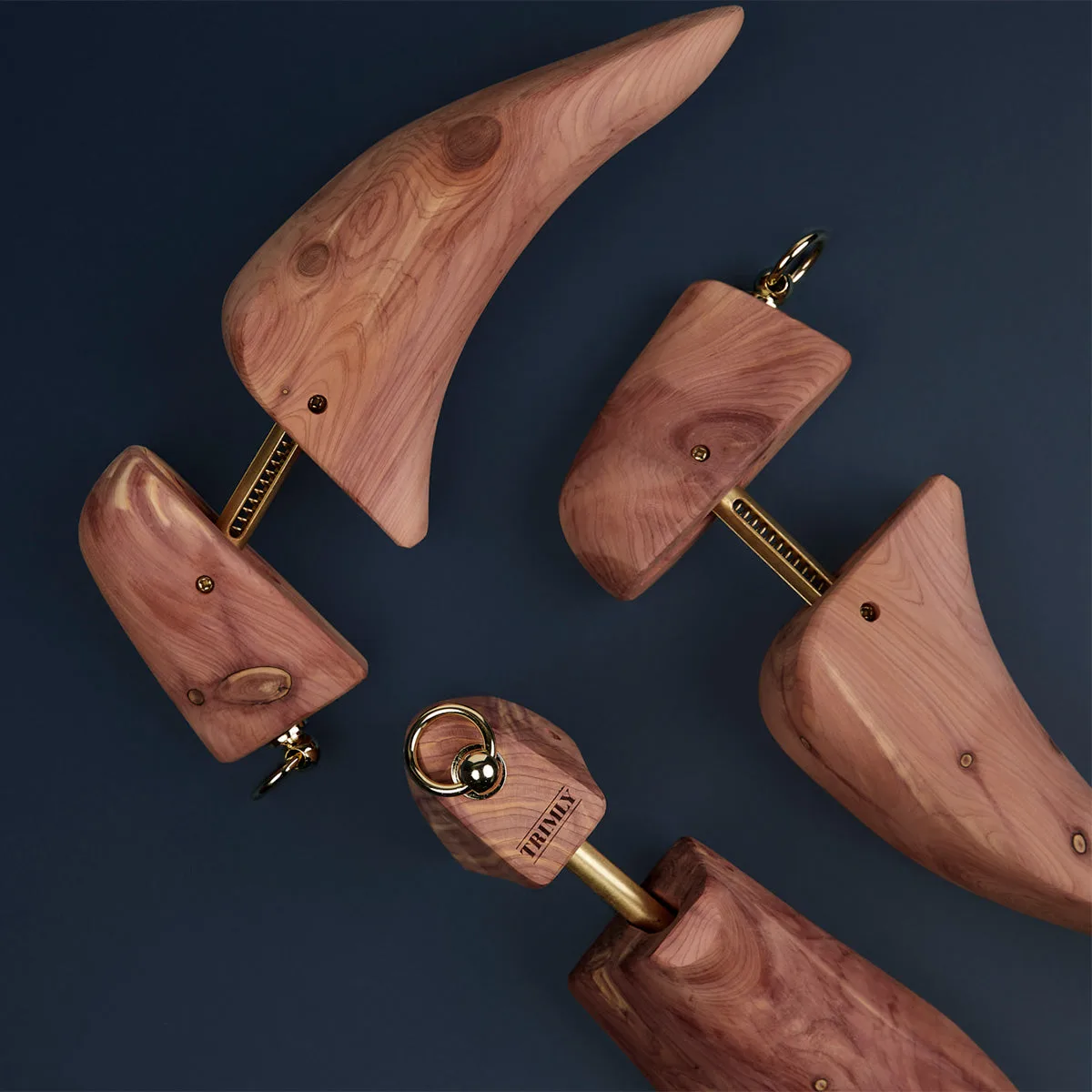
Image source: Bing (Web (fair-use with source credit))
Quick Answer
Cedar shoe trees for women ankle boots preserve upper leather. They smooth out deep walking creases. Raw Eastern redcedar absorbs sweat and kills odor.
Specialized boot trees protect low shafts without overstretching leather. Regular women's shoe trees also work well. Avoid unisex or downsized men's trees.
Why Women's Ankle Boots Demand Dedicated Cedar Trees
Ankle boots endure unique structural stresses during everyday wear. Every step creates sharp horizontal creases across the vamp, where your foot naturally flexes. Because boots enclose more surface area than standard pumps or loafers, they trap significantly more sweat against the inner lining.
Without internal support, wet leather collapses inward as it dries. Over time, those walking creases turn into permanent, brittle cracks. Moisture also weakens internal heel counters and causes the leather footbed to curl upward at the edges.
Women's boots present specific dimensional hurdles:
- Narrow heel pockets that stretch out if forced over wide blocks.
- Tighter ankle shafts and elastic Chelsea gussets that make insertion difficult.
- Steeper instep angles that require a distinct upward pitch.
Standard flat trees fail to address these shapes. A dedicated tree applies gentle forward and lateral pressure right at the flex point. This continuous outward support keeps the sole flat, prevents toe curl, and allows internal moisture to evaporate evenly from the grain.
Anatomy of a Proper Ankle Boot Tree: Wood, Springs, and Last Shapes
The performance of any boot tree comes down to three elements: timber quality, mechanical tension, and last profile. Understanding these components helps ensure you select hardware that protects rather than damages delicate linings.
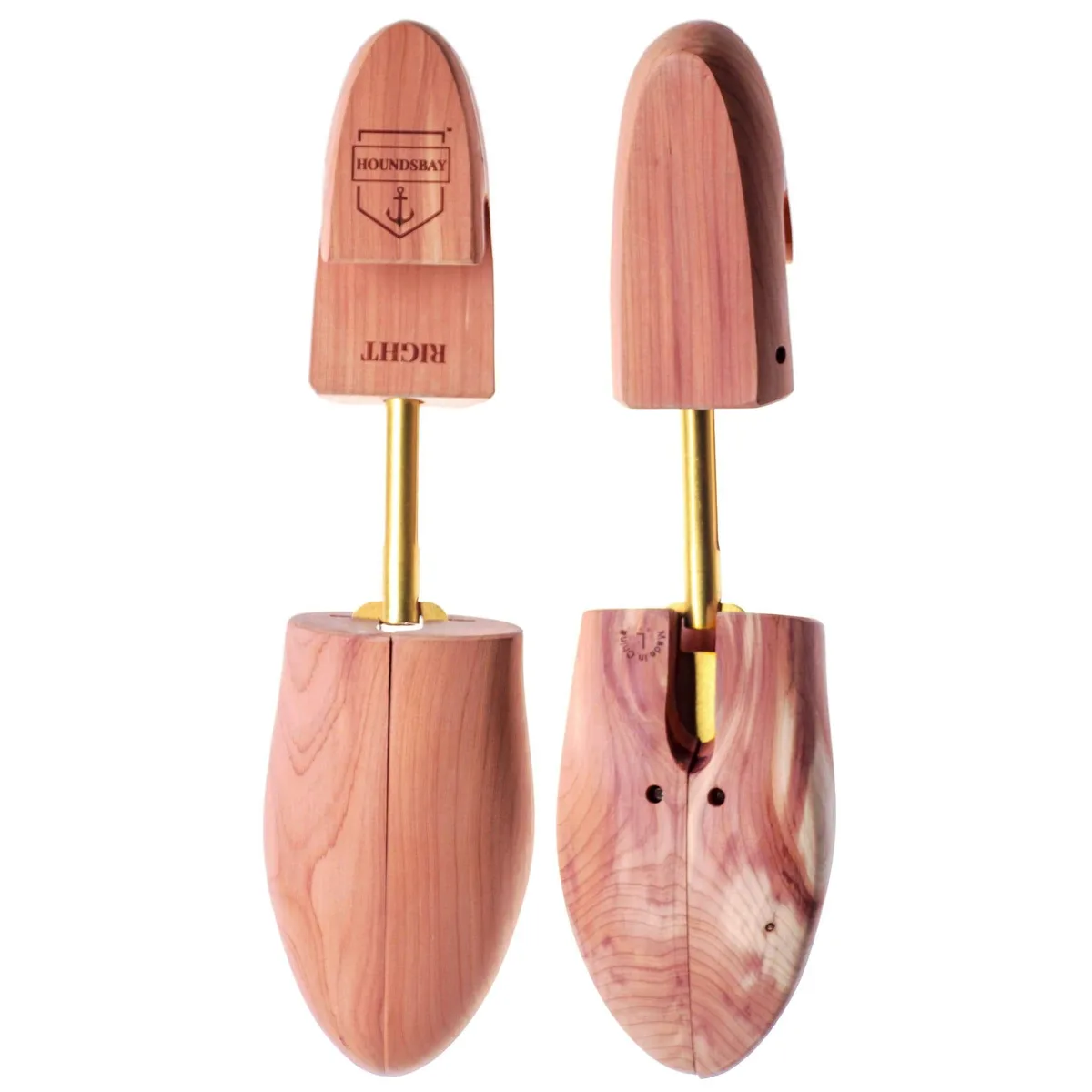
Image source: Bing (Web (fair-use with source credit))
Raw heartwood from Eastern Redcedar (Juniperus virginiana) remains the gold standard. Research published by the USDA Forest Service highlights that aromatic redcedar contains natural organic compounds like cedrol, which resist fungal rot and neutralize bacteria. The timber must remain raw and unvarnished.
Glossy coatings seal the pores, completely neutralizing the wood's natural ability to wick moisture away from calfskin and suede linings.
Mechanical tension comes from steel or brass spring systems. Telescoping center tubes provide longitudinal pressure, pushing the toe piece forward while anchoring the heel block against the rear counter.
Forefoot mechanics generally use either a solid block or a split-toe spreader. A split-toe design features a small mechanical slide that widens the toe piece sideways as forward pressure increases. This transversal spread fills the entire vamp cavity, smoothing creases along both the top and the sides of the toe box.
| Component | Standard Dress Shoe Tree | Dedicated Women's Ankle Boot Tree |
|---|---|---|
| Heel Profile | Low cut, wide radius | Tapered narrow cup, high back counter |
| Instep Height | Flat horizontal line | Sloped pitch to fill the boot throat |
| Hardware | Low brass pull knob | Elevated leather loop or vertical post handle |
| Tension Type | Single-spring linear | Twin-tube or articulating angle spring |
Comparing the 4 Primary Styles of Cedar Trees for Ankle Boots
Boot owners generally weigh four primary hardware styles. Each option handles leather tension, shaft clearance, and moisture removal differently.
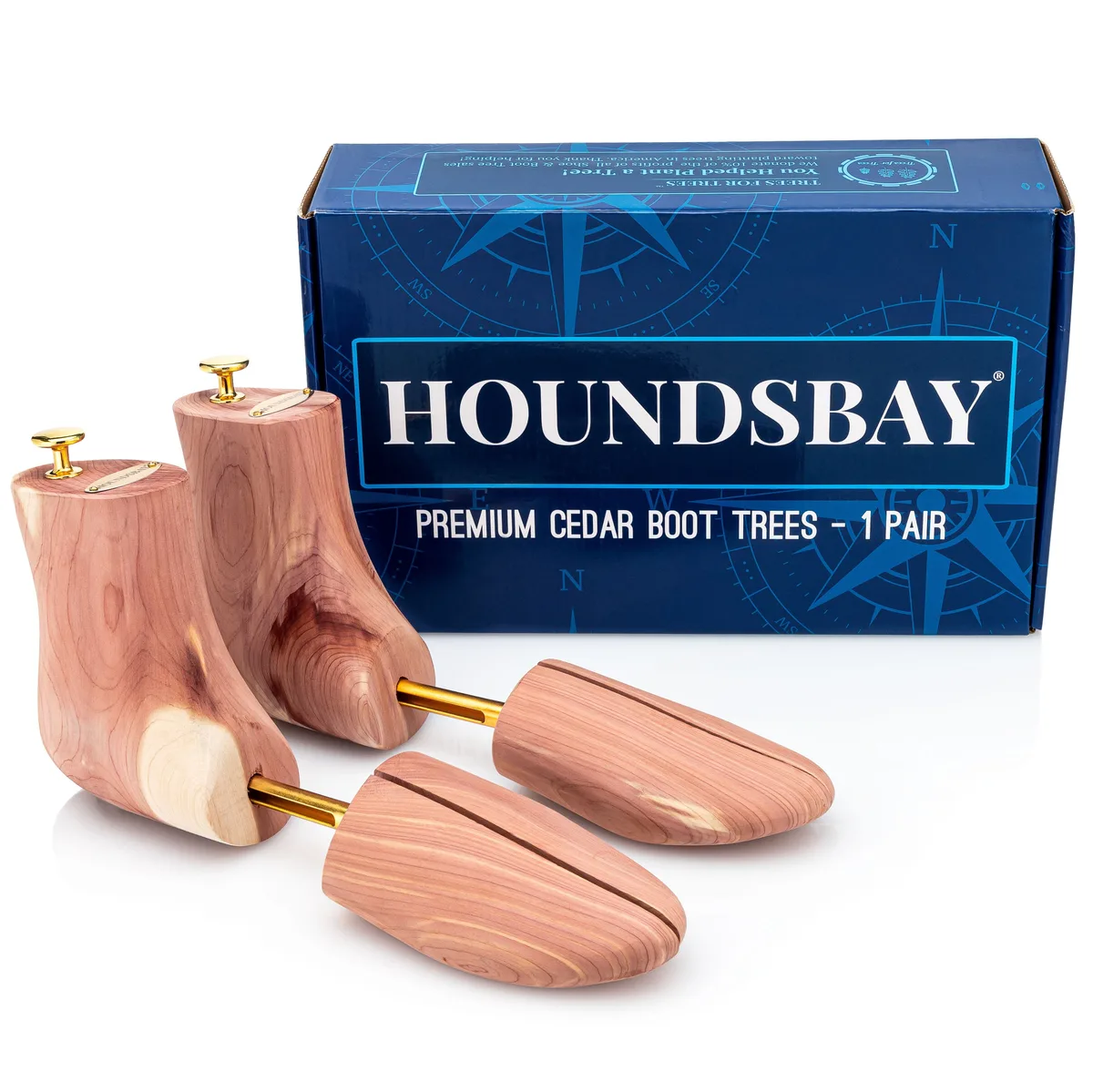
Image source: Bing (Web (fair-use with source credit))
1. Dedicated Women's Ankle Boot Trees (High Vamp & Ankle Cut)
These feature an elevated wooden collar that rises directly into the lower shaft. The design mirrors the actual human ankle, providing support through the throat and instep of the boot. They usually include an upright metal rod or leather pull loop, allowing you to lift the tree straight up out of a deep shaft without wrenching the zipper.
This style offers the most comprehensive shape retention for premium leather booties.
2. Women's Split-Toe Shoe Trees
A women's split-toe shoe tree uses a standard low heel block paired with an expandable, spring-loaded forefoot. While it lacks support for the ankle collar, it excels at smoothing horizontal vamp rolls. The lateral spreading mechanism adapts automatically to various toe widths.
It works exceptionally well in pull-on booties and low-profile Chelsea boots where a taller wooden block cannot easily slide past the elastic gusset.
3. Solid-Toe Full-Heel Shoe Trees
Solid-toe models use a single, sculpted block of cedar for the forefoot. Because there are no moving parts in the front, they provide a smooth, uniform surface that will not pinch thin, unlined leathers. The trade-off is fixed width.
If the carved block is narrower than your boot, side creasing remains untouched. If it is too wide, it can distort the upper over time.
4. Downsized Men's or Unisex Trees
Many retailers market their smaller men's sizes (usually XS) as unisex options for women. In practice, these rarely fit women's boots cleanly. Men's lasts are cut with wider heel blocks and lower insteps.
Forcing a downsized men's tree into a sleek women's ankle boot often overstretches the heel pocket while leaving the top of the vamp loose and wrinkled.
Side-by-Side Comparison: Fit, Tension, and Boot Preservation
Evaluating these styles side by side clarifies which design aligns best with your footwear rotation and budget:
| Feature / Metric | Dedicated Boot Tree | Women's Split-Toe Tree | Solid-Toe Tree | Unisex / Men's XS Tree |
|---|---|---|---|---|
| Vamp Crease Smoothing | Excellent | Excellent | Moderate | Poor to Moderate |
| Shaft Support | Full lower-shaft fill | None (footbed only) | None (footbed only) | None (footbed only) |
| Insertion Ease | Moderate (requires room) | Easy | Moderate | Difficult (bulky heel) |
| Heel Counter Safety | High (narrow profile) | High (slender cup) | Moderate | Low (blowout risk) |
| Moisture Absorption | Maximum timber volume | High | High | High |
| Price Range (as of 2026) | $50 to $80 | $30 to $45 | $25 to $40 | $20 to $35 |
Dedicated boot trees provide the most complete structural care, especially for structured calfskin. However, standard women's split-toe trees deliver nearly identical crease-smoothing power across the forefoot at a lower price point, making them an excellent secondary alternative.
Matching Your Boot Style to the Right Cedar Tree
Not all ankle boots share the same internal space, meaning your choice should depend on closure type and leather firmness:
- Chelsea Boots: Elastic side panels can catch on bulky wood. Choose a women's split-toe shoe tree with a slender heel block. The low profile slides easily past the elastic opening without overstretching the gussets.
- Lace-Up Combat Boots: High-instep dedicated boot trees are ideal here. Because the laces allow the boot to open wide, inserting a taller wooden form is simple, and the tree fully fills the deep vamp.
- Side-Zip Booties: Standard solid-toe or split-toe trees work best. A tall boot tree can bump against the zipper teeth during insertion, risking leather tears or broken zipper tracks.
- Heeled Fashion Booties (Over 2 Inches): Use dedicated low-cut women's trees with flexible spring tubes. Standard flat trees create unnatural downward stress on high-angle footbeds, which can weaken the internal shank.
Sizing, Insertion, and Care: Getting the Most Out of Aromatic Cedar
Getting the sizing right prevents permanent damage to your boot shafts. Women's sizing typically spans Small (US 5 to 6.5), Medium (US 7 to 8.5), and Large (US 9 to 10.5). If your boots fall on a half-size threshold, size down.
An undersized tree still absorbs sweat and flattens the vamp, but an oversized unit can blow out the heel seam or stretch side zippers.
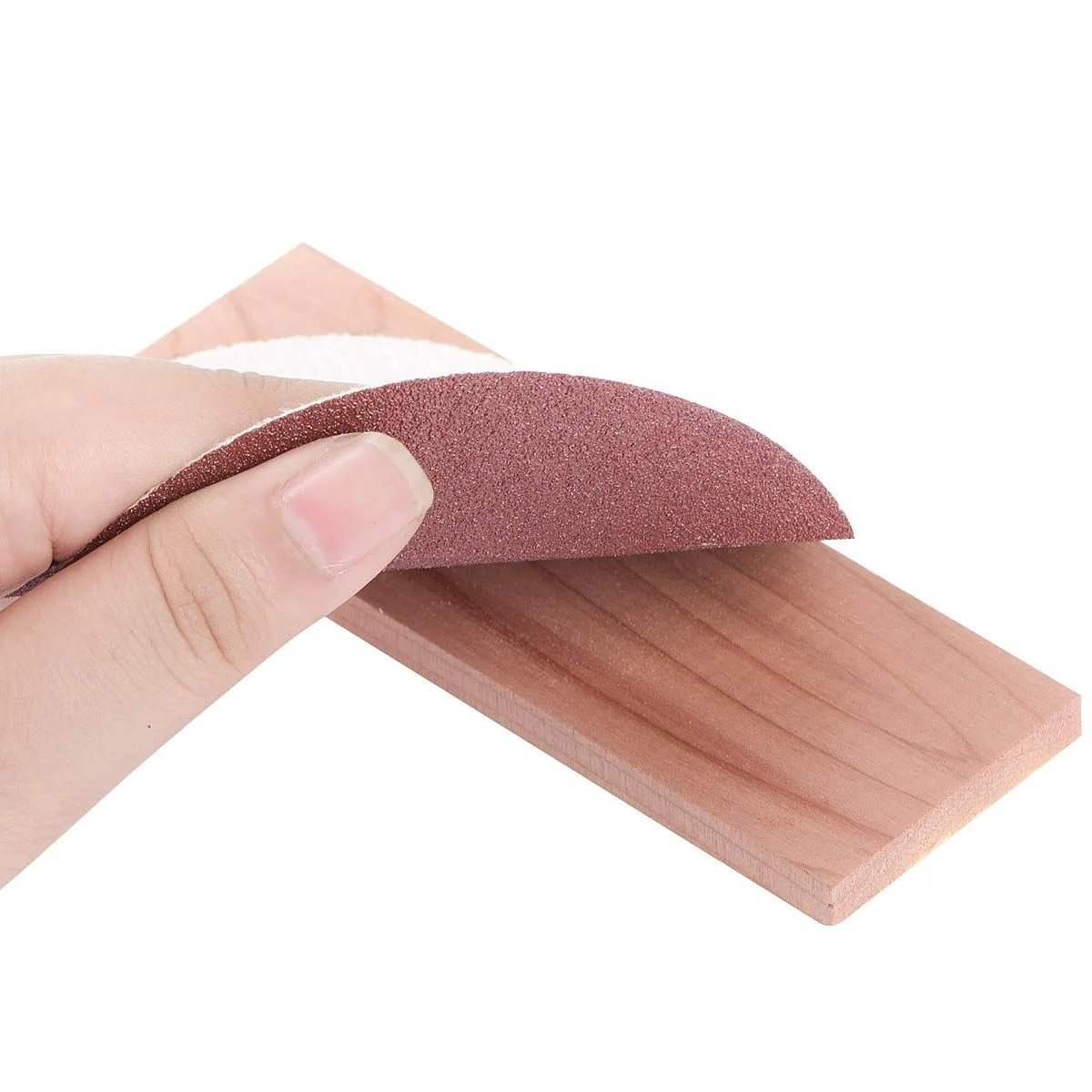
Image source: Bing (Web (fair-use with source credit))
Inserting a boot tree requires a specific angle to protect the opening. Follow these practical steps:
- Unlace the throat or unzip the side fully before trying to insert the wood.
- Slide the toe block in at a 45-degree angle until it hits the front edge.
- Compress the center spring forward by pushing on the heel piece.
- Drop the heel block straight down along the back counter and release.
Over time, cedar pores become saturated with airborne dust and evaporated foot oils. When the aroma fades, the wood loses its desiccant power. Sand the raw timber lightly with 200-grit sandpaper once a year to expose a fresh layer of aromatic grain.
Wipe away wood dust with a dry cloth before placing the trees back inside your boots.
Sometimes white, crystalline fuzz appears on the surface of stored cedar. This is not mildew or mold. It is "cedar bloom," a natural crystallization of the timber's organic essential oils.
Simply wipe it away with a dry rag.
Cost vs. Value: What You Should Actually Pay
Cedar boot trees require a higher initial spend than basic plastic shapers, but their lifespan is essentially indefinite. Premium dedicated ankle boot trees cost between $50 and $80 per pair. Standard women's split-toe shoe trees cost roughly $30 to $45 per pair.
Plastic travel shapers sit at the low end around $15 to $20. While they are cheap and lightweight, plastic provides zero moisture absorption. In fact, non-porous plastic can trap residual dampness against the inner lining, accelerating rot in high-end vegetable-tanned leather.
For boots under $150, basic women's split-toe cedar trees provide plenty of protection without overspending. For heritage, Goodyear-welted boots or designer calfskin booties over $300, spending $60 on dedicated ankle boot hardware makes financial sense. Proper trees prevent premature creasing, directly delaying the need for expensive cobbler relasting or premature replacement.
Frequently Asked Questions About Cedar Boot Trees
Can I use regular women's shoe trees instead of boot trees?
Yes, regular women's shoe trees work well for most ankle boots. They flatten the footbed and smooth vamp creases just like dedicated boot trees. The only drawback is lower ankle coverage.
You also miss out on the elevated handle, which makes removal slightly harder from deep shafts.
How long should I leave cedar trees inside my boots?
Leave cedar trees in your boots for at least 24 hours after wearing them. Most internal moisture leaves the leather lining within the first day. After that initial drying period, the trees can stay inside indefinitely to hold the leather in shape until your next wear.
Will cedar shoe trees stretch my ankle boots out?
Properly sized cedar trees will not stretch your boots. They apply gentle spring tension designed solely to flatten walking rolls and keep soles straight. Overstretching only happens if you force downsized men's trees or an oversized women's model into a boot that is too narrow.
Do I need a pair for every set of ankle boots I own?
No, you do not need a dedicated pair for every boot in your closet. Two or three pairs are plenty if you rotate your footwear. Simply insert the trees into yesterday's pair for 24 hours, then transfer them to another pair once the moisture has evaporated.

Similar Posts