How Much Does a Felt Purse Organizer Insert Weigh?
Founder & Fashion Creative Director at Julia Fashionista · CFDA Fashion Scholar, Certified Image Consultant (AICI) · 12+ years in editorial wardrobe styling, sustainable textile sourcing, and luxury capsule curation
A heavy handbag can quickly ruin your day and strain your neck. When you add a bag liner to solve interior clutter, paying close attention to purse organizer felt insert weight is the secret to keeping your carry-all comfortable. The wrong liner can easily double the empty heft of your favorite designer tote before you even slip in your wallet or keys.
Pressed non-woven felt creates crisp pockets and holds its shape exceptionally well, but that structure requires material density. Most standard felt inserts register between 300 and 800 grams per square meter (GSM) based on textile manufacturing standards. Understanding how those numbers translate into ounces on your shoulder makes all the difference before you order.
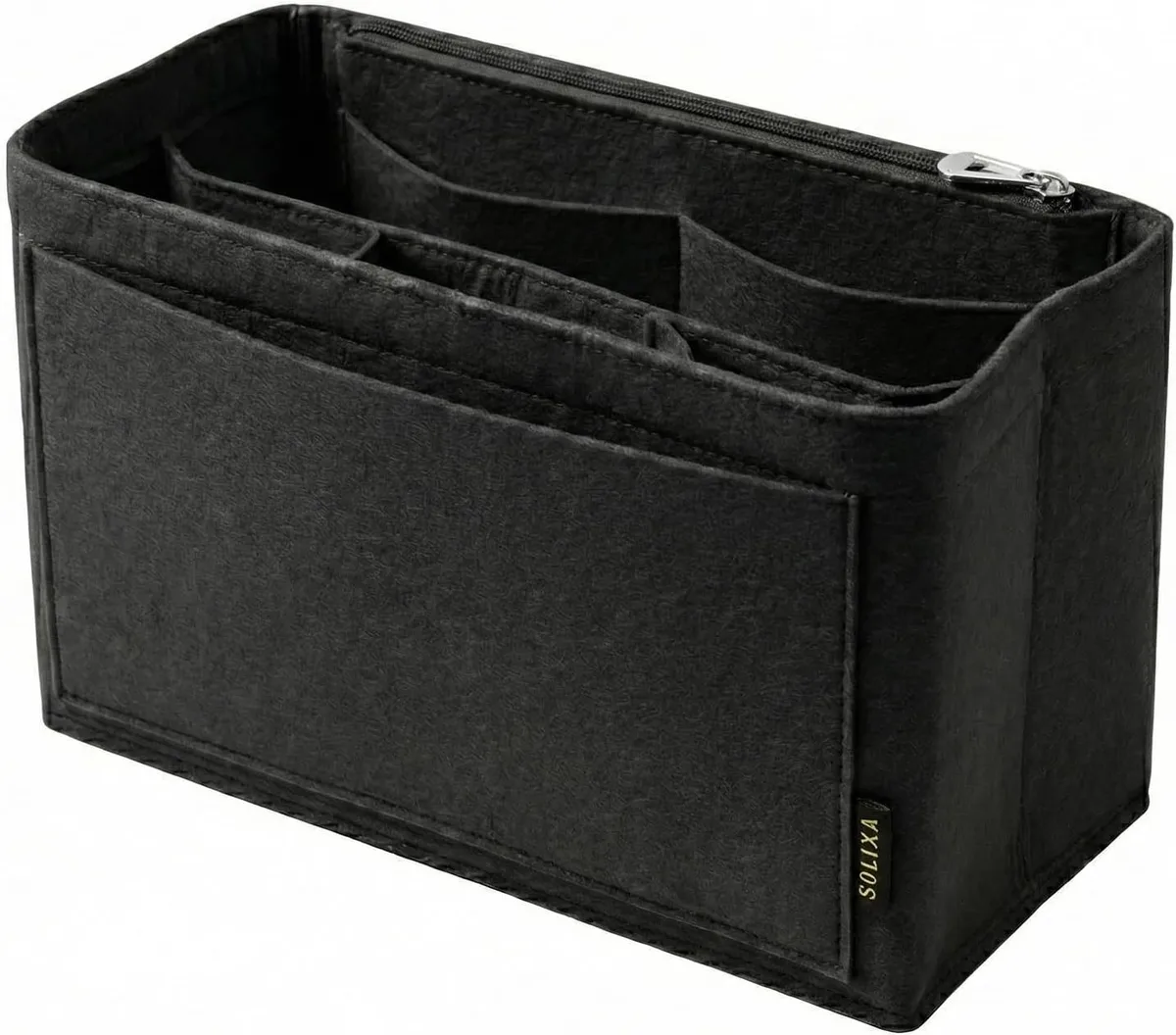
Image source: Bing (Web (fair-use with source credit))
Quick Answer
A purse organizer felt insert weight ranges from 2.5 to 16 ounces. Small organizers weigh under 5 ounces. Medium inserts for standard shoulder bags average 5 to 7.5 ounces.
Large tote liners weigh between 8 and 13 ounces. Extra-large travel inserts can reach 16 ounces or more. Thinner 2mm felt saves significant weight over stiff 3mm versions.
The Real Weight of Felt Purse Organizers: What Your Shoulder Actually Feels
Tare weight is the empty weight of any container before you place items inside it. When you drop a dense felt insert into an unlined leather bag, you add deadweight that never leaves your shoulder. That extra mass sits right on your trapezius muscle with every single step you take.
According to ergonomic guidelines from the American Chiropractic Association, a loaded handbag should not exceed 10 percent of your total body weight. If your everyday tote already holds two pounds of essentials, an insert adds immediate physical strain. A heavy insert eats into your safe carrying allowance very fast.
Felt feels light when you hold a small sample swatch in your hand. Once a manufacturer stitches together multiple pocket walls, a reinforced base, and drink holders, that fabric multiplies. A large insert can hold eight to ten separate panels.
Those stacked layers accumulate ounces quickly.
As of 2026, many bag owners report surprise when placing their organizers on a kitchen scale. A bag that felt manageable can easily cross the comfort threshold once loaded. Choosing the right material density prevents that slow-building shoulder ache by the end of your commute.
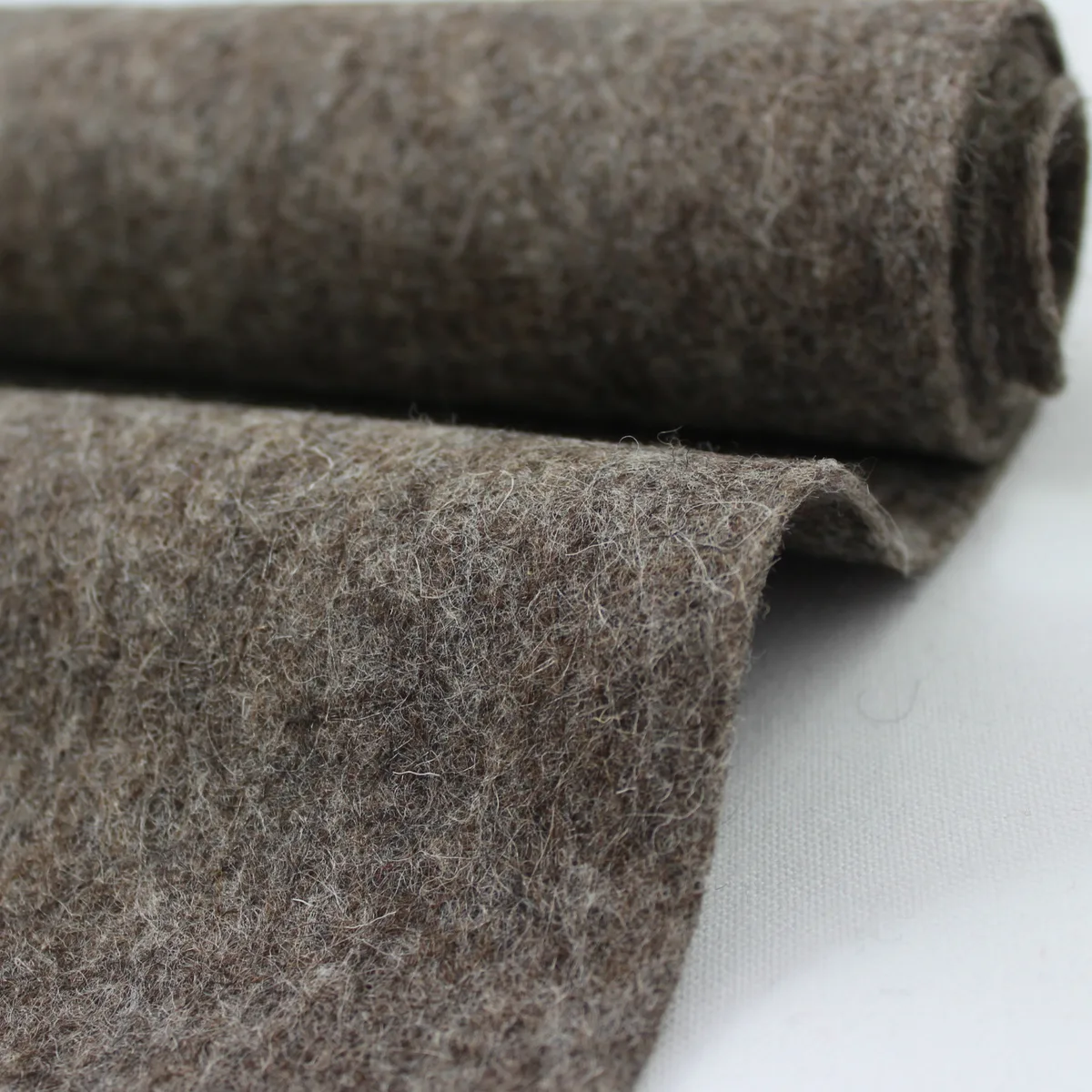
Image source: Bing (Web (fair-use with source credit))
2mm vs. 3mm Felt: The Direct Trade-Off Between Rigidity and Added Ounces
Thickness is the single biggest factor dictating how much a felt insert weighs. Most aftermarket brands construct liners using either 2mm or 3mm synthetic polyester felt. While a 1mm difference sounds negligible on paper, it radically alters both stiffness and deadweight.
A 3mm felt insert delivers maximum upright rigidity. It stands completely upright on its own, even when your tote bag is completely empty. However, dense 3mm felt is roughly 40 to 55 percent heavier than 2mm felt of identical dimensions.
That extra density creates a stiff box structure inside your bag.
By contrast, 2mm felt provides a lean, flexible alternative. It delivers enough body to stop your keys from scratching canvas linings and keeps lipsticks organized. It does not stand as stiffly as 3mm fabric, but it shaves valuable ounces off your daily load.
| Felt Thickness | Average GSM | Structure Level | Weight Impact | Best For |
|---|---|---|---|---|
| 1.2mm to 1.5mm | 200 – 280 GSM | Soft, pliable | Ultralight (2 – 4 oz) | Small clutches, delicate vintage bags |
| 2mm | 320 – 420 GSM | Moderate support | Balanced (4 – 7 oz) | Daily shoulder bags, soft leather totes |
| 3mm | 550 – 750 GSM | High rigidity | Heavy (8 – 15 oz) | Open-top canvas totes, structured carry-alls |
| Double 2mm (4mm) | 700 – 900 GSM | Extreme rigidity | Maximum (12 – 18 oz) | Heavy travel bags, base-heavy haulers |
Choosing between them comes down to a simple trade-off. If you want crisp, boxy stability and don't mind extra heft, 3mm felt works well. If you carry your bag across long walking commutes, 2mm felt protects your shoulders.
Actual Weight by Bag Size: Small Crossbodies to Jumbo Totes
Bag volume dictates the surface area of felt required to build an organizer. A liner designed for a compact crossbody requires only a fraction of the material used for an oversized work tote. Manufacturer specifications confirm clear weight brackets across popular dimensions.
Small inserts built for compact styles or mini bags weigh between 2.5 and 4.5 ounces. Because these bags carry minimal cargo, the added insert weight is barely noticeable. You get neat card slots and pocket separators without feeling weighed down.
Medium organizers sized for popular styles like 30cm satchels typically weigh 5.0 to 7.5 ounces. This category represents the sweet spot for everyday office wear. At roughly a third of a pound, a 2mm version keeps your bag organized without dragging on your arm.
Large and extra-large inserts for popular 40cm shopping totes weigh between 8.0 and 16.0 ounces. When an insert hits a full pound on its own, it matches the weight of a tablet or a metal water bottle. That is substantial deadweight before you pack your daily essentials.
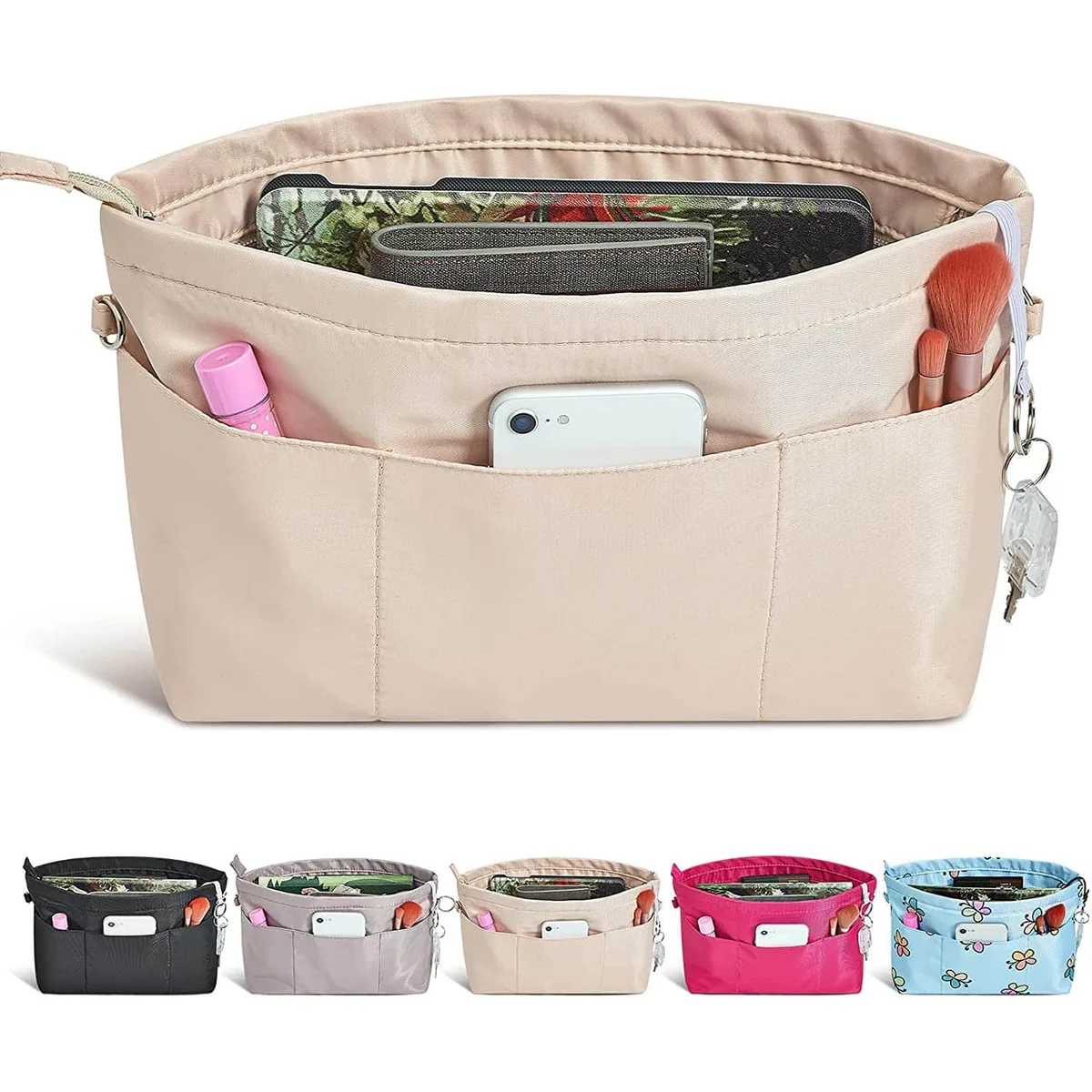
Image source: Bing (Web (fair-use with source credit))
Felt vs. Nylon, Neoprene, and Base Shapers: Weight and Structure Compared
Felt is popular because it holds pockets open so you can grab items quickly with one hand. However, alternative liner materials offer very different weight profiles. Comparing these fabrics helps you decide if felt is truly the right medium for your daily routine.
Ripstop nylon is the primary lightweight competitor to needle-punched felt. A nylon organizer for a large tote usually weighs between 3.0 and 5.5 ounces. That is less than half the weight of a comparable 3mm felt liner.
Nylon slips easily into tight bags and resists liquid stains, though its soft walls often collapse when empty.
Neoprene sits somewhere in the middle. It offers soft cushioning for tech gadgets and cosmetic bottles. It weighs slightly more than nylon but remains lighter than dense felt.
It also adds impact protection that felt cannot match.
Rigid acrylic base shapers represent another structural option. Many people buy plastic base plates to stop bag bottoms from sagging under heavy loads. An acrylic base shaper alone can add 4 to 8 ounces.
A 2mm or 3mm felt insert already has an integrated bottom panel, which often eliminates the need for a separate plastic board entirely.
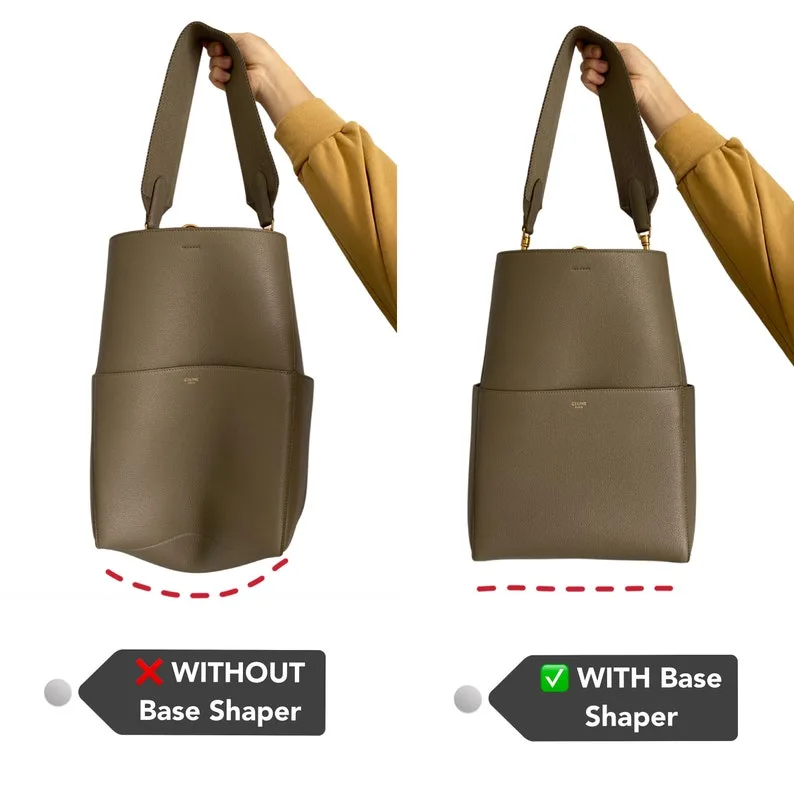
Image source: Bing (Web (fair-use with source credit))
How Insert Weight Changes Your Handbag’s Drape and Posture
The physical weight of an insert does more than strain your shoulder muscles. It directly alters the silhouette and movement of your handbag. Every bag style has an intended drape created by its leather temper or canvas weave.
When you install a heavy 3mm felt insert into supple, pebbled leather, the liner forces the leather outward. It removes the natural slouch and casual drape of the bag. The purse transforms into a rigid, rectangular block that bounces awkwardly against your hip as you walk.
A dense, bottom-heavy organizer can also pull on thin shoulder straps. Many lightweight luxury totes feature delicate, narrow leather handles designed for casual loads. Adding a 12-ounce insert alongside a laptop concentrates downward pull on the handle anchor stitches.
Over time, that concentrated strain stretches soft leather handles out of shape.
A lighter 2mm felt liner flexes along with your body movement. It maintains internal order while letting soft leather crease and fold naturally. Matching insert density to your bag's inherent structure preserves both the bag's aesthetic line and its stitching over years of daily wear.
How to Pick the Right Felt Weight for Your Specific Bag Style
Matching insert density to your handbag structure comes down to three clear rules. You must assess bag silhouette, leather stiffness, and carrying duration.
If your bag is made of floppy coated canvas or lightweight nylon, choose a 3mm felt insert. Unstructured totes lack base support entirely. A 3mm insert provides structural framing, standing upright on desks and preventing bottom sagging without an acrylic shaper plate.
If your bag features soft, supple calfskin or slouchy hobo leather, pick a 2mm felt organizer. Heavy 3mm panels push against soft side seams. That pressure stretches natural leather grains and turns relaxed silhouettes into rigid, awkward cubes.
If you walk long distances or deal with chronic neck tension, choose 1.2mm to 2mm felt, or switch to ripstop nylon. The extra 6 to 10 ounces of 3mm felt creates cumulative shoulder fatigue over an eight-hour day.
- Use 1.2mm to 2mm felt for structured satchels, designer flap bags, and slouchy leather totes.
- Use 3mm felt for floppy canvas shoppers, open-top market baskets, and travel carry-alls needing upright support.
- Use lightweight nylon if your bag already weighs over two pounds empty.
Frequently Asked Questions About Purse Organizer Weight
How much does an average felt purse insert weigh?
A standard felt organizer weighs between 5 and 9 ounces (140g to 255g). Compact styles for small crossbodies weigh as little as 2.5 ounces. Large inserts designed for oversized commuter totes can weigh 13 to 16 ounces, depending on the thickness of the felt.
Is 2mm or 3mm felt better for everyday totes?
A 2mm felt insert is generally better for everyday use because it saves critical tare weight. It keeps your belongings divided without stiffening soft bag walls. Choose 3mm only if your tote is completely limp and cannot stand upright on its own.
Does a felt organizer add noticeable deadweight to a handbag?
Yes, a dense felt liner adds noticeable heft once loaded. While 8 ounces sounds small in your hand, carrying that deadweight for hours causes neck strain. Pairing a heavy insert with an already hefty leather tote easily pushes bags past comfortable ergonomic limits.
Can a heavy felt insert damage the lining of my purse?
A heavy insert will not tear linings, but rough synthetic polyester fibers can cause friction wear. Stiff felt edges rub against delicate lambskin or raw suede interiors over time. For delicate interiors, ensure your insert has smooth, finished seams and fits snugly without sliding.

Similar Posts