Bulky Sunglass Case? Slim Solutions for Small Purses
Founder & Fashion Creative Director at Julia Fashionista · CFDA Fashion Scholar, Certified Image Consultant (AICI) · 12+ years in editorial wardrobe styling, sustainable textile sourcing, and luxury capsule curation
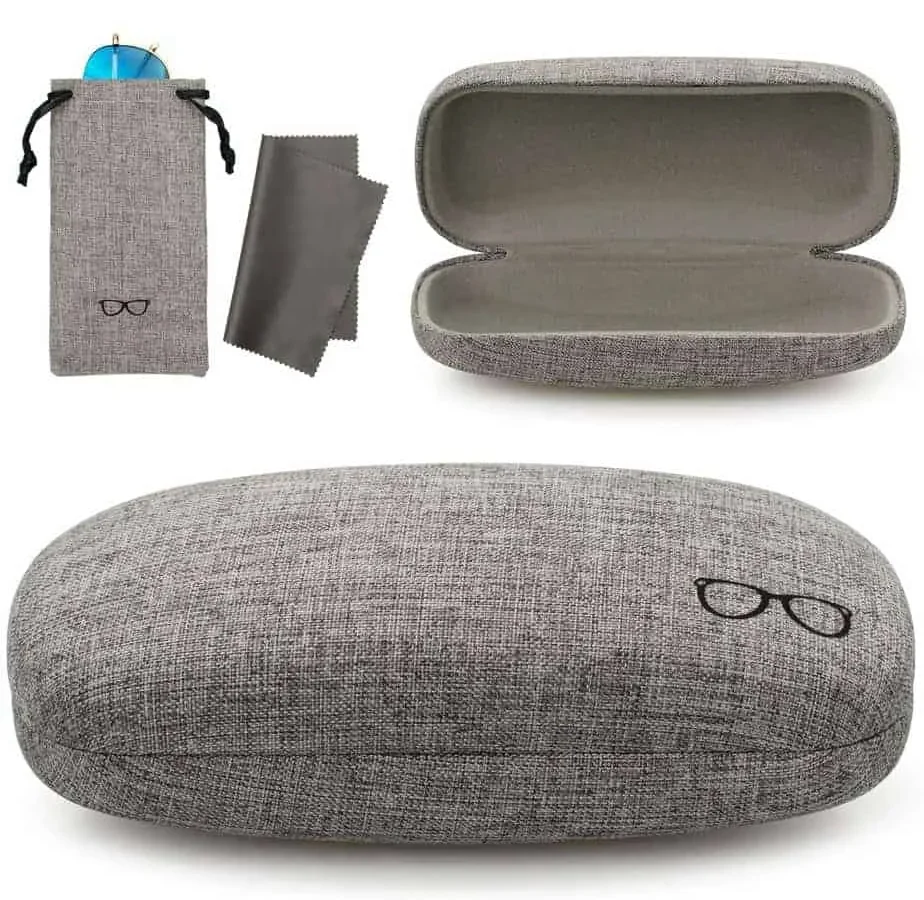
A sunglass hard case bulky in small purse interiors is a constant packing frustration. You want to carry a compact bag, but the case devours half your space. Forcing it inside stretches leather seams and crushes everything else you carry.
Standard manufacturer clamshells consume up to 500 cubic centimeters of volume, yet eyewear occupies only a fraction of that shell. Eyewear testing standards like ANSI Z80.3 focus on frame safety rather than pocket profile. Fortunately, you do not have to choose between bent wire rims and a ruined handbag silhouette.
Quick Answer
A sunglass hard case bulky in small purse setups ruins interior storage. Standard clamshell cases waste over sixty percent of their volume on empty air. Swap the factory case for an origami folding case or slim sleeve.
Collapsible triangle cases fold completely flat when you wear your glasses. Reinforced slipcases protect the lens bridge while saving forty percent more bag space.
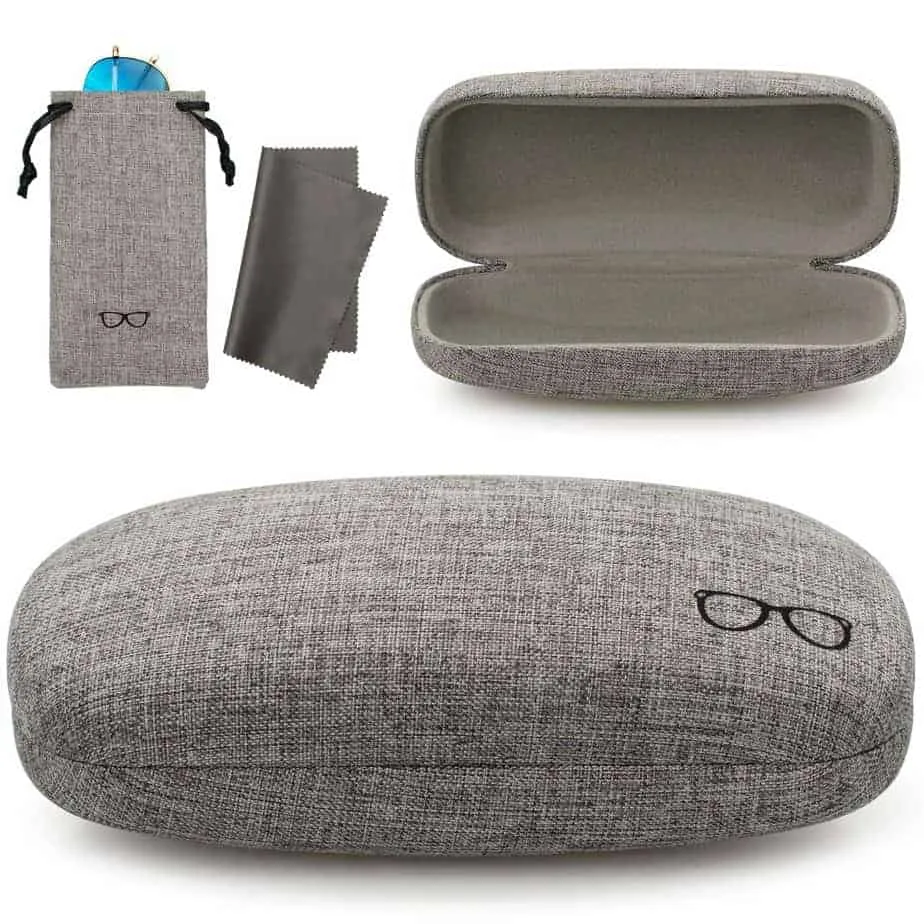
Image source: Bing (Web (fair-use with source credit))
The Small Purse Dilemma: Why Factory Cases Steal All Your Space
Brand-name glasses usually arrive in massive, injection-molded clamshell boxes. Designers build these generic cases to fit their widest wraparound frames. When you place a delicate pair of aviators inside, roughly sixty to seventy percent of that case is empty air.
In a small crossbody or clutch, volume is premium real estate. Most micro-bags offer between forty and seventy millimeters of interior depth. A standard hard case measures fifty-five to sixty-five millimeters deep.
The math simply does not work.
When you force a standard case into a small purse, two things happen. First, the case forces your wallet, keys, and phone into high-pressure contact. Second, the rigid edges push outward against the bag lining.
Over time, this stress warps zipper tracks, pops seam stitches, and permanently stretches leather panels.
Research into everyday carry optimization highlights spatial displacement. A factory case displaces around 450 cubic centimeters. In a three-liter bag, that single case claims fifteen percent of your total capacity.
In a one-liter evening clutch, it monopolizes nearly half the bag.
The Anatomy of Protection: What Your Frames Actually Need Inside a Bag
Before ditching your hard case, you need to understand what you are protecting against. Many people switch to a thin microfiber drawstring bag to save space. That switch often ends with cracked polarized lenses or snapped hinges.
According to eyewear maintenance guidelines from The Vision Council, lens scratches and frame alignment loss usually stem from improper storage. Inside a purse, your glasses face three specific hazards:
- Radial crush forces from heavier objects pressing inward
- Point-impact scratches from metal keys and makeup compacts
- Torsional twist on the bridge and temple hinges
A protective case does not need heavy exterior bulk to stop these threats. The primary vulnerability on any pair of glasses is the center bridge. If the bridge flexes, the eyewires torque, which pops lenses out and bends hinges.
You also need basic surface protection. High-grade optical lenses feature anti-reflective and scratch-resistant coatings. Loose items inside a purse abrade these coatings rapidly.
A soft internal liner paired with targeted structural reinforcement delivers full protection without the giant footprint.
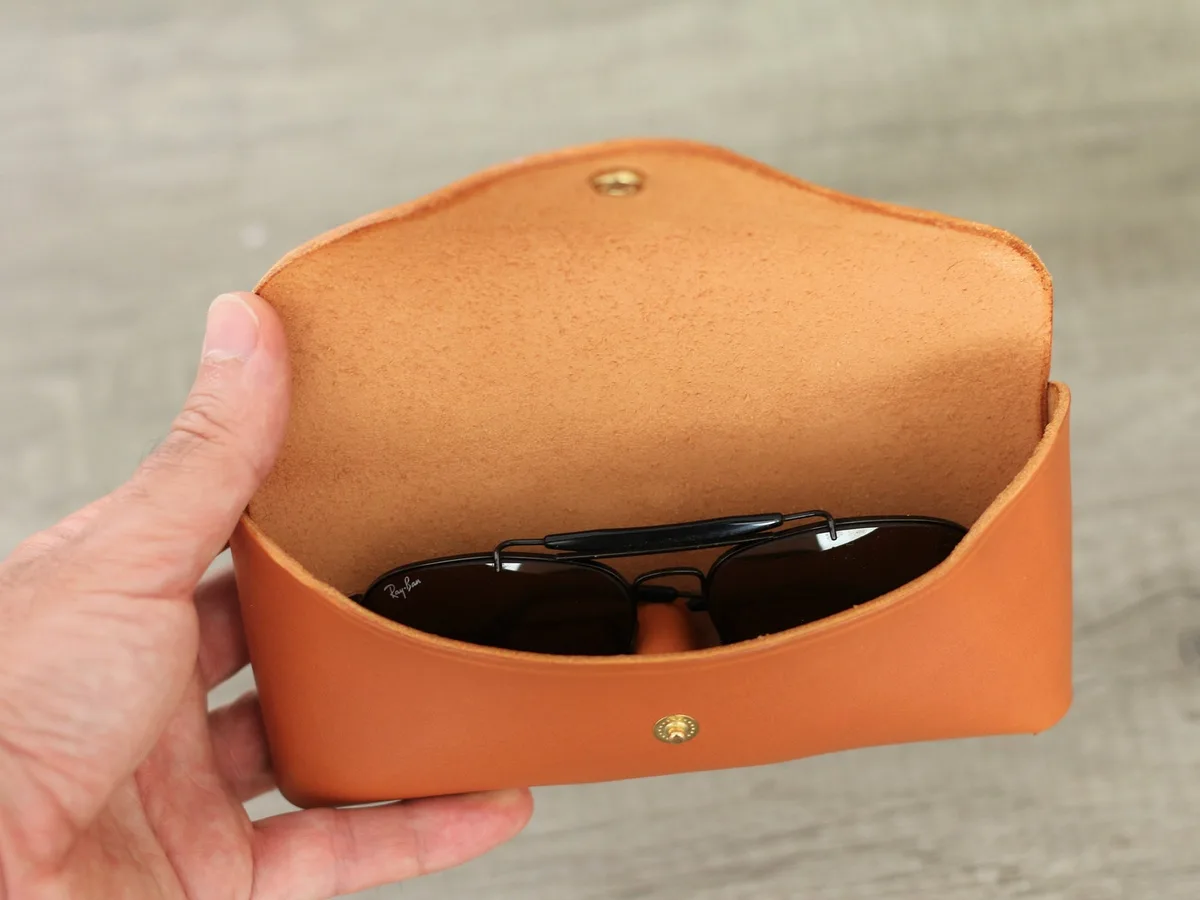
Image source: Bing (Web (fair-use with source credit))
Breaking Down the Low-Profile Alternatives to Chunky Clamshells
You do not have to accept the bulk of standard packaging. Several modern designs solve the purse-packing challenge through smarter materials and geometry.
1. The Collapsible Origami Prism
Origami cases use triangular geometry to create rigid protection from flat materials. When assembled, internal magnets hold the panels in a sturdy triangular prism. This triangle redistributes radial compression along its outer facets.
The real magic happens when you take your sunglasses out. The case collapses flat into a slim paddle under ten millimeters thick. You can slide the flattened case into a purse slip pocket while wearing your frames.
2. The Semi-Rigid Molded EVA Sleeve
Molded Ethylene Vinyl Acetate (EVA) foam delivers shock absorption with minimal wall thickness. These sleeves contour tightly around folded glasses instead of forming a giant rectangle.
A zipper track seals out purse dust and loose crumbs. The dense foam resists crushing from adjacent items like phones and hard wallets. Most EVA sleeves reduce total volume by forty percent compared to factory cases.
3. The Reinforced Bridge Leather Slipcase
Leather slipcases have evolved beyond thin sleeves. Modern slim versions integrate a rigid plastic or aluminum spine directly along the center seam.
An internal peg supports the nose bridge from underneath. This small pillar prevents the glasses from flattening under purse weight. The sides remain flexible, keeping the profile exceptionally thin.
4. Exterior Attachment Holsters and Bag Charms
If your purse interior is completely full, consider moving your glasses outside the bag. Exterior holsters clip to strap anchors or top handles using secure carabiners.
These holders wrap securely around the frame front and temples, leaving the ear stems neatly folded. High-grade versions feature microfiber linings and secure magnetic snaps. This method frees up one hundred percent of your purse interior.
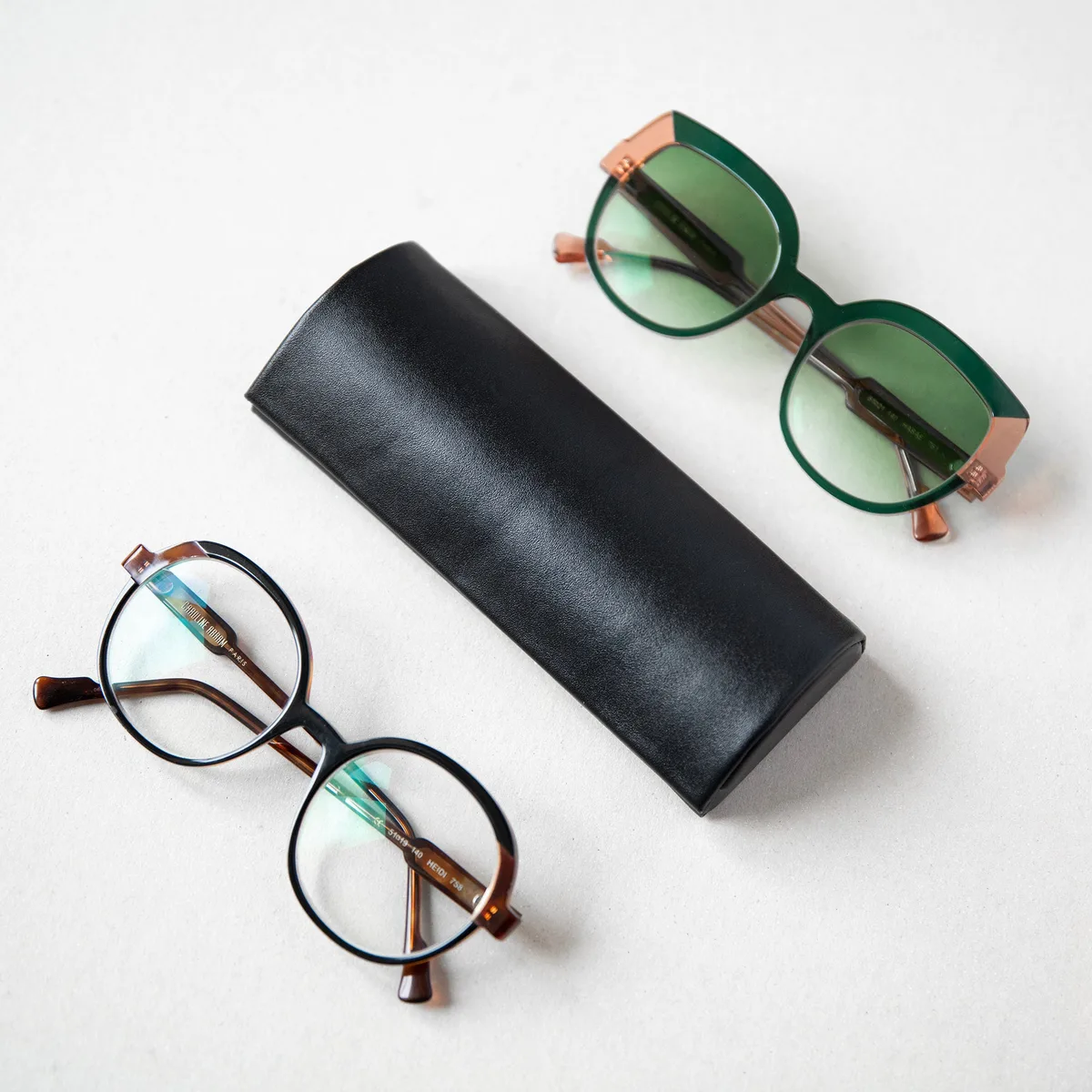
Image source: Bing (Web (fair-use with source credit))
Side-by-Side Comparison: Bulk, Protection, and Usability
Selecting the right alternative depends on how you balance bag space against frame safety. Every design makes deliberate trade-offs.
As of 2026, structural materials allow for much thinner protective walls without sacrificing drop safety. Here is how the most common case styles compare in daily purse carry:
| Case Style | Volume Displacement | Radial Crush Defense | Collapses When Empty? | Ideal Bag Match |
|---|---|---|---|---|
| Factory Clamshell | 400 to 500 cm³ | Very High | No (Rigid box) | Large totes, backpacks |
| Origami Prism | 120 to 160 cm³ | High | Yes (Folds flat) | Clutches, small crossbodies |
| Molded EVA Sleeve | 180 to 220 cm³ | Medium-High | No (Semi-rigid) | Camera bags, belt bags |
| Reinforced Slipcase | 90 to 130 cm³ | Medium | Partial (Flattens slightly) | Wallet on Chain (WOC) |
| Exterior Clip Holster | 0 cm³ (Internal) | Medium-Low | No (Stays on exterior) | Micro-bags, mini totes |
The origami case offers the best overall balance for most users. It matches factory clamshell strength when closed, yet vanishes when empty. The reinforced slipcase wins if your purse is flat, while the exterior holster solves absolute space shortages.
Image source: Bing (Web (fair-use with source credit))
Matching the Case to Your Frame Style and Bag Type
The right case depends directly on the geometry of your frames and the shape of your bag. Using the wrong pairing can still bend your glasses or crowd your bag.
If you wear wireframe aviators or rimless frames, avoid soft-sided sleeves. Wire frames lack torsional rigidity. A folding origami case provides the rigid perimeter needed to prevent bridge bends.
Thick acetate frames are naturally rigid. They resist bending on their own, meaning you only need scratch protection and moderate cushion. A slim leather slipcase with a bridge rest works perfectly for heavy acetate styles.
Your bag style dictates thickness limits:
- Wallet on Chain (WOC): Interior depth is often under thirty millimeters. Choose a reinforced leather slipcase and slide it against the back wall.
- Structured Camera Bag: These bags offer boxy depth. A molded EVA sleeve fits upright along the side gusset without eating central space.
- Soft Leather Crossbody: Flexible bags press inward against items. Use an origami prism to shield your glasses from the bag's shifting contents.
Costly Carrying Mistakes That Warp Frames and Scratch Lenses
Downsizing your eyewear case introduces new packing risks if you are not careful. The most common mistake is stacking heavy items on top of a soft sleeve. Placing a heavy portable charger or metal key ring over your lenses will crush the eyewire inward.
Another mistake involves sliding naked glasses into an interior bag pocket. Many people assume a purse slip pocket provides built-in protection. In reality, keys and pen tips easily slide into open slip pockets.
Unlined nylon linings can also scuff delicate polarized films over time.
Watch out for these specific packing habits:
- Forcing frames into a sleeve without folding the temples completely flat
- Storing sunglasses lens-down against bottom purse seams where grit collects
- Hanging frames by one arm from an interior bag divider, which stretches the hinge spring
- Leaving glasses in a tight exterior pocket exposed to direct sun and trapped heat
Avoid dropping loose microfiber cloths into the bottom of your purse. A cloth collects loose makeup dust, grit, and sand from the bottom of your bag. When you later wipe your lenses, that trapped dirt acts like liquid sandpaper.
Always keep your cleaning cloth tucked safely inside the slim case itself.
Frequently Asked Questions
Can a soft microfiber pouch protect sunglasses in a purse?
A microfiber pouch protects lenses from surface scratches, but it offers zero crush resistance. Heavy items inside your bag can easily snap the frame bridge or bend delicate wire temples. Use a pouch only inside dedicated, rigid bag compartments.
How do collapsible origami cases hold up over time?
Origami cases use tough structural cardboard or thin aluminum plates wrapped in synthetic leather. The magnetic fold lines hold their shape through thousands of open-and-close cycles. They provide solid everyday crush resistance unless subjected to extreme, direct body weight.
Will squeezing sunglasses into a tight purse loosen the screws?
Yes, continuous side pressure flexes the frame front and loosens tiny hinge screws. Uneven pressure also causes spring hinges to lose tension over time. If your purse requires forceful shoving to close, your eyewear case is too wide.
What is the slimmest way to carry wireframe aviators?
Wireframe aviators need structural bridge protection to prevent lens pop-out. A folding triangular origami case is the slimmest safe option. It collapses flat when you wear the glasses, saving space without risking bent eyewires while stored.
Are magnetic sunglass bag charms safe for expensive frames?
Exterior magnetic clips are safe for casual walking, but they leave temples exposed to snagging. In crowded subways or tight spaces, exterior clips can catch on clothing or straps. For designer acetate or prescription frames, interior slim storage remains much safer.
The Final Verdict: How to Free Up Space Without Breaking Your Sunglasses
Ditching your bulky factory clamshell does not mean risking your expensive lenses. The easiest space upgrade for most people is a collapsible origami prism. It protects your glasses from heavy purse contents when closed.
Once you put your sunglasses on, the case folds completely flat to give your purse back its natural shape.
If you carry a narrow wallet-on-chain bag, grab a reinforced leather slipcase with an internal bridge post instead. It slides flush against the inner pocket wall and eliminates wasted bulk. Match your case design to your frame materials, pack your heaviest items on the bag bottom, and your purse will stay organized without a single scratched lens.