Cat Eye Glasses for Wide Cheekbones: Flattering Fit Guide
Founder & Fashion Creative Director at Julia Fashionista · CFDA Fashion Scholar, Certified Image Consultant (AICI) · 12+ years in editorial wardrobe styling, sustainable textile sourcing, and luxury capsule curation
Finding flattering cat eye glasses for wide cheekbones often feels impossible when standard frames constantly pinch your temples. Most off-the-shelf pairs squeeze your brow, push down against your cheeks, and slide out of position within seconds.
The issue comes down to facial geometry rather than your personal style. Fitting guidelines from the American Optometric Association highlight the need for proper vertex distance and proportional frame scaling to prevent optical distortion and painful friction points. Here is how to navigate frame sizing and find a comfortable, secure pair that highlights your features.
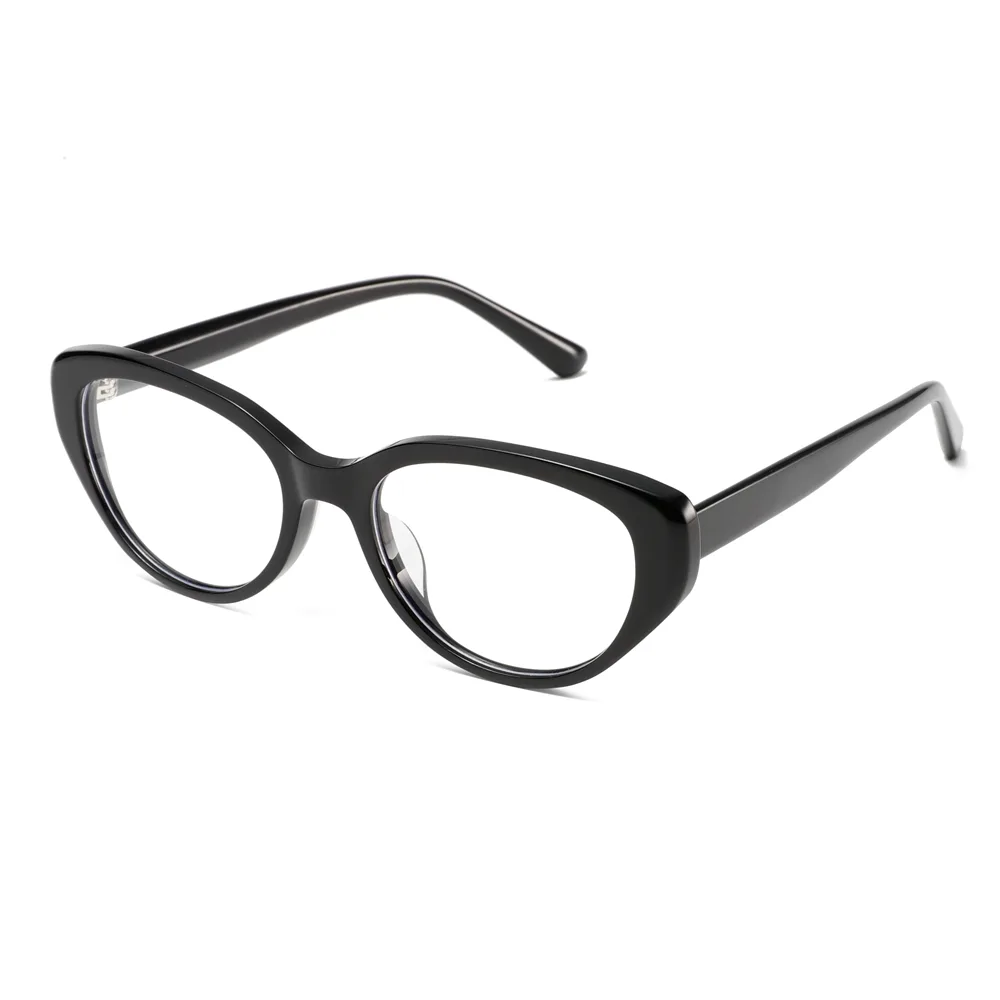
Image source: Bing (Web (fair-use with source credit))
Quick Answer
The right cat eye glasses for wide cheekbones require extended hinge endpieces. Total frame width must match or slightly exceed your cheekbone apex. Select frames with adjustable gooseneck nose pads to lift the eyewires.
A reduced pantoscopic tilt of four to eight degrees stops bottom-rim contact. Avoid thick acetate saddle bridges.
The Physics of Wide Cheekbones: Why Most Cat-Eye Frames Fail
Cat-eye frames feature sweeping outer wings that draw focus upward. On wider cheekbones, standard frame designs frequently cause structural and mechanical fit issues.
The Zygomatic Pinch and Cheek Resting
Wide cheekbones are defined by prominent zygomatic arches. These arches form the widest structural point across your mid-face. Standard glasses are built with parallel temples that extend straight back from narrow hinges.
When frames lack sufficient total width, the acetate rims press directly against your temporal bones. At the same time, the bottom eyewire settles heavily onto the skin over your cheekbones. This constant contact traps sweat, transfers makeup, and creates deep red pressure marks within hours.
The Smile Test: Why Your Glasses Pop Up When You Laugh
Your cheeks naturally rise when you talk or smile. If your frames lack sufficient vertical clearance, that upward muscular movement pushes the lower rims immediately.
This displaces your glasses, lifting them straight off the bridge of your nose. The glasses then settle crookedly or slide down your nose once your face relaxes. A correct fit maintains a minimum gap of 1.5 to 2.0 millimeters between the bottom frame edge and your cheeks during full facial movement.
The Vertex Distance Trap
Vertex distance is the physical space between the back surface of your corrective lens and the front of your cornea. ANSI optical standards place this ideal clearance at roughly 12 millimeters.
When wide cheekbones push frames upward and forward, that vertex distance changes completely. This shift alters the effective power of your prescription. It induces unwanted spherical aberration and leads to eye strain, blurred peripheral sight, and persistent frontal headaches.
Measuring Your Architecture: 3 Specs Generic Sizing Charts Ignore
Standard optical labels print three numbers inside the frame temple, such as 52-18-140. These measurements track lens width, bridge width, and temple length. They leave out the structural dimensions needed for broad facial structures.
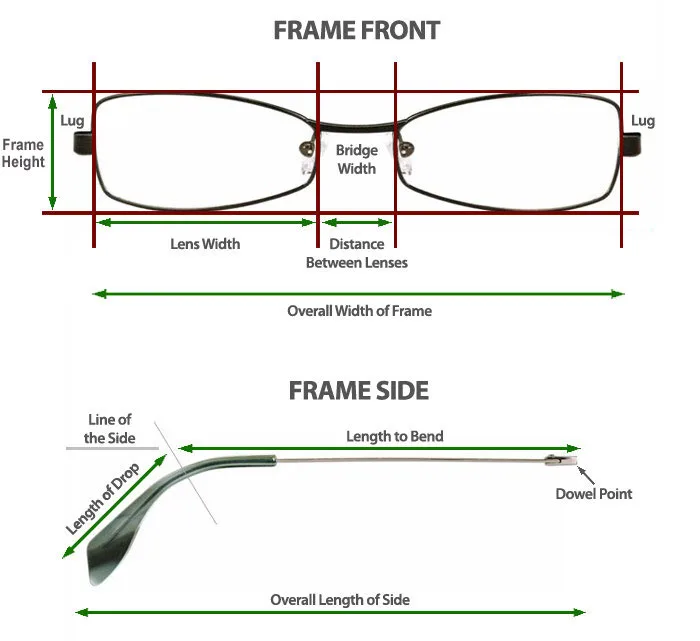
Image source: Bing (Web (fair-use with source credit))
Total Frame Width vs. Lens Width (The Endpiece Equation)
Lens width only measures the glass itself. The true width of a frame depends on the endpieces, which are the outer hinge extensions holding the cat-eye wing.
Two pairs can share an identical 52-millimeter lens width while offering entirely different fits. A frame with flush, compact hinges might measure only 130 millimeters across. A design with pronounced wing extensions can easily reach 142 millimeters.
For wider cheekbones, hinge-to-hinge width is the single most important number to track.
Bridge Width and Distance Between Lenses (DBL)
Distance Between Lenses (DBL) is the shortest horizontal gap between your lenses. If your bridge measurement is too narrow, the frame perches high on your nose and drags the lower rims right into your cheek tissue.
If the bridge is too wide, the entire frame drops down, worsening cheek contact. Wide cheekbones paired with a low nasal bridge generally perform best with a DBL between 16 and 18 millimeters. A higher, narrower nose bridge typically needs 19 to 21 millimeters.
Pantoscopic Tilt and Bottom-Rim Beveling
Pantoscopic tilt refers to the vertical forward angle of the frame front toward your cheeks. Standard frames feature a steep tilt between 10 and 12 degrees.
On prominent cheekbones, that steep angle guarantees the bottom rim will dig into your skin. You need a shallower tilt between 4 and 8 degrees, or even a neutral retroscopic adjustment. Frames with back-beveled bottom rims also create extra physical clearance along the zygomatic line.
The Cat-Eye Fit Decision Tree: Finding Your Frame Architecture
Your facial architecture dictates the specific cat-eye geometry you need. Use these three conditions to match your proportions to the right frame build.
Start: Evaluate Facial Architecture
 │
 ├─► Condition 1: Low Nasal Bridge + Wide Cheeks
 │     └─► Frame: Metal or low-bridge acetate with adjustable gooseneck pads + 4° pantoscopic tilt
 │
 ├─► Condition 2: High Nasal Bridge + Prominent Zygomatic Arches
 │     └─► Frame: Keyhole acetate (19-21 mm DBL) with extended endpieces + shallow bottom eyewire
 │
 └─► Condition 3: Soft, Round Cheeks + Narrow Temples
       └─► Frame: Sharp geometric upswept wings + spring hinges + high B-measurement clearance
Condition 1: Low Nasal Bridge + Wide Cheekbones (The Lift-Off Scenario)
If your nasal bone sits level with or below your pupils, standard acetate frames have nothing to grip. The frames drop instantly and rest flat on your cheekbones.
- The Solution: Pick metal or combination cat-eye designs built with adjustable gooseneck pad arms.
- Sizing Rule: Prioritize low-bridge or universal fit options. These feature built-in, enlarged pad mounts that raise the frame chassis off your face.
- Angle Adjustments: Set the pantoscopic tilt between 3 and 5 degrees to keep the lower rim suspended.
Condition 2: High Nasal Bridge + Prominent Zygomatic Arches (The Pinch Point)
If your nose bridge sits well above your pupils while your cheekbones project outward, frames often bite hard across your temples.
- The Solution: Look for acetate cat-eyes with a wide keyhole bridge and pronounced, wing-style endpieces.
- Sizing Rule: Seek a DBL of 19 to 21 millimeters paired with an overall frame width of 140 to 146 millimeters.
- Angle Adjustments: Ensure the lower edge has an upward, sweeping bevel. This detail curves the rim away from the face as it reaches back toward the ear.
Condition 3: Soft, Round Cheeks + Narrow Temples (The Floating Wing Solution)
If you have broad, soft cheeks but a narrower forehead, standard oversized glasses swallow your face and slide forward constantly.
- The Solution: Choose angular, geometric cat-eye frames with upward sweep rather than outward bulk.
- Sizing Rule: Keep lens depth (the B-measurement) under 40 millimeters. This leaves plenty of vertical clearance above your cheeks while preserving the lifting wing visual.
- Angle Adjustments: Use spring hinges that allow the temples to bow outward slightly without pulling the lenses closer to your face.
Frame Anatomy Guide: Features That Make or Break the Fit
Knowing the key components of an eyeglass frame helps you separate functional pairs from painful ones. Certain structural elements are essential for handling wide facial proportions.
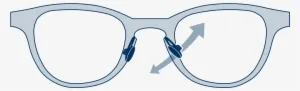
Image source: Bing (Web (fair-use with source credit))
Adjustable Pad Arms vs. Molded Acetate Saddle Bridges
Fixed saddle bridges on standard acetate frames provide zero room for error. The plastic rests directly on your nose with no option to modify clearance height or tilt.
Adjustable gooseneck pad arms give you full control over how your frames sit. By pulling the pads closer together or flattening their angle, you raise the frame vertically and shift it away from your cheeks. This guarantees the 2-millimeter safety gap needed for natural smiling.
Temple Flare and Spring Hinges
Rigid barrel hinges stop cold at a 90-degree angle. When worn against wide zygomatic arches, rigid temples press into your skin and leave sore indentations by midday.
- Spring Hinges: These contain internal spring assemblies that flex outward past 90 degrees. They relieve pressure on your temples and absorb sudden head turns comfortably.
- Factory Flared Temples: These temple arms curve outward immediately past the hinge screw. This creates crucial lateral clearance around your eyes before bending gently behind your ears.
Subtle Lift vs. Dramatic 1950s Wings
Vintage 1950s cat-eyes feature sharp, high-swept wing extensions. Modern reinterpretations offer softer curves with subtle browline emphasis.
Dramatic wing points create wide leverage arms. If the hinges are set too far back, those long points make the frame front sit flat against your temples. Modern, softened cat-eye shapes keep the upswept visual lift while maintaining proper optical curvature across your face.
Optical Frame Sizing Benchmarks for Broad Facial Structures
Generic sizing guidelines from big optical brands often suggest frame widths that are much too small for prominent cheekbones. Finding a comfortable fit starts with checking the dimensions across every component of the frame.
| Dimension Metric | Standard Average Fit | Wide Cheekbone Architecture | Low-Bridge / Prominent Cheek Fit |
|---|---|---|---|
| Total Frame Width | 130 mm to 135 mm | 140 mm to 148 mm | 138 mm to 145 mm |
| Lens Width (A) | 48 mm to 51 mm | 52 mm to 56 mm | 50 mm to 54 mm |
| Bridge Width (DBL) | 16 mm to 18 mm | 18 mm to 21 mm | 16 mm to 18 mm (with pads) |
| Lens Height (B) | 38 mm to 45 mm | 36 mm to 42 mm | 34 mm to 38 mm |
| Pantoscopic Tilt | 10° to 12° | 4° to 8° | 2° to 5° |
| Temple Length | 135 mm to 140 mm | 145 mm to 150 mm | 140 mm to 145 mm |
Calculating Your Ideal Total Width
Do not rely solely on the three numbers printed on your glasses. You can calculate your target frame width using a clear ruler and an existing pair that fits your nose comfortably.
First, measure the width of your face from the apex of your left cheekbone across to your right. Next, calculate the frame width by doubling the lens width, adding the bridge measurement, and factoring in the endpiece extensions.
$$\text{Total Frame Width} = (\text{Lens Width} \times 2) + \text{Bridge Width} + \text{Total Endpiece Width}$$
If your lenses are 53 millimeters and your bridge is 18 millimeters, the raw front equals 124 millimeters. Look for endpiece extensions that add at least 8 to 10 millimeters per side. This brings your total frame width up to the recommended 140-to-144-millimeter target range.
Common Sizing Pitfalls and Frame Adjustment Fixes
Buying glasses based on appearance alone leads to chronic discomfort if the frame geometry fights your facial structure. Knowing where generic sizing fails helps you troubleshoot problems before ordering or taking a pair to an optician.
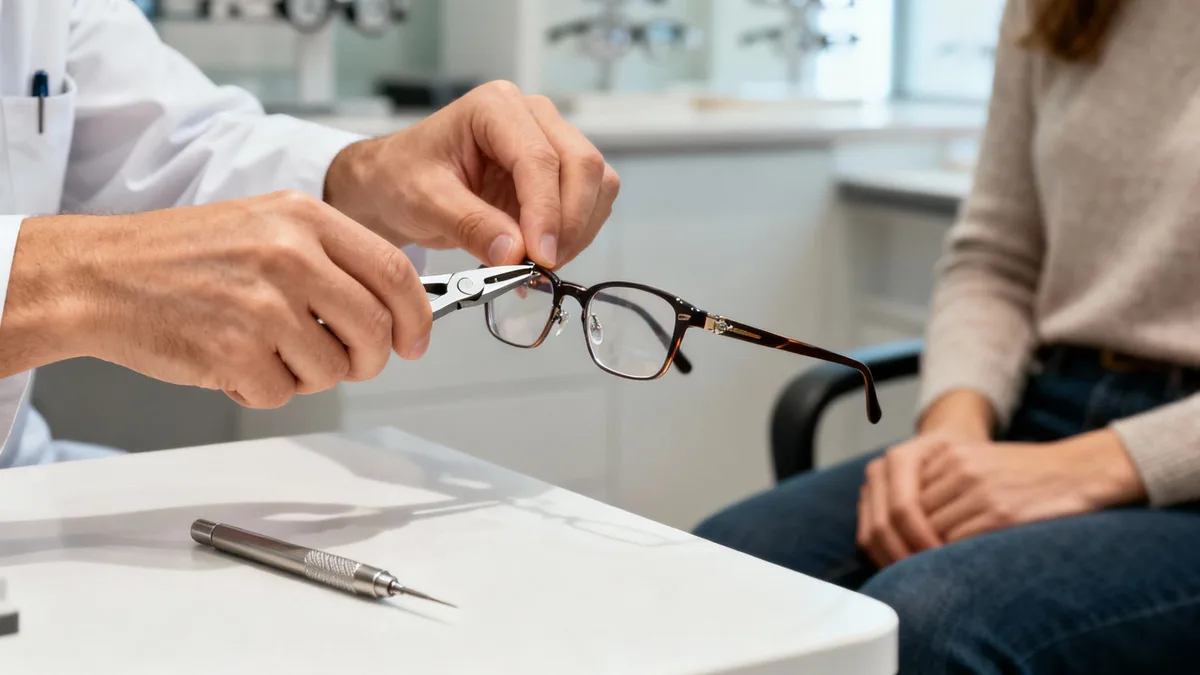
Image source: Bing (Web (fair-use with source credit))
Mistake 1: Relying Exclusively on the Stamped Boxing System Numbers
The three numbers stamped inside your temple arm only show the interior lens box and the bridge gap. They tell you nothing about the thickness of the acetate or the spread of the hinges.
Two frames with identical 53-17-140 stamps can vary by more than 12 millimeters in exterior width. A thick acetate design with flush hinges will pinch broad zygomatic arches. Meanwhile, a thin wire frame with decorative endpiece wings will fit comfortably.
Always measure the full exterior hinge spread rather than trusting the stamp alone.
Mistake 2: Ignoring Frame Curvature (Base Curve)
Most flat fashion frames carry a base curve of 4 or less. Highly curved wrap frames feature a base curve of 6 to 8.
Flat cat-eye frames sit parallel across your face, which often causes the outer lower eyewire to bump directly into projecting cheekbones. A frame with a very mild structural curve (base curve 4 to 5) wraps subtly around your brow. This provides natural clearance for prominent cheek tissue while keeping your prescription optics accurate.
In-Office Adjustments: Pantoscopic Angle and Pad Splay
You can fix minor fit issues on existing frames with two simple optician bench adjustments.
- Pantoscopic Angle: An optician uses angled frame pliers to bend the temples upward at the hinge. This tilts the bottom of the eyewires outward, away from your cheeks.
- Pad Splay and Elevation: Adjusting gooseneck pad arms narrower pushes the entire chassis higher on your nose. Splaying the pad angles flat distributes the frame weight evenly over your nasal bridge without sinking.
Frequently Asked Questions About Cat-Eye Glasses for Wide Cheekbones
Do cat-eye glasses look good on wide cheekbones?
Yes, cat-eye frames are naturally flattering on wide cheekbones because the upswept browline draws attention upward and outward. This creates balance across diamond, round, and heart face shapes. The key is ensuring the outer wings match your widest facial point.
How do I stop my cat-eye glasses from touching my cheeks?
You can stop cheek contact by switching to adjustable gooseneck nose pads or reducing the pantoscopic tilt. Having an optician bend the bottom eyewires outward creates the necessary 2-millimeter clearance gap. Choosing frames with a shorter lens height also prevents cheek resting.
What is the best frame material for wide cheekbones?
Titanium and combination frames with adjustable pad arms offer the best fit flexibility for wide cheekbones. High-grade beta-titanium provides lightweight strength with flexible temples that do not pinch. Thick acetate works well only when crafted with extended hinge endpieces or low-bridge nose pads.
Why do my cat-eye glasses lift when I smile?
Your glasses lift because the lower frame rim rests directly on your zygomatic tissue. When you smile, your facial muscles elevate your cheeks, pushing the frame upward. Raising the nose bridge fit or choosing frames with shallower lens depth resolves the problem.
The Final Checklist: Securing Your Ideal Pair Without Cheek Contact
Finding the right cat-eye frames comes down to precise proportions rather than trial and error. As of 2026, many optical manufacturers offer universal fit options designed specifically for lower nasal bridges and prominent cheek arches. Keep this quick checklist in mind when evaluating your next frame:
- Confirm the total frame width matches or slightly exceeds your cheekbone apex (typically 140 to 148 millimeters).
- Choose adjustable nose pads instead of fixed acetate saddle bridges to easily control height and distance.
- Keep the lens height under 40 millimeters to ensure vertical clearance above your cheek contours.
- Check for outward-angled endpieces or flexible spring hinges to eliminate pinching along your temples.
- Verify a minimum 2-millimeter gap between the lower rim and your skin during full facial expressions.
Follow this systematic approach and you will secure an upswept silhouette that stays comfortable and stationary all day long.

Similar Posts