Why Your Glasses Nose Pads Turn Green and How to Fix It
Founder & Fashion Creative Director at Julia Fashionista · CFDA Fashion Scholar, Certified Image Consultant (AICI) · 12+ years in editorial wardrobe styling, sustainable textile sourcing, and luxury capsule curation
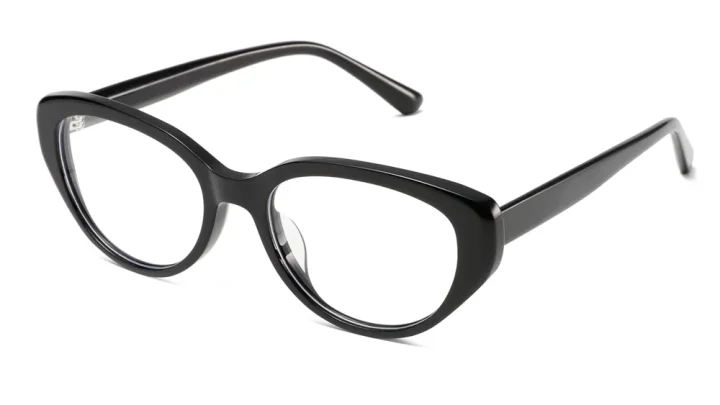
You pick up your frames to clean them and spot an unpleasant crusty film. Seeing your nose pads turning green on metal glasses is surprisingly common, but it can be jarring when you first notice it against your skin.
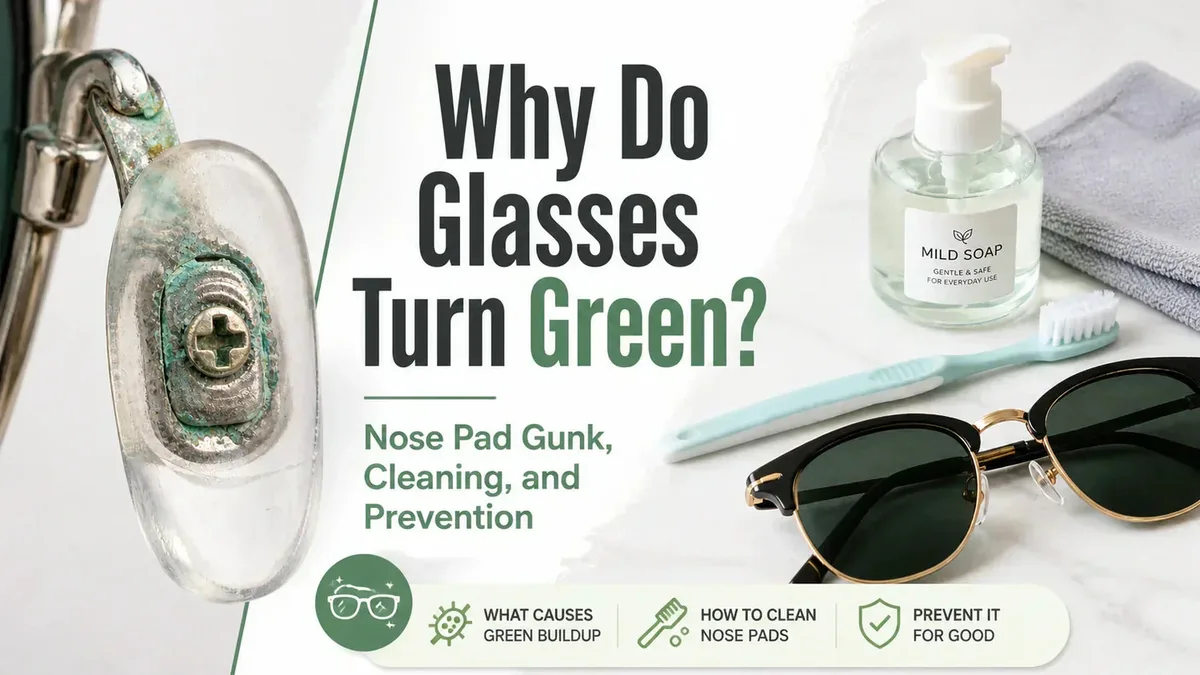
Image source: Bing (Web (fair-use with source credit))
That discoloration is not mold or poor hygiene. Human perspiration contains trace acids and sodium chloride, which reacts directly with copper-bearing frame alloys to form basic copper carbonate. Understanding how this reaction works makes fixing it straightforward.
Quick Answer
Nose pads turning green on metal glasses happens because of copper oxidation. Your sweat and skin oils mix with the copper in metal frames. This reaction creates a harmless green substance called verdigris.
Porous silicone nose pads absorb this buildup over time. You cannot wash out leached verdigris. The best fix is swapping them for fresh silicone or non-porous titanium pads.
Why Nose Pads Turn Green (And What That Gunk Actually Is)
The green residue on your eyewear has a formal name: verdigris. It is the exact same chemical patina that turned the Statue of Liberty green over decades of atmospheric exposure.
Most metal eyeglass frames are made from durable base-metal blends like Monel, nickel silver, or phosphor bronze. These alloys frequently contain copper for strength and pliability. Even frames plated with gold, palladium, or protective clear lacquers wear down over time.
Skin friction gradually thins this plating around the nose bridge. Human perspiration contains sodium chloride, lactic acid, and water, carrying a natural acidic pH of 4.5 to 5.5. Skin sebum adds fatty acids to the mix.
When your skin oils penetrate worn plating, the underlying copper oxidizes. As documented by chemical research indexed on PubChem, copper reacts with moisture and carbon dioxide to yield basic copper carbonate:
$$\text{Cu}_2\text{CO}_3(\text{OH})_2$$
This green compound leaches straight into the nose pad. Standard clear nose pads are made of medical-grade silicone. Silicone is soft and grips the skin well, but it is also microscopic sponge-like material.
It drinks in the oxidized copper salts. Once the salt enters the silicone matrix, it stays trapped.
Surface Grime vs. Leached Verdigris: The Diagnostic Decision Tree
Before ordering parts or grabbing a screwdriver, identify what you are dealing with. Follow this simple troubleshooting path:
                  Examine your nose pad closely
                                |
        Is the green color trapped INSIDE the clear pad?
                                |
             +------------------+------------------+
             |                                     |
           [YES]                                  [NO]
             |                                     |
Internal Verdigris Leached            External Sebum / Grime
- Trapped in silicone pores           - Sits on metal pad arm
- Cannot be cleaned out               - Wipes off with mild soap
- ACTION: Replace the pad             - ACTION: Clean with soft brush
- Condition A (Surface buildup): If the green film sits on top of the metal pad arm, clean it immediately. A soft toothbrush dipped in lukewarm water and mild dish soap will clear it away without damaging the frame.
- Condition B (Internal discoloration): If the green hue is visible through the clear center of the pad, the silicone is permanently dyed. Scrubbing the exterior will not help. You must unscrew or unclip the pad and install a fresh pair.
- Condition C (Skin irritation): If you notice red spots, peeling, or itchiness where the pad touches your nose, take action quickly. Trapped verdigris and exposed nickel can trigger contact dermatitis, according to dermatological guidance from the American Academy of Ophthalmology.
Mount Types and Materials: Choosing Your Replacement Strategy
To replace your pads, first identify the mounting mechanism. Manufacturers use four main styles to secure nose pads to the frame's pad arm.
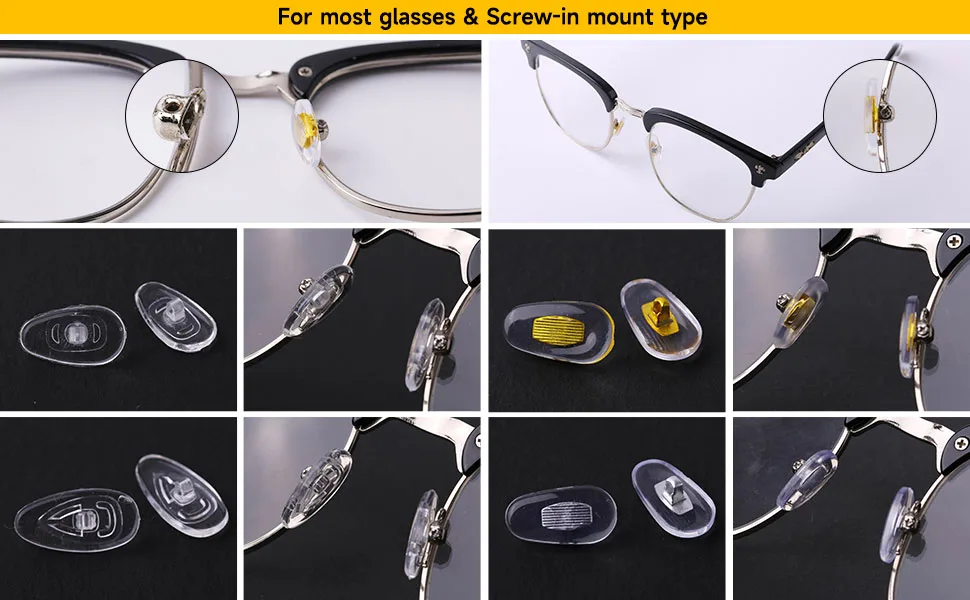
Image source: Bing (Web (fair-use with source credit))
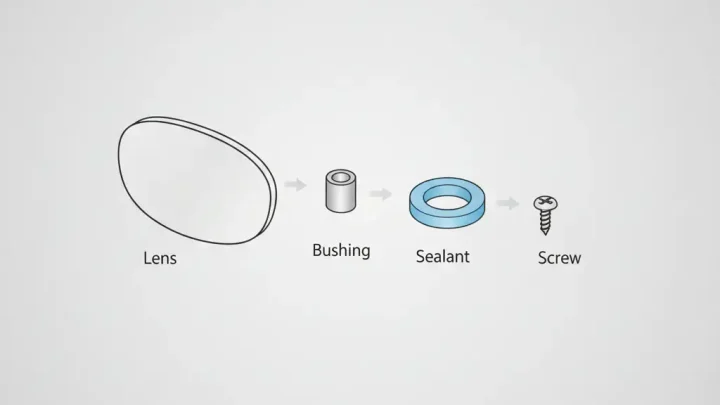
- Screw-in mounts: The most common system. A small metal bracket with an open rectangular slot (the pad box) accepts a rectangular pad tab. A micro-screw (typically 1.0mm to 1.2mm in diameter) runs through both components to lock them together.
- Push-on mounts: Also called snap-in or click-in pads. These feature a small silicone or plastic peg with a flared lip. You press the peg firmly into a metal cavity until it clicks into place. No screws or screwdrivers are needed.
- Slide-on mounts: Found frequently on rimless styles and specific European designs like Silhouette. The pad features a hollow sleeve that slides over a flat metal tongue.
- Crimp-on mounts: Mostly seen on vintage or specialty frames. Small metal tabs wrap around the pad core to pinch it shut.
| Mount Type | Tool Required | Difficulty | Primary Benefit |
|---|---|---|---|
| Screw-in | Optical screwdriver (1.0mm–1.4mm) | Moderate | Secure, universal availability |
| Push-on | None (fingers or plastic tweezers) | Easy | Fast, tool-free installation |
| Slide-on | None | Easy | Clean profile, low bulk |
| Crimp-on | Soft-jaw optical pliers | High | Secure on vintage wire designs |
Standard pads come in lengths of 11mm, 13mm, and 15mm. Check the back of your current pad with a small ruler to match your replacement size.
Step-by-Step: How to Safely Clean or Swap Your Nose Pads
Replacing your own nose pads takes less than ten minutes if you prepare your work area properly.
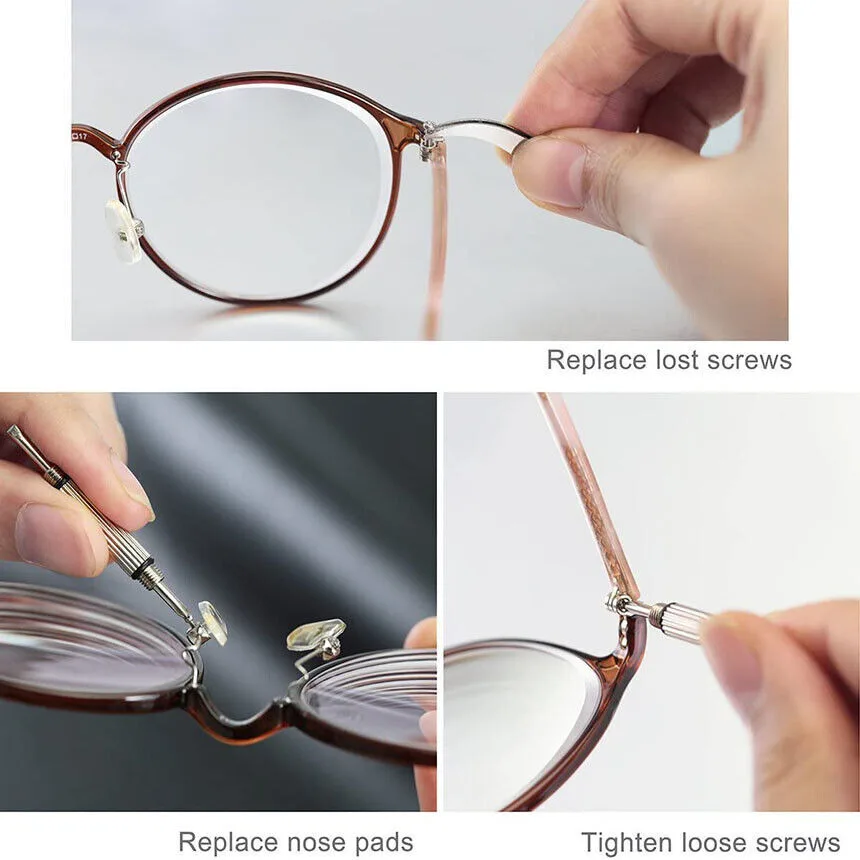
Image source: Bing (Web (fair-use with source credit))
Preparation and Tools
- A micro-optical flathead screwdriver (1.0mm to 1.2mm tip)
- Replacement nose pads matched to your mount type
- A microfiber cloth or shallow tray to catch loose parts
- Mild liquid dish soap and a soft-bristle toothbrush
Step 1: Secure Your Work Surface
Micro-screws bounce easily and vanish on hard countertops. Spread a dark microfiber towel across a flat table. Work directly over the towel so dropped screws stay put.
Step 2: Extract the Old Nose Pad
For screw-in designs, hold the glasses firmly by the bridge. Do not hold them by the temples, or you risk bending the hinges. Align your optical screwdriver with the micro-screw head.
Turn counter-clockwise until the screw backs out.
Place the screw safely in a small container. Pull the discolored pad out of the metal bracket. For push-on pads, grip the pad firmly with your fingertips and pull straight back with steady pressure.
Step 3: Scrub the Pad Arm Box
Before installing the new pad, scrub the empty metal bracket. Dip your soft toothbrush into warm, soapy water. Gently clean out the accumulated skin oils and green verdigris crust inside the pad box.
Dry the metal thoroughly with your cloth.
Step 4: Seat and Fasten the Replacement
Slide the mount tab of your fresh pad into the cleaned metal bracket. Align the hole in the pad tab with the hole in the frame's pad arm.
Pick up the micro-screw using magnetic tweezers or the tip of your screwdriver. Insert the screw into the aligned hole. Turn clockwise until you feel firm resistance.
Snug it down gently, but stop before you strip the microscopic threads.
Upgrading Beyond Silicone: Titanium, Ceramic, and PVC Compared
If you are tired of swapping degraded silicone pads every few months, consider upgrading your pad material. Standard clear silicone offers fantastic grip, but its porosity makes verdigris absorption inevitable over time.
Image source: Bing (Web (fair-use with source credit))
Pure Titanium Pads
Titanium is completely non-porous, hypoallergenic, and chemically inert. It will never corrode, turn green, or absorb skin oils. Titanium pads provide a sleek, modern look and last the entire life of your frames.
The trade-off is grip. They feel smoother against your nose and can slide if your skin gets oily.
Ceramic Pads
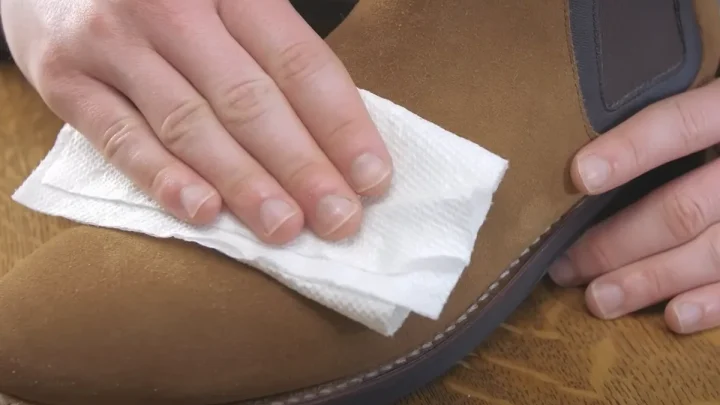
Ceramic nose pads are smooth, cool to the touch, and impervious to chemical staining. Like titanium, ceramic pads wipe clean with a tissue and never discolor. They are popular on luxury frames, though they add minor weight and can crack if dropped directly onto ceramic tile.
Rigid Polyvinyl Chloride (PVC) Pads
Hard PVC pads sit between soft silicone and metal. They resist sweat and skin sebum significantly better than silicone. As of 2026, many frame manufacturers use PVC as a cost-effective alternative to silicone.
They maintain transparency longer without yellowing or absorbing copper salts, though they offer less cushion on sensitive nasal bridges.
Common Mistakes That Ruin Frames During DIY Swaps
Swapping pads is simple, but small slips can permanently damage your eyeglasses. The most frequent issue is lens scratching caused by a runaway screwdriver. Always place your thumb over the lens surface behind the pad arm to act as a buffer.
If the blade slips off the tiny screw head, it hits your thumb instead of gouging an expensive anti-reflective coating.
Another common pitfall is over-torquing the micro-screws. Eyeglass screws are soft, and the threads inside the pad arm bracket strip easily. Turn the driver until you feel initial resistance, then stop.
If you continue tightening, you risk stripping the bracket threads, which means you cannot secure a new pad without replacing the entire arm.
Never use pliers directly on metal pad arms without rubber padding. Bending the arm directly with bare steel pliers weakens the solder joint where the arm meets the frame rim. If that small weld snaps, the repair requires professional spot-soldering that often ruins the surrounding frame finish.
Finally, avoid soaking your glasses in harsh solvents. Rubbing alcohol, acetone, and bleach degrade lens coatings and eat through clear frame lacquers. Stick entirely to mild dish soap and lukewarm water.
Frequently Asked Questions About Green Glasses Buildup
Is the green stuff on my glasses mold?
No, the green residue is basic copper carbonate, commonly called verdigris. It forms when the copper in your metal frames reacts with sweat, moisture, and skin sebum. Mold requires organic material to feed on, while verdigris is purely a chemical reaction.
Can green buildup on nose pads harm my skin?
Yes, it can cause mild contact dermatitis if left unaddressed. Copper salts and nickel leached from underlying metal alloys can trigger redness, itching, and minor flaking on sensitive skin around your nose bridge. Replacing discolored pads quickly eliminates this contact risk.
Can I clean green nose pads with vinegar or baking soda?
You can clean surface grime off the metal arm with vinegar, but you cannot save discolored silicone pads. The green copper salts absorb into the interior pores of the silicone material. Once discolored, you must discard the silicone pad and install a new one.
How often should eyeglass nose pads be replaced?
Plan to replace standard silicone nose pads every 6 to 12 months. Silicone naturally oxidizes, hardens, and absorbs facial oils over time. If you sweat heavily or live in a humid coastal area, inspect them every six months for discoloration or stiffness.
Can an optometrist replace my nose pads for free?
Many local optical clinics and optometrist offices replace standard screw-in or push-on nose pads free of charge, or for a nominal fee under ten dollars. They have the precise tools, correct screw thread pitches, and replacement parts on hand.
The Long-Term Play: How to Keep Your Frames Pristine
Preventing verdigris starts with a daily cleaning routine. At the end of each day, wipe down the nose pads, bridge, and temples with a clean microfiber cloth. Removing pooled sweat and sebum every evening stops the electrochemical reaction before it has time to attack the metal alloys.
Give your frames a weekly wash under lukewarm tap water. Place a single drop of lotion-free dish soap between your fingertips, work it into a gentle lather, and clean the pad arms thoroughly. Rinse away all soap residue with running water and dry the entire frame using an optical microfiber towel.
If you produce acidic sweat or spend considerable time outdoors in humid weather, rethink your frame material for your next pair. Switching to solid titanium or stainless steel frames completely eliminates the copper issue at the source. Titanium contains no base copper to oxidize, meaning your frame arms will stay clean and bright for years.

Similar Posts