Flat Sneakers & Achilles Tendonitis: The Heel Drop Link
Founder & Fashion Creative Director at Julia Fashionista · CFDA Fashion Scholar, Certified Image Consultant (AICI) · 12+ years in editorial wardrobe styling, sustainable textile sourcing, and luxury capsule curation
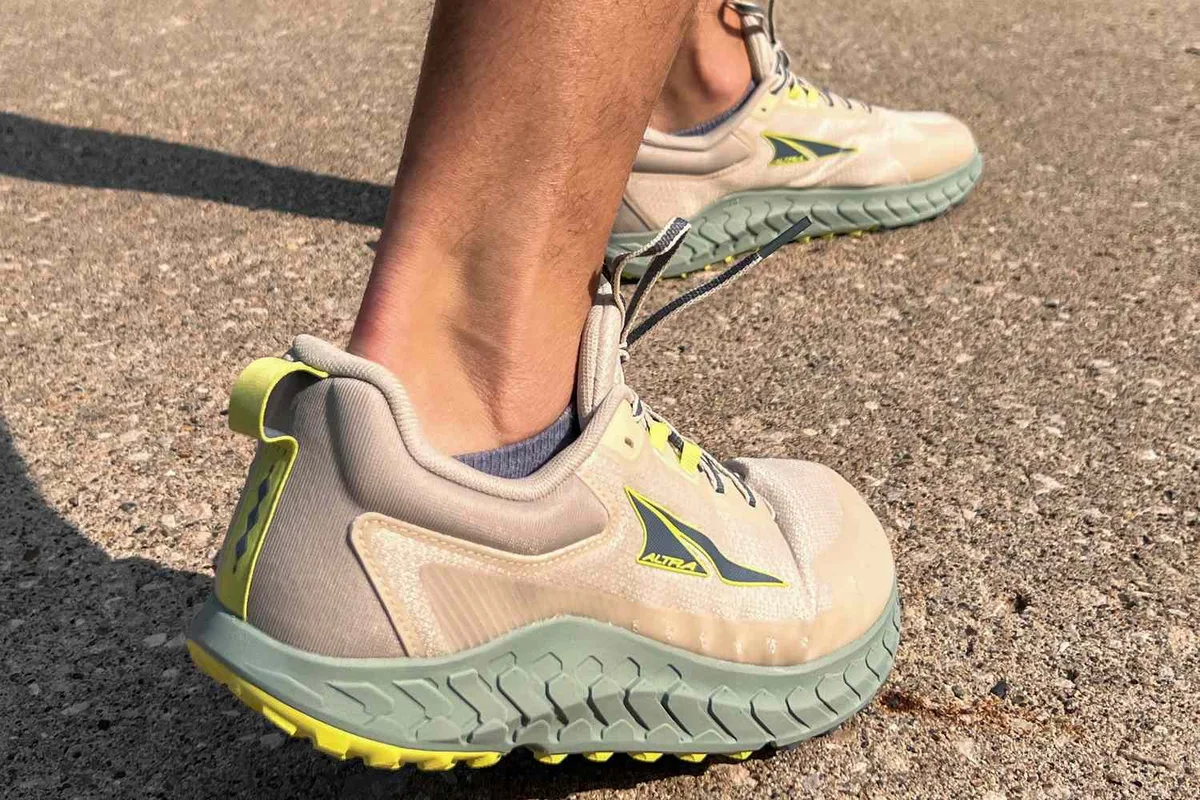
If your heel throbs after a day in casual canvas shoes, you are not imagining things. Managing achilles tendonitis heel drop in flat sneakers is tricky because zero-drop footwear pulls the calf muscles taut and spikes peak tensile stress through an irritated tendon.
Image source: Bing (Web (fair-use with source credit))
Biomechanical research from clinical gait studies shows that flat soles increase ankle dorsiflexion by several degrees during mid-stance. That extra stretch directly overloads healing tissue. Understanding how stack height changes tendon strain makes all the difference in staying active without pain.
Quick Answer
Achilles tendonitis heel drop in flat sneakers refers to zero shoe offset. Flat sneakers feature a 0 mm heel drop. This design increases ankle dorsiflexion while walking.
It pulls the Achilles tendon into maximum stretch. That tensile strain aggravates inflamed tendon fibers. Adding temporary heel lifts reduces this mechanical load immediately.
The Double Meaning: Shoe Drop vs. Eccentric Heel Drops
People searching this topic often mix up two completely different concepts. One is a physical shoe measurement. The other is a classic physical therapy exercise.
Shoe heel-to-toe drop is the height difference between the heel cushion and the forefoot bed. A zero-drop sneaker sits parallel to the ground. In contrast, an eccentric heel drop is an active rehabilitation movement.
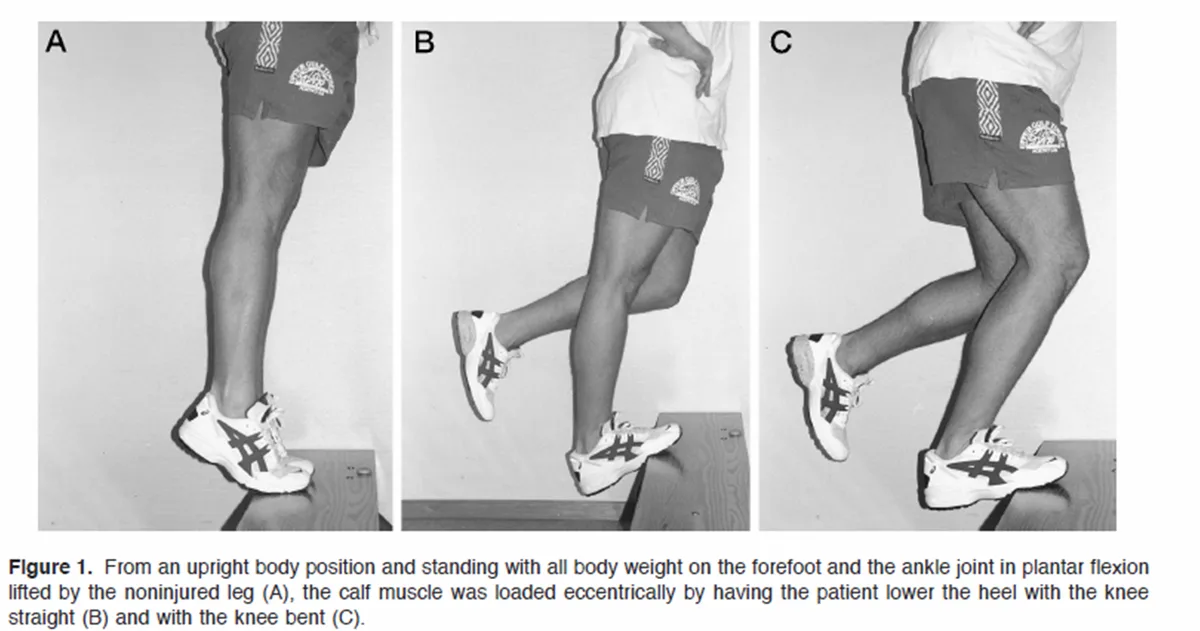
Image source: Bing (Web (fair-use with source credit))
Popularized by the Alfredson protocol, eccentric drops involve standing on a raised step and slowly lowering your heel below your toes. This controlled lengthening strengthens the gastrocnemius and soleus muscles while remodeling tendon collagen.
The confusion causes real harm. Someone with severe morning pain might read that "heel drops cure tendinitis" and mistakenly buy flat, zero-drop sneakers for daily walking. In reality, walking in completely flat footwear creates repetitive passive strain.
Eccentric loading, however, applies structured, therapeutic tension under controlled conditions. Keep these two ideas distinct.
What Flat Sneakers Do to an Inflamed Achilles Tendon
Your Achilles tendon acts like a thick, high-tension rubber band connecting your calf to your calcaneus. Every time your foot strikes the ground and rolls forward, the ankle flexes upward into dorsiflexion.
Flat sneakers lack an elevated heel wedge. Because the heel sits on the exact same plane as the ball of the foot, your ankle must bend deeper to move your body weight over your foot. This deep dorsiflexion pulls the tendon taut right at the point of maximum ground impact.
For a healthy runner, this natural stretch builds calf resilience. But when tissue is already degraded by micro-tears, that extra tension prevents collagen fibers from knitting back together. Clinical guidelines indexed by the National Institutes of Health emphasize reducing peak tensile strain during active inflammatory phases.
Walking in flat shoes without adequate calf mobility also compresses the retrocalcaneal bursa. The repetitive pinch irritates the surrounding nerve endings, leaving you with stiffness that makes stepping out of bed feel agonizing.
Drop Heights Compared: Zero-Drop Flats to High-Stack Running Shoes
Footwear drop is measured in millimeters. The difference between a classic lifestyle sneaker and a traditional stability trainer dramatically alters lower-leg load distribution.
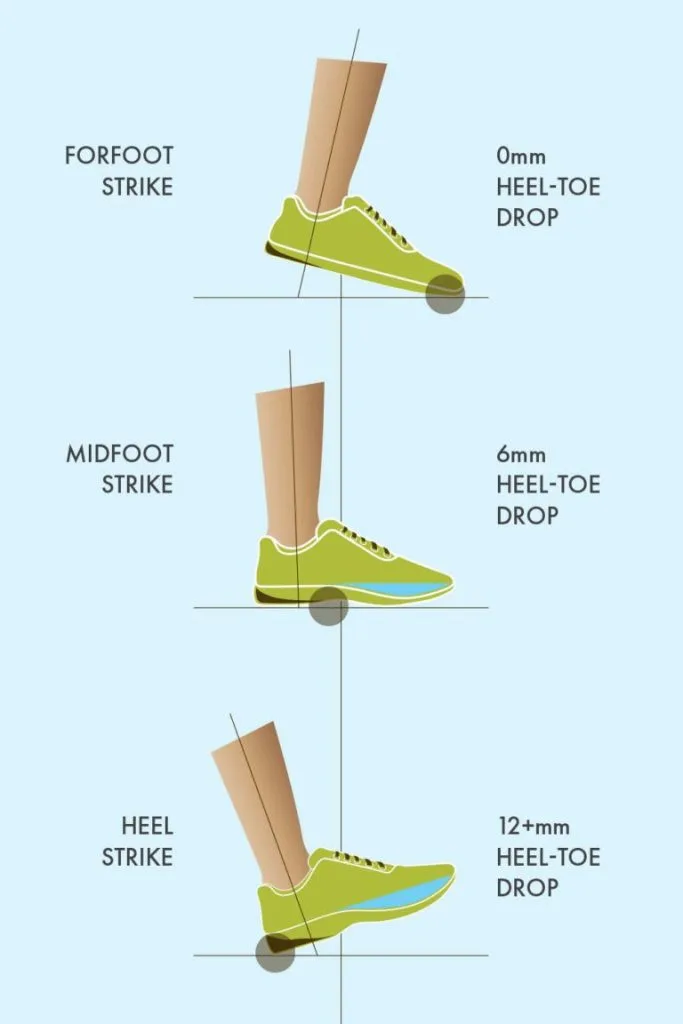
Image source: Bing (Web (fair-use with source credit))
The table below breaks down how various drop profiles affect tendon tension:
| Heel-to-Toe Drop | Sneaker Category | Mechanical Effect on Tendon | Best Use Stage |
|---|---|---|---|
| 0 mm | Minimalist flats, skate shoes | Maximum tendon stretch, high calf load | Late recovery, fully healed |
| 4 mm to 6 mm | Low-drop road shoes, trail flats | Moderate stretch, balanced foot strike | Mid-rehab, mild symptoms |
| 8 mm to 10 mm | Standard daily trainers | Reduced stretch, moderate offloading | Early walking rehab |
| 10 mm to 12 mm+ | Traditional cushioned runners | Minimal dorsiflexion, lowest strain | Acute flare-ups, severe pain |
Higher drops shift mechanical work away from the Achilles tendon and upward toward the knee and quadriceps. Zero-drop models force the tendon and foot arch to absorb the brunt of each step. As of 2026, modern gait lab data confirms that shifting from a 0 mm flat sneaker to a 10 mm running shoe cuts peak Achilles loading forces significantly during normal walking speeds.
Midportion vs. Insertional Achilles Issues: Why Footwear Selection Differs
Where your tendon hurts dictates how your footwear needs to fit. Achilles tendinitis comes in two distinct anatomical varieties, and treating them the same way can backfire.
Midportion tendinitis occurs roughly 2 to 6 centimeters above your heel bone in the hypovascular zone. This area suffers from poor blood flow, making healing slow. Midportion issues tolerate slight dorsiflexion better than insertional problems.
The main priority here is reducing overall tensile pulling forces.
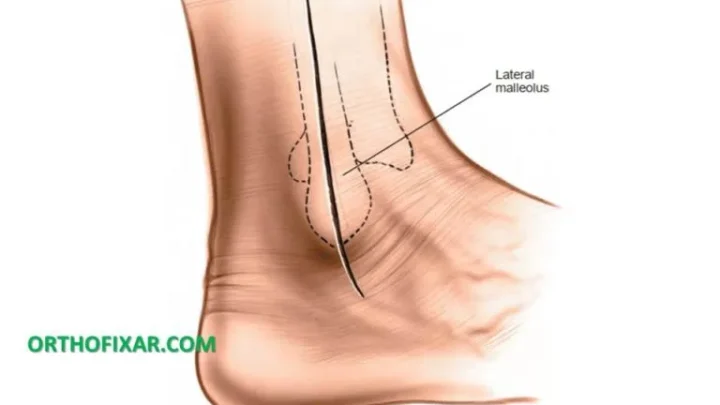
Insertional tendinitis occurs right where the tendon anchors into the back of your calcaneus. It frequently coincides with retrocalcaneal bursitis or a bony spur known as a Haglund deformity.
For insertional pain, flat sneakers are especially harmful. As your foot flattens, the tendon wraps tightly over the calcaneal bone. This creates high compressive shear forces alongside regular tensile stretch.
If your pain sits low on the heel collar line, flat sneakers will repeatedly pinch that inflamed insertion.
How to Wear Your Favorite Flat Sneakers Without Provoking a Flare-Up
You do not need to throw away your favorite flat sneakers forever. If your workplace dress code or personal style demands classic canvas flats, simple biomechanical adjustments make them safe to wear during recovery.
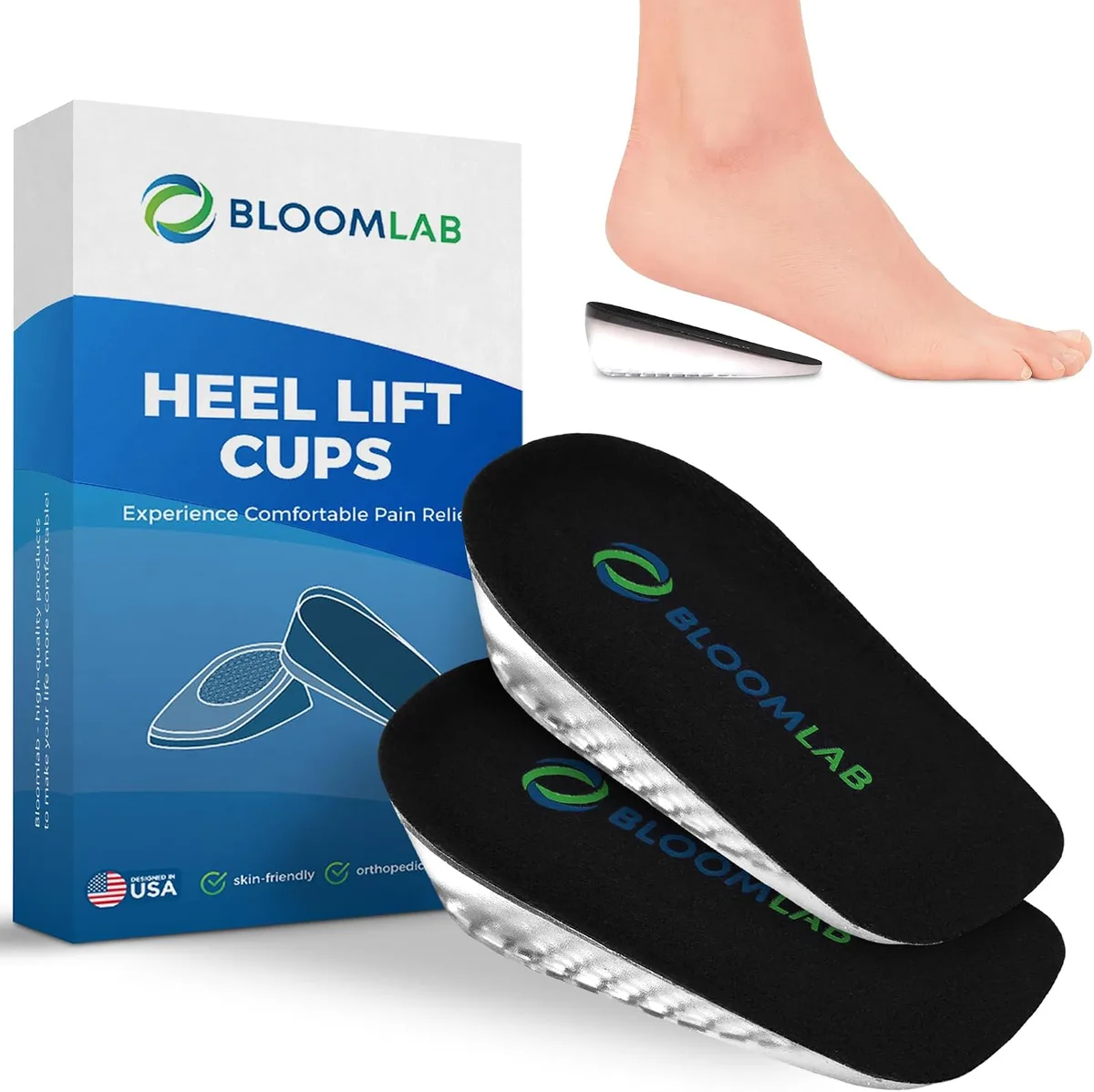
Image source: Bing (Web (fair-use with source credit))
The easiest fix is adding a firm heel lift insert directly underneath the shoe footbed. Avoid squishy gel pads, which compress under body weight and destabilize your rearfoot. Instead, choose firm cork or dense high-density EVA foam lifts measuring 6 mm to 9 mm in thickness.
Follow this quick setup:
- Remove the factory insole if possible and slide the lift underneath.
- Place identical lifts in both shoes to avoid developing hip or pelvic asymmetry.
- Check that your heel does not slip out of the shoe collar while walking.
- Gradually reduce lift thickness over several months as tissue strength improves.
A firm wedge artificially converts a 0 mm flat shoe into an 8 mm drop platform. This shields your tendon while letting you keep your normal wardrobe intact.
The Safe Progression: Reintroducing Flat Footwear and Eccentric Loading
You do not have to abandon zero-drop footwear permanently, but your collagen needs time to adapt. Tendons remodel very slowly due to low vascularity. Rushing straight back into unassisted flats invites an immediate setback.
The safest pathway uses progressive loading phases:
- Phase 1 (Pain relief): Use an 8 mm to 10 mm shoe drop or stack firm heel lifts into flat shoes. Focus on isometric calf holds to calm tendon irritability without dynamic stretching.
- Phase 2 (Tendon rebuilding): Introduce flat-ground eccentric heel drops. Avoid letting the heel drop below your toes yet. This builds tensile capacity without compressing the tendon insertion.
- Phase 3 (End-range adaptation): If you have midportion tendinitis, transition to off-a-step eccentric heel drops. Lower your heel below step level only when basic calf raises cause zero pain.
- Phase 4 (Footwear weaning): Cut your heel lift thickness in half for two weeks. If morning stiffness stays below 3 out of 10 on a pain scale, remove the lifts entirely for short walking intervals.
According to clinical guidelines published by the American Orthopaedic Foot & Ankle Society, load tolerance dictates progression, not the calendar. If your tendon aches the morning after wearing flats, step back to your previous lift height for another week.
Common Footwear Mistakes That Keep Your Achilles Angry
Healing an Achilles problem often fails because of tiny habits that undermine your recovery. Many people unknowingly sabotage their rehab right at the shoe rack.
The most frequent error is walking barefoot around the house on hard tile or hardwood floors. Going barefoot is a zero-drop activity with zero arch assistance. Slipping into a recovery slide with a moderate heel pitch protects the tendon between shoe changes.
Another classic issue is selecting ultra-flexible lifestyle flats that twist like a dish towel. A good sneaker needs torsional rigidity. If you can fold the shoe in half at the midfoot, your plantar fascia and Achilles must work overtime to stabilize your stride.
Do not ignore the heel counter. Rigid plastic counters that curve inward often rub directly against the retrocalcaneal bursa. If your footwear presses hard against the back of your heel, it will aggravate insertional tendinitis regardless of the heel drop height.
Finally, avoid stretching your calves against a wall when the tendon is actively inflamed. Aggressive pulling strains weak collagen fibers and worsens insertional impingement. Stick to controlled strength loading instead of passive stretching.
Frequently Asked Questions About Achilles Tendinitis and Flat Footwear
Can wearing flat sneakers cause Achilles tendinitis?
Yes, flat sneakers can trigger tendinitis if you switch to them abruptly. Moving from higher-drop shoes to completely flat soles forces the Achilles tendon to lengthen further under load. Without adequate calf flexibility and strength, that extra mechanical stress can cause micro-tears.
What heel drop is best for an irritated Achilles tendon?
A drop of 10 mm to 12 mm works best during an acute flare-up. This elevated heel angle shortens the calf muscles and reduces peak tensile strain during walking. Once pain subsides, you can gradually move down toward moderate-drop shoes.
Should I do eccentric heel drops off a step or on flat ground?
Do eccentric drops on flat ground if you have insertional tendinitis to avoid pinching the tendon against your heel bone. If your pain sits higher up in the midportion tendon, performing them off the edge of a step provides deeper tendon strengthening.
How thick should a heel lift be for flat sneakers?
A heel lift between 6 mm and 9 mm provides an ideal balance for most flat sneakers. This thickness offloads the tendon effectively without pushing your foot too high out of the shoe collar. Always use firm materials like cork rather than soft gel.
How do I know when it is safe to wear flat shoes again?
You are ready for flat shoes when you can walk briskly and complete single-leg calf raises without pain. Your morning stiffness should also be completely gone. Reintroduce flat footwear gradually, starting with an hour or two per day.

Similar Posts