Chaco vs Teva Sandals: Which Has Better Arch Support?
Founder & Fashion Creative Director at Julia Fashionista · CFDA Fashion Scholar, Certified Image Consultant (AICI) · 12+ years in editorial wardrobe styling, sustainable textile sourcing, and luxury capsule curation
If you spend long hours outdoors, choosing the right footwear can save your feet from serious fatigue. The debate over chaco vs teva sandals arch support comes down to two completely different biomechanical philosophies.
Chaco relies on a firm, sculpted platform designed to keep your joints strictly aligned. Teva prioritizes immediate softness, using flexible foam layers that cushion every step. Official standards from the American Podiatric Medical Association show that structured footbeds reduce strain on the plantar fascia, making your choice critical for foot health.
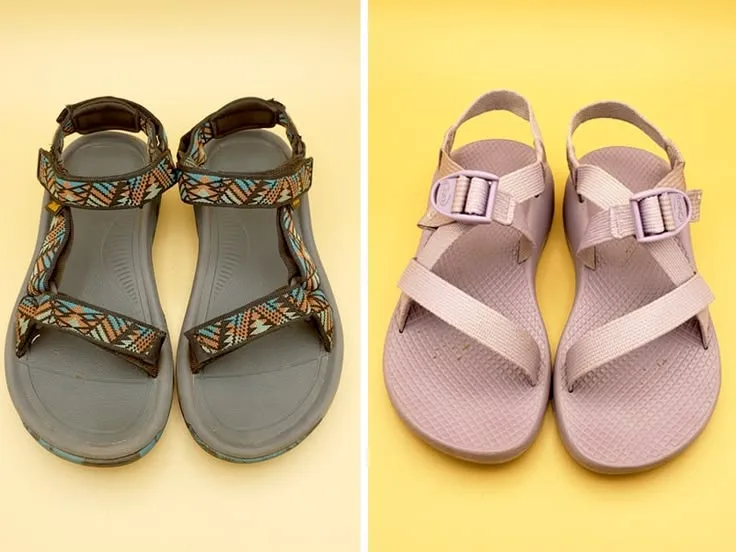
Image source: Bing (Web (fair-use with source credit))
Quick Answer
Chaco provides aggressive, high-profile arch support. Its dense polyurethane footbed stays firm and will not collapse under heavy weight. Teva offers moderate, relaxed arch support.
Its lightweight EVA foam footbed flexes naturally and cushions impacts right away. Chaco suits high arches, heavy backpacking, and severe overpronation. Teva suits flat feet, relaxed walking, and instant comfort without a break-in period.
The Arch Support Divide: Why Chaco and Teva Feel Completely Different
The physical sensation of stepping into a Chaco sandal versus a Teva sandal is night and day. Chaco utilizes a rigid, molded footbed that pushes firmly upward into your medial longitudinal arch. If your feet are not used to direct midfoot pressure, it can feel like standing on a rolled-up magazine.
Teva takes a gentler approach. Instead of forcing your foot into an aggressive shape, Teva molds its footbed with a subtle, low-to-moderate curve. The material yields under body weight, offering a forgiving bed that absorbs downward energy rather than pushing back against it.
This structural divide impacts how your entire kinetic chain moves. A firm platform stops your foot from rolling inward during dynamic strides. A flexible platform lets your foot move naturally, which reduces stress on your ankles during short, casual outings.
Neither design is universally superior. The right choice depends on your arch height, gait, and daily mileage.
Anatomy of the Sole: Chaco's LUVSEAT vs. Teva's Cushioned Footbeds
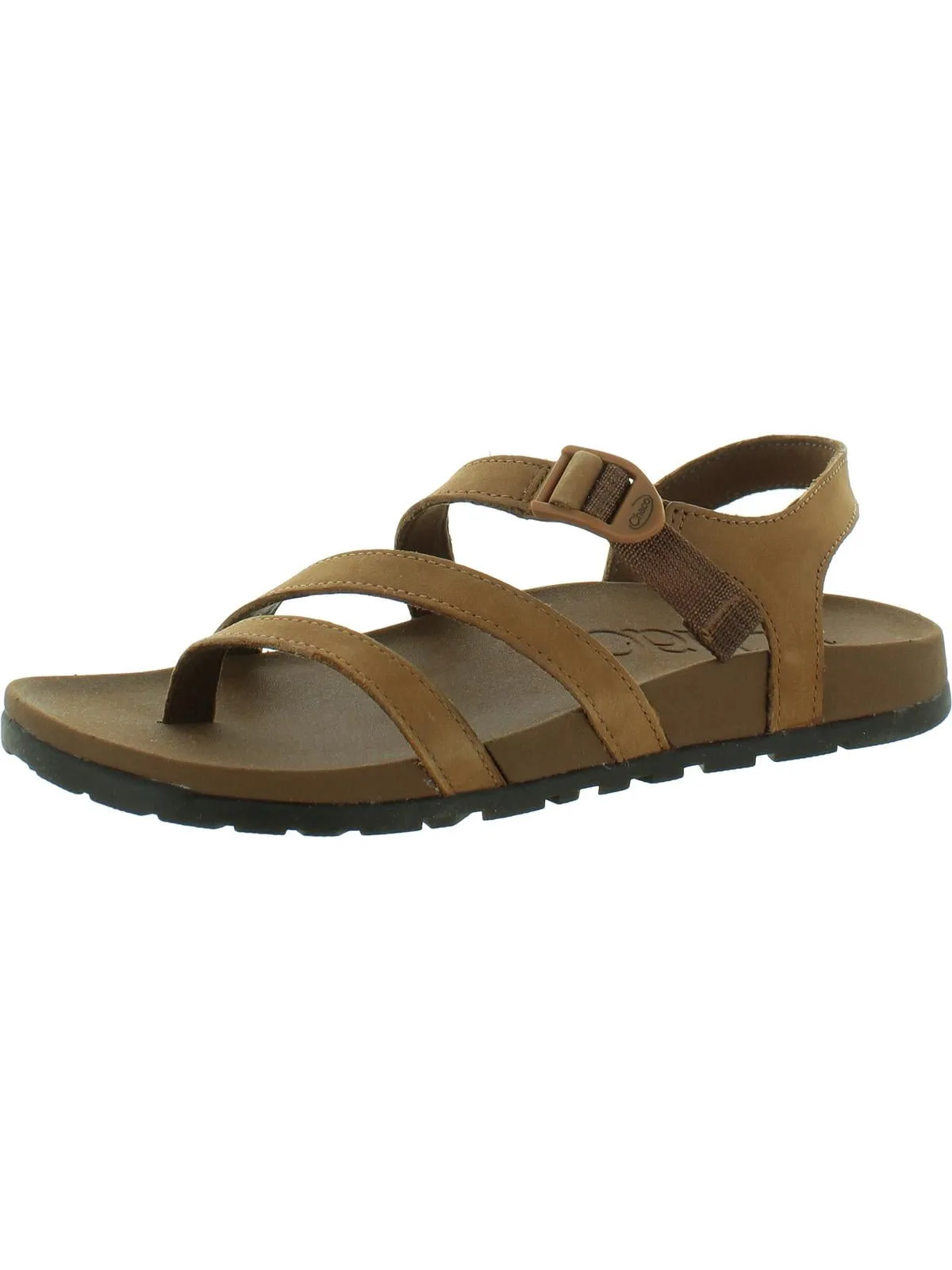
Image source: Web (Bing) / walmart.com (Web image (fair-use with source credit))
Chaco: Dense Polyurethane and the Aggressive LUVSEAT Arch
Every classic Chaco sandal is built on the proprietary LUVSEAT footbed. This platform is molded from dense, single-density polyurethane (PU). Polyurethane is a resilient polymer that resists compression over years of heavy use.
The LUVSEAT features a pronounced contour that lifts the midfoot while cupping the heel bone. This deep calcaneal heel cup holds the natural fat pad in place under your heel, improving natural shock absorption. Because the PU material does not pack out over time, the arch support remains identical on day 500 as it was on day one.
Teva: Layered EVA Foam and Moderate Structural Lift
Teva models like the Hurricane XLT2 and Original Universal rely on ethylene-vinyl acetate (EVA) foam midsoles. EVA is a lightweight, closed-cell foam known for pillowy shock absorption and instant flexibility.
Under the foot, Teva shapes a mild contour that supports the arch without aggressively elevating it. Many technical Teva sandals incorporate a nylon shank embedded within the midfoot layers. This internal shank adds torsional rigidity, preventing the sandal from twisting awkwardly over uneven roots and rocks while preserving a soft landing.
| Feature | Chaco (Classic Z Series) | Teva (Hurricane / Terra Fi) |
|---|---|---|
| Midsole Material | High-density Polyurethane (PU) | Layered EVA Foam (with Nylon Shank) |
| Arch Profile | High, prominent, and rigid | Moderate, relaxed, and semi-flexible |
| Heel Cup Depth | Deep (stabilizes heel fat pad) | Shallow to moderate (cushioned landing) |
| Torsional Rigidity | Very high (resists twisting) | Moderate (flexible at forefoot) |
| Average Lifespan | 5 to 10 years (fully resoleable) | 2 to 4 years (eventual foam packing) |
Head-to-Head Comparison: Materials, Arch Height, and Biomechanics
The mechanical differences between these brands boil down to how they handle ground reaction forces. When your foot strikes the earth, your arch naturally flattens slightly to absorb impact, then tightens to propel you forward.
Chaco minimizes that flattening motion entirely. By locking the medial arch in an elevated state, it transfers stress away from the plantar fascia band and onto the rigid PU base. This rigid support system stabilizes the subtalar joint, preventing internal knee rotation and helping hikers maintain an efficient gait under heavy loads.
Teva allows the arch to function with greater natural mobility. The soft EVA compresses beneath your heel and ball of the foot, distributing pressure evenly across the plant of the foot. For people who lack extreme pronation issues, this dynamic flex feels less restrictive and significantly lighter across long flat stretches.
As of 2026, user satisfaction metrics continue to reflect this distinction. Walkers looking for a lightweight shoe favor Teva, while those requiring orthopedic stabilization lean toward Chaco.
How Your Foot Shape Dictates the Winner: High Arches, Flat Feet, and Plantar Fasciitis
Living with High Arches or Overpronation
If you have high arches (pes cavus), empty space sits beneath your midfoot when standing. Chaco is often the superior tool here. The tall LUVSEAT contour rises up to fill that void, distributing your body weight across the entire footbed rather than concentrating it solely on your heel and ball.
For overpronators whose ankles collapse inward, Chaco acts like an unyielding orthotic. It physically stops the medial collapse, protecting your knees and lower back on long trail days.
Living with Flat, Low-Volume, or Sensitive Feet
For people with flat feet (pes planus) or low arches, the standard Chaco footbed can feel painful. The rigid PU ridge digs directly into collapsed navicular bones, which can cause bruising during long hikes.
Teva is far friendlier to flat and sensitive feet. The flatter EVA surface does not force your bones into an artificial posture. It simply provides a soft, forgiving platform that molds gently to your foot shape over time.
The Plantar Fasciitis Factor
Plantar fasciitis involves micro-tears and inflammation in the connective tissue running along the bottom of your foot. If your plantar fascia is inflamed, stepping onto a flat, unsupportive surface creates sharp pain.
Chaco sandals excel at managing chronic plantar fasciitis because they stop the fascia from over-stretching during heel-to-toe transitions. However, during an acute, highly painful flare-up, the rock-hard polyurethane might feel too punishing on a tender heel. In those cases, a supportive yet cushioned hybrid model like the Teva Terra Fi 5 or the softer Chaco Z-Cloud offers an ideal middle ground.
Trail, Water, and Everyday Wear: How Support Holds Up in the Real World
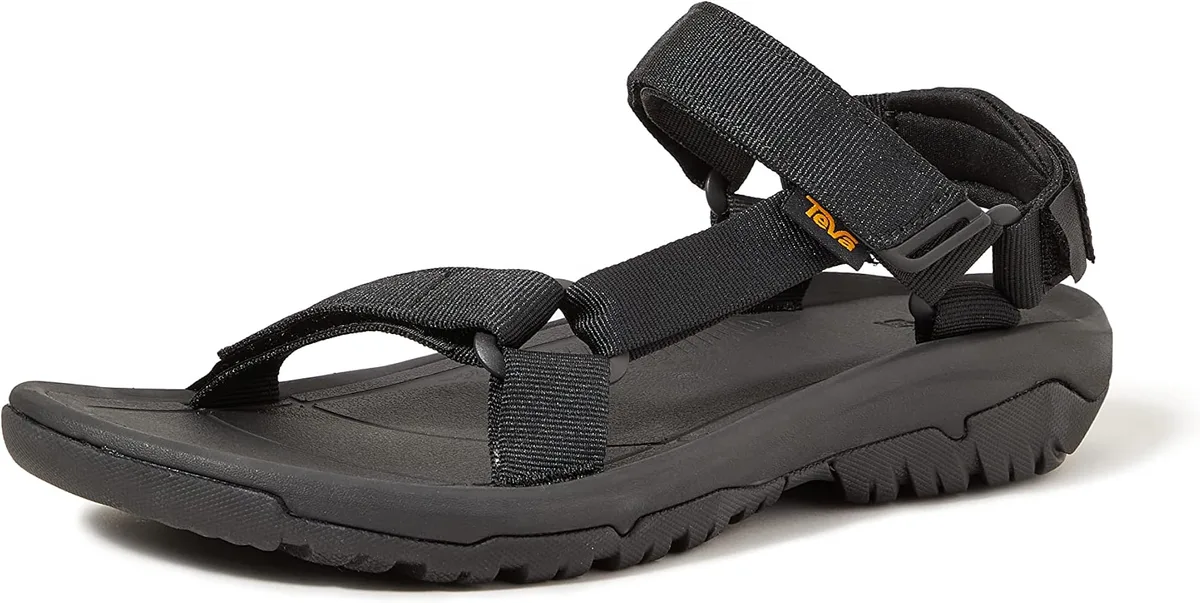
Image source: Web (Bing) / munimoro.gob.pe (Web image (fair-use with source credit))
Heavy Backpacking and Rocky Trails
Carrying a 30-pound pack changes foot mechanics entirely. Added pack weight drives your arches downward with every step, increasing the risk of strain.
Chaco shines in rough backcountry conditions. The dense polyurethane does not compress under heavy gear, and its stiff base shields your feet from sharp, jagged rocks. Teva sandals will cushion trail chatter, but over dozens of rocky miles, softer EVA platforms allow more trail feel, which leads to quicker muscular fatigue.
River Days, Wet Traction, and Rafting
Both brands got their start on river expeditions, yet they handle moving water differently.
Chaco locks your foot firmly onto the bed using its deep heel cup, preventing sideways sliding even when drenched. However, Chaco sandals are noticeably heavy, weighing roughly 850 to 950 grams per pair. If you slip in deep current, that weight is apparent.
Teva footwear is significantly lighter, usually averaging between 550 and 650 grams. They float better, dry faster, and feel far less cumbersome when swimming through rapids or scrambling across slick moss.
Casual Walking, Travel, and Daily Commuting
For city pavements, dog walks, and airport travel, Teva takes the lead for most people. Pavement is hard and unforgiving, and the buoyant bounce of an EVA midsole absorbs concrete vibrations effectively.
Teva models pack down small in luggage and provide instant comfort from the first hour. Chacos can feel overbuilt and unnecessarily heavy for a simple afternoon stroll around town.
The Break-In Period and Strap Systems: Can You Actually Dial In the Support?
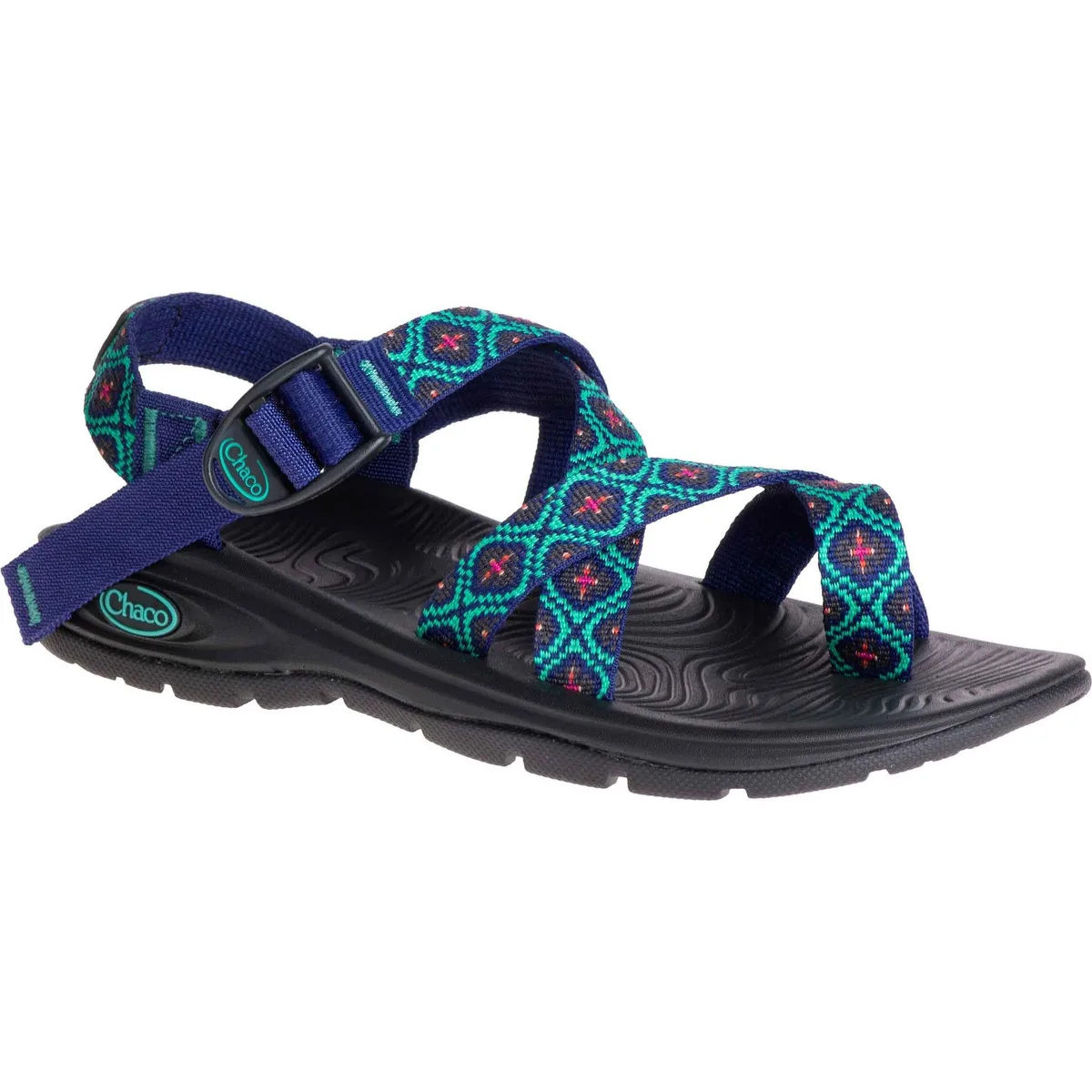
Image source: Web (Bing) / pinterest.com (Web image (fair-use with source credit))
A supportive footbed does very little if your foot slides off the platform. Strap architecture dictates how securely your arch stays anchored over the molded contour.
Chaco uses a continuous polyester webbing loop that threads internally through the midsole. You pull the webbing through the bed to snug down the forefoot, midfoot, and ankle separately. This design creates a customized fit that locks your arch directly over the LUVSEAT curve.
However, Chaco requires an extensive break-in period. Editorial reviews and podiatric feedback show that users often need two to three weeks of gradual wear to adapt to the stiff polyurethane base. Grit can also enter the strap channels over time, requiring you to flush the sole with fabric softener and water to keep the webbing adjustable.
Teva uses independent hook-and-loop straps across the toes, instep, and heel. This setup allows immediate, intuitive adjustments in seconds.
Teva sandals require almost zero break-in time. The straps feature soft neoprene or mesh padding, preventing the friction hotspots common with raw polyester webbing. The tradeoff is precision.
You cannot fine-tune the midfoot lockdown quite as securely as a continuous loop, allowing slight heel slippage on steep side slopes.
Frequently Asked Questions About Chaco and Teva Arch Support
Which brand is better for severe plantar fasciitis?
Chaco is generally better for chronic plantar fasciitis. Its rigid LUVSEAT contour prevents the plantar fascia band from overstretching during movement. If your heels are currently inflamed, choose the Chaco Z-Cloud, which pairs this rigid base with a softer top cushion.
Do Teva sandals lose their arch support over time?
Yes, Teva sandals lose support as the EVA foam compresses. Under regular hiking use, the foam packs down within two to four years. Once compressed, the footbed flattens, reducing both arch elevation and impact protection across trail miles.
Are Chaco sandals painful for people with flat feet?
Chaco sandals can cause arch pain for people with very flat feet. The firm polyurethane arch does not compress beneath low-volume feet, which can lead to direct pressure and bruising. Flat-footed walkers often prefer Teva or wide-width Chaco designs.
Can you get Chaco sandals resoled to keep the arch intact?
Yes, Chaco offers an official factory repair program called ReChaco. Because the molded polyurethane LUVSEAT footbed lasts for decades without sagging, technicians can replace worn outsoles and webbing repeatedly without altering the original arch support profile.
Do Teva sandals provide enough support for multiday backpacking?
Teva models with internal nylon shanks, like the Terra Fi 5, handle light to moderate backpacking well. However, for loads exceeding thirty pounds, firm polyurethane platforms like Chaco offer superior resistance against structural collapse under heavy downward pressure.
The Final Verdict: Which Sandal Should You Choose for Your Feet?
Choosing between these sandals depends on your arch structure, intended pack weight, and comfort timeline. Neither brand fits every foot type, so your biomechanical needs must guide the decision.
Choose Chaco if you have high arches, struggle with inward overpronation, or carry heavy packs on rocky terrain. The unyielding polyurethane structure acts like a true orthotic. It stabilizes the subtalar joint and delivers unwavering support for thousands of miles.
Choose Teva if you have flat feet, prefer a soft landing, or want immediate comfort right out of the box. The lightweight EVA platform absorbs city concrete, flexes naturally on day hikes, and eliminates the painful break-in period entirely. Matching the midsole material to your personal anatomy will guarantee happy feet all season long.

Similar Posts