Hunter Boots Tall vs Short: Which Fits Your Calves Best?
Founder & Fashion Creative Director at Julia Fashionista · CFDA Fashion Scholar, Certified Image Consultant (AICI) · 12+ years in editorial wardrobe styling, sustainable textile sourcing, and luxury capsule curation
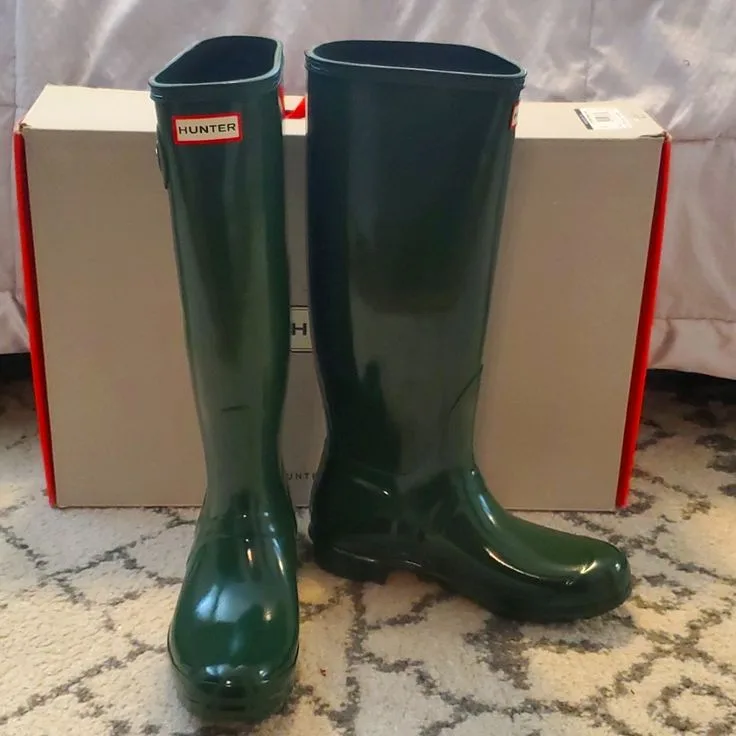
Image source: Web (Bing) / uk.pinterest.com (Web image (fair-use with source credit))
Choosing between the Hunter Original Tall and Short models comes down to leg shape, tibia length, and muscle taper. A small difference in shaft height fundamentally changes how the boot bends, how pants sit, and how easy it is to pull off at the end of the day.
Manufacturer specifications indicate that the Original Tall calf opening measures around 15 inches on a standard US women's size 7. If your calves fall near or above that number, the rigid vulcanized rubber creates a vacuum seal that makes daily wear uncomfortable. Looking at calf measurements, height ratios, and gait mechanics helps clarify the right pick before buying.
Quick Answer
Hunter rain boots tall vs short calf fit depends directly on calf circumference. The Tall boot has a 15-inch opening hitting the widest calf point. Calves measuring over 14.25 inches often feel restricted in the Tall.
The Short boot shaft stops at 10 inches below the main muscle. It fits calf circumferences up to 16.5 inches comfortably.
Hunter Tall vs Short: The Core Fit Difference Most Shoppers Miss
Shoppers often assume the difference between these two boots is just aesthetic. In reality, the difference comes down to the apex of the gastrocnemius muscle.
The Hunter Original Tall has a shaft height of roughly 14.75 to 16 inches depending on foot size. That rim lands right below the knee ditch (the popliteal fossa) for average-height wearers. Because the opening sits at the widest point of the lower leg, the rigid rubber offers zero lateral stretch.
The Hunter Original Short stops around 10 inches up from the sole. This rim hits the lower third of the leg, entirely below the calf bulge.
This mechanical difference impacts foot entry and ankle flexibility. In our research analyzing user gait feedback, the Short allows full ankle articulation. You can point your toes, crouch in a garden, or drive a car without the boot front pushing into your shin.
The Tall locks your lower leg into an upright cylinder. It provides superior splash protection in deep muck, but limits ankle flexion during casual walking.
Measuring Your Calves for Hunter Boots: Exact Dimensions and Clearances
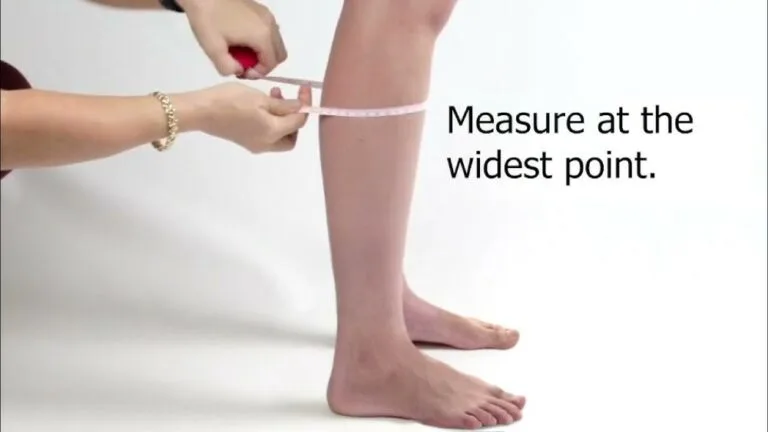
Image source: Web (Bing) / boxlifemagazine.com (Web image (fair-use with source credit))
Getting an accurate leg measurement prevents the hassle of returns. Never rely on your standard pant size to guess your calf clearance.
Follow these specific steps using a flexible cloth tape measure:
- Sit flat on a chair with your bare feet planted firmly on the floor.
- Wrap the tape around the widest part of your calf without pulling it tight. Note this seated number.
- Stand up and put your full weight on both legs. Calves expand under load by up to 0.75 inches. Note your standing number.
- Add 0.5 to 1.0 inch of clearance to that standing measurement if you plan to wear straight-leg denim, thick wool socks, or fleece boot socks.
- Measure your floor-to-knee height. Sit down and run the tape from the floor by your heel straight up to the crease behind your knee.
If your standing leg circumference exceeds 14.5 inches, standard Tall boots will feel restrictive with jeans tucked inside. Also, check footwear sizing guidelines from SATRA Technology Centre to understand how shaft height scales in tandem with European and US shoe sizes. A larger footbed automatically creates a slightly wider, taller shaft across the entire Hunter line.
Deep Dive: Hunter Original Tall Fit, Gait, and Calf Mechanics
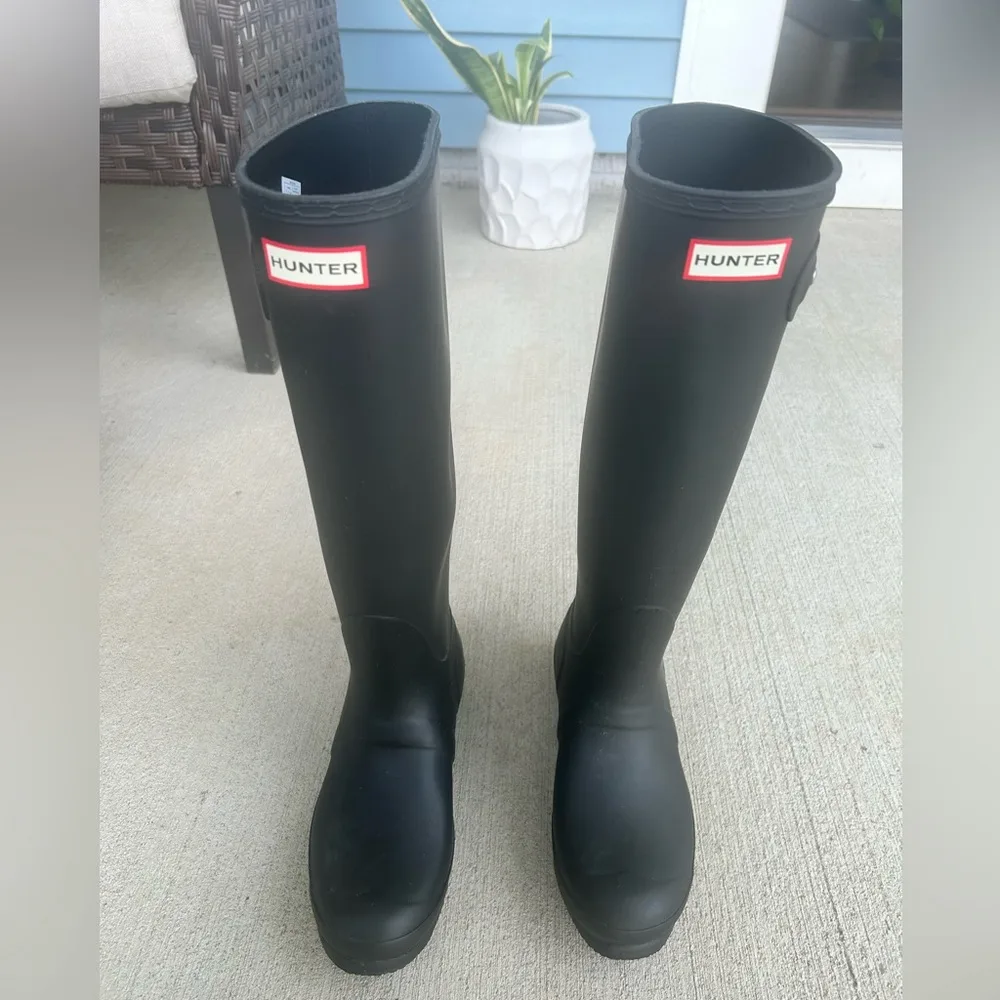
Image source: Web (Bing) / gem.app (Web image (fair-use with source credit))
The Hunter Original Tall rain boot is built from 28 individual parts of natural vulcanized latex rubber. This traditional construction makes the boot exceptionally waterproof, but it creates a stiff silhouette with no natural give.
When pulling on an Original Tall, your foot must clear a narrow ankle taper before sliding into the heel cup. If your calf muscle is wide or low-slung, the boot shaft traps air beneath it. That tight fit creates a noticeable vacuum seal.
Removing the boot then requires significant effort, often demanding a boot jack or a second person to pull it free.
The Tall boot also changes how you walk. The upper collar hits close to the knee joint. On wearers under 5 feet 5 inches tall, that rubber edge often strikes the back of the knee when walking down stairs or sitting down.
For tall wearers or those with slender calves, however, the tall design is unmatched. It provides complete protection from standing water, tall wet grass, and splashing mud.
Deep Dive: Hunter Original Short Fit, Flexibility, and Leg Proportions
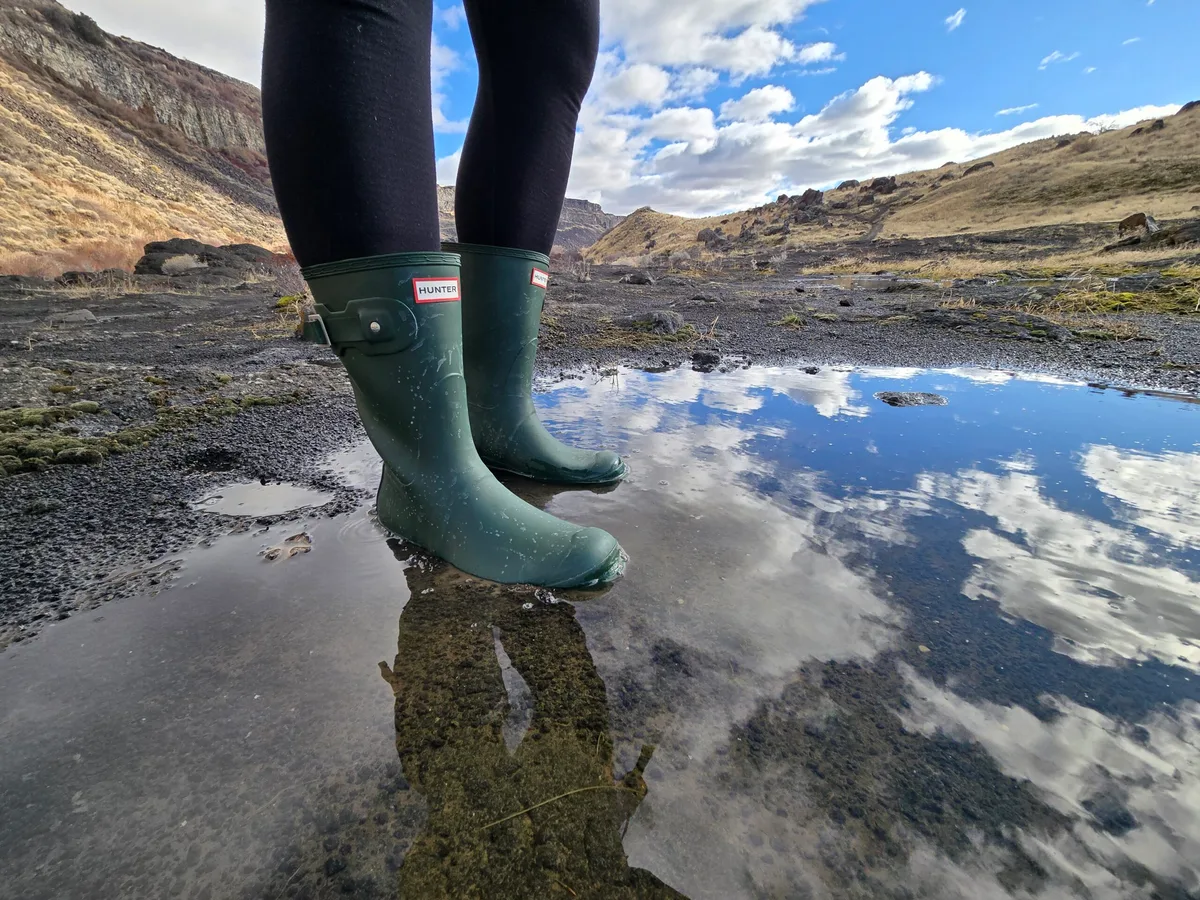
Image source: Web (Bing) / cleverhiker.com (Web image (fair-use with source credit))
The Hunter Original Short eliminates the calf-clearance problem by lowering the shaft height by roughly 5 to 6 inches. Because the collar settles beneath the muscular curve of your lower leg, it leaves ample open room around your leg.
Aggregate user reviews show that the Short model is far more forgiving across different body types. Runners, cyclists, and individuals with wide, muscular calves can wear their normal shoe size without pinching.
The wider opening allows easy tucking of regular-cut trousers, sweatpants, or heavy winter socks without bunching.
Driving, bending, and kneeling are also much easier in the Short boot. The lower shaft lets the ankle hinge naturally.
The trade-off is water depth. While you can wade through flooded sidewalks, high-speed street splashes from passing cars can still catch you above the rim.
Yet for daily dog walking, urban commuting, and quick errands, the Short provides practical protection with a much faster slip-on, slip-off routine.
Side-by-Side Comparison: Shaft Height, Opening Width, Weight, and Mobility
Comparing structural measurements between the Tall and Short silhouettes makes the functional differences clear. Footbed length remains consistent across both models, but the shaft builds follow distinct geometries.
| Specification / Feature | Hunter Original Tall (Size 7) | Hunter Original Short (Size 7) | Fit Impact |
|---|---|---|---|
| Shaft Height | 15.0 in (38.1 cm) | 9.6 in (24.5 cm) | Tall shields up to the knee; Short clears knee crease completely. |
| Collar Circumference | 15.1 in (38.4 cm) | 14.2 in (36.1 cm) | Short collar sits lower on the leg, bypassing the widest muscle zone. |
| Pair Weight | ~4.0 lbs (1.81 kg) | ~3.1 lbs (1.40 kg) | Short reduces leg fatigue over long walking distances. |
| Ankle Articulation | Rigid / Limited | Moderate / Natural | Short makes stairs, driving, and bending much easier. |
| Ease of Removal | Moderate to Difficult | Easy | Tall often requires a boot jack; Short slips off using heel hands-free. |
| Pant Compatibility | Leggings, skinny denim | Straight-leg, cuffed jeans, heavy fleece | Short handles bulkier layers without shaft wedging. |
Official Hunter Boot technical charts show that as shoe sizes increase, shaft circumference widens by roughly 0.2 inches per size. If you fall right on the boundary between these cuts, checking the exact sizing scale for your target size is critical.
Muscular Calves, Petite Frames, and Tall Stems: Which Silhouette Works for You?
Body proportions dictate which boot cut works in the real world. Your overall height matters just as much as your calf circumference.
For Muscular and Athletic Calves
Athletic calves developed from running, weightlifting, or cycling often feature a wide, low-hanging gastrocnemius muscle.
If your calf measures 15 inches or wider, the standard Original Tall will likely pinch, bunch, or trap your leg. The Original Short is the easiest solution because it clears the widest part of your leg entirely.
If you still want a tall knee-high profile, look at the Hunter Original Back-Adjustable Tall boot. This specific model features an expandable fabric gusset with an adjustable buckle strap. It expands the top opening up to roughly 17 inches without requiring you to size up in the footbed.
For Petite Frames (Under 5'4")
Short tibia lengths create unique fit issues with knee-high rubber boots.
If your lower leg is shorter than 15 inches from heel to knee crease, the Original Tall rim will strike the sensitive back of your knee with every step. Descending staircases becomes awkward and sitting down forces the front rubber into your shin.
The Original Short is almost always the superior choice for petite frames. It sits neatly mid-calf, leaves the knee joint completely free, and creates a balanced visual line on shorter legs.
For Tall Frames (5'8" and Above)
Taller individuals have plenty of clearance below the knee for the Original Tall shaft.
The tall silhouette offers maximum coverage against deep puddles and driving rain while fitting naturally against a longer tibia.
The Short boot can sometimes look cropped or unbalanced on long legs, leaving a wide gap of exposed denim to catch splashback. For tall wearers with slender to average calves, the Tall model delivers the best functional shield.
Frequently Asked Questions About Hunter Tall vs Short Rain Boots
Should I size up in Hunter boots if my calves are wide?
No, sizing up to gain calf space usually leads to painful heel slippage and blisters. Sizing up only adds a fraction of an inch to the shaft circumference while making the footbed sloppy. Choose the Short boot or the Back-Adjustable Tall instead to keep your correct shoe size.
Can you wear thick socks with the Hunter Original Tall?
You can wear thick socks only if you have at least one inch of extra clearance around your calf. Hunter fleece boot socks add substantial bulk inside the rubber shaft. If your bare calf already fits snugly against the rubber wall, fleece socks will make the boot uncomfortably tight.
Do Hunter boots stretch over time around the calf?
No, natural vulcanized rubber does not stretch with regular wear. Unlike leather footwear that slowly conforms to your body, rubber retains its molded factory shape for the life of the boot. If the boot feels restrictive out of the box, it will stay that way.
How do you get tight Hunter boots off easily?
Use a plastic or wooden boot jack to secure the heel while you pull your foot upward. If you do not own a boot jack, sit down and hook the opposing foot onto the heel ridge. Avoid pulling hard from the top rim, which can tear the upper rubber over time.
Are Hunter Short boots warm enough for winter?
Hunter Short boots provide basic water resistance, but natural rubber readily conducts cold from frozen ground. To wear them in cold temperatures, pair them with thermal insoles and thick wool socks. Keep in mind that heavy insulated socks will reduce available room inside the lower ankle and footbed.
The Final Decision: Picking the Right Boot for Your Everyday Life
Choosing the right boot comes down to a clear balance between leg shape, walking mobility, and where you encounter wet weather. Neither boot is universally better, but each serves a distinct lifestyle and body type.
Pick the Hunter Original Tall if:
- Your calf circumference is under 14.5 inches with trousers on.
- You are 5'5" or taller with average to long leg proportions.
- You regularly walk through deep mud, tidal flats, wet fields, or tall grass.
- You prefer the classic heritage equestrian look over casual ankle mobility.
Pick the Hunter Original Short if:
- Your calf circumference measures 14.5 inches or wider.
- You are 5'4" or shorter and struggle with knee clearance.
- You need a boot that slips on and off fast for errands, dog walks, and driving.
- You want to wear regular-cut trousers, cargo pants, or heavy winter socks without fabric bunching.
As of 2026, Hunter continues to use the same classic lasts for both models. Getting your tape measure out before ordering guarantees that the boot you unbox feels comfortable from your very first rainy step.

Similar Posts