New Balance 530 vs 327: Which Is More Comfortable?
Founder & Fashion Creative Director at Julia Fashionista · CFDA Fashion Scholar, Certified Image Consultant (AICI) · 12+ years in editorial wardrobe styling, sustainable textile sourcing, and luxury capsule curation
Picking between lifestyle sneakers usually comes down to silhouette, but the real debate around New Balance 530 vs 327 comfort centers on biomechanics. Both shoes dominate casual wear, yet they treat your feet in completely different ways. One is a pliable, airy Y2K running shoe, while the other is an angular, firm retro-trail hybrid.
Our research shows that underfoot fatigue depends heavily on your foot shape, walking volume, and arch profile. The New Balance 530 relies on a segmented running chassis designed for shock dispersion, whereas the New Balance 327 uses a sculpted EVA wedge with aggressive lateral flare. Understanding how these structural differences play out during daily use will save you from sore feet.
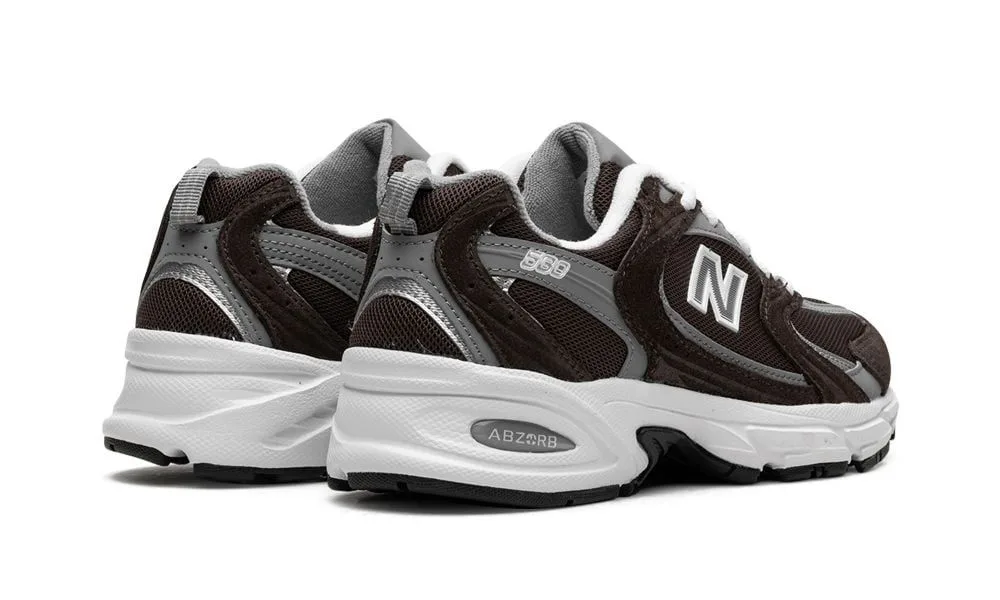
Image source: Bing (Web (fair-use with source credit))
Quick Answer
The New Balance 530 wins on step-in comfort, breathability, and forefoot room. It flexes easily and softens heel strikes. The New Balance 327 feels much firmer underfoot.
It provides stronger lateral arch contact. Wide feet will prefer the roomy 530. Narrower feet enjoy the snug 327.
The Quick Verdict: Which Sneaker Actually Wins on Comfort?
If your goal is immediate softness, the New Balance 530 takes the prize. It feels like an authentic early-2000s performance trainer right out of the box. The shoe flexes naturally with your gait, bends easily across the ball of the foot, and lets in plenty of air.
Aggregate user feedback indicates that people who stand on their feet for eight-hour work shifts consistently rank the 530 higher for impact relief.
The New Balance 327 offers a distinctly different sensation that appeals to fans of structured support. Instead of soft squish, you get a dense, grounded platform. The flared sole prevents your foot from rolling outward, creating a planted, stable stance.
- Choose the 530 if you want an airy shoe with immediate flexibility, plush collar padding, and zero break-in period.
- Choose the 327 if you prefer a supportive, firm wedge with pronounced arch contact and a sleek silhouette.
Neither shoe is universally better, because comfort is personal. As of 2026, both models remain everyday staples, yet they serve opposing foot types. If you have flat or wide feet, the 327 can cause pressure points.
If you have high arches that demand rigid support, the flexible 530 might leave you wanting a firmer foundation.
Underfoot Cushioning: ABZORB Tech vs. Flared EVA Foam
The core ride of the 530 comes from its proprietary ABZORB tooling. Developed by New Balance as an elastomer-based blend, ABZORB resists compression set better than standard ethylene-vinyl acetate. When your heel contacts the pavement, the foam absorbs ground reaction forces and disperses energy across the rearfoot.
Segmented rubber pods underneath flex independently, giving you a smooth transition from heel strike to toe-off.
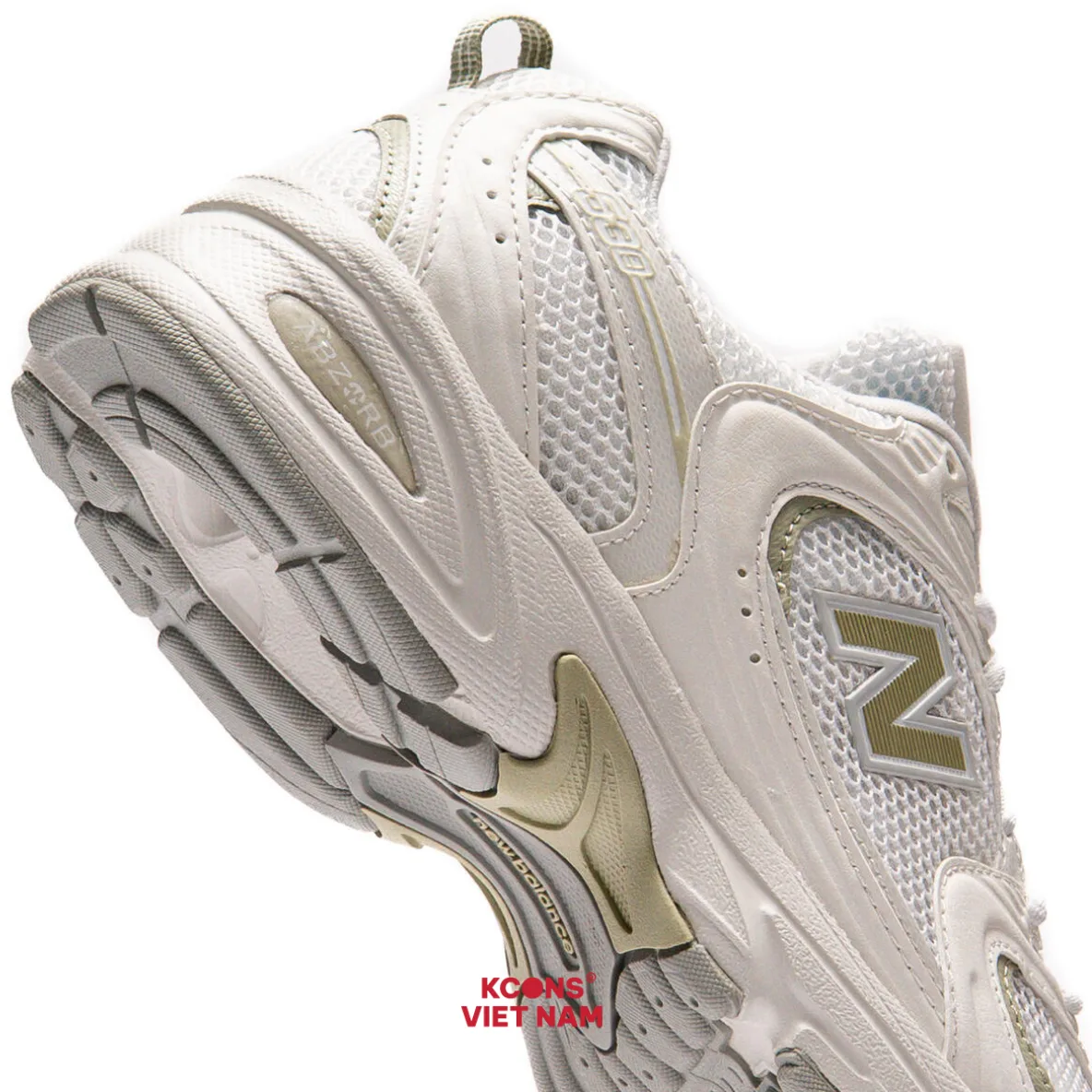
Image source: Bing (Web (fair-use with source credit))
In contrast, the 327 uses a thick, dual-density EVA foam wedge. This design takes inspiration from 1970s marathon models like the 320 and 355. It lacks modern impact gel or specialized dampening inserts.
The midsole feels solid, springy, and remarkably stable under load.
Because the EVA wedge does not compress deeply, it avoids the bottoming-out effect that plagues many squishy lifestyle shoes. However, that firmness means your joints take more direct impact on hard concrete sidewalks. The thick foam dampens vibration, but it does not cradle your heel with the pillow-like give found in the 530.
Fit, Width, and Upper Anatomy: Roomy Mesh vs. Sculpted Nylon
Fit determines comfort just as much as cushioning does. The New Balance 530 features an open-cell athletic mesh upper reinforced with synthetic overlays. It provides generous vertical volume throughout the toe box.
The American Podiatric Medical Association stresses the importance of adequate toe room to prevent bunions and nerve compression. The 530 accommodates natural toe splay with ease, making it a reliable pick for standard to slightly wide feet.
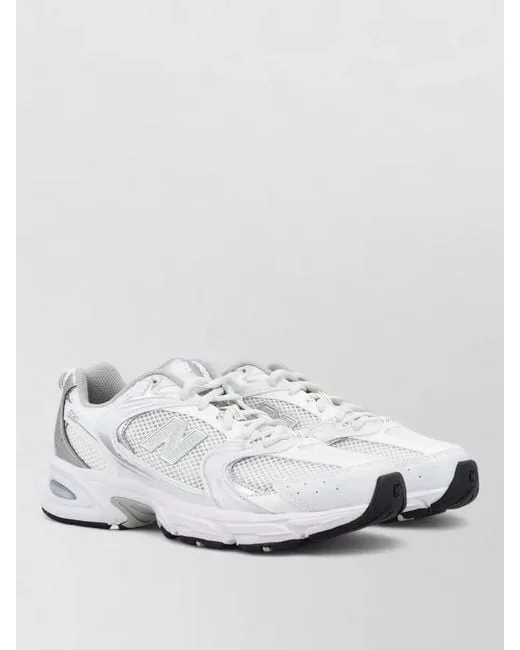
Image source: Web (Bing) / lyst.com (Web image (fair-use with source credit))
The 327 takes an entirely different anatomical approach. Its upper is built from unlined nylon or canvas paired with heavy suede paneling. It features an hourglass silhouette with an aggressively carved waist.
- Forefoot Space: The 530 is broad and tall. The 327 tapers into a retro point, which can squeeze wider toes.
- Midfoot Hug: The 530 stays neutral and open. The 327 grips the arch tightly with a narrow baseboard.
- Ankle Collar: The 530 has thick, plush foam lining the heel collar. The 327 uses a minimalist, deconstructed collar that sits low against the ankle bone.
If you have a wide midfoot, the sculpted waist of the 327 can be problematic. Your medial arch may spill over the top of the sole unit, creating friction along the inner edge of your foot.
Walking 15,000 Steps: Real-World Stability and Arch Fatigue
High step counts reveal how shoes behave under prolonged stress. During a full day of travel or city walking, the 530 feels effortless for the first few miles. Its lightweight construction reduces leg fatigue, and its natural flex grooves keep your stride smooth.
However, because the midsole is soft and lacks a rigid midfoot shank, wearers with overpronation may experience arch tiredness past the 10,000-step mark.
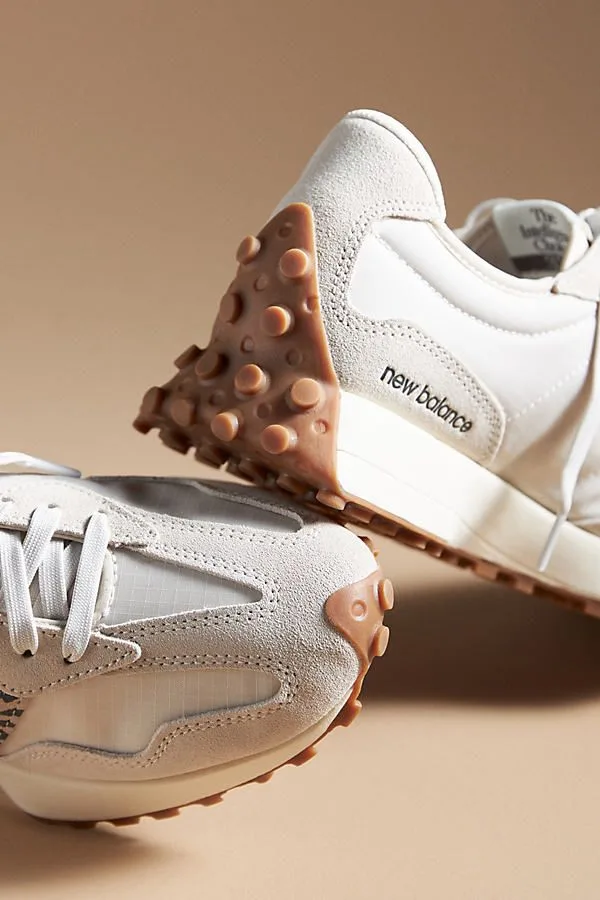
Image source: Web (Bing) / uk.pinterest.com (Web image (fair-use with source credit))
The 327 performs better if you require torsional stiffness. Its flared sole unit widens significantly toward the pavement, acting like outriggers on a canoe. This broad base resists inward and outward ankle tilt, keeping your foot locked in a straight plane.
The aggressive rubber tread wrap on the 327 changes heel dynamics. The studded trail lugs wrap all the way up the Achilles tendon. If you strike hard with your heel, you will feel the individual studs press upward before the EVA foam compresses.
For pure walking mileage on flat city pavement, the smooth, segmented rubber pads on the 530 offer a far more natural rolling motion.
Seasonal Breathability, Durability, and Day-to-Day Practicality
Upper materials directly dictate climate comfort. The 530 is essentially an air intake system for your foot. Its open synthetic mesh allows maximum airflow, keeping your feet cool and dry during hot summer days.
The downside is obvious in wet conditions. A sudden rain puddle or cold breeze penetrates the mesh instantly, leaving your socks soaked within seconds.
The 327 functions much better as a transitional, multi-season shoe. The suede and solid nylon weave block wind and resist light splashes. It keeps your feet significantly warmer in autumn and early spring.
Long-term durability leans slightly in favor of the 327. Suede panels withstand abrasions and scrapes that could snag the open mesh of the 530. However, suede requires dedicated brush cleaning and stains easily when wet.
The 530 features low-maintenance synthetic leather overlays that wipe clean with a damp cloth, making it simple to keep fresh.
Side-by-Side Spec Breakdown: New Balance 530 vs. 327
Comparing the exact dimensions and build profiles of these two silhouettes puts their functional differences into clear focus. While both sit in the lifestyle category, their origins dictate how they carry your weight throughout the day. The 530 inherits the architecture of a 2000s technical distance runner, whereas the 327 modernizes lightweight cross-country flats from the 1970s.
The table below breaks down the primary specifications that influence ride feel, stability, and everyday fit:
| Feature / Spec | New Balance 530 | New Balance 327 |
|---|---|---|
| Midsole Technology | ABZORB foam + rubber compound | Sculpted EVA wedge foam |
| Outsole Pattern | Segmented rubber with flex grooves | Studded trail rubber with heel wrap |
| Upper Material | Open synthetic mesh with overlays | Suede with unlined nylon or canvas |
| Midfoot Width | Standard to wide base | Narrow, aggressively carved waist |
| Flexibility | High (natural forefoot bend) | Low to moderate (stiff platform) |
| Sizing Tendency | True to size, roomy toe box | True to size in length, narrow midfoot |
| Ideal Climate | Warm, dry weather | Mild, dry, cool transitional weather |
These engineering choices explain why the underfoot sensation diverges so dramatically. The 530 gives you segmented impact absorption and broad surface area. The 327 relies on an exaggerated rear platform and a tapered midsection to guide your stride.
The Matchup Guide: Which Pair Fits Your Feet and Lifestyle?
Choosing between these two models comes down to matching your personal anatomy and daily routine to the platform design. Because neither sneaker behaves like a generic lifestyle flat, you need to match your foot profile to the specific chassis.
If you have wide feet, prominent bunions, or a flat arch, the New Balance 530 is your best option. Its straight last and roomy forefoot allow your toes to spread out naturally without hitting the inner side walls. The soft mesh upper also stretches over pressure points without pinching.
For service industry workers, retail staff, or travelers logging heavy walking hours, the combination of light weight and ABZORB dampening prevents tired, aching feet.
If you have a standard to narrow foot shape and prefer structured support, the New Balance 327 is the smarter pick. Wearers with high arches often appreciate how the curved midfoot cuts inward to hug the foot bottom. The wide flared heel base also stabilizes lateral movement, making it a reliable option for all-day casual wear if you dislike overly mushy shoes.
Frequently Asked Questions About 530 and 327 Comfort
Are New Balance 530s good for standing all day?
Yes, the New Balance 530 performs well for extended standing shifts. The ABZORB midsole dampens vertical pressure, while the wide, flat base distributes body weight evenly across your foot. The breathable mesh also keeps feet cool during long hours on hard floors.
Do New Balance 327s run narrow or wide?
The New Balance 327 runs narrow through the midfoot and arch. The toe box fits true to size in length, but the carved waist is noticeably tight. If you have wide feet, sizing up a half size helps prevent your arch from spilling over the midsole edge.
Which shoe is better for plantar fasciitis?
The New Balance 327 offers a firmer EVA platform that limits midfoot flexing, which can relieve stress on the plantar fascia. However, the 530 has a removable insole that makes it much easier to fit a custom rigid orthotic device.
Can you use the 530 or 327 for running workouts?
Neither model is recommended for serious running workouts today. The 530 was an authentic running shoe decades ago, but its materials are outdated compared to modern performance foams. Both models are now intended purely for casual lifestyle walking and light daily activity.

Similar Posts