Chuck 70 vs. All Star: Which Has Better Cushioning?
Founder & Fashion Creative Director at Julia Fashionista · CFDA Fashion Scholar, Certified Image Consultant (AICI) · 12+ years in editorial wardrobe styling, sustainable textile sourcing, and luxury capsule curation
If you wear flat canvas sneakers for a long day on city pavement, your feet usually let you know by hour four. The debate around converse chuck 70 vs all star cushioning comes down to how much impact protection you actually want underfoot.
Standard All Stars rely on a paper-thin foam sheet that leaves your soles feeling every pebble. By contrast, the Chuck 70 uses a dense, removable footbed that measures nearly five times thicker in the heel. That single structural shift completely transforms how each shoe behaves on hard surfaces.
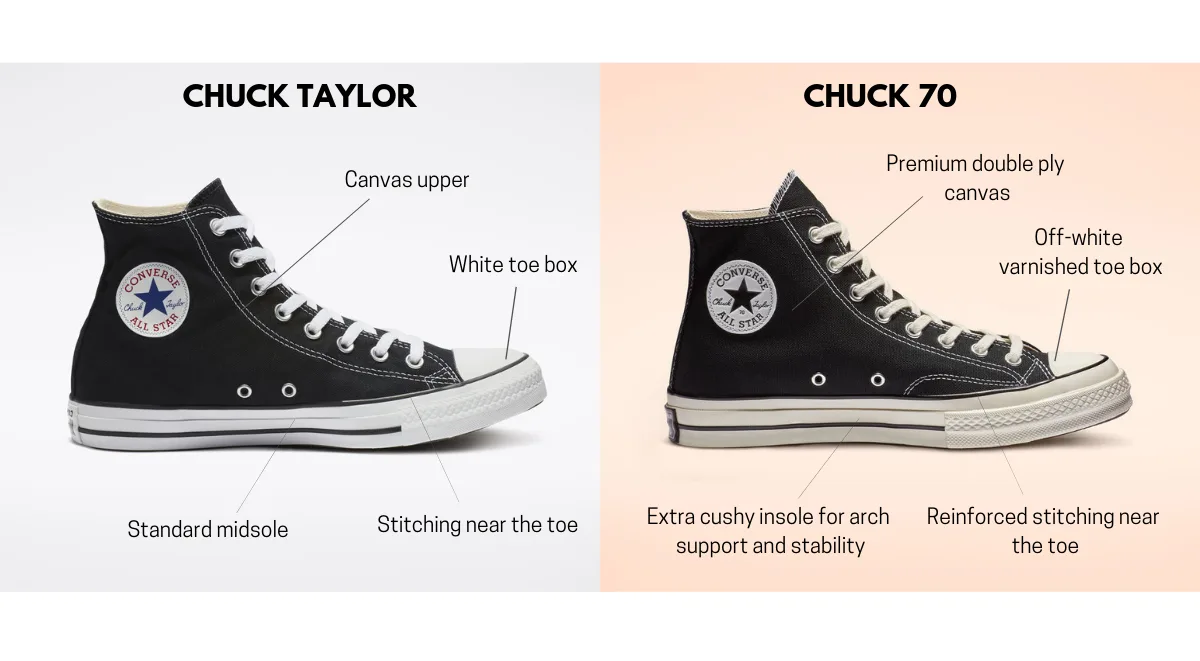
Image source: Web (Bing) / balance.warendorf-kuechenstudio.de (Web image (fair-use with source credit))
Quick Answer
The Converse Chuck 70 has far more cushioning than the standard All Star. It uses a thick polyurethane and OrthoLite footbed. The classic All Star uses thin, flat foam over hard fiberboard.
Chuck 70s absorb harsh shocks much better on concrete. Classic All Stars feel flatter, lighter, and closer to the ground.
Why Cushioning Between the All Star and Chuck 70 Divides Everyone
At a glance, both silhouettes share the same vintage basketball DNA created by Converse. Yet the experience of wearing them could not be more different. The classic Chuck Taylor All Star, known as the "Core" model, keeps the stripped-back build first popularized decades ago.
Many wearers love that classic setup specifically because it has almost zero padding. You get total ground feel, extreme flexibility, and an ultra-light shoe that bends with your foot. Weightlifters and barefoot shoe enthusiasts often swear by this direct connection to the floor.
On the other side are commuters, retail workers, and travelers who find the standard sole punishing. For them, walking miles on concrete without impact damping leads to arch soreness and heel bruises. The Chuck 70 was re-engineered specifically to fix that fatigue.
As of 2026, the Chuck 70 remains the go-to choice for people who want the iconic canvas look without the aching joints. It bridges the gap between old-school style and modern foam technology.
Inside the Build: Glued EVA Sheet vs. Dense OrthoLite-PU Footbed
Peeling back the interior reveals why these two shoes feel so different. In the classic All Star, the foot sits directly on a thin strip of ethyl-vinyl acetate (EVA) foam. This strip is glued firmly to a hard Strobel fiberboard base.
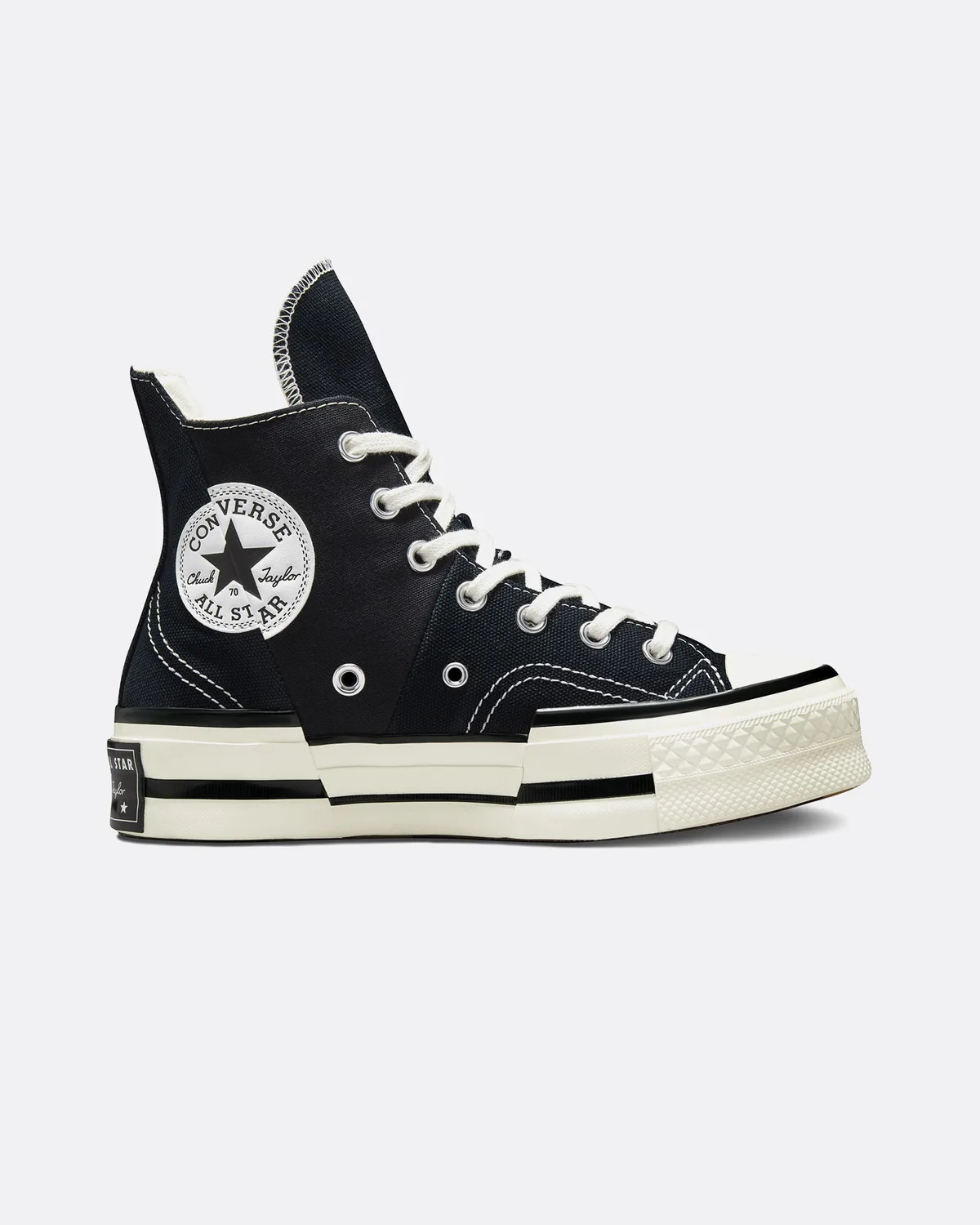
Image source: Web (Bing) / converse.com.uy (Web image (fair-use with source credit))
That classic foam layer measures roughly 2 to 3 millimeters thick. Within a few weeks of daily wear, the closed-cell foam compresses permanently. Once it bottoms out, your foot strikes the rigid rubber outsole with almost no shock absorption in between.
The Chuck 70 completely discards that glued-down construction. Inside, you find a substantial, removable drop-in footbed built from high-density polyurethane (PU). Polyurethane has exceptional rebound resilience, meaning it resists packing down flat over time.
Topped with an open-cell foam layer engineered by OrthoLite, the Chuck 70 footbed allows air circulation while dampening repetitive micro-impacts. The heel section swells to roughly 12 to 14 millimeters of structured foam before tapering down toward the forefoot. Underneath, a soft canvas lining prevents your socks from slipping.
Head-to-Head Cushioning Specs and Material Comparison
To understand how each shoe manages impact, it helps to look at the raw specifications. Midsole geometry and rubber density dictate how forces travel up your legs.
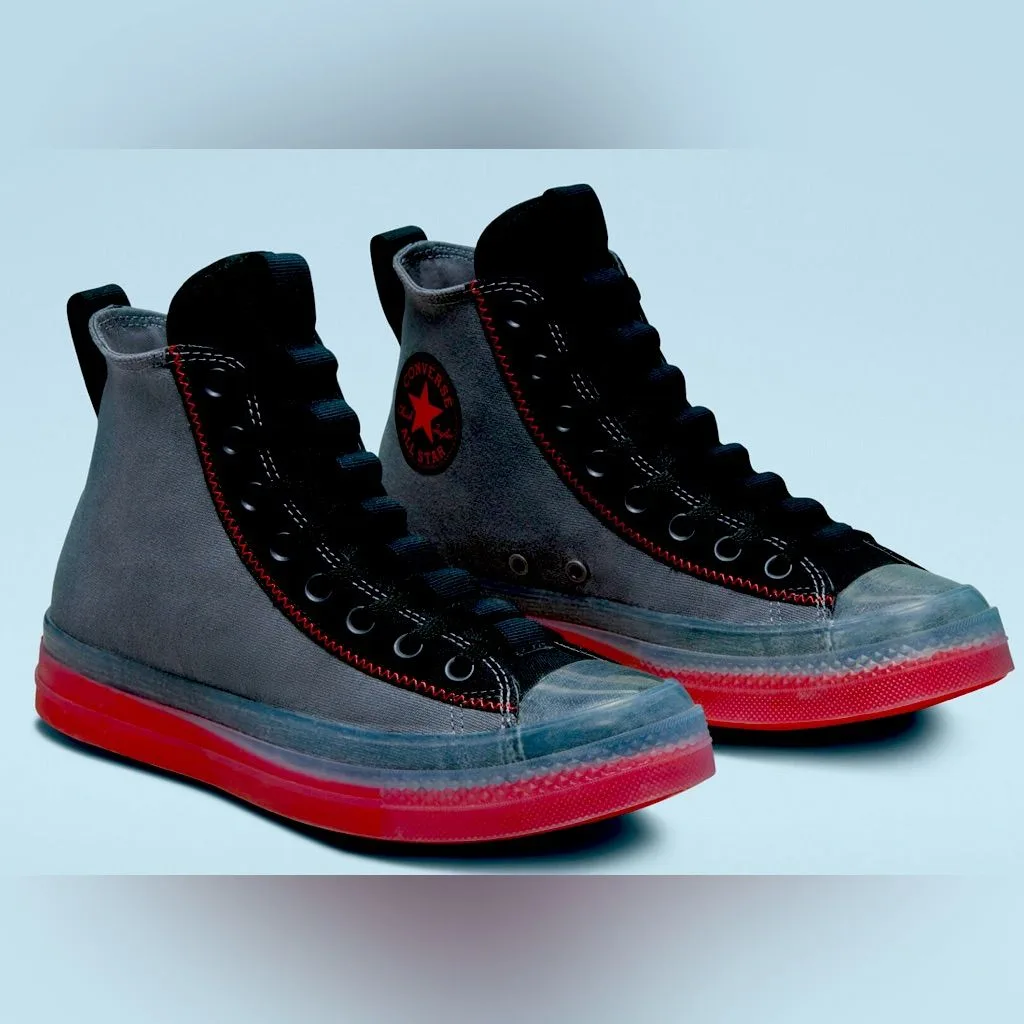
Image source: Web (Bing) / pinterest.com (Web image (fair-use with source credit))
The sidewalls, known as the foxing tape, play a major structural role. The Chuck 70 features vulcanized rubber foxing that is approximately 5 millimeters taller than the classic version. This creates a deep cup that securely cradles the thick PU insole.
| Spec / Feature | Classic Chuck Taylor All Star | Chuck 70 Heritage Reissue |
|---|---|---|
| Footbed Material | Glued 2–3mm EVA foam sheet | Removable dual-density PU + OrthoLite |
| Heel Thickness | ~3mm total underfoot foam | ~12mm–14mm contoured foam |
| Insole Removability | Glued tight (hard to remove) | Fully removable drop-in footbed |
| Sub-Insole Base | Rigid cellulose fiberboard | Finished canvas Strobel layer |
| Foxing Tape Height | Standard low-profile matte rubber | ~5mm taller, varnished gloss rubber |
| Approximate Weight | ~11–13 oz per shoe | ~17–18.5 oz per shoe |
| Primary Feel | Firm, raw, flexible, flat | Springy, supportive, dense, shock-absorbing |
Because the classic sole lacks vertical depth, it flexes instantly right out of the box. The Chuck 70 feels notably more rigid across the midfoot. The taller, heavier rubber walls absorb side-to-side torsion, keeping your foot steady.
Real-World Impact: All-Day Walking, Standing Shifts, and Heavy Lifting
Underfoot cushioning changes how you use each sneaker throughout the day. Where one model shines, the other can become a liability depending on the activity.
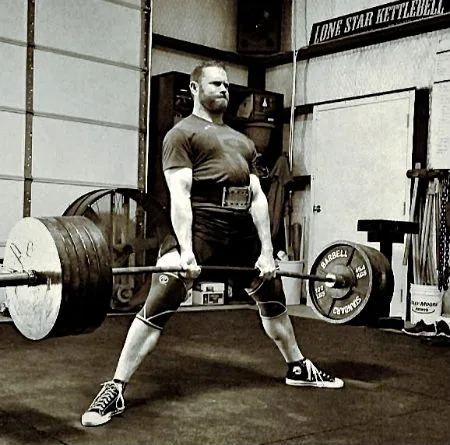
Image source: Bing (Web (fair-use with source credit))
If you stand for eight hours on hard tile or walk five miles across city concrete, the Chuck 70 is vastly superior. Aggregate user feedback consistently highlights reduced heel throb and less calf tightness after long shifts. The PU foam softens the harshness of continuous hard surface strikes.
Gym environments tell the opposite story. For powerlifting, squats, and deadlifts, athletes prefer the standard All Star.
- Heel Compression: The Chuck 70 foam can compress slightly under heavy barbell loads, creating minor instability.
- Ground Proprioception: The thin classic sole keeps your center of gravity low and delivers instant tactile feedback from the floor.
- Energy Transfer: Classic All Stars have zero squish, giving you a firm, non-compressible driving platform.
For pure athletic stability in the gym, the classic model wins. For daily commuting, travel, and prolonged pavement pounding, the Chuck 70 prevents early foot fatigue.
The Hidden Trade-Offs: Extra Weight, Foxing Stiffness, and Break-In Time
More cushioning is not always an automatic upgrade for every wearer. The thick components of the Chuck 70 introduce distinct mechanical trade-offs you should consider.
First is the weight penalty. The dense polyurethane footbed, 12-ounce duck canvas, and elevated rubber foxing add real heft. A single Chuck 70 weighs roughly 5 ounces more than a classic All Star.
Over thousands of steps, that extra mass is noticeable on your ankles.
Second is the break-in timeline. Classic Chucks are soft, pliable, and comfortable on day one because their canvas is light and their sole is thin. The Chuck 70 requires patience.
Its thick vulcanized sidewalls resist bending at the ball of the foot until you have put 10 to 15 miles into them.
Finally, the higher sidewalls cut down on foot ventilation. The heavy canvas and thick foam in the Chuck 70 trap more body heat than the lightweight, unlined shell of the classic All Star.
Sizing, Squeaks, and Arch Support: Practical Fixes for Both Pairs
The extra volume of the Chuck 70 insole directly alters how the shoe fits on your foot. Because that dense polyurethane footbed takes up vertical interior space, the shoe wraps tighter over the bridge of your instep.
Most wearers need to go down a half size from their regular sneaker size in both models. If you have wide feet, stick with your true size in the Chuck 70. The reinforced canvas does not stretch as readily as the thin classic shell, which can pinch your outer toes.
A common issue with the Chuck 70 is internal squeaking. As you step, the polyurethane footbed rubs against the rubber sidewall and canvas lining, producing a noticeable chirp. You can cure this instantly by lifting the removable insole and dusting a light coat of baby powder underneath.
For anyone who relies on custom orthotics, the Chuck 70 is the clear choice. The factory insole lifts right out, creating a clean, level cavity for medical inserts. Pulling the glued foam out of a classic All Star usually tears the underlying cellulose board and ruins the shoe.
Frequently Asked Questions
Can you put Chuck 70 insoles into regular All Stars?
You can, but it makes the fit uncomfortably tight. The standard All Star upper has less vertical clearance. Dropping a thick 14mm Chuck 70 footbed inside crushes your toes against the top canvas and forces your heel to slip out of the low collar.
Are Chuck 70s good for plantar fasciitis?
They are much better than classic All Stars, but they are not dedicated orthopedic footwear. The PU insole offers moderate arch contouring and good heel impact dampening. If you need rigid plantar support, remove the stock footbed and swap in a dedicated podiatric insert.
Why do Chuck 70s squeak when walking?
The squeak comes from friction between the dense polyurethane footbed and the smooth canvas interior. Moisture from sweat worsens the rubbing sound. Removing the insole and applying foot powder or placing a thin dryer sheet on the Strobel floor solves the noise permanently.
Do Converse Chuck 70s get softer over time?
Yes, the underfoot feel improves significantly after about two weeks of consistent wear. The dense polyurethane molds subtly to your foot depressions, while the stiff vulcanized rubber sole loosens up at the ball of the foot. Classic All Stars feel soft immediately but degrade quickly.
Are Chuck 70s zero-drop shoes?
Neither model is strictly zero-drop, but both sit very close to the ground. The classic All Star has a roughly 2mm to 3mm drop from heel to toe. The Chuck 70 has an estimated 4mm to 5mm drop due to the wedge-shaped heel contour of its footbed.
The Verdict: Which Footbed Actually Earns the Price Difference?
The price gap between these two icons usually sits around $25 to $30. When you look strictly at underfoot construction, the Chuck 70 easily earns that premium.
Choose the Chuck 70 if you want an everyday casual sneaker that survives miles of walking on hard pavement. The combination of dense polyurethane, an OrthoLite top layer, and elevated foxing walls delivers genuine shock absorption that lasts for years without flattening out.
Choose the classic Chuck Taylor All Star if you specifically want a lightweight, stripped-down shoe. It remains the superior option for barbell training, deadlifts, and anyone who prefers pure ground feel over squish. Your knees and heels will tell you right away which platform fits your lifestyle.

Similar Posts