Birkenstock Boston Suede vs Oiled Leather: Which to Buy?
Founder & Fashion Creative Director at Julia Fashionista · CFDA Fashion Scholar, Certified Image Consultant (AICI) · 12+ years in editorial wardrobe styling, sustainable textile sourcing, and luxury capsule curation
Choosing between the Birkenstock Boston suede vs oiled leather comes down to a direct trade-off between out-of-the-box comfort and long-term durability. Both share the exact same cork-latex foundation, but they behave like two completely different shoes on your feet.
Manufacturer specifications indicate that the oiled leather variant uses a sturdy 2.8 to 3.2 mm full-grain hide, while the suede version features a flexible, buffed split leather. That structural difference changes everything from break-in time to how easy it is to slide your foot inside.
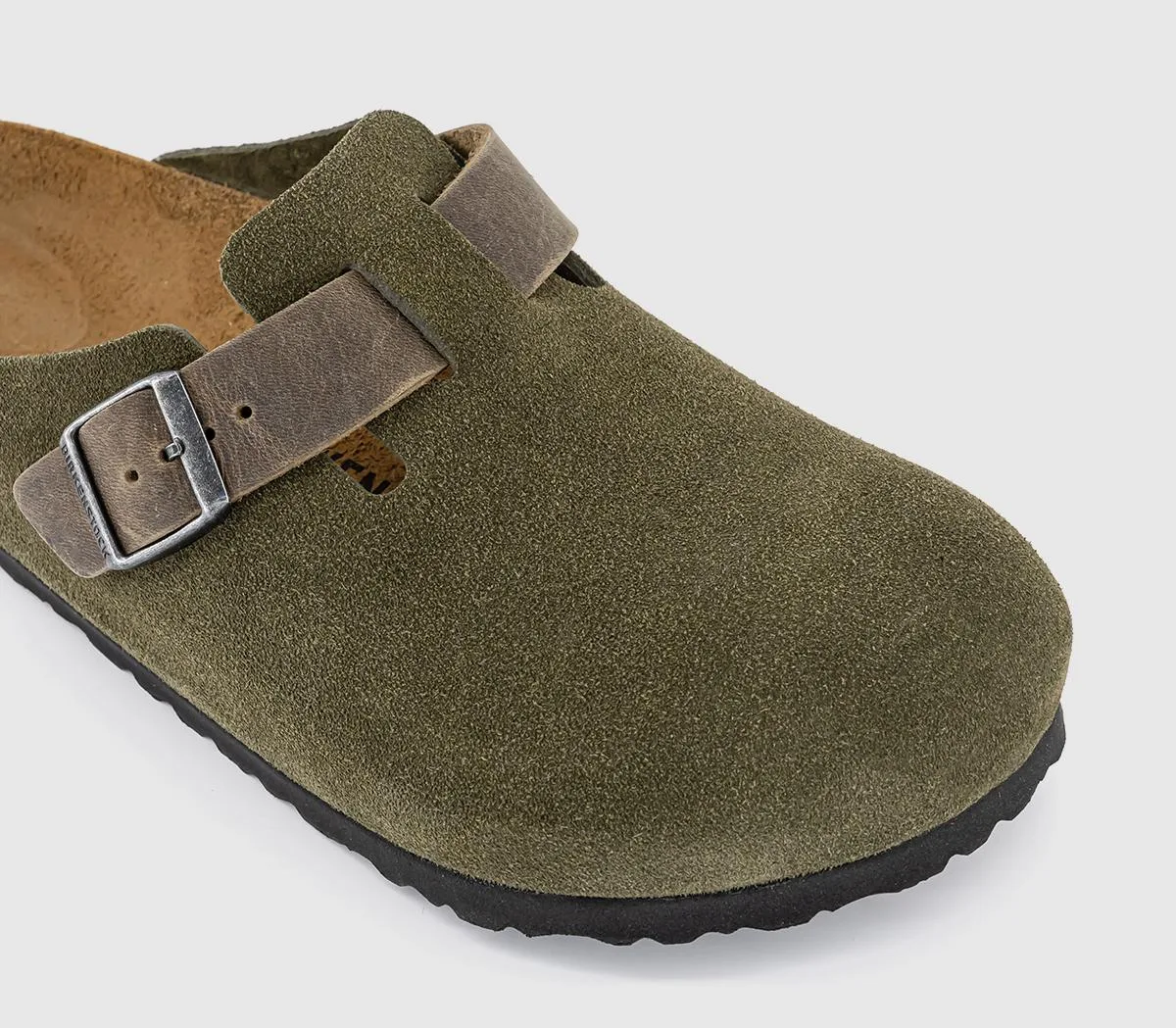
Image source: Web (Bing) / office.co.uk (Web image (fair-use with source credit))
Quick Answer
The Birkenstock Boston suede vs oiled leather choice depends on your daily habits. Suede offers immediate, pillowy comfort with zero break-in pain. It absorbs water easily and collapses when taken off.
Oiled leather is tough, moisture-resistant, and holds its dome shape for hands-free entry. It requires a stiff, two-week break-in across the instep.
The Core Dilemma: Two Different Animals on the Same Footbed
Underneath the upper, both models are identical. You get the signature contoured cork footbed, the raised toe bar, deep heel cup, and dual jute layers. Yet, aggregate user reviews show that customer satisfaction splits dramatically based on upper material.
The core dilemma is simple:
- Suede feels like a broken-in slipper on day one, but it demands active protection from moisture, spills, and heavy wear.
- Oiled leather feels like a stiff work boot across the top of your foot at first, but it rewards patience with bulletproof resilience and a rich patina.
If you hate feeling pressure on your instep, suede solves that instantly. If you hate bending down to pull your shoes on every single time, oiled leather is the right path.
Upper Construction and Materials: Suede vs. Oiled Leather
Understanding how these hides are processed explains why they act so differently under daily stress. The Leather Working Group evaluates tanneries for environmental performance, and Birkenstock sources its materials through certified operations that treat these hides using distinct tanning methods.
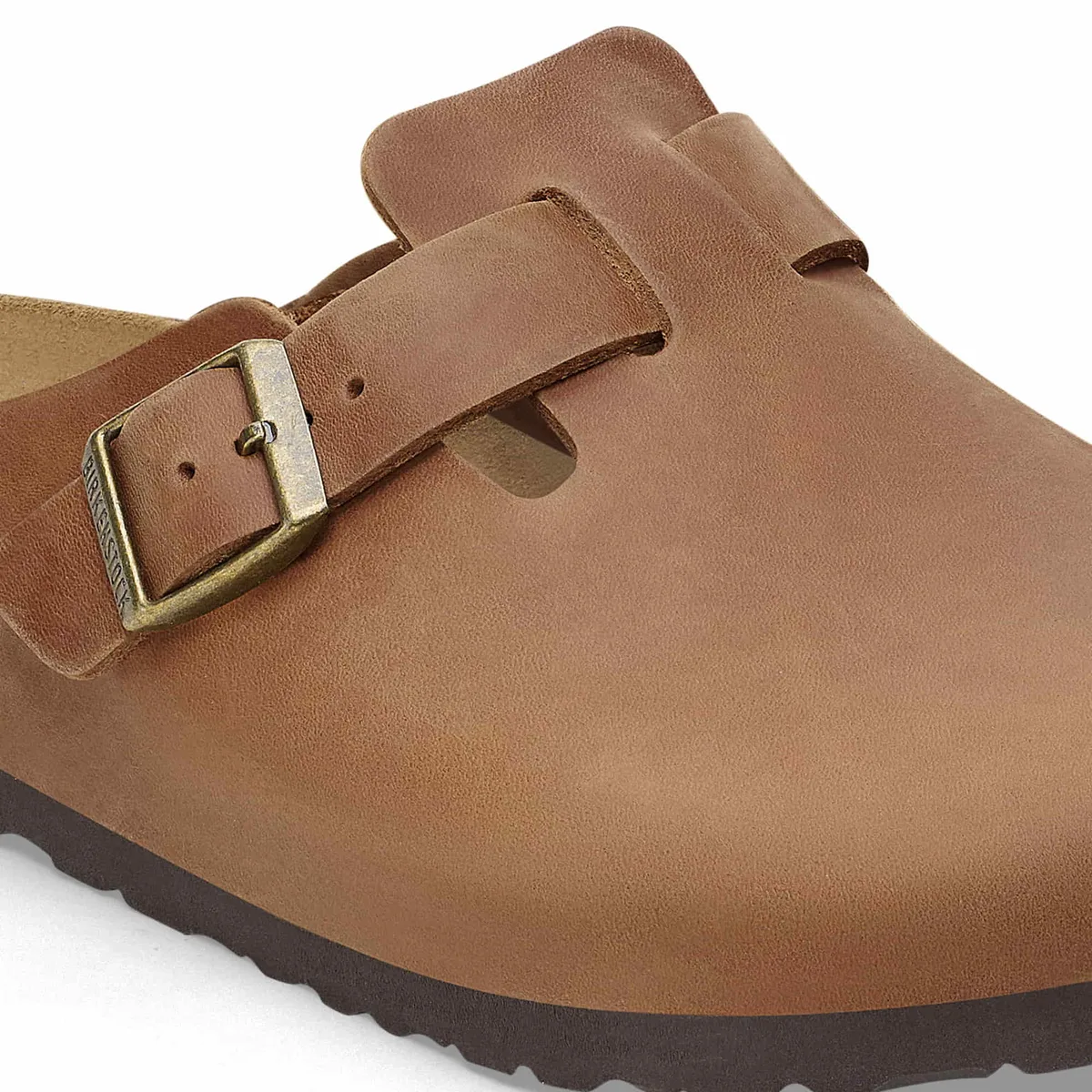
Image source: Web (Bing) / birkenstock.in (Web image (fair-use with source credit))
The Suede Boston: Split Leather and Velvet Nap
Birkenstock makes its suede uppers from split leather. During processing, the tanners separate the top grain from the lower flesh layer of the hide. The resulting split hide is buffed heavily to create a soft, velvet-like nap.
This material lacks the tight, dense outer fiber structure of full-grain hide. Because of this, it is exceptionally pliable, breathable, and soft against bare skin. However, that open nap also makes the material porous, allowing oils, dirt, and water to penetrate deep into the fibers.
The Oiled Boston: Heavyweight Full-Grain Pull-Up Leather
The oiled leather Boston uses a substantial 2.8 to 3.2 mm thick full-grain cowhide. Instead of buffing the surface away, tanners leave the original outer grain intact and saturate it with heavy oils and waxes.
This creates an unmistakable "pull-up" effect. When you bend or flex the shoe, the oils migrate within the fibers, temporarily lightening the leather in high-crease areas. Rubbing the spot with your thumb warms the wax and redistributes the color, creating a natural, self-healing surface that shrugs off scuffs.
The Break-In Reality: Instant Comfort vs. The 2-Week Instep War
The break-in experience for these two clogs represents opposite ends of the footwear spectrum. While the cork footbed takes roughly 20 to 30 hours of foot heat and pressure to mold to your arches on both, the upper tells a completely different story.
Suede requires zero break-in period. You can lace up a fresh pair, step out the door, and walk three miles without a single hot spot. The velvety split leather yields immediately to your foot's natural flexion, making it the clear winner for barefoot wearers and sensitive feet.
Oiled leather demands patience. Out of the box, the heavy waxed hide sits stiff and unyielding over the dorsal nerve along the top of your instep. In our research, verified buyer feedback consistently notes an "instep bite" during the first 10 to 14 days of wear.
To survive the oiled leather break-in without blisters, follow this simple protocol:
- Wear thick wool socks for your first 10 outings to cushion the friction against your instep.
- Unbuckle the strap one notch looser than your normal setting until the leather softens.
- Flex the upper manually with your hands while watching television to work the waxes through the hide.
- Limit wear to 2-hour windows around the house before taking them on extended outdoor walks.
Structural Integrity and Fit Over Time: The "Collapsing Vamp" Factor
One of the biggest functional differences between these two shoes is how they sit on your floor when you take them off. This simple physical behavior changes how you interact with the shoe every day.
The oiled leather upper forms a rigid, self-supporting structural dome. When you slide your foot out, the shoe holds its shape completely open. That means you can kick them off by the back door, come back hours later, and slide your feet right back inside without bending down, using hands, or pulling straps.
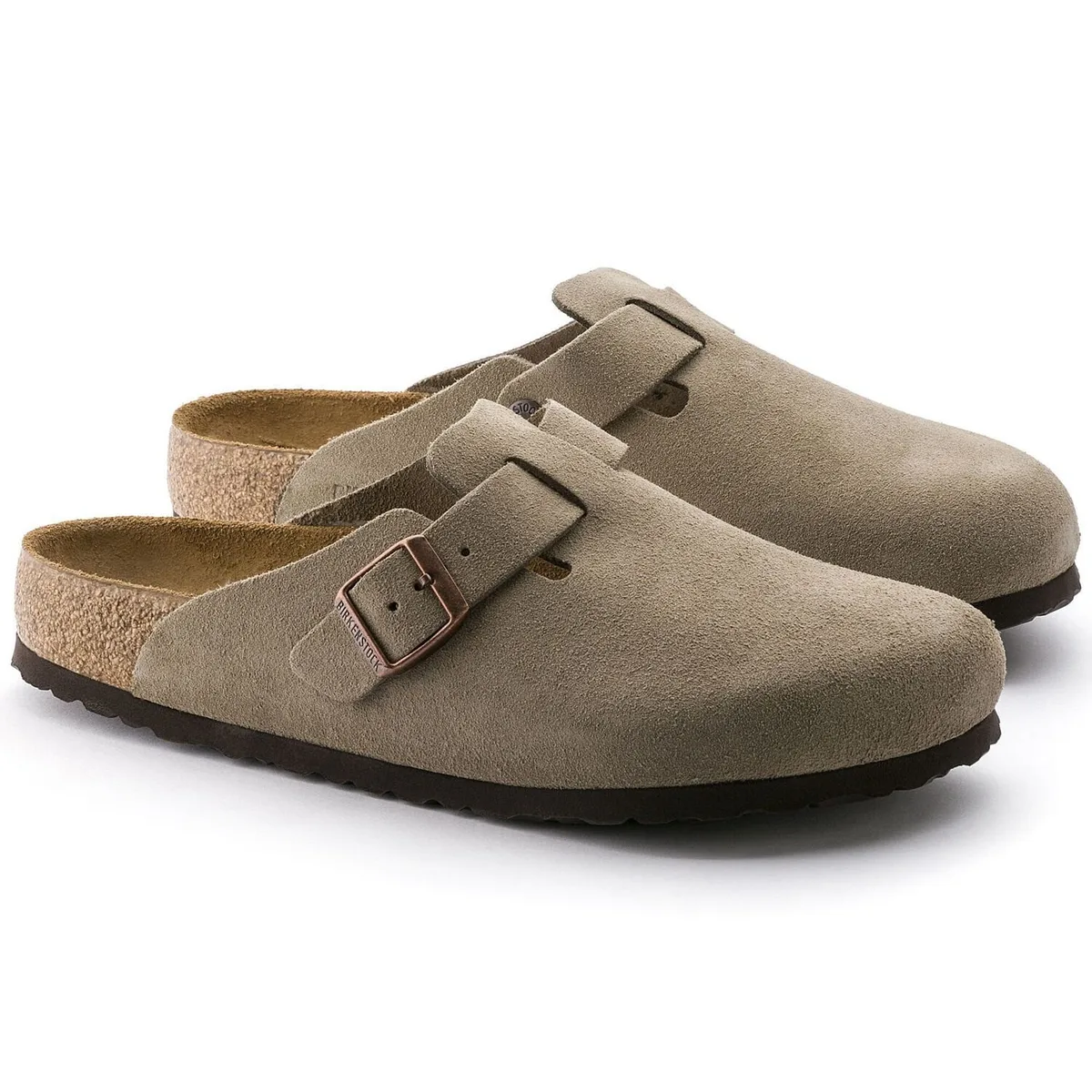
Image source: Web (Bing) / birkenstock.com (Web image (fair-use with source credit))
The suede upper, by contrast, has no internal stiffener. Without a foot inside to support it, the unlined vamp immediately flops flat against the footbed. You cannot slide into a suede Boston hands-free; you must physically bend down, pull the upper open, and wiggle your foot inside.
Furthermore, suede stretches substantially over time. As of 2026, user sizing logs indicate that suede Bostons stretch roughly a half-size across the width after six months of steady wear.
Many owners eventually need to punch an extra hole in the instep strap to keep them secure. Oiled leather stretches minimally, loosening just enough to match your unique foot contours without losing structural support.
Weather Resistance, Longevity, and Cleaning Demands
How your shoes handle the elements dictates how much time you will spend maintaining them over their lifespan. Unfinished suede and treated oiled leather require completely different care strategies to stay wearable.
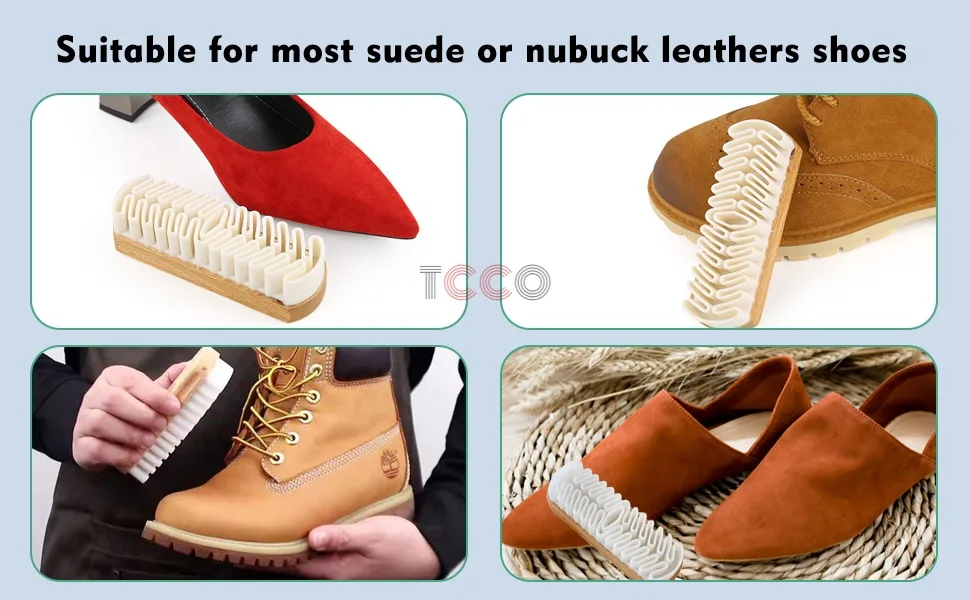
Image source: Web (Bing) / amazon.in (Web image (fair-use with source credit))
Suede acts like a moisture magnet. A single puddle splash or kitchen grease drop can leave a permanent dark mark on untreated nap. While you can protect suede with a fluorocarbon-free water-repellent spray, you still cannot wear it in steady rain without risking water spotting and matting the velvet texture.
Cleaning suede requires dry friction tools: a brass-bristle brush, a crepe block, and a suede eraser to lift ground-in dirt.
Oiled leather is built for rougher conditions. The dense wax saturation naturally repels light rain, slush, and street dust. Dirt wipes away with a damp cloth, and light scrapes disappear with a dab of leather balm or a quick buff with a horsehair brush.
If you plan to wear your clogs year-round across wet sidewalks or gravel paths, oiled leather offers far greater protection and a much simpler maintenance routine.
Side-by-Side Comparison: Suede vs. Oiled Leather Boston Specs
Comparing the physical specifications of each clog clarifies where your money goes. Both options retail between $145 and $160, but their build traits attract different routines.
| Feature | Suede Boston | Oiled Leather Boston |
|---|---|---|
| Leather Cut | Split-hide suede | Full-grain cowhide |
| Material Thickness | 1.8 to 2.2 mm | 2.8 to 3.2 mm |
| Upper Finish | Buffed velvet nap | Waxed pull-up oil treatment |
| Upper Break-In | 0 to 2 days (immediate) | 10 to 14 days (stiff instep) |
| Structural Shape | Collapses flat | Self-supporting dome |
| Hands-Free Slide-In | No (requires hands) | Yes (slip on and go) |
| Moisture Tolerance | Poor (stains and mats) | Fair to good (sheds light water) |
| Long-Term Stretch | High (stretches half-size) | Low (micro-molds to foot) |
| Care Tools Needed | Crepe brush, suede eraser | Horsehair brush, leather balm |
These specs show a clear functional divide. Suede prioritizes lightweight comfort right away. Oiled leather trades short-term ease for a self-supporting build that stands up to rugged everyday wear.
Which One Should You Buy? Concrete Use Cases
Choosing the right pair comes down to your local climate, your wardrobe style, and how you wear your shoes daily. Match your lifestyle against these concrete scenarios.
Buy the Suede Boston If:
- You plan to wear them mostly indoors or in dry climates. Suede makes a premier house shoe or warm-weather slip-on. It handles dry pavement, office carpets, and hardwood floors with ease.
- You refuse to endure a painful break-in period. If your dorsal instep bone is sensitive, the plush nap of suede eliminates the bruising common with stiff leathers.
- You prefer a relaxed, low-profile silhouette. Suede drapes naturally over the foot. It pairs easily with wide-leg denim, linen trousers, and loose loungewear.
- You have wide feet or minor bunions. Suede split leather yields to wide pressure points within your first hour of wear.
Buy the Oiled Leather Boston If:
- You want a true hands-free slip-on. If you constantly run outside to grab the mail, take out the trash, or walk the dog, the rigid dome lets you slide in without bending over.
- You live in wet, unpredictable regions. The heavy wax saturation protects the leather from morning dew, sidewalk splashes, and light autumn rain.
- You want a shoe that looks better as it ages. Scuffs, scratches, and daily bends build a distinct personal patina that you can easily refresh with conditioning cream.
- You pair your clogs with thick socks for cold weather. The structured dome provides ample clearance for heavy knit socks without clamping down on your toes.
Frequently Asked Questions About Birkenstock Boston Materials
Does oiled leather stretch as much as suede?
No, oiled leather stretches far less than suede. Full-grain oiled leather softens and micro-molds around pressure points, but its dense grain keeps the original structural shape. Split suede has looser fibers, which often causes the vamp to loosen by roughly half a shoe size after months of wear.
Can you make the oiled leather Boston waterproof?
You cannot make oiled leather fully waterproof, but you can make it highly water-resistant. Applying an all-natural beeswax conditioner or specialized leather dressing seals the seams and coats the grain. This treatment helps the clog repel light rain, slush, and puddles without staining the hide.
Why do my oiled leather Bostons look scratched out of the box?
Oiled leather features a pull-up wax finish that shifts shade whenever the hide is bent or rubbed. What looks like scratches are simply displaced surface oils from shipping. Rubbing the marked spot briskly with a clean thumb or a horsehair brush warms the wax and makes the marks fade.
Will suede Bostons ruin if they get wet?
Getting caught in light rain will not permanently ruin suede Bostons, but prolonged soaking can stiffen the nap. If they get soaked, stuff the toes with paper towels to hold their shape and let them air dry away from direct heat. Once dry, brush them firmly with a crepe brush.
Do suede Bostons run bigger than oiled leather?
Both models share the exact same cork footbed measurements, so they fit true to size when brand new. However, suede feels roomier much faster because the split leather stretches quickly across the bridge of your foot. If you are between sizes, size down in suede.

Similar Posts