Ceramic Watch Bands: Scratch-Proof or Shatter Risk?
Founder & Fashion Creative Director at Julia Fashionista · CFDA Fashion Scholar, Certified Image Consultant (AICI) · 12+ years in editorial wardrobe styling, sustainable textile sourcing, and luxury capsule curation
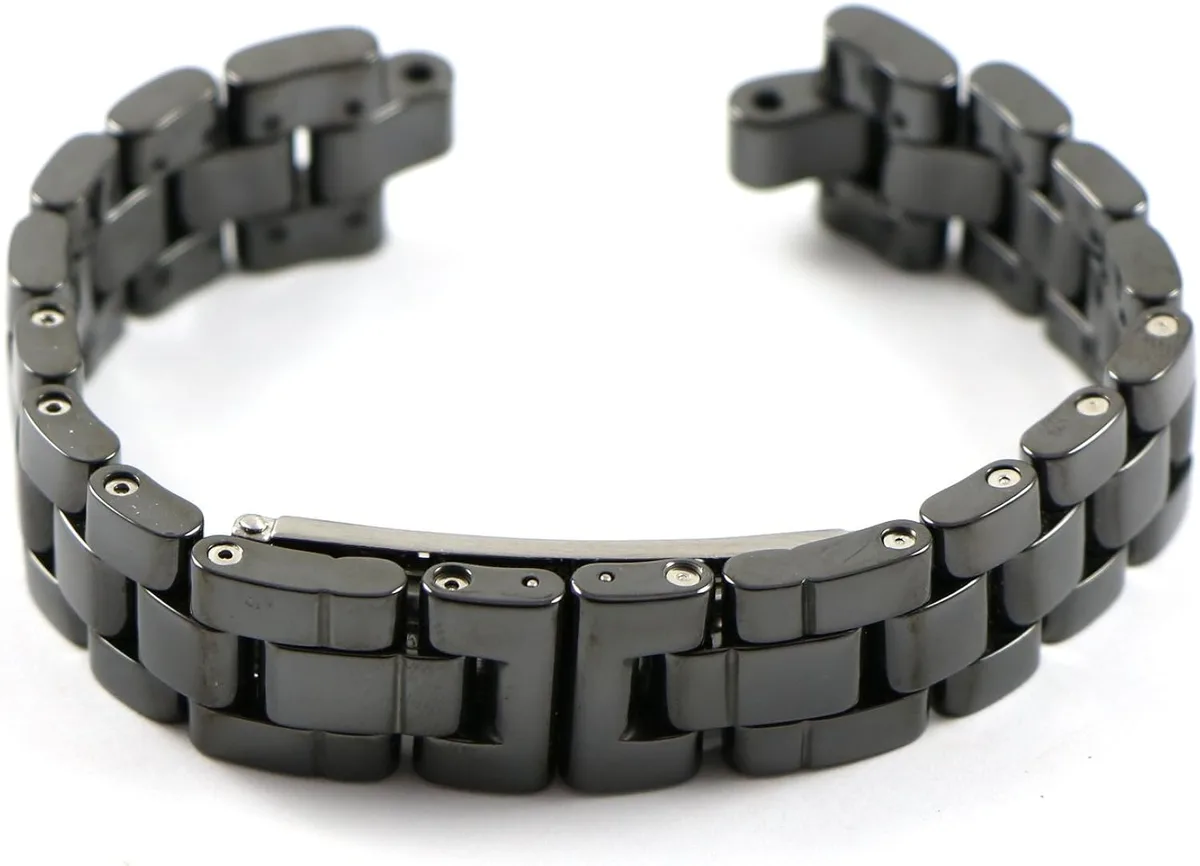
Choosing a watch bracelet usually comes down to durability and daily comfort. A ceramic watch band scratch resistant shatter risk trade-off defines the entire ownership experience. You gain an ultra-hard surface that shrugs off daily friction, but you accept a material that behaves very differently from steel when dropped.
Image source: Bing (Web (fair-use with source credit))
Technical data from the National Institute of Standards and Technology shows that engineered ceramics feature exceptional hardness ratings alongside lower mechanical impact thresholds. That structural balance explains why ceramic never oxidizes or scuffs, yet demands mindful handling around hard floors. Here is how that physical balance shapes real-world performance.
Quick Answer
A ceramic watch band scratch resistant shatter risk balance favors surface wear over drops. Ceramic rates between 1,200 and 1,500 Vickers hardness. It will not scratch against desks, cuffs, or keys.
It lacks the tensile elasticity of metal. A direct drop onto tile can shatter the links.
The Ceramic Trade-Off: Pristine Hardness vs. Brittle Reality
Engineering materials always force a compromise between hardness and plasticity. Metals deform under stress, which creates dents and deep scratches while absorbing kinetic energy. High-tech ceramic behaves in the exact opposite manner.
It resists deformation entirely until reaching its breaking threshold.
The surface remains glossy or satin-smooth because common environmental hazards cannot bite into it. Dust, sand grains, and metal tools slide off without leaving a trace. That makes the band look brand new after years of heavy wrist wear.
The flip side is brittle failure mechanics. When an external force exceeds the tensile threshold, the material cannot bend to dissipate the load. It releases that force by propagating micro-cracks through the link body.
You trade visible cosmetic aging for an absolute structural limit.
| Material Property | High-Tech Ceramic ($\text{ZrO}_2$) | 316L Stainless Steel |
|---|---|---|
| Hardness Range | 1,200 to 1,500 HV | 150 to 200 HV |
| Fracture Toughness ($K_{1c}$) | 5 to 8 $\text{MPa}\cdot\text{m}^{1/2}$ | 50+ $\text{MPa}\cdot\text{m}^{1/2}$ |
| Scratch Resistance | Extreme (Immune to metals) | Low (Scuffs easily) |
| Impact Failure Mode | Fractures / Shatters | Dents / Bends |
| Skin Interaction | Hypoallergenic / Inert | Contains nickel traces |
Inside High-Tech Ceramic: What Makes Zirconia So Tough Yet Fragile
Horology applications rely on zirconium dioxide ($\text{ZrO}_2$), commonly called zirconia. Manufacturers mix fine zirconia powder with binder agents and stabilize it using yttria. This creates yttria-stabilized tetragonal zirconia polycrystal, known as Y-TZP in materials science.
The blended powder enters precision molds before heading into high-temperature sintering furnaces. Temperatures reach over 1,400 degrees Celsius during this phase. Sintering closes all microscopic voids and shrinks the component into a dense, solid crystalline matrix.
Diamond paste polishers then shape the final exterior.
Y-TZP achieves remarkable compressive strength during sintering. It handles pressure squeezed directly against the link without flinching. The crystalline structure lacks slip planes, however.
Those slip planes allow metals to shift their atoms without separating. Without them, zirconia cannot flex under sudden shear stress.
Scratch Resistance Tested: Desk Divers, Micro-Abrasion, and Daily Wear
Daily wear exposes bracelets to constant friction against laptop casings, granite countertops, and car doors. Watch enthusiasts call clasp abrasions "desk diving marks." Traditional steel clasps pick up hairline swirlies within weeks of regular typing.
A sintered zirconia bracelet remains completely unaffected by these hazards. On the Mohs scale of mineral hardness, high-tech ceramic sits between 8 and 8.5. Most metals, including hardened steel files, sit below 6.5.
A standard aluminum laptop lid cannot displace the ceramic surface.
Micro-abrasions from airborne dust represent another hidden hazard for luxury jewelry. Normal household dust contains silica particles, which rate at 7 on the Mohs scale. Silica easily carves swirls into polished gold and raw steel.
Ceramic rates higher than ambient quartz, ensuring the original factory finish stays clear through 2026 and beyond.
The Shatter Factor: Impact Physics, Tile Floors, and Weak Points
While ceramic repels abrasion, blunt trauma reveals its primary vulnerability. The fracture toughness ($K_{1c}$) of zirconia hovers between 5 and 8 $\text{MPa}\cdot\text{m}^{1/2}$. Stainless steel exceeds 50 $\text{MPa}\cdot\text{m}^{1/2}$, offering roughly ten times more resistance to crack growth.
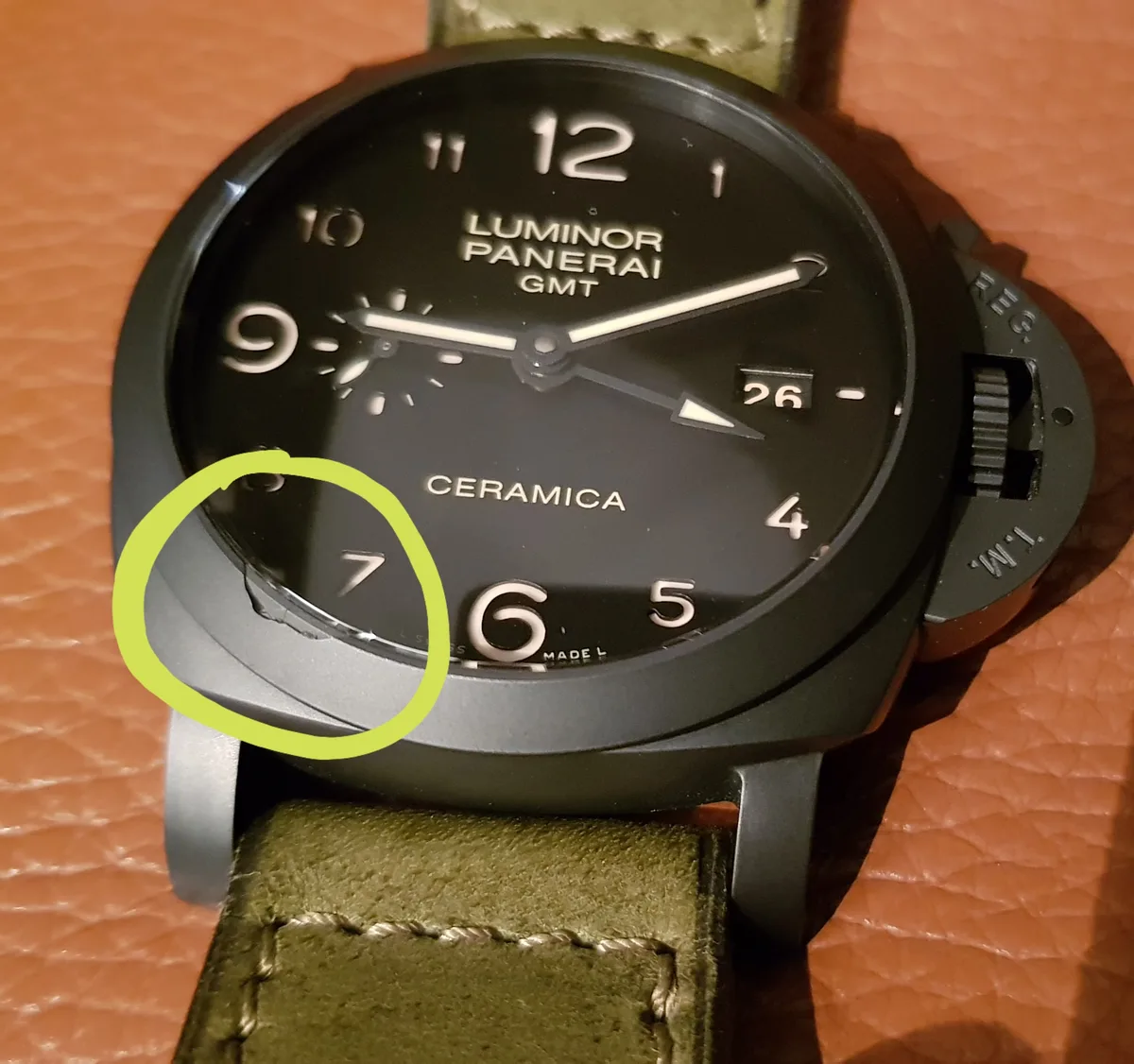
Image source: Bing (Web (fair-use with source credit))
When a ceramic bracelet hits an unyielding surface, energy cannot disperse through mechanical flexing. The shock wave travels straight through the crystalline body.
Common high-risk fracture zones include:
- The thin walls surrounding internal pin bores
- Chamfered outer edges where links strike edges first
- Connection points around deployment clasp assemblies
- Links struck while resting on bathroom porcelain or ceramic floor tiles
A fall from chest height onto soft carpet poses virtually no threat to ceramic links. The danger spikes when the drop lands on polished granite or unyielding ceramic tile. In those specific scenarios, the impact force concentrates on a tiny contact point, shattering individual links instantly.
Head-to-Head: Ceramic vs. Stainless Steel, Titanium, and DLC
Choosing the right bracelet material requires evaluating your daily work environment against physical material properties. Each option balances wear resistance and shock tolerance in distinct ways.
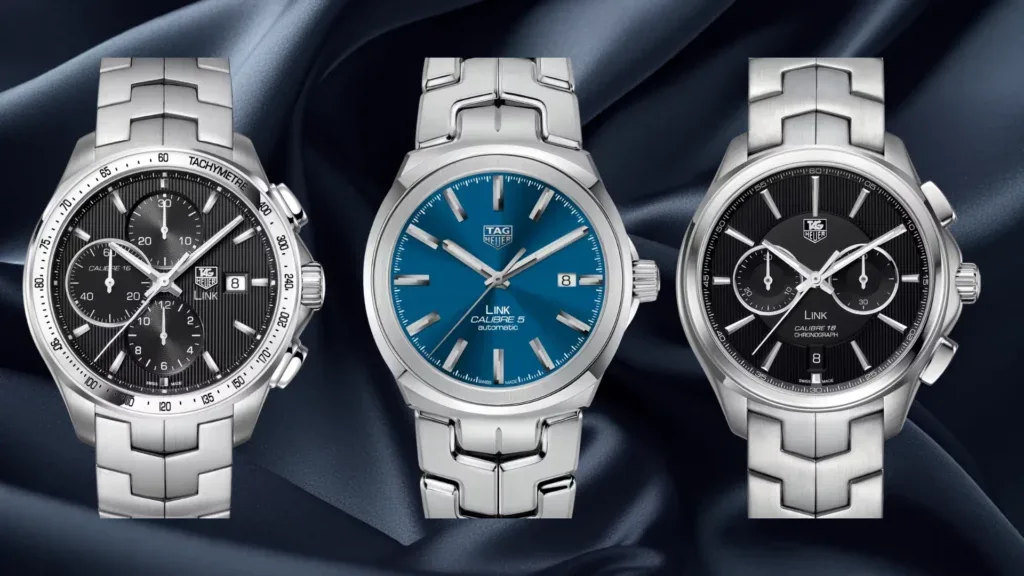
Image source: Bing (Web (fair-use with source credit))
Standard 316L surgical stainless steel remains the universal baseline. It is cheap to produce, easy to re-brush, and impossible to shatter with hand tools. It scuffs constantly, however, losing its luster quickly under heavy use.
Grade 5 titanium provides exceptional tensile strength at roughly 45 percent less weight than steel. It absorbs hard knocks easily, though raw titanium oxidizes into a dull gray and shows rub marks quickly. Diamond-Like Carbon (DLC) coatings try to bridge the gap by applying a razor-thin layer of carbon over metal.
DLC offers impressive scratch resistance, but the underlying metal substrate can still dent beneath the coating.
Ceramic remains the clear winner for desk workers and urban commuters who hate visible swirlies and desire a hypoallergenic, skin-temperature band. Tradespeople, industrial workers, and outdoor athletes should lean toward titanium or steel to eliminate drop-failure risks entirely.
Living with Ceramic: Sizing Hazards, Maintenance, and Everyday Protection
Sizing a ceramic bracelet presents the highest risk of accidental breakage outside of a hard floor drop. Traditional steel links tolerate forceful hammer strikes against pin pushers. Trying that approach with ceramic usually cracks the link right down the center bore.
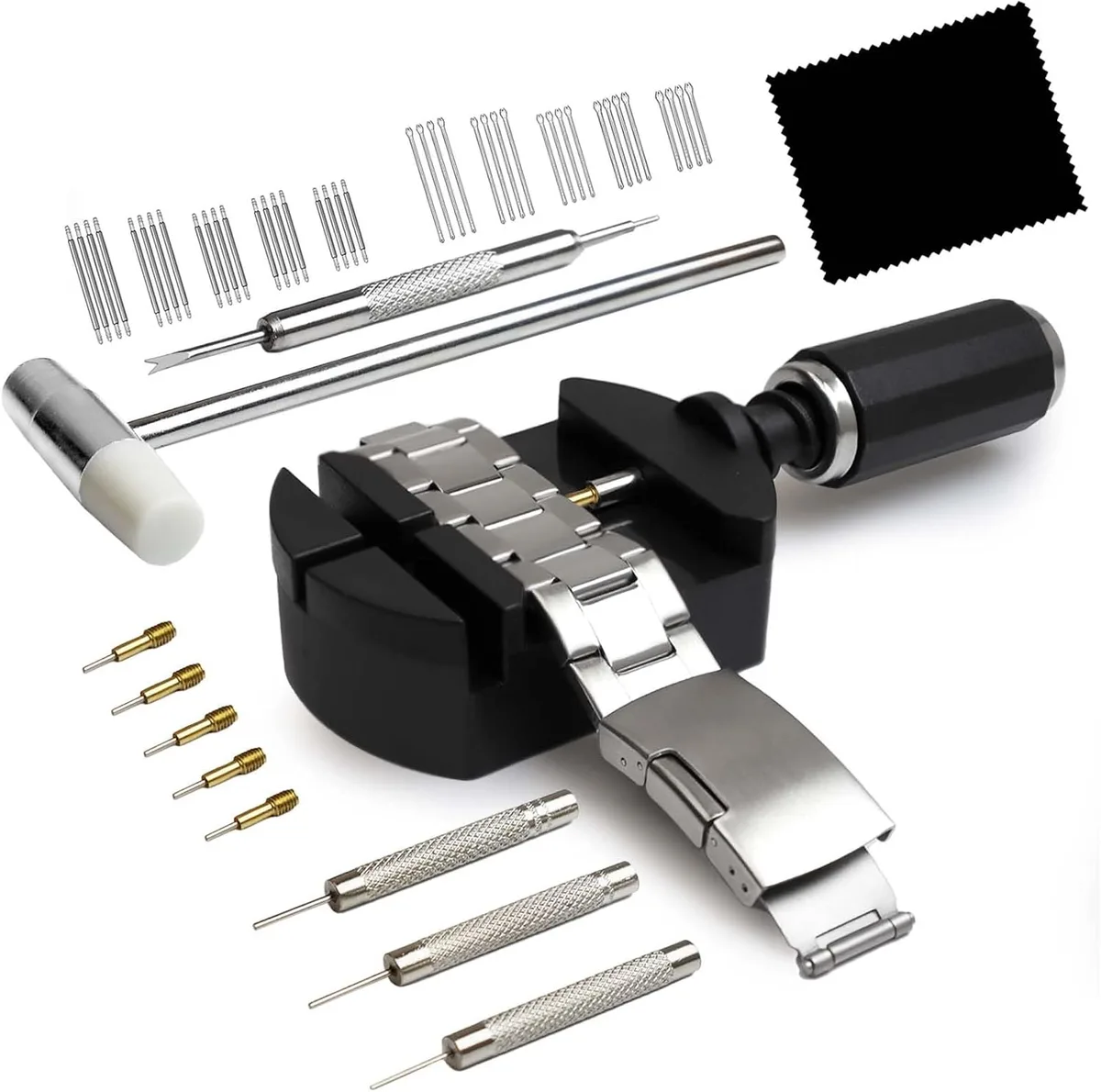
Image source: Bing (Web (fair-use with source credit))
Most ceramic bracelets use internal friction pins seated inside split metal collars. Some brands rely on threaded micro-screws running through metal sleeves. The ceramic link should never contact the driving tool directly.
Using a dedicated screw-type link removal tool applies smooth, linear pressure that prevents uneven lateral torque.
Daily cleaning requires very little effort because high-tech ceramic is chemically inert. Sweat, salt water, and sunscreen wipe away without causing surface pitting or discoloration. A soft microfiber cloth with warm water and mild dish soap keeps the band clean.
Skip harsh abrasive polishes entirely, as they cannot buff ceramic and will only degrade the internal steel connection hardware.
When traveling or changing watches, store ceramic pieces in padded cases rather than tossing them loosely into gym bags. A heavy metal buckle banging against ceramic links inside luggage can induce localized impact chipping along vulnerable bevels.
Frequently Asked Questions About Ceramic Watch Bands
Can a ceramic watch band be scratched by everyday items?
No, everyday metal objects cannot scratch a high-tech ceramic watch band. Keys, coins, stainless steel cutlery, and aluminum laptops lack the mineral hardness required to mark zirconium dioxide. Only materials harder than ceramic, such as diamonds, sapphire crystals, or silicon carbide abrasives, can produce surface scratches.
What happens if you drop a ceramic watch band on a tile floor?
Dropping a ceramic band onto a tile floor frequently cracks or shatters the impacted links. Ceramic bathroom and kitchen tiles possess high hardness and zero elasticity, which prevents them from absorbing impact energy. That kinetic shock travels directly into the brittle zirconia matrix, causing immediate fracture along internal pin lines.
Are ceramic watch bands safe for people with sensitive skin?
Yes, high-tech ceramic bands are entirely hypoallergenic and safe for sensitive skin. Unlike surgical stainless steel, which can leach trace amounts of nickel, sintered zirconia contains zero irritating metals. The material is biologically inert, resistant to perspiration corrosion, and prevents contact dermatitis during warm, humid weather.
Can you fix a chipped or broken ceramic watch link?
You cannot repair a chipped or fractured ceramic watch link using glue, heat, or polishing pastes. Any attempt to bond fractured pieces will fail under routine wrist movement tension. The only practical solution is replacing the entire damaged link using manufacturer spare parts sourced through an authorized service center.
Is ceramic heavier or lighter than stainless steel on the wrist?
Ceramic feels noticeably lighter than solid stainless steel on the wrist while remaining heavier than titanium. Zirconium dioxide features a density of roughly 6 grams per cubic centimeter, compared to 8 grams per cubic centimeter for steel. It also adapts to body heat faster, offering a comfortable, neutral feel.
The Final Verdict: Is a Ceramic Watch Band Right for You?
Choosing a ceramic watch band comes down to how and where you wear your timepiece. If you work in an office or spend long hours typing at a desk, ceramic is nearly unbeatable. It stays completely free of the hairline swirlies and scuffs that inevitably ruin metal bracelets.
The polished finish looks as fresh after five years as it did on day one.
The balance shifts if your routine involves manual labor, construction sites, or contact sports. The low fracture toughness of zirconia means that one bad strike against hard masonry or stone can shatter a link completely. Metal bracelets dent and scratch, but they stay intact and keep the watch on your wrist.
For daily lifestyle wear, desk duty, and hot climates where sweat degrades metal, ceramic provides exceptional comfort and lasting aesthetics. Just remember to strap it on over a carpeted floor or bed rather than hard bathroom tile, and it will reward you with decades of showroom shine.

Similar Posts