Can the Sun Crack Your Mother of Pearl Watch Dial?
Founder & Fashion Creative Director at Julia Fashionista · CFDA Fashion Scholar, Certified Image Consultant (AICI) · 12+ years in editorial wardrobe styling, sustainable textile sourcing, and luxury capsule curation
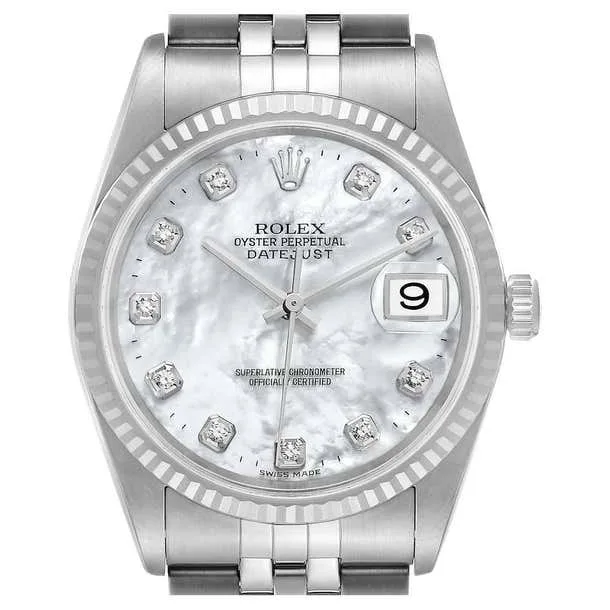
A mother-of-pearl watch dial cracking from sun exposure is a heartbreaking sight. That shimmering, iridescent face suddenly develops a jagged hairline split right through the center. Intense solar heat causes this exact failure far more often than direct UV light degradation.
Understanding what happened inside the watch case is crucial. Natural nacre contains roughly 2% to 5% water bound into an organic protein matrix. When intense heat drives that moisture out, the shell brittle-cracks under physical stress.
Here is how to diagnose the damage, prevent further splitting, and decide on the best repair path.
Image source: Bing (Web (fair-use with source credit))
Quick Answer
A mother-of-pearl watch dial cracking in the sun stems from trapped thermal heat. Sunlight creates a greenhouse effect inside the sealed watch case. Internal temperatures can quickly exceed 60 degrees Celsius.
Heat dries out the fragile shell matrix. The brass baseplate expands much faster than the nacre layer. This expansion mismatch shears the dial.
The brittle shell cracks along its natural mineral planes.
The Physics Behind Sunlight and Mother-of-Pearl Dial Damage
Direct sunlight creates extreme thermal spikes inside an enclosed watch case. A sapphire crystal functions like a miniature greenhouse lens. Solar energy enters easily, but sealed gaskets trap the rising heat.
Internal temperatures can surge to 70°C (158°F) within thirty minutes on a hot afternoon. That thermal spike triggers two simultaneous physical failures: organic desiccation and mechanical shear stress.
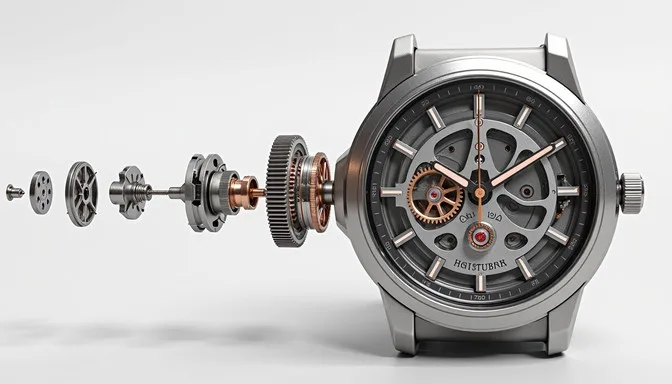
Image source: Bing (Web (fair-use with source credit))
Why Mother-of-Pearl Reacts Poorly to Intense Heat
Mother-of-pearl, or nacre, is not a simple stone. It is a biological composite composed of microscopic aragonite calcium carbonate tablets held together by an organic protein binder called conchiolin.
The Gemological Institute of America documents that this natural organic matrix holds essential moisture. When sunlight superheats the watch interior, the conchiolin rapidly dries out. The protein matrix shrinks, turns brittle, and loses its adhesive elasticity.
The Differential Expansion Problem: Shell vs. Brass Substrate
A typical watch dial features a gossamer-thin slice of nacre, often just 0.2 mm to 0.4 mm thick. Watchmakers laminate this fragile shell directly onto a solid brass baseplate using industrial adhesives.
Brass has a thermal expansion coefficient around $18 \times 10^{-6}/\text{K}$, while aragonite expands at less than half that rate. Thermal databases from the National Institute of Standards and Technology highlight how disparate materials behave under rapid temperature changes. As the brass plate rapidly swells in the heat, the rigid, desiccated shell cannot keep up.
The brass physically tears the brittle shell apart from underneath.
| Material Layer | Thickness | Thermal Expansion Rate | Reaction to Direct Sunlight Heat |
|---|---|---|---|
| Sapphire Crystal | 1.0 – 2.0 mm | Low | Transmits infrared heat directly into the dial chamber |
| Nacre Veneer | 0.2 – 0.4 mm | Low ($\approx 5\text{–}10 \times 10^{-6}/\text{K}$) | Desiccates, shrinks, and loses flexibility |
| Adhesive Film | Micro-thin | Variable | Softens or crystallizes under high thermal loads |
| Brass Baseplate | 0.4 – 0.8 mm | High ($\approx 18\text{–}19 \times 10^{-6}/\text{K}$) | Expands outwards rapidly, exerting lateral shear stress |
Natural Striations vs. Structural Cracks: How to Inspect Your Dial
Not every visible streak across an iridescent dial is a structural fracture. Natural nacre features biological growth lines, organic color bands, and natural fissures formed within the mollusk shell.
Telling the difference between an organic growth line and a sun-induced thermal fracture requires careful examination. Structural cracks pose an immediate risk to the movement, while natural striations are completely harmless.
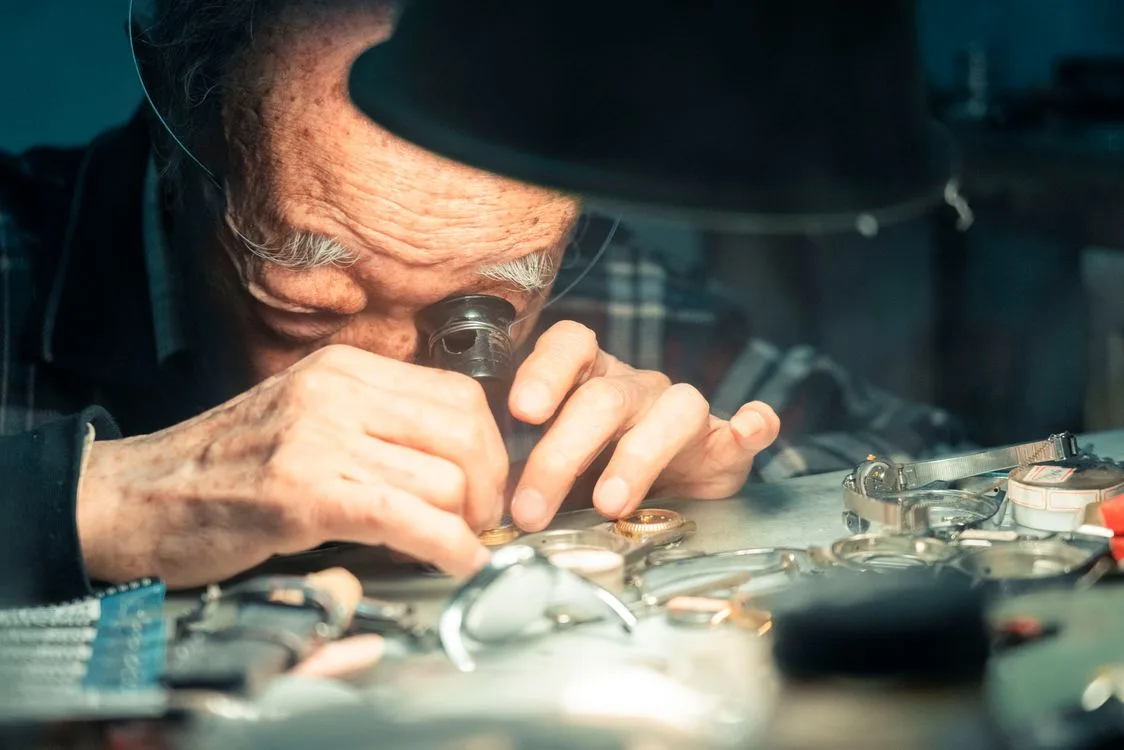
Image source: Bing (Web (fair-use with source credit))
The Raking Light Test Using a 10x Loupe
To evaluate the dial, use a 10x or 20x optical loupe under raking light. Raking light means shining a single light source across the watch dial at a shallow, near-horizontal angle.
A natural growth striation sits entirely beneath the polished surface. Light will pass smoothly over it without casting a shadow, and the iridescence will flow across the grain.
A true thermal crack creates a microscopic physical rift. As the light hits the break, you will spot an unmistakable shadow along the edge. The fracture interrupts the light refraction completely, creating a dull, dead line through the chatoyancy.
Identifying Stress-Riser Fractures at the Arbor and Date Window
Thermal fractures almost never begin in open space. They originate at "stress risers," which are geometric cutouts where tension naturally concentrates.
Look closely at the center pinion hole, known as the arbor, where the hands are mounted. Check the perimeter of the date aperture as well. If a sharp line radiates outward from the center post or date cutout toward the outer hour track, you are looking at a thermal stress fracture.
Immediate Triage: What to Do the Moment You Spot a Crack
Discovering a cracked mother-of-pearl dial requires prompt action. Continued exposure and mechanical vibrations will cause the fracture to propagate across the entire face.
Worse, tiny flakes of aragonite can detach from the fracture line. If those mineral particles enter the mechanical movement, they can grind gear teeth to a halt.
Pulling the Crown to Prevent Movement Contamination
The moment you notice a split on the dial, immediately pull the watch crown out to the time-setting position. In modern calibers, this activates the hacking mechanism, stopping the balance wheel and gear train.
- Stop the hands: Halting the movement stops the hands from dragging across any raised fracture edges.
- Avoid wheel binding: A dragging hand can bend its central pinion or scratch the surrounding pearl veneer.
- Keep the watch flat: Store the piece face-up in a rigid box so gravity holds any loose flakes against the dial plate.
- Do not wind the watch: Mechanical vibration can cause microscopic stress fractures to lengthen.
Controlled Temperature and Humidity Stabilization
Never place a hot, sun-baked watch straight into a refrigerator or air-conditioned breeze to cool it quickly. Thermal shock will drastically accelerate differential contraction, snapping the dial completely.
Let the watch return to room temperature naturally in an unshaded, temperate room. Keep the watch in a moderately humid environment rather than a dry safe. Extreme dryness pulls remaining bound moisture from the conchiolin, causing the crack edges to curl upward.
Dial Assessment Decision Workflow: Repair, Consolidate, or Replace?
Once the watch has safely cooled, you must decide how to handle the compromised dial. The correct path depends on whether the nacre remains flat on its brass backing.
Use this simple decision workflow to diagnose your dial's condition and determine the appropriate repair strategy.
[Inspect Dial Under 10x Raking Light]
                   |
     Does the crack cast a shadow?
        /                      \
      (No)                    (Yes)
       |                        |
[Natural Striation]      Is the surface flat?
(No action needed)       /                  \
                       (Yes)               (No)
                         |                   |
               [Hairline Fracture]    Are edges lifting?
             (Consolidate via resin)   /              \
                                     (Yes)            (No)
                                       |                |
                             [Delaminating Dial]  [Flaking Debris]
                             (Hands will catch)   (Movement risk)
                                       \                /
                                  [Full Replacement Required]
Scenario A: Stable Hairline Surface Fracture
If the crack is a clean hairline split and the nacre remains completely flat against the brass blank, the dial is stable. The hour and minute hands can rotate without obstruction.
In this scenario, dial replacement is rarely mandatory unless the visual flaw bothers you. A qualified watchmaker can apply optical-grade micro-resins along the underside or edges during standard servicing to lock the crack in place.
Scenario B: Raised Edges, Delamination, and Hand Interference
If the crack displays stepped or raised edges under the loupe, the shell has delaminated from the underlying brass plate. The drying adhesive has failed, allowing the nacre to bow upward.
This situation requires professional disassembly. Watch hands clear the dial surface by fractions of a millimeter. If a raised edge touches the passing hour hand, it will stall the gear train and ruin the movement.
Scenario C: Flaking Aragonite and Movement Debris
If microscopic flakes or white mineral dust have separated from the fissure, the dial is structurally compromised. These mineral fragments act like coarse lapping compound inside watch jewels and escapements.
Do not attempt to run or wear a watch in this condition. The piece requires full de-casing, an ultrasonic cleaning of the movement components, and complete dial replacement.
Safe Wearing and Storage Practices in High-Sun Environments
Preventing thermal fractures is far simpler than restoring shattered biomineral dials. A few adjustments to your wearing and storage habits will protect these sensitive materials from extreme heat.
Mother-of-pearl timepieces are luxury items with unique structural requirements. Treating them like rugged tool watches in extreme heat invites expensive repairs.
The Solar Greenhouse Effect in Parked Cars and Window Sills
The single most common cause of cracked dials is leaving a watch inside a stationary automobile. A car dashboard or center console exposed to full sun easily reaches 80°C (176°F).
Window sills inside modern homes pose a similar danger. Double-pane low-E glass focuses direct thermal energy across display cases. Never store your watches on unshaded dresser tops or south-facing window counters.
As of 2026, many collectors use UV-blocking, climate-controlled storage cases specifically to shield exotic materials from ambient heat cycles.
Handling Direct Sunlight Exposure During Outdoor Wear
Wearing an exotic dial watch at an outdoor brunch or an open-air event is generally fine because your wrist acts as a natural heatsink. Your circulating blood maintains your skin around 33°C to 35°C (91°F to 95°F), which actively pulls heat away from the steel caseback.
The danger begins when the watch sits stationary off the wrist in full sun. Remove the piece before sunbathing, swimming, or leaving it on an outdoor table. If the watch case feels uncomfortably hot to the touch, move it into the shade immediately.
Professional Restoration Options and Associated Costs
Restoring a cracked mother-of-pearl dial requires specialized micro-conservation techniques. Standard watch servicing centers often refuse to repair damaged nacre, preferring instead to swap in a brand-new dial assembly.
When an original dial is rare, historic, or out of production, horological restoration specialists step in. They use precision chemical stabilization to halt crack growth and restore structural integrity.

Image source: Bing (Web (fair-use with source credit))
Micro-Capillary Resin Consolidation
Micro-capillary consolidation stabilizes cracks without altering the dial appearance. A restoration expert first removes the dial from the movement and places it in an isolated clean bench.
The specialist applies an ultra-low-viscosity, optical-grade conservation resin along the rear of the brass baseplate or directly into the fracture line. Capillary action draws the liquid polymer into the microscopic fissure between the aragonite layers.
Once cured under controlled UV light, the resin binds the separated mineral edges. This process reinforces the dial blank and prevents future delamination.
Sourcing OEM Replacement Dials vs. Custom Fabrication
If the shell has shattered or shed loose debris, full replacement is the only viable path forward. The cost and turnaround time will depend entirely on how you source the new component:
- Factory OEM replacement: Authorized service centers typically charge between $400 and $1,800 for genuine mother-of-pearl dials. High-end manufacture brands often insist on a mandatory complete movement service alongside the dial swap.
- Independent watchmaker repair: An independent specialist can often source new-old-stock (NOS) dials for common calibers. This option usually runs between $250 and $600, skipping the mandatory brand service package.
- Custom artisanal fabrication: When vintage factory dials are permanently out of stock, specialty dial cutters can machine a new brass blank. They laminate a fresh slice of natural Pinctada maxima shell for roughly $800 to $2,500.
Frequently Asked Questions About Mother-of-Pearl Watch Dials
Can sunlight crack a mother-of-pearl dial while you are wearing it?
No, sunlight rarely cracks a dial while the watch is actively on your wrist. Your body acts as a steady heatsink, keeping the caseback close to your skin temperature. Cracks happen almost exclusively when a watch sits unworn in direct sunlight, such as on a table or car dashboard.
Does water exposure help rehydrate a cracked mother-of-pearl dial?
No, placing a cracked dial in water will cause severe, irreversible damage. Liquid water dissolves the dial adhesive, corrodes the steel hands, and rusts the underlying movement components. The hydration bound inside nacre is microscopic cellular moisture within the protein matrix, which cannot be restored by surface wetting.
Does a small hairline crack hurt the watch movement?
A stable hairline crack will not hurt the movement as long as the surface remains flat. The danger arises if the fracture sheds small mineral flakes or lifts upward. Raised edges can catch the spinning hands, stalling the geartrain and causing costly mechanical damage.
Does sapphire crystal block the heat that cracks these dials?
No, standard synthetic sapphire crystals do not block infrared heat. Sapphire transmits short-wave infrared energy directly into the watch chamber while trapping rising heat inside. Anti-reflective coatings cut down surface glare, but they do not stop internal solar heating.
Can a watchmaker buff or polish out a crack in the shell?
No, you cannot buff or polish a crack out of mother-of-pearl. Nacre veneers are extraordinarily thin, often measuring less than 0.3 millimeters thick. Polishing creates uneven friction heat, strips away the iridescent surface layers, and will shatter the brittle shell completely.

Similar Posts