Paperclip vs Curb Chain: Which Tangles More?
Founder & Fashion Creative Director at Julia Fashionista · CFDA Fashion Scholar, Certified Image Consultant (AICI) · 12+ years in editorial wardrobe styling, sustainable textile sourcing, and luxury capsule curation
Few jewelry frustrations match the annoyance of pulling your favorite necklace from a drawer only to find a tight, knotted mess. When comparing paperclip chain vs curb chain tangling, link geometry makes all the difference in whether a necklace knots on itself or snags other pieces.
A curb chain relies on tightly interlocked, flattened links that naturally resist knots. In contrast, drawn cable designs like the paperclip style have large internal openings, often measuring 10mm to 20mm in open interior space, that easily catch stray wires and hair. Understanding these mechanical differences helps you pick the right chain for daily wear or layered stacks.
Quick Answer
Curb chains tangle far less than paperclip chains. Their uniform, flattened links lie flat and cannot slip through each other. Paperclip chains feature large, open oval links.
These open centers act as loops that trap neighboring chains, loose hair, and even their own clasp. For low-maintenance everyday wear, choose a curb chain.
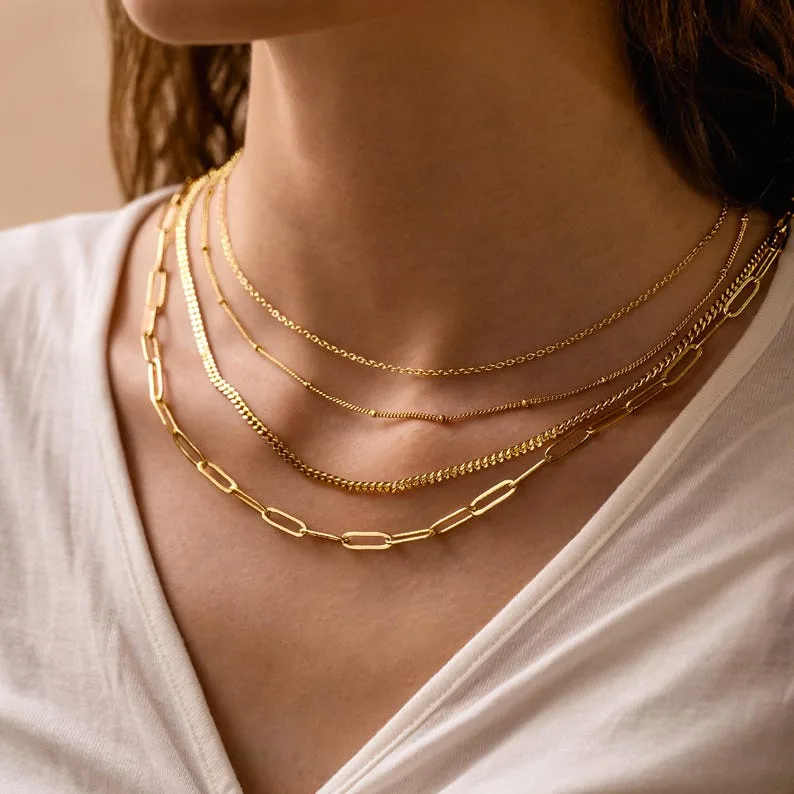
Image source: Bing (Web (fair-use with source credit))
Why Necklace Chains Tangle: Link Mechanics Explained
Chain tangling comes down to mechanical movement, friction, and link dimensions. When a chain shifts against your skin or fabric, the individual segments rotate. If a design has high flexibility and loose tolerances, links flip over each other and bind.
Jewelry manufacturing standards, like those outlined by the Gemological Institute of America, highlight how link symmetry and solder quality determine chain durability and movement. Solid, well-soldered links glide over one another without catching on rough seams.
What Happens When Links Interlock
A knot starts when one section of wire slips through the opening of another link and reverses direction. If the link aperture is wide, this pass-through happens easily.
Once tension is applied, the loop tightens. Small link shifts cause friction points that lock the metal in place, turning a loose overlap into a stubborn knot.
The Difference Between Self-Tangling and Catching Other Chains
Self-tangling happens within a single necklace when it coils during storage or shifts while you sleep. Chains with small link clearances rarely self-tangle because the wire cannot double back through an adjacent link.
Inter-chain catching occurs in layered necklace arrangements. A wide-link necklace acts like an open gate. It swallows thinner chains, trapping pendants and fine strands inside its open segments.
The Anatomy of a Paperclip Chain
The paperclip chain, technically an elongated cable chain, features stretched rectangular or oval loops with clean wire edges. As of 2026, it remains one of the most popular modern styles for both solo statement pieces and charm bases.
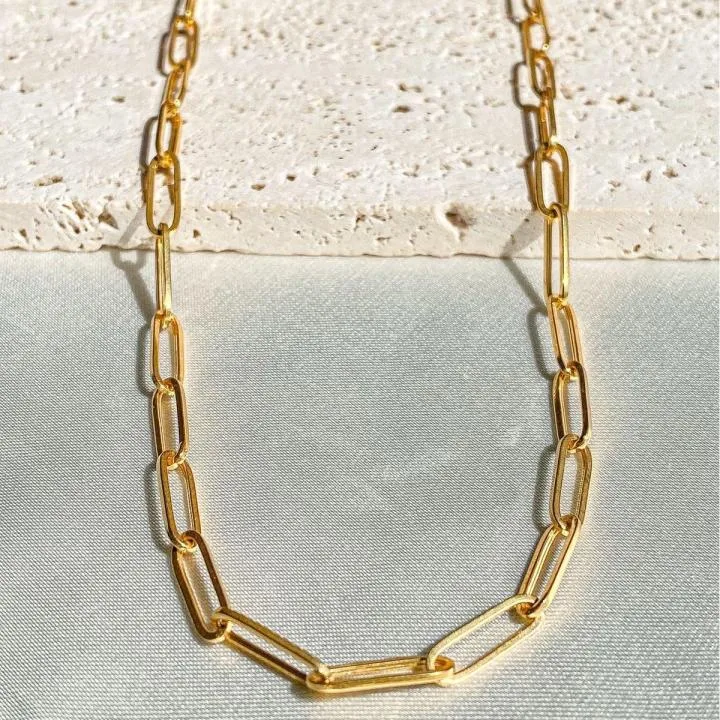
Image source: Bing (Web (fair-use with source credit))
Elongated Geometry and Open Negative Space
The defining feature of a paperclip chain is its high ratio of negative space to wire diameter. Each link consists of thin, drawn wire surrounding a large, hollow center.
Because the internal clearance is so spacious, other items pass directly through the middle. When the chain rests against your collarbone, adjacent links can fold sideways into the center of the next link, creating a sudden kink.
Where Paperclip Chains Catch: Internal Corners and Hair Traps
The internal corners of an elongated link create natural pinch points. Instead of smoothly sliding around a curve, links hit an abrupt internal turn.
- Fine nape hair easily wraps around the narrow wire ends.
- Knitted sweaters and woven scarves hook directly into the open centers.
- Lobster clasps slip through open links, accidentally locking the chain into a shorter loop.
The Anatomy of a Curb Chain
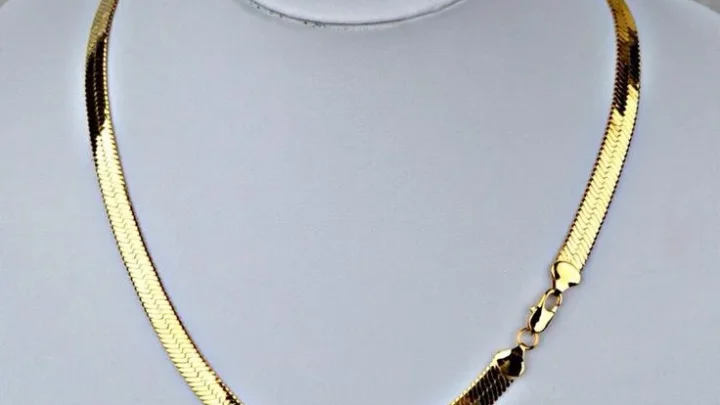
The curb chain is an ancient, highly refined design built for smooth, planar movement. Jewelers take standard round links, twist them so they interlock along a single plane, and then diamond-cut or polish the faces flat.
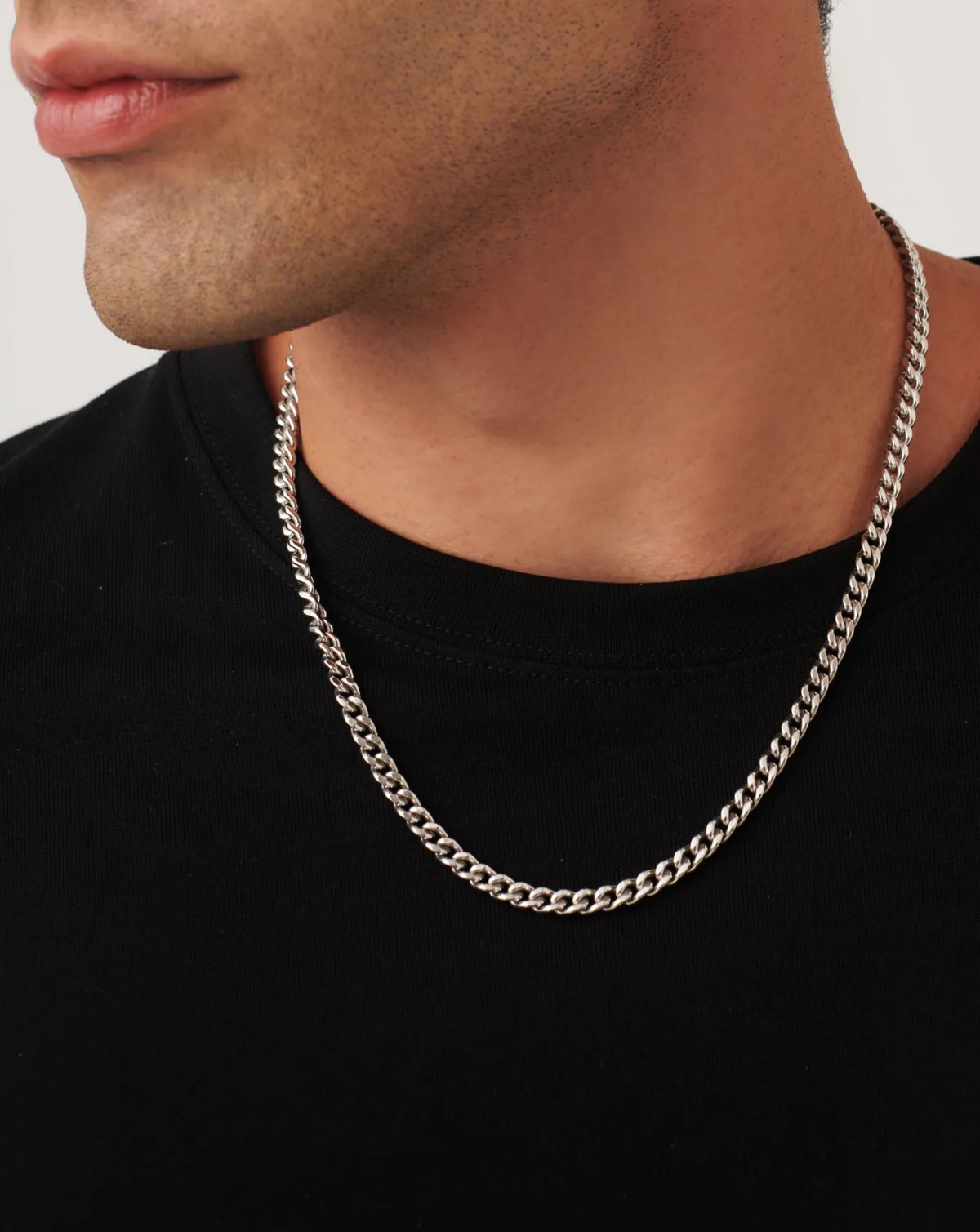
Image source: Bing (Web (fair-use with source credit))
Twisted Links and Flat-Lying Surfaces
Every curb link rests flush against its neighbor. Because the links are twisted at a set angle, they cannot rotate independently in three dimensions.
This limited range of motion keeps the entire chain resting flat against the chest. The links slide forward and backward along a smooth track, preventing the chain from twisting into knots.
How Symmetrical Edges Deflect Knots
Curb links feature minimal negative space. The wire gauge is thick relative to the internal hole, leaving no room for another link to enter.
If a curb chain drops onto itself, the beveled, diamond-cut surfaces guide the metal away from open loops. The chain spills across itself like liquid instead of snagging, which naturally sheds potential knots before they tighten.
Head-to-Head Comparison: Paperclip vs. Curb Chain
Choosing between these two popular styles means balancing modern visual style against everyday convenience. Here is how their physical mechanics compare across key wear scenarios.
| Feature / Scenario | Paperclip Chain (Elongated Cable) | Curb Chain (Flat / Cuban Style) |
|---|---|---|
| Link Negative Space | High (large open centers) | Low (dense, tight clearance) |
| Solo Tangle Risk | Moderate (links can fold and kink) | Very Low (sheds knots naturally) |
| Multi-Chain Snag Risk | High (traps fine strands easily) | Low (deflects external chains) |
| Hair Catching | Moderate to High (at corners and solder joints) | Low (flat profile glides over hair) |
| Drape Flexibility | Multi-directional, loose | Single-plane, fluid |
| Best Everyday Use | Statement styling, charm pendants | Daily wear, gym, sleep, base layers |
Tangle Resistance in Solo Wear
Worn alone, a curb chain is almost impossible to knot during standard activity. Its tight link tolerance stops the wire from doubling back through itself.
A solo paperclip chain resists standard knots reasonably well due to its rigid link lengths. However, it can fold back on itself, causing two parallel links to wedge tightly side by side.
Performance in Layered Necklace Stacks
In a layered necklace stack, the curb chain performs reliably. It creates a smooth, continuous line that does not hook nearby pieces.
The paperclip chain presents a major snag hazard when layered. Thinner chains, such as delicate cable, box, or rope styles, slip straight through the paperclip's open windows, creating complex knots that take patience to undo.
Storage, Travel, and Active Movement
Active movement exposes the mechanical limits of each chain design. During running, sports, or restless sleep, a paperclip chain shifts and traps loose fabric fibers.
Curb chains stay organized inside jewelry boxes and travel cases. Even if tossed loosely into a pouch, a quick shake usually loosens a curb chain, whereas a paperclip chain requires careful untangling link by link.
The Layering Conflict: What Happens When You Wear Them Together
Pairing an elongated paperclip chain with a classic curb chain is a popular aesthetic, combining modern angles with traditional weight. However, mixing these two designs requires specific precautions to keep them from tangling.
How Paperclip Links Trap Fine Curb Chains
The friction dynamic between these two shapes is uneven. A fine curb chain (under 2mm) acts like a thread that slips straight through the broad window of a paperclip link.
Once the fine chain passes through, its flat links catch on the paperclip's squared interior edges. As you walk, normal body movement pulls the knot tight, turning a simple overlap into a firm mechanical bind.
Weight, Spacing, and Drape Rules to Prevent Snags
To wear both styles without frustration, balance the chain weights and lengths so they move independently.
- Space by at least two inches: Pair a 16-inch curb chain with an 18-inch or 20-inch paperclip chain so they never share the same resting point on your chest.
- Keep the curb chain heavier: Use a thicker curb chain (3mm or wider). A larger curb chain cannot physically enter the interior clearance of the paperclip link.
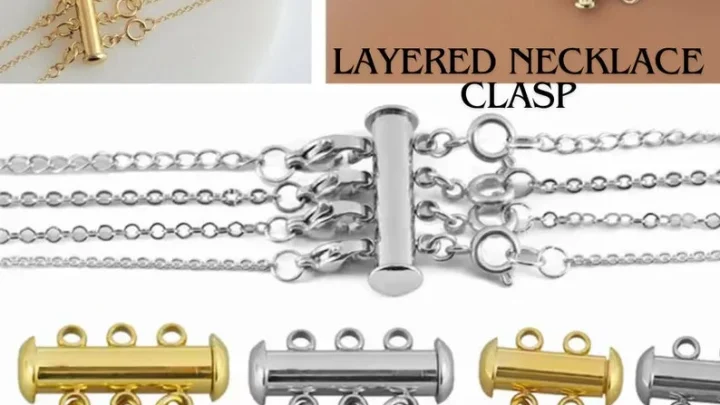
- Anchor with a multi-strand clasp: A magnetic or slide detangler clasp keeps both ends locked at a fixed width behind your neck, stopping the strands from wrapping around each other.
Following these spacing rules keeps both chains sitting cleanly, preventing snags throughout the day.
How to Untangle and Care for Both Chain Styles
When a chain binds, pulling the ends only tightens the problem. Aggressive pulling can stretch precious metal links, warp solder seams, or snap delicate wire completely.
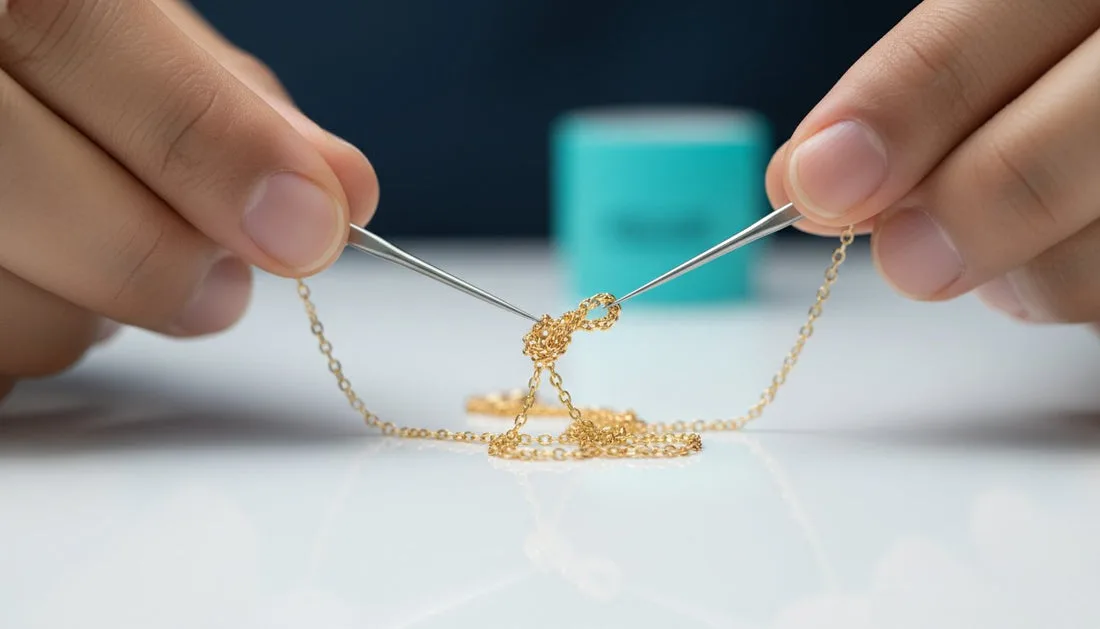
Image source: Bing (Web (fair-use with source credit))
Safe Extraction: The Two-Pin and Lubricant Method
The safest way to release a stubborn knot is with lubrication and patience. A drop of baby oil or olive oil reduces friction between the metal contact points, letting trapped links slide free.
- Lay the knotted chain flat on a hard, non-porous surface like a plate or glass tray.
- Apply one drop of mineral oil or baby oil directly onto the center of the knot.
- Insert the tips of two blunt sewing needles or open safety pins into the center of the tangled loop.
- Gently wiggle the needles outward in opposite directions to loosen the internal tension.
- Once the knot opens up, use clean tweezers to guide the trapped links out one by one.
- Wash the chain in warm water with mild dish soap to remove all traces of oil, then pat dry with a microfiber cloth.
Storage Habits That Keep Chains Tangle-Free
Preventing tangles starts with proper daily storage habits. The rules defined in the FTC Jewelry Guides remind consumers that precious metal alloys like 14k gold and sterling silver are malleable and prone to mechanical distortion under stress.
Hang both styles vertically on a wall rack or dedicated jewelry tree whenever possible. If you must pack them for travel, thread each chain through an ordinary drinking straw, clasp the ends together, and place the assembly in a soft fabric pouch.
Frequently Asked Questions About Chain Tangling
Does chain thickness change how easily curb or paperclip chains tangle?
Yes, chain thickness has a massive effect on tangling risk. A curb chain under 2mm can twist around itself if dropped into a pile, while a 4mm version stays knot-free. For paperclip styles, smaller links reduce the interior clearance, making them much less likely to swallow nearby necklaces.
Can a tangled paperclip chain be permanently damaged?
Yes, forcing a knot out of an elongated link can bend the long, unsupported sides of the wire. Once an elongated link bends out of alignment, it will never sit flat again. A professional bench jeweler would have to cut out the bent segment and resolder the chain.
Are hollow chains more prone to tangling than solid ones?
Hollow chains carry the same basic knotting risk based on shape, but the structural consequences are far worse. If a hollow paperclip or curb chain forms a tight knot, the pressure can easily crush the internal walls. Crushed hollow links cannot be popped back out or repaired cleanly.
Which chain style is better for sleeping or daily workouts?
A curb chain is significantly better for sleeping, exercising, or active daily routines. Its flat, twisted links glide smoothly against your skin, bedding, and sweat-wicking athletic gear. A paperclip chain easily snags loose pillow threads, sports bra mesh, and fine body hair during active motion.
The Final Verdict: Which Chain Should You Choose?
If low maintenance, rugged durability, and zero snags are your top priorities, choose a curb chain. Its symmetrical, flat-laying links provide unmatched knot resistance, whether worn solo at the gym or mixed into an active routine. It glides across skin and fabric without catching.
Choose a paperclip chain if your primary focus is visual versatility and modern design. The open links make a striking style statement and allow you to fasten the clasp at any point for adjustable lengths. If you go with the paperclip style, remember to store it hung vertically, take it off before bed, and pair it with heavier chains when creating layered stacks.

Similar Posts