Eternity Band Width: Should You Size Up a Half Size?
Founder & Fashion Creative Director at Julia Fashionista · CFDA Fashion Scholar, Certified Image Consultant (AICI) · 12+ years in editorial wardrobe styling, sustainable textile sourcing, and luxury capsule curation
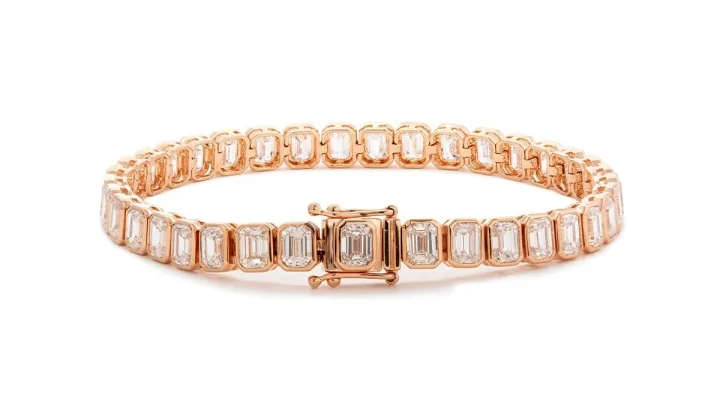
An eternity band sizing up half size width calculation is essential because wide rings trap more skin than narrow bands. When stones wrap around your entire finger, you cannot simply cut the metal and stretch it later.
Getting the size right before the setting is cast prevents permanent structural damage. As of 2026, standard workshop tolerances per Jewelers of America confirm that wide bands need an extra quarter to half size to match the fit of a standard 2mm ring. Understanding how metal width shifts your sizing is the best way to avoid expensive workshop fixes down the road.
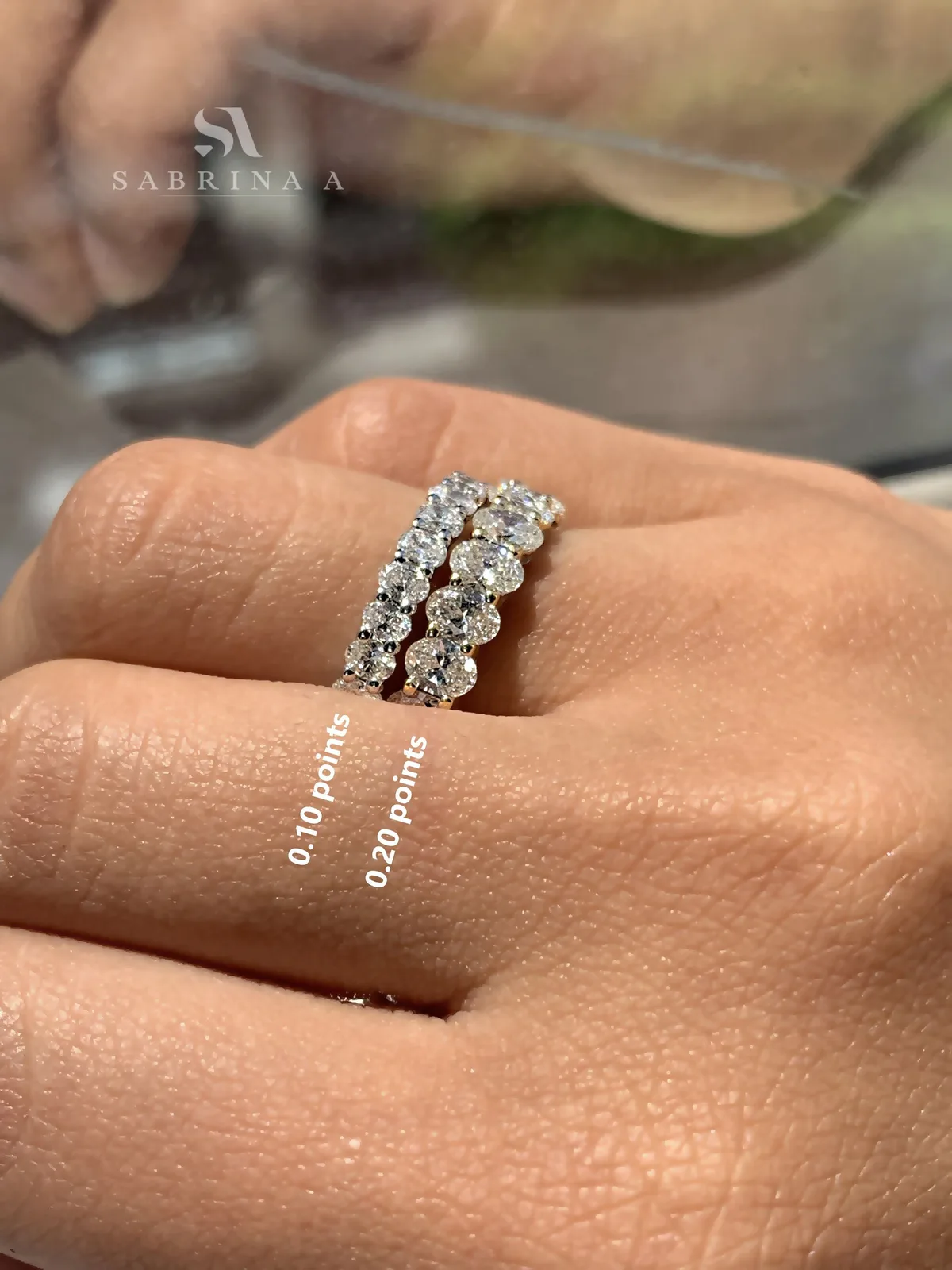
Image source: Bing (Web (fair-use with source credit))
Quick Answer
Wide eternity rings require sizing up a half size to fit comfortably. Wider bands cover more surface area and displace more skin. A continuous loop of gems cannot stretch mechanically on a mandrel.
Safe sizing up after production relies strictly on carefully shaving inner shank metal.
The Sizing Dilemma: Band Width, Skin Displacement, and Eternity Rings
A ring does not sit on a static cylinder. It rests on soft tissue that compresses and shifts as your hand moves. When you wear a narrow band, your skin easily moves around the thin wire.
Wider bands cover much more surface area. That broad surface creates significant friction across your skin. The trapped tissue has nowhere to go, which makes the ring feel substantially tighter than its measured diameter suggests.
The Physics of Wide Bands vs. Narrow Bands
A 6mm band traps roughly three times the surface area of a standard 2mm solitaire shank. That broad profile causes skin displacement. The flesh that normally rests under the ring gets pushed to the edges, creating a tight band of pressure.
Because of this friction, a wide ring requires extra internal clearance. Without that space, the band pinches during normal hand movements. You need a larger internal diameter just to achieve the same resting comfort.
The "No-Cut" Rule of Continuous Gemstone Settings
Traditional rings have a plain metal sizing section at the base of the shank. A jeweler simply cuts that blank area, adds a piece of wire, and laser-welds the seam.
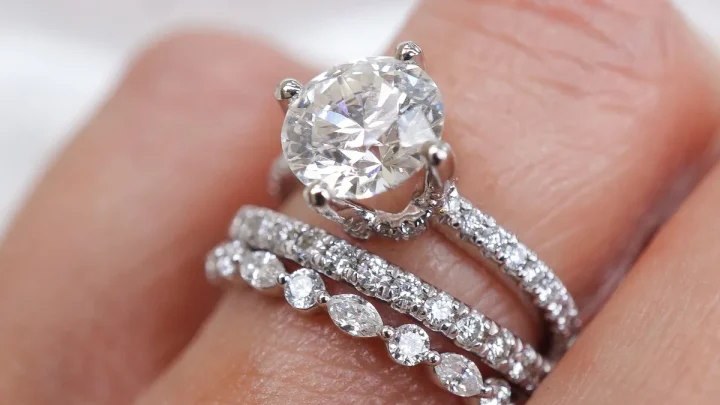
Full eternity rings do not have plain metal sections. Stones sit shoulder to shoulder around the entire circumference. Cutting into an eternity band destroys the prong layout, ruins the symmetry, and loosens neighboring gems.
| Ring Style | Plain Sizing Area? | Can It Be Cut? | Safe Mechanical Stretch? |
|---|---|---|---|
| Solitaire / Plain Shank | Yes | Yes | Yes |
| Half Eternity | Yes | Yes | Limited |
| 3/4 Eternity | Yes (small bar) | Yes | Very Limited |
| Full Eternity Band | No | No | Never |
Sizing Up at Purchase: How Width Dictates Your Ring Size
The cleanest way to size an eternity band is adjusting your numbers before production begins. Once the mounting is cast and stones are set, your options shrink dramatically.
Always measure your finger using a wide-band sizing gauge rather than thin wire loops. Thin plastic sizers give a false sense of security. They slide over knuckles easily but fail to mimic the friction of a broad metal ring.
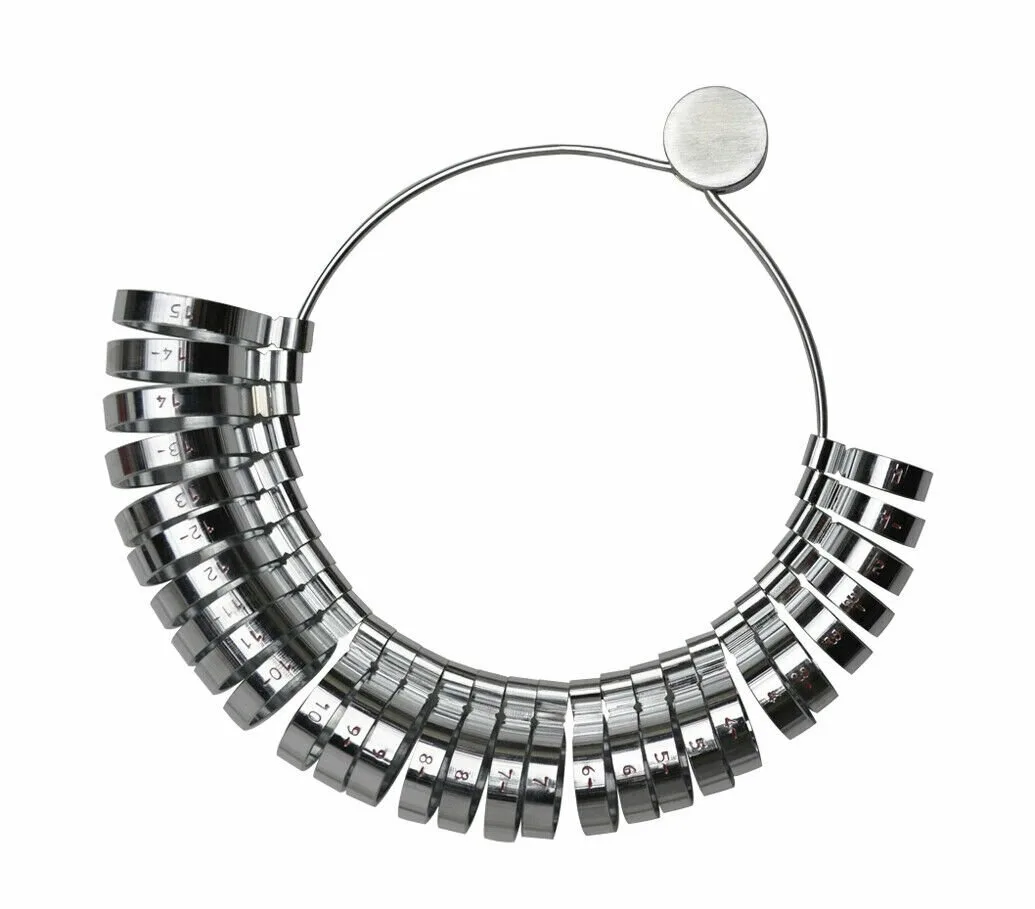
Image source: Bing (Web (fair-use with source credit))
The Millimeter-to-Size Formula
Band width directly controls how much extra room you need inside the ring. You can use this practical baseline when choosing your eternity band width:
- Under 3mm wide: Order your true standard size.
- 4mm to 6mm wide: Add +0.25 to +0.5 US ring size.
- 7mm to 9mm wide: Add +0.5 to +1.0 US ring size.
For instance, if your baseline size on a thin gauge is 6.0, a 5mm band will likely require a size 6.5. This buffer keeps the ring from squeezing your finger during warmer days.
Flat Profiles vs. Comfort-Fit Shanks
The interior shape of the band changes how tightly it hugs your skin. Standard flat rings sit flush against your finger across their entire width, creating maximum surface drag.
Comfort-fit profiles feature a gently domed interior surface. Only the center of the shank makes firm contact with your finger. This curved profile slides over knuckles smoothly and reduces the need for aggressive size increases.
Factoring in Finger Shape, Stacking, and Daily Fluctuations
Finger anatomy also determines your ideal size adjustment. If your fingers taper toward the tip without prominent knuckles, wide bands slide off more easily. You may only need an extra quarter size.
If you have prominent knuckles, the ring must clear the joint without spinning wildly at the base. Stacking multiple bands together creates the exact same friction as a single wide band. Three stacked 2mm bands behave on the finger just like a solid 6mm ring.
Decision Tree: Can an Existing Eternity Band Go Up a Half Size?
If you already own the eternity band and it feels too tight, you cannot use conventional sizing techniques. You must evaluate the ring systematically to see if modification is safe.
Work through these physical checks to find your options:
[Start: Ring is too tight by 0.25 to 0.5 size]
                 |
                 v
   Is the wall thickness ≥ 1.5mm?
          /              \
        NO                YES
        /                  \
[Cannot Shave Metal]     [Check Setting Style]
        |                  /               \
        |         Shared-Prong / Pavé    Bezel / Channel
        |                 |                     |
        |          [High Risk of       [Moderate Risk;
        |           Loose Stones]       Confirm Seat Depth]
        |                 \                     /
        v                  v                   v
[Remount Band or       [Proceed with Precision Lathe Shaving:
 Convert to 3/4 Style]  Target Max +0.5 Size Increase]
Step 1: Evaluating Shank Thickness and Metal Depth
You must measure the metal gauge from the bottom of the stone seats to the inside finger surface. This wall thickness provides the structural foundation of the entire ring.
If this metal barrier is under 1.5mm, shaving it is unsafe. Removing metal from a thin wall exposes stone culets and leaves prongs unsupported.
Step 2: Setting Type Diagnostics
Different gemstone settings handle internal stress in distinct ways:
- Pavé settings: Extremely delicate. Tiny beads hold stones in place. Inner metal removal can compromise bead root anchors.
- Shared-prong settings: Prongs secure two adjacent diamonds. Internal shaving can cause prong bases to flex and drop stones.
- Channel settings: Thick outer rails provide solid structural support. These handle light inner reaming better than open prong designs.
- Bezel settings: Metal completely wraps each stone. These offer the best structural stability for careful interior modification.
Step 3: Determining Your Modification Path
If your ring has thick metal walls and secure channels, internal boring is viable. You can gain up to a half size without cutting the perimeter.
If the ring is already thin or set with delicate micro-pavé, stop immediately. Your only reliable choices are converting the piece to a 3/4 eternity band or remounting the stones into a new casting.
The Workshop Reality: Shaving the Inside Shank vs. Remaking the Ring
Bench jewelers use specialized equipment to alter rings that cannot be cut. The most common technique for gaining a quarter to half size is internal boring.
This process shaves away a fraction of a millimeter of precious metal from the inside diameter. It creates physical room for the finger while leaving the outer stone settings undisturbed.
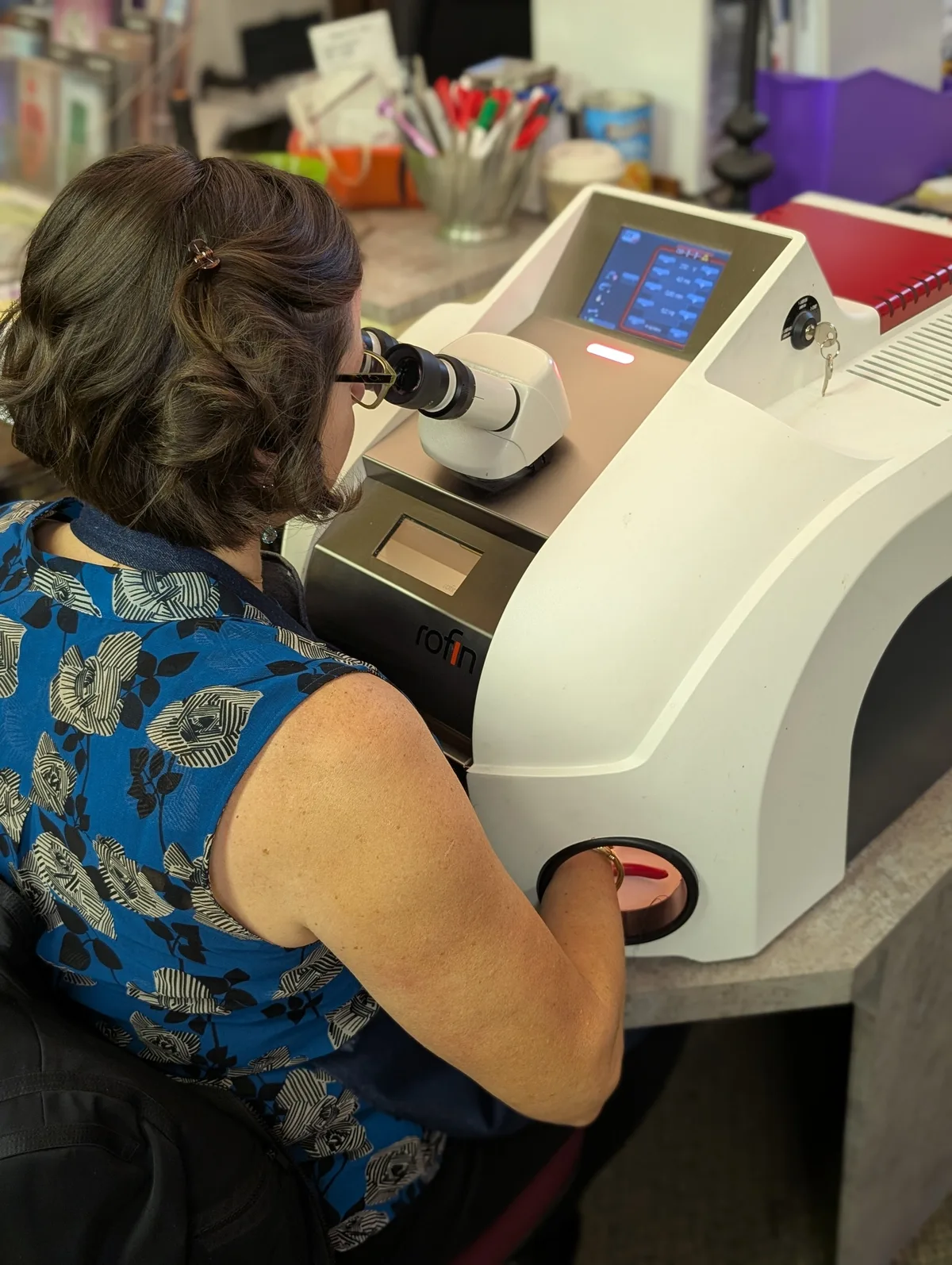
Image source: Bing (Web (fair-use with source credit))
What Internal Boring Actually Involves
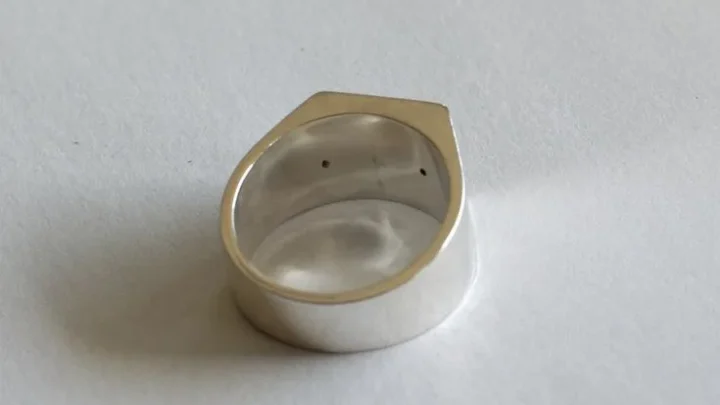
A bench jeweler mounts the eternity band on a jeweler's lathe or uses a flexible shaft tool. A high-speed carbide burr slowly cuts away internal metal along the inner circumference.
The technician works gradually around the circle to keep the inside perfectly round. The goal is removing just enough metal to increase the inside diameter by roughly 0.4mm, which equals one half size.
The Critical Limits: How Much Metal Can Safely Disappear?
Jewelers cannot remove metal indefinitely. The absolute maximum depth for safe shaving is between 0.2mm and 0.3mm of inner stock.
The finished ring must retain at least 1.2mm of solid metal between the finger and stone seats. Digging deeper exposes the pointed bottoms of the diamonds, known as the culets. Exposed culets will scratch your finger and chip under minor impacts.
The Alternative: Swapping Stones for a Sizing Bar
When a ring is too thin to shave, conversion to a 3/4 eternity band provides an alternative to a full remake. The jeweler removes one or two stones from the base of your finger.
They fill that vacated space with a solid metal sizing bar. This clean metal section gives you a permanent area for future cuts and adjustments. You sacrifice the complete unbroken circle of gems, but you save the existing mounting.
Why Mechanical Stretching Is an Absolute Non-Starter
Standard plain wedding bands are easily enlarged on an expanding mechanical mandrel. Placing a full eternity band on an expander is catastrophic.
As the mandrel segments push outward, the circular arc flattens between each gemstone. Prongs bend away from the girdles, channels spread open, and diamonds immediately pop out or shatter under lateral shear force. Never allow a jeweler to stretch an eternity band mechanically.
Step-by-Step Diagnostic Workflow for Your Jeweler
When you bring a tight eternity band to a workshop, a professional follows a clear diagnostic sequence. This process ensures the piece can handle sizing before any tool touches the precious metal.
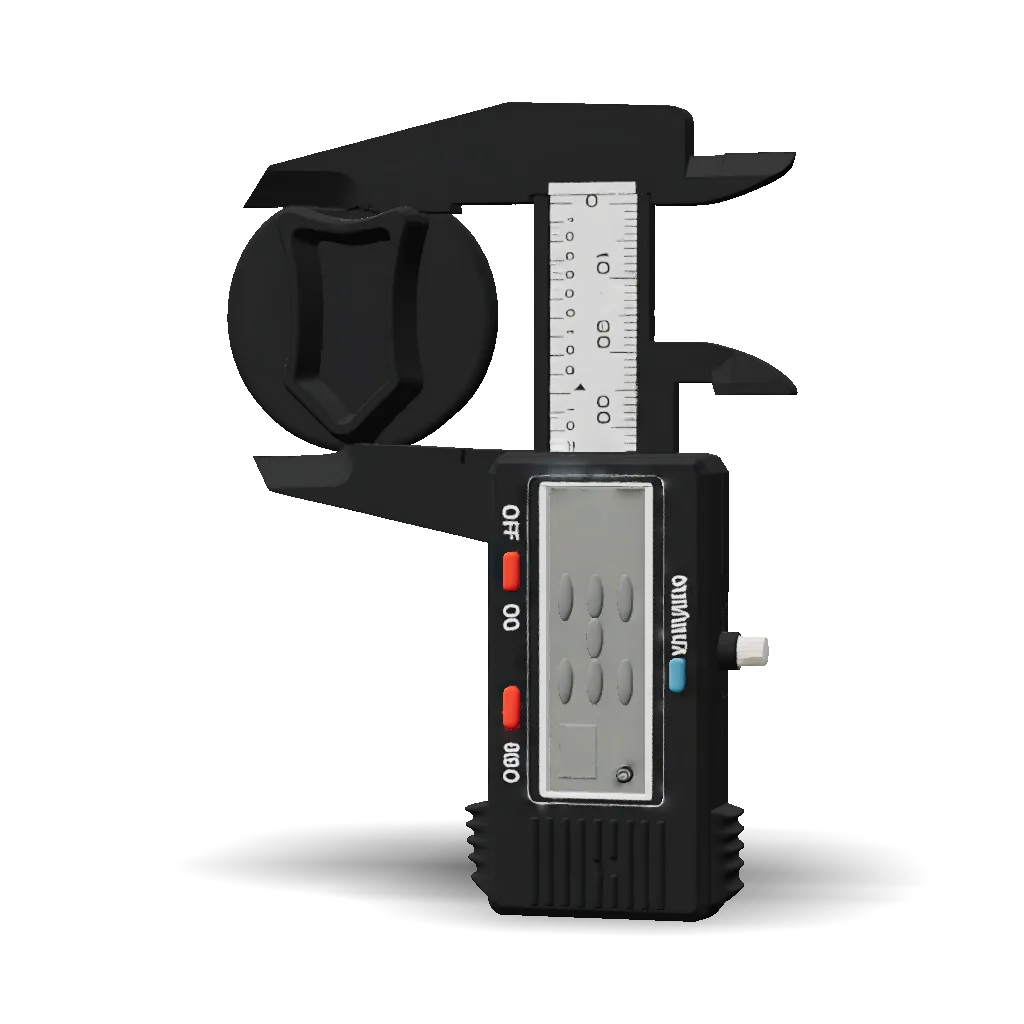
Image source: Bing (Web (fair-use with source credit))
Stage 1: Caliper and Microscope Inspection
The jeweler begins by measuring the shank profile with digital dial calipers. They record the exact outside width, total height, and inner wall clearance down to the hundredth of a millimeter.
Next, they inspect the piece under a stereo binocular microscope. They check for existing stress fractures in the metal, loose prongs, and chipped stone girdles.
Stage 2: Structural Integrity Assessment
The bench technician calculates the finished wall thickness after removing 0.25mm of metal. They confirm that the diamond culets have adequate clearance above the new inner line.
If the seat cuts leave enough solid metal beneath the stones, the ring passes inspection. If the prong roots sit too close to the inner wall, the jeweler will decline boring to protect the piece.
Stage 3: Cold-Working Options and Execution
The jeweler secures the ring in an expanding brass collet to protect the outer stones from tool marks. Using lubricated cutting burrs running at low speeds, they systematically ream the interior wall.
They check progress continuously against an ISO-calibrated steel mandrel. Once the target half size is reached, they bevel the internal edges to create a smooth comfort-fit edge.
Stage 4: Post-Sizing Stone Tightening and Security Checks
Removing metal relieves internal tension, which can loosen stone seats. The jeweler returns the ring to the microscope to test every single gemstone.
They gently probe each diamond with a brass pick to confirm zero movement. Any loosened prongs are re-burnished, and the band is cleaned in an ultrasonic bath and inspected with a final steam blast.
Cost Breakdown, Risks, and Setting-Specific Red Flags
Adjusting an existing eternity band carries physical and financial risks that ordinary rings never face. The cost depends on whether the metal can be safely shaved or if the entire piece must be remade.
Pricing reflects the bench jeweler's time and liability. Shaving metal seems simple, but inspecting dozens of prongs under high magnification requires serious bench skill.
Pricing Estimates for Boring vs. Remaking
Internal boring is relatively inexpensive because it only requires workshop labor. Converting to a sizing bar or completely remaking the ring involves new castings, added metal, and resetting dozens of stones.
- Internal lathe boring: $75 to $200. This covers microscopic inspection, metal removal, and prong tightening.
- Installing a plain sizing bar: $150 to $350. This requires removing stones, soldering gold or platinum, and polishing the new joint.
- Complete CAD redesign and remount: $800 to $2,500+. The jeweler reuses your diamonds, casts a brand new ring chassis, and hand-sets every gemstone.
Expect platinum rings to run 20% to 40% higher on labor costs. Platinum creates intense friction against cutting burrs and dulls workshop tools quickly.
Irreversible Mistakes: Thin Prongs, Twisted Channels, and Stone Pop-Out
The biggest danger in sizing an eternity band is over-thinning the structural walls. If a goldsmith removes too much metal, the seat that supports each diamond collapses inward.
In channel settings, shaving metal weakens the bottom track. The outer walls then flare outward under minor pressure. Once a channel spreads, stones twist sideways, catch on clothing, and fall out continuously.
Shared prongs suffer an even worse fate. When the root metal beneath the prongs is carved away, the shared tips lose their grip. A single loose prong can drop two adjacent diamonds simultaneously.
Frequently Asked Questions About Sizing Wide Eternity Bands
Can any eternity band go up a half size?
No. Only bands with at least 1.5mm of solid metal between the stone seats and the inside finger can be shaved. Bands with thin rails, hollow galleries, or micro-pavé will fail structurally if shaved.
Why does a 6mm band feel tighter than a 2mm band of the same size?
Wide bands cover more surface area and trap your finger tissue. The displaced skin creates high friction across the wider metal. You need an extra quarter to half size to offset that contact drag.
Will shaving the inside of the ring lower its value?
Shaving removes a microscopic amount of precious metal, usually under 0.3 grams. The scrap loss is negligible. However, damaging stone settings or weakening prongs will destroy the structural value of the ring.
Can you stretch an eternity band using heat?
No. Heat causes the precious metal to expand faster than the gemstones. This thermal shock fractures diamonds, melts prong tips, and loosens stone seats.
Cold stretching on a mandrel is equally destructive.
How do I measure my finger for a wide eternity ring?
Use a wide sizing gauge that matches the exact millimeter width of your planned band. Standard thin wire sizers do not replicate the friction of broad rings and will lead to an uncomfortably tight fit.
The Final Decision: Your Clear Action Plan
Getting the proper fit on a wide eternity ring comes down to timing and physics. If you are ordering a new ring, apply the millimeter formula before placing the order. Order a half size up for bands between 4mm and 6mm to account for skin displacement.
If you already own a tight band, take it to an experienced master goldsmith for a caliper inspection. Do not let anyone attempt to stretch the ring on an expander.
If your ring has at least 1.5mm of wall thickness and a sturdy channel or bezel, proceed with internal lathe shaving to gain that half size. If the setting is too delicate, choose between installing a clean sizing bar or commissioning a new casting. Protecting the security of your gemstones should always come first.

Similar Posts