Bezel vs Prong Necklace: Which One Flips More?
Founder & Fashion Creative Director at Julia Fashionista · CFDA Fashion Scholar, Certified Image Consultant (AICI) · 12+ years in editorial wardrobe styling, sustainable textile sourcing, and luxury capsule curation
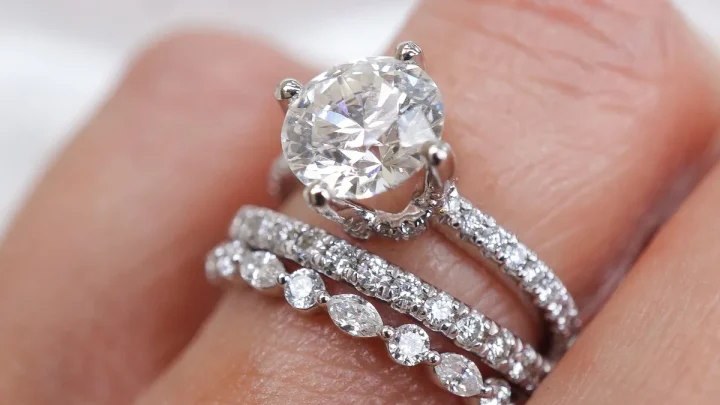
Few jewelry problems irritate quite as much as looking in the mirror and seeing your diamond turned completely backward. When comparing a bezel set vs prong set necklace flipping comes down to balance, base shape, and how the chain pulls across your chest. Both styles can sit flat or tumble constantly, depending entirely on how the jeweler built the mounting.
Diamond proportions play a huge role in this balance. Per cut guidelines established by the Gemological Institute of America, a standard round brilliant diamond features a pavilion depth of 43% to 45% of its overall diameter. That tapered depth creates an inverted cone that naturally wants to roll over unless the mounting counteracts it.
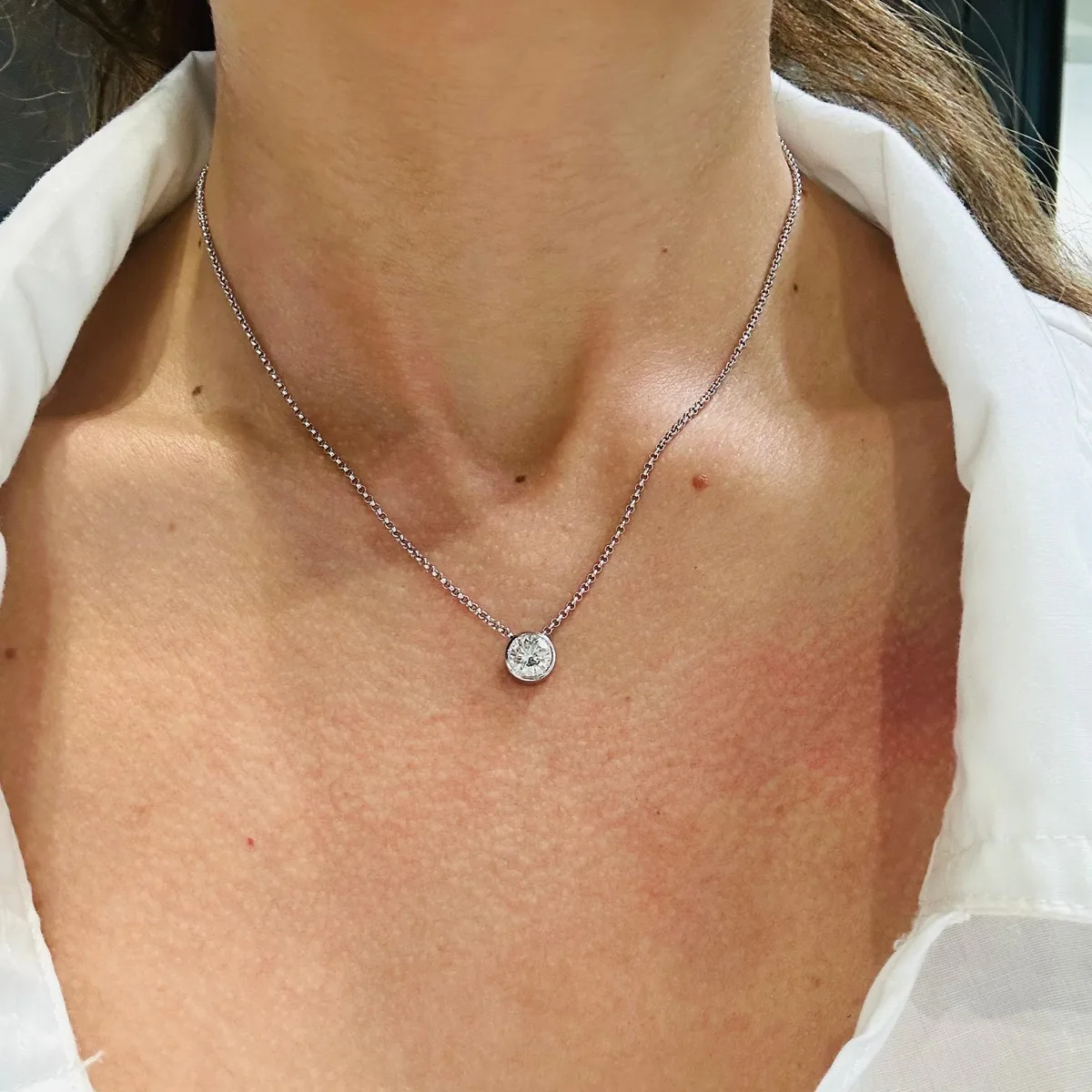
Image source: Bing (Web (fair-use with source credit))
Quick Answer
A bezel set vs prong set necklace flipping comparison favors the bezel for overall stability. Bezel settings provide a wider, flat metal perimeter against the skin. Prong settings often taper into a point that rolls easily.
Both styles will flip if the chain connects below the stone's center of gravity. A low-profile basket prong stays flat almost as well as a bezel.
Why Solitaire Necklaces Flip: The Physics of Pendant Balance
Pendants flip because gravity, friction, and body motion constantly fight for control of the mount. A solitaire pendant is a suspended pendulum. As you walk, your chest moves and your collarbone shifts.
If the setting lacks enough base width, it tumbles forward or backward along its axis.
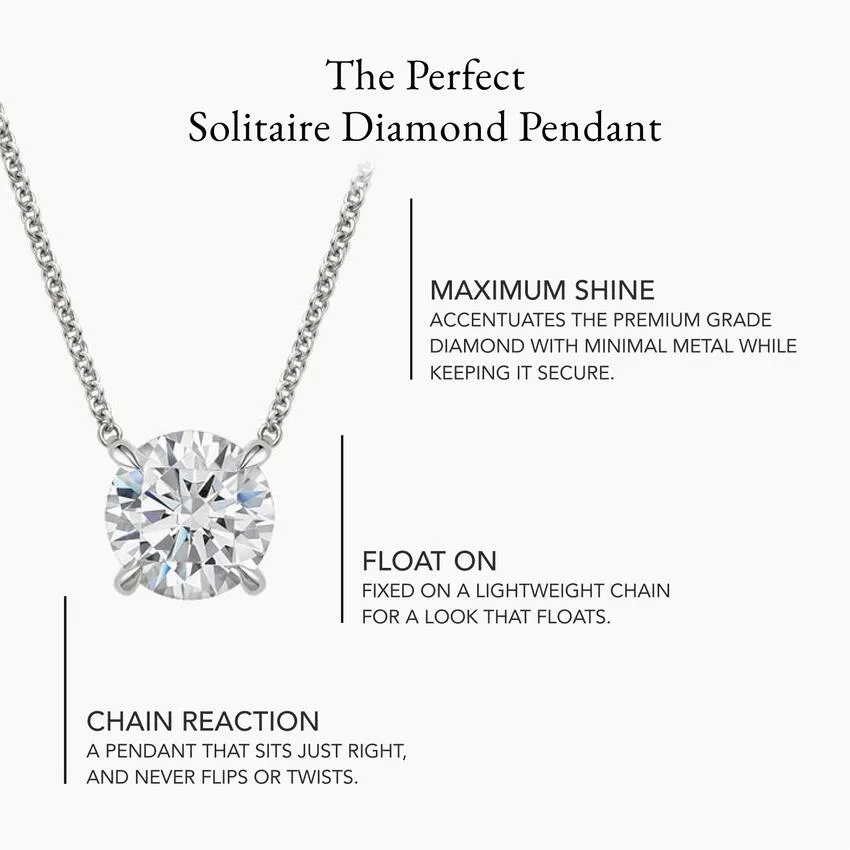
Image source: Bing (Web (fair-use with source credit))
Center of Gravity and the Pivot Line
Every pendant has an imaginary horizontal line where the chain passes through the mounting. This is the pivot line. If the center of gravity sits above this pivot line, the pendant is top-heavy.
The heavier table facet swings downward, pointing the sharp culet forward.
To keep a diamond upright, the pivot line must sit at or slightly above the stone's girdle. When jewelers place drill holes or bails too low, the top of the stone tips forward. Adding more metal near the bottom of the setting pulls that balance point back down.
Skin Contact Area and Undercarriage Geometry
The back of the pendant needs surface contact with your skin to create friction. A wide, flat floor acts like a kickstand against your sternum.
A rounded or sharply tapered back cannot grip the skin. Instead, it acts like a rocker on a rocking chair. The slightest bump from your clothing sends it spinning.
Anatomy and Chain Dynamics: The Clavicle Hollow
Your chest is not a flat canvas. The hollow between your collarbones creates an empty pocket where short chains hover.
If a 16-inch pendant sits inside that hollow, it lacks skin contact. Without skin to rest on, the pendant floats freely in mid-air. In this suspended state, even minor chain twists cause the setting to spin completely around.
Bezel-Set Pendants: Stability Mechanics, Pros, and Hidden Traps
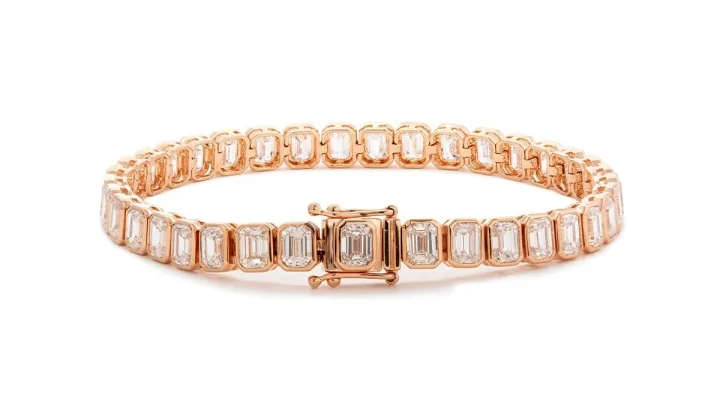
A bezel setting wraps a complete rim of gold or platinum around the stone's perimeter. This design naturally resists rolling better than most alternatives.
How the Metal Rim Distributes Weight Against the Skin
The outer rim of a bezel creates a broad, level contact patch. This rim distributes the metal's weight across a larger footprint.
Because metal is heavier than diamond material, the bezel adds substantial mass around the girdle. This extra perimeter weight lowers the center of gravity. The flat rear rim rests flush against your chest wall, dramatically reducing rolling.
Full Bezel vs. Semi-Bezel: Impact on Movement
A full bezel circles the entire perimeter, giving an even 360-degree base. It provides consistent resistance to flips in every direction.
A semi-bezel leaves two sides open to let in extra light. While striking, semi-bezels often have uneven side-to-side weight. If the jeweler cuts away too much metal from the bottom bridge, the pendant loses its broad base and starts tipping sideways.
The Slide-Bail Trap: When a Bezel Still Flips
Many buyers assume bezels never flip. That is a myth.
If a bezel pendant features an open back with a steep conical taper, it will roll. Similarly, hidden slide bails placed midway down the back create a violent forward tilt. As of 2026, jewelers often combat this by casting flat-backed gallery plates directly onto slide bezels.
| Bezel Feature | Anti-Flip Impact | Real-World Performance |
|---|---|---|
| Full Flat-Back Rim | High | Sits completely flush against skin |
| Top-Rail Slide Bail | High | Keeps pivot line above the diamond girdle |
| Conical Tapered Back | Low | Rolls easily despite the bezel front |
| Mid-Body Hidden Bail | Critical Failure | Creates extreme top-heavy forward tipping |
Prong-Set Pendants: Light Performance vs. Rolling Tendencies
Prong mountings maximize light return by leaving the sides of the gemstone open. However, removing metal from the sides means removing the exact structure that prevents flipping.
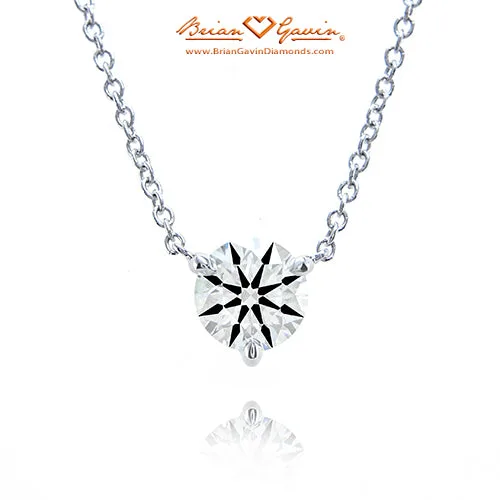
Image source: Bing (Web (fair-use with source credit))
Basket Prongs vs. Martini Settings: Two Completely Different Animals
Not all prong settings behave the same way on a necklace. A traditional four-prong basket features a flat wire rail running along the bottom. This rail creates a boxy, stable foundation against the skin.
A three-prong martini setting forms a steep V-shape cone. While martini styles sit beautifully in earlobes, they perform terribly on a chain.
The Cone Effect: Why Martini Prongs Roll Nonstop
The conical shape of a martini mount acts like a spinning top. The point of the cone rests on your chest, while the wide diamond sits high above it.
There is zero flat surface to stop the pendant from rolling. With every step you take, the cone shifts. Within minutes of putting it on, the culet pokes your skin and the diamond faces inward toward your shirt.
Flat-Bottom Wire Galleries That Keep Prongs Facing Forward
If you prefer prongs, a four-prong wire basket with an integrated gallery wire is essential. The gallery wire connects the prongs into a rigid, square frame.
This square frame rests flat against your skin. It gives the setting physical corners that resist twisting forces from the chain. As long as the suspension point sits at the top wire, a basket prong stays upright remarkably well.
Head-to-Head Comparison: Bezel vs. Prong on the Neckline
Choosing between these settings requires balancing optical sparkle against daily wearability.
Side-by-Side Specifications and Anti-Flip Benchmarks
- Skin Contact Footprint: Bezel settings offer up to 40% more contact area than open prongs of identical stone size.
- Mass Distribution: Bezels add metal weight around the outer rim, stabilizing the balance point. Prongs keep mass concentrated in the center.
- Pivot Placement: Prongs often rely on top-loop jump rings. Bezels accommodate high-drilled slide channels.
Movement and Roll Resistance
A bezel wins the roll-resistance test almost every time. Its continuous outer edge creates drag against the skin or fabric.
Prong settings have open gaps between the wires. These gaps can catch on skin texture or fabric weaves, causing the pendant to trip and twist over itself during movement.
Daily Comfort and Hair/Fabric Catching
Bezel settings offer a completely snag-free profile. You can wear them to sleep or while working out without snagging a single thread.
Prongs feature tiny metal tips bent over the diamond crown. These tips love to snag knit sweaters, scarfs, and long strands of hair. Each snag tugs the necklace out of position.
Visual Size vs. Diamond Brilliance
Prongs expose more facet surfaces, offering slightly better sparkle in low-light environments.
A bezel acts like a picture frame. The shiny metal collar makes a 1-carat diamond appear roughly 10% to 15% larger from a standard conversational distance. You trade a slight amount of side brilliance for a larger face-up profile and bulletproof stability.
Matching the Setting to Your Anatomy and Daily Routine
Your unique bone structure and chain selection dictate how either setting behaves.
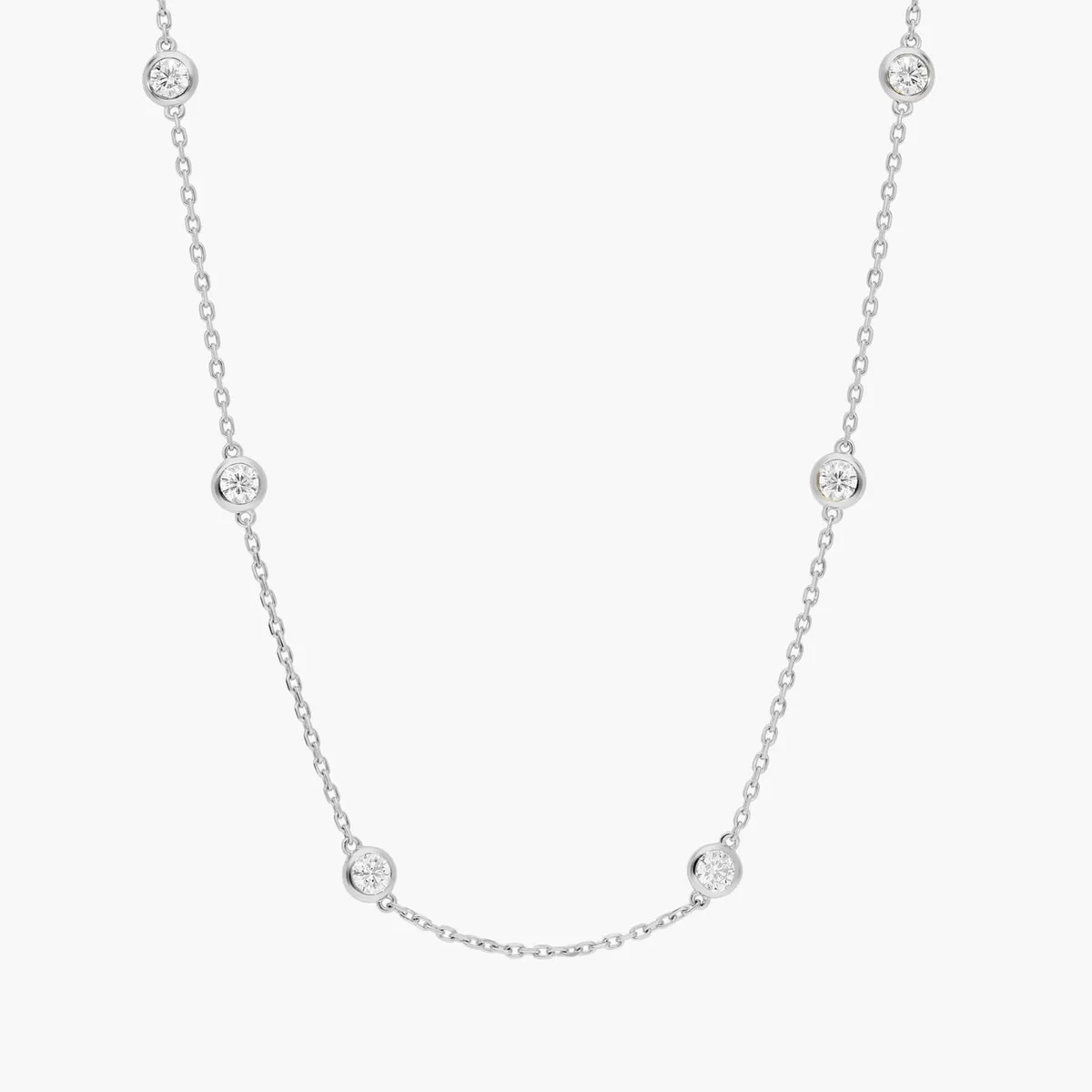
Image source: Bing (Web (fair-use with source credit))
Deep Sternal Hollows vs. Flat Chest Anatomy
If you have prominent clavicles, a short 16-inch chain causes any pendant to bridge the gap and float. For this anatomy, choose an 18-inch or 20-inch chain. This drops the pendant onto the flatter, broader plane of your upper sternum where skin friction can do its job.
For flatter chest profiles, a low-profile basket prong or bezel will sit flat at almost any chain length.
Chain Type Matters: Cable, Wheat, and the Problem with Snake Chains
Chain construction plays an overlooked role in pendant stability. Snake chains and herringbone chains are stiff. As your neck moves, these chains twist along their length like a torque spring, mechanically forcing the pendant to flip.
Loose, fluid chains like fine cable, diamond-cut wheat, or curb links absorb body twists between their individual links. They transfer zero rotational force into the pendant mount.
Fixed Station vs. Sliding Bail: The True Anti-Flip Deciding Factor
The ultimate cure for pendant roll is a fixed station mount. In a station necklace, the chain cuts into two pieces and solders directly to the left and right sides of the setting.
With two distinct anchor points on the stone's upper perimeter, the pendant physically cannot rotate. It is anchored like a suspension bridge. Whether you choose a bezel or prongs, a fixed station construction permanently solves the flipping issue.
How to Fix a Flipping Necklace Without Buying a New One
If your current necklace will not stay facing forward, you do not need to replace the entire piece. Bench jewelers use several mechanical adjustments to correct rotational balance on existing settings.
Moving the Drill Point or Adding High-Mounted Jump Rings
Repositioning the chain attachment point is the fastest fix for top-heavy tipping. If your pendant uses a single central loop near the bottom of the collet, ask a jeweler to remove it.
Replacing that loop with two small jump rings soldered to the upper rail changes the fulcrum. Setting the chain attachment at the top third of the head forces gravity to pull the base inward. This simple modification keeps the diamond table facing directly out.
Soldering the Pendant as a Fixed Station
Converting a sliding pendant into a stationary piece removes its ability to tumble along the chain. A jeweler simply removes the sliding bail and cuts your chain at the collarbone center.
The jeweler then solders each cut end of the chain to opposite sides of the top rim. This dual-point connection anchors the setting firmly. The necklace moves with your chest rather than rolling freely along a loose wire.
Adjusting Chain Length and Using Clasp Counterweights
Changing the resting position of the stone often solves flipping caused by chest anatomy. Adding a two-inch chain extender drops the pendant below the hollow of your throat.
You can also attach a small metal charm or counterweight directly next to the rear clasp. This added rear weight creates backward tension along the neckline. It pulls the chain taut, preventing slack from allowing the pendant to roll over.
Frequently Asked Questions About Pendant Flipping
Does diamond carat weight affect how much a necklace flips?
Larger diamonds flip less than smaller ones when set properly. Higher diamond carat weight adds downward gravitational pull, which helps anchor the setting. However, if a two-carat stone sits in a tall, conical martini mount, its extra height makes top-heavy tipping far more severe.
Can a jeweler add a flat back to an existing prong setting?
Yes, a bench jeweler can modify an open-wire prong setting. They do this by soldering a flat undercarriage plate or gallery wire to the bottom base. This modification expands the skin-contact area and costs significantly less than buying an entirely new mounting.
Will shortening my chain stop my solitaire from rolling?
Shortening a chain usually makes flipping worse if it places the stone inside your clavicle hollow. Pendants need consistent skin contact to remain upright. Extending the chain to 18 inches allows the setting to rest against the flatter, broader surface of your upper breastbone.
Are three-prong martini settings ever stable as necklaces?
Three-prong martini settings are almost never stable as sliding pendants. Their conical shape creates a pivot point with virtually no skin friction. The only way to stabilize a martini setting is by soldering it directly to the chain as a fixed station necklace.
The Final Verdict: Which Setting Wins the Flip Test?
When comparing stability alone, the bezel setting wins decisively over the prong setting. Its wider base, perimeter metal weight, and smooth contact area keep stones flat against the body. A bezel naturally counteracts the rotational forces created by daily movement.
Prong settings can still work well, but only if you choose the right architecture. Avoid conical martini styles entirely for pendants. Instead, select a four-prong basket with a broad, flat gallery wire set as a low-profile mount.
If total flip prevention is your top priority, choose a fixed station bezel necklace. Anchoring the chain directly to both sides of a flat-backed bezel guarantees your diamond stays brilliant, centered, and facing forward all day.

Similar Posts