Freshwater vs Akoya Pearl Luster: Which Shines Brighter?
Founder & Fashion Creative Director at Julia Fashionista · CFDA Fashion Scholar, Certified Image Consultant (AICI) · 12+ years in editorial wardrobe styling, sustainable textile sourcing, and luxury capsule curation
Choosing between pearls often comes down to one question: how sharp do you want your reflection to be? When you examine freshwater pearl vs akoya pearl luster side by side, the difference jumps out immediately. One delivers a mirror-like shine with crisp reflections, while the other offers a soft, diffused glow.
The choice comes down to nacre density, culturing methods, and biological differences between saltwater oysters and freshwater mussels. Laboratory testing and gemological standards show that crystal alignment directly determines surface shine. Here is how both pearl varieties stack up in light reflection, visual sharpness, and real-world durability.
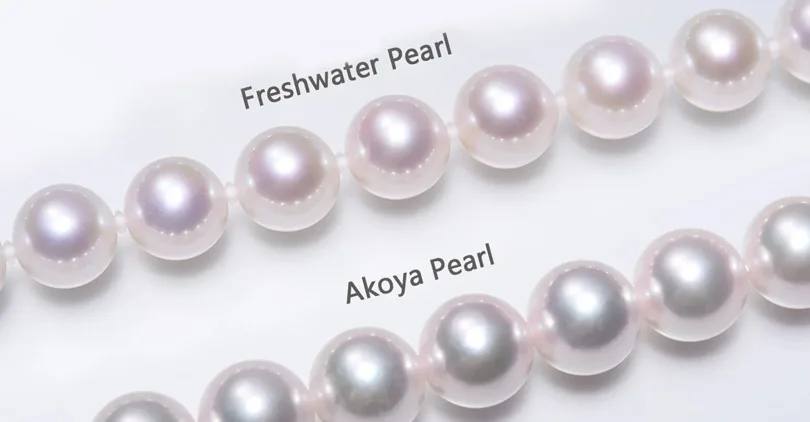
Image source: Bing (Web (fair-use with source credit))
Quick Answer
The main freshwater pearl vs akoya pearl luster difference is surface sharpness. Akoya pearls produce a mirror-like, specular shine. You can clearly see your face reflected in them.
Freshwater pearls typically show a softer, satiny glow. Light diffuses gently through their thicker, solid-nacre layers. Modern metallic freshwater grades can rival Akoyas, but standard Akoyas reflect light more crisply.
The Luster Face-Off: Mirror Reflections vs. Soft Internal Glow
Luster describes how light reflects off a pearl's surface and refracts through its internal layers. Gemologists evaluate this visual factor before any other. It separates high-grade pearls from dull, chalky specimens.
Akoya pearls set the global standard for high-contrast, specular reflection. When you hold an Akoya under a direct light bulb, you see a pin-sharp highlight. You can often see the distinct outline of the bulb and the reflection of your own eyes.
This optical effect is known as "ball-bearing" luster because the gem looks like polished chrome.
Standard freshwater pearls display diffuse reflection. Light travels into the gem and bounces across millions of organic layers, scattering outward. The result is a warm, velvety glow that seems to come from deep within the core.
While an Akoya snaps with crisp edges, a traditional freshwater pearl offers subtle, creamy elegance.
Here is who each optical style suits best:
- Akoya luster: Best for formal occasions, classic bridal wear, and anyone who wants high-contrast sparkle across the room.
- Freshwater luster: Best for casual daytime wear, skin-tone blending, and shoppers who prefer a softer, understated visual profile.
The Science of Pearl Shine: Why Akoya and Freshwater Reflect Light Differently
The optical behavior of a pearl comes down to two materials: aragonite and conchiolin. Aragonite is a crystalline form of calcium carbonate. Conchiolin is the organic protein "glue" that binds those microscopic crystals together.
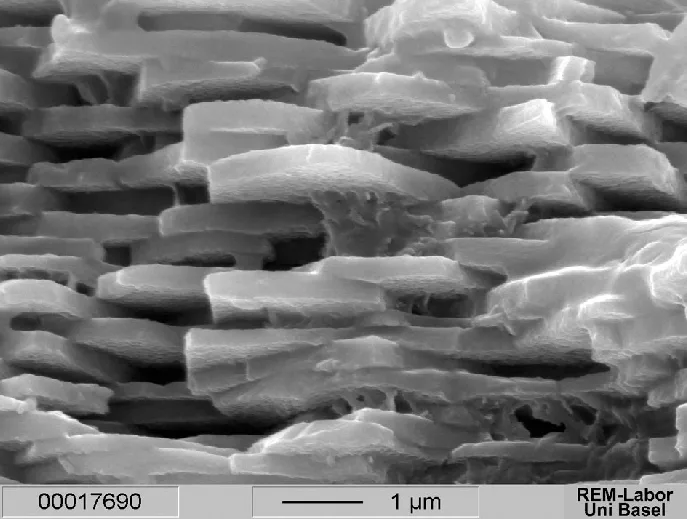
Image source: Bing (Web (fair-use with source credit))
Saltwater Akoya oysters (Pinctada fucata martensii) secrete thin, extremely uniform aragonite platelets. These microscopic sheets average roughly 0.4 to 0.5 microns thick. Akoya oysters also deposit lower amounts of organic conchiolin.
Because the crystalline sheets lie flat like tightly stacked window glass, light bounces off the top surfaces with minimal scattering. Cold ocean waters in Japan slow the oyster's metabolism during winter harvests, which tightens the crystal structure even further.
Freshwater mussels (Hyriopsis cumingii) build their nacre differently. The aragonite platelets in freshwater pearls are slightly thicker, running between 0.5 and 0.8 microns. Mussels also use higher ratios of conchiolin protein between the crystal sheets.
The thicker platelets and denser organic matrix scatter incoming light rays in multiple directions. Research published by the Gemological Institute of America confirms that platelet uniformity and nacre compactness dictate how sharp surface reflections appear to the human eye.
Side-by-Side Breakdown: Akoya vs. Freshwater Luster Across Key Metrics
Comparing these two varieties requires looking at optical properties, biological origins, and surface performance side by side.
| Metric | Akoya Pearl (Pinctada fucata martensii) | Freshwater Pearl (Hyriopsis cumingii) |
|---|---|---|
| Primary Luster Style | Specular, mirror-like, metallic edges | Diffuse, satiny, deep internal warmth |
| Reflection Sharpness | High (facial details clearly visible) | Moderate (soft, recognizable shapes) |
| Platelet Thickness | 0.4 to 0.5 microns (very tight) | 0.5 to 0.8 microns (standard) |
| Culturing Environment | Cold saltwater bays (Japan, Vietnam) | Freshwater lakes and rivers (China) |
| Average Nacre Depth | 0.35 mm to 0.6 mm (over bead core) | Solid nacre (100% pearl material) |
| GIA Top Luster Grade | Hanadama / Excellent | Gem Grade / Excellent (Metallic) |
| Light Scattering | Low (maximum direct light return) | High (internal light refraction) |
This comparison highlights how different their optical profiles really are. An Akoya strand catches immediate attention under evening restaurant lighting or camera flashes. A freshwater strand looks mellow and soft, showing its best color shifts under natural outdoor sunlight.
Modern Exceptions: The Rise of "Metallic" and Bead-Nucleated Freshwater Pearls
The traditional rule that freshwater pearls are always softer than Akoyas is no longer absolute. Farming innovations in China's Zhejiang province have reshaped the market. As of 2026, advanced pearl culturing produces freshwater harvests that challenge saltwater luster directly.
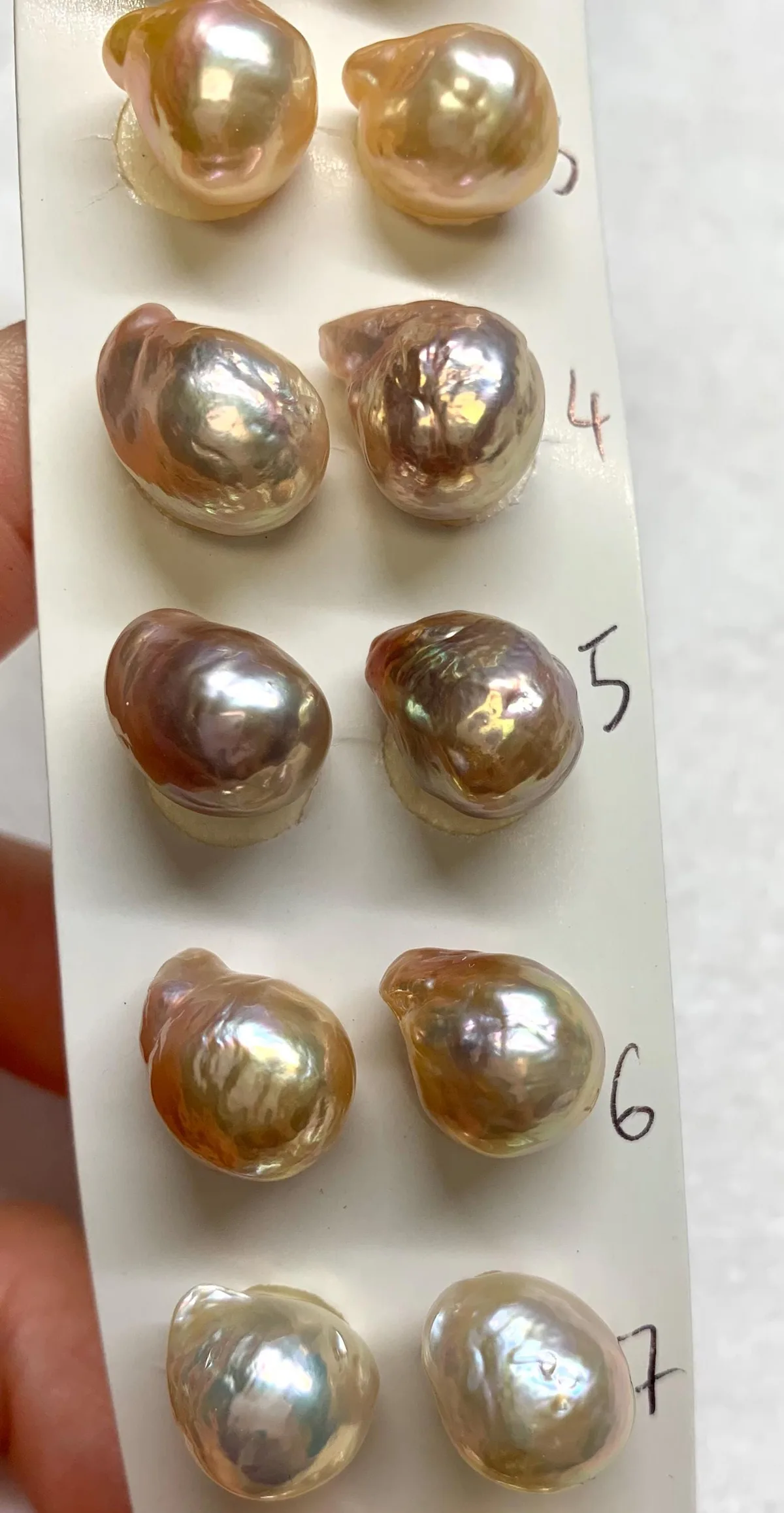
Image source: Bing (Web (fair-use with source credit))
The most notable development is the "metallic" tissue-nucleated freshwater pearl. These gems account for less than 0.1% of a standard freshwater harvest. They lack the diffuse, milky look of historic freshwater gems.
Instead, they produce an intense, reflective sheen that mimics polished silver or brass. Under standard grading lamps, high-grade metallic freshwater pearls show reflections almost as crisp as top-tier Akoyas.
Another breakthrough comes from bead-nucleated freshwater varieties, often traded under names like Edison pearls. Technicians insert a large mother-of-pearl bead into the mussel's visceral mass alongside a piece of mantle tissue. This mirrors the saltwater bead-nucleation technique.
These mussels produce large pearls (often 11 mm to 16 mm) with intense, high-sheen luster. While standard tissue-nucleated pearls have a softer body, these bead-nucleated freshwater varieties exhibit focused, mirror-like highlights previously found only in saltwater oysters.
The Nacre-to-Luster Trade-Off: Visual Impact vs. Everyday Durability
When you choose an Akoya for its mirror shine, you accept a specific structural trade-off. Akoya pearls are bead-nucleated gems. Farmers insert a round shell bead into the oyster, which coats it with nacre over 10 to 18 months.
The resulting nacre layer is thin, typically measuring between 0.3 mm and 0.6 mm.
If you wear Akoyas daily, acidic body oils, perfumes, and clothing friction can wear down that thin coating over several decades. Once the nacre wears through, the dull inner shell core shows. This issue is known in the jewelry trade as "blinking."
Traditional freshwater pearls, by contrast, are tissue-nucleated. Farmers insert a small piece of donor mantle tissue without an interior bead. Over three to five years, the mussel builds concentric layers of aragonite around that tissue, which eventually dissolves.
The resulting pearl is nearly 100% solid nacre.
Solid nacre offers unmatched durability:
- It cannot chip or peel away to reveal an artificial bead center.
- It tolerates frequent contact with skin oils without losing its core structure.
- You can buff away minor surface wear without ruining the gem.
An Akoya gives you the ultimate mirror finish today, but it requires cautious wear and regular maintenance. A solid freshwater pearl trades a bit of optical sharpness for a gem that can easily last for generations of daily use.
How to Test and Grade Pearl Luster Like a Gemologist
You do not need a laboratory spectrometer to evaluate pearl luster accurately. Gemologists rely on standard visual inspection methods that you can replicate at home with a single overhead light source.
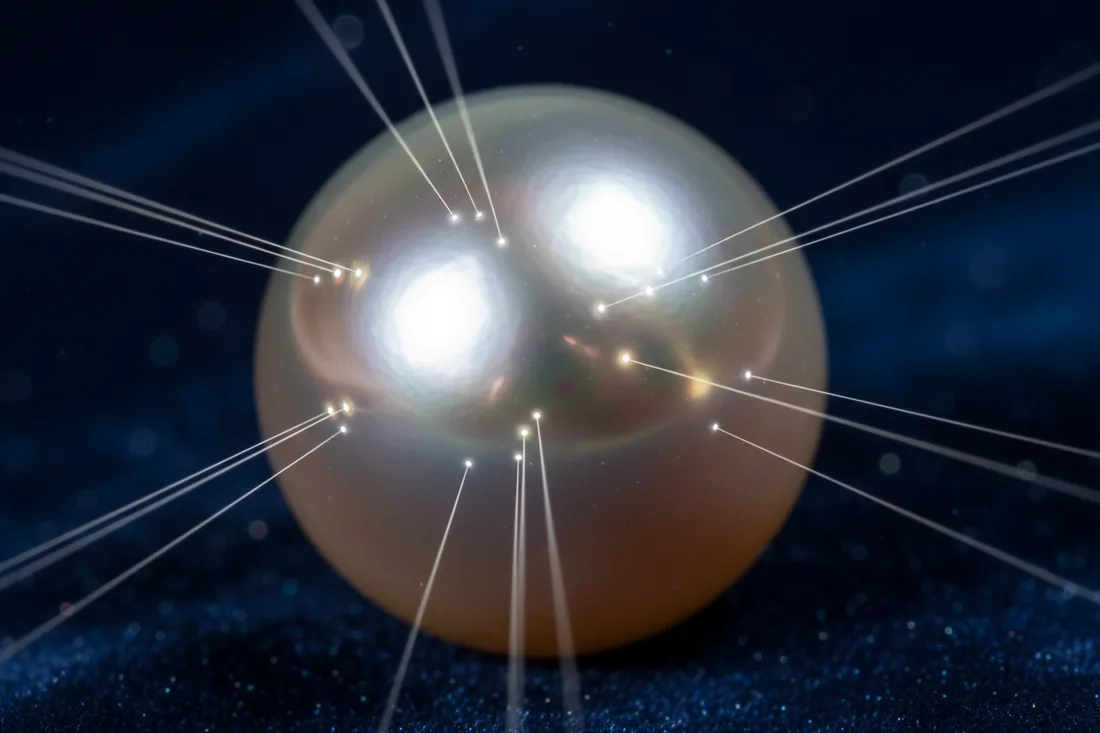
Image source: Bing (Web (fair-use with source credit))
Place the pearls on a neutral background, such as a matte white grading tray or a grey microfiber cloth. Avoid holding them under direct yellow incandescent light. Neutral 5500K daylight bulbs work best.
Position the strand about twelve inches beneath the light source, then look directly into the reflection on the pearl's surface.
Apply these visual checkpoints to determine the grade:
- The Pupil Test: Lean in close to the pearl. If you can clearly see the dark outline of your pupil reflected on the surface, the pearl exhibits Excellent luster. If you only see your silhouette without facial details, it rates as Good or Fair.
- Light Source Edge Definition: Check the perimeter of the light bulb reflected on the pearl dome. A sharp, crisp boundary indicates Akoya-style specular luster. A soft, fuzzy, or blooming halo points to diffuse freshwater luster.
- Roll Inspection: Roll the strand slowly across the tray. A top-tier luster maintains continuous, sharp reflections across the entire circumference without turning dull, chalky, or milky on one side.
Major appraisal systems follow the CIBJO Pearl Commission standards. These rules require testing laboratories to evaluate luster alongside surface cleanliness, nacre thickness, and overtone before assigning top commercial grades.
FAQs About Freshwater and Akoya Pearl Luster
Can freshwater pearls have the same luster as Akoya pearls?
Top-grade metallic freshwater pearls can match the reflection sharpness of standard Akoyas. These rare specimens account for less than one percent of freshwater harvests. Most commercial freshwater pearls retain a softer, more satiny light return compared to the mirror finish typical of saltwater Akoyas.
Does Akoya pearl luster fade over time?
Akoya luster can degrade if the pearl contacts cosmetics, perfume, or acidic perspiration. Because Akoyas have thin nacre coatings over an internal bead, abrasive cleaning or chemical exposure strips the surface platelets quickly. Proper storage and wiping with a damp cloth preserve their shine for decades.
Why do some freshwater pearls look chalky?
Lower-grade freshwater pearls look chalky when their surface aragonite platelets are thick, disorganized, or bound by heavy conchiolin protein. Rapid harvest cycles and poor water quality can prevent mussels from laying down compact nacre. This causes incoming light to scatter completely instead of reflecting back.
What is the highest luster grade for an Akoya pearl?
The highest recognized luster grade for an Akoya pearl is Hanadama, certified by the Pearl Science Laboratory in Tokyo. Hanadama pearls demonstrate superior optical reflection, verified by photometric testing. They must show sharp mirror reflections, minimal surface blemishes, and a nacre thickness of at least 0.4 millimeters.
The Buying Decision: Which Pearl Luster Belongs in Your Collection?
Your decision between these two gems rests on how you balance reflection sharpness against price and daily durability. Neither option is universally better. Each delivers distinct optical strengths suited to different wearing habits.
Choose Akoya pearls if you want unmatched visual pop. If you are buying a strand for a black-tie gala, a formal wedding, or milestone anniversary jewelry, the sharp specular highlight of an Akoya remains the classic benchmark. Nothing matches the bright, mirror-like intensity of an Akoya necklace resting against an evening dress.
You simply need to treat the strand with care, reserving it for special moments to protect that thin, delicate nacre layer.
Choose freshwater pearls if you value resilience, versatility, and deeper color warmth. High-grade freshwater pearls deliver roughly eighty to ninety percent of an Akoya's optical appeal at a fraction of the cost. Because they consist of solid nacre, you can wear them to the office, to weekend dinners, or on warm summer days without worrying about rubbing through to a core bead.
If you want the best of both worlds, look for metallic freshwater pearls. They give you the chrome-like reflections of a saltwater gem alongside the rugged, solid-nacre construction of a freshwater classic.

Similar Posts