Do Salt and Pepper Diamonds Chip? Durability Explained
Founder & Fashion Creative Director at Julia Fashionista · CFDA Fashion Scholar, Certified Image Consultant (AICI) · 12+ years in editorial wardrobe styling, sustainable textile sourcing, and luxury capsule curation
If you are wondering about salt and pepper diamond durability, chip risks are likely your biggest concern. These stones offer a moody, galaxy-like look that standard white diamonds simply cannot match. Yet that exact look comes from internal traits that can make the stone fragile.
Pure diamond rates at a 10 on the Mohs hardness scale. However, heavy internal inclusions alter how force travels through the gem. Understanding how these gems handle everyday knocks will help you protect your investment for years to come.
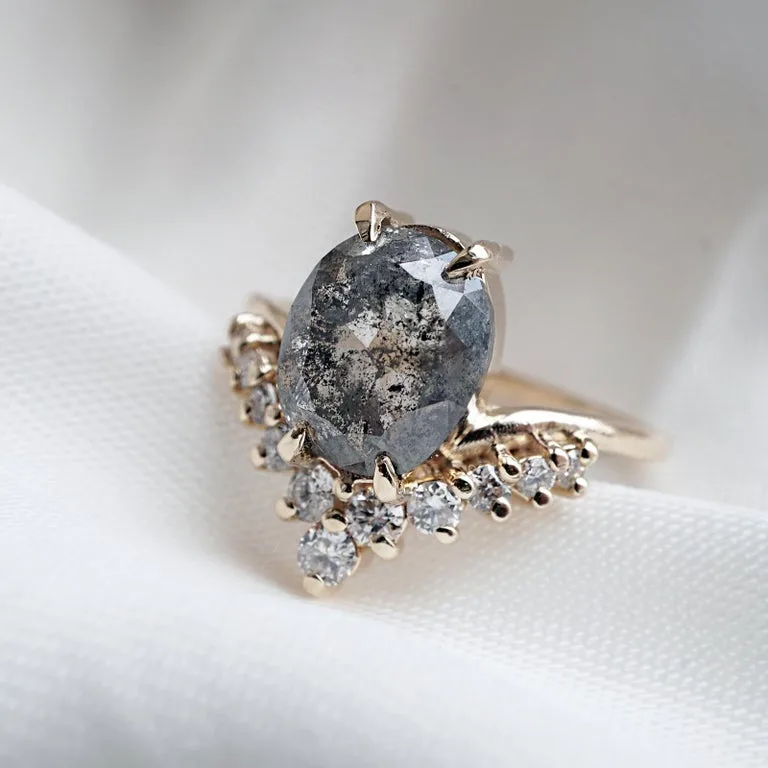
Image source: Bing (Web (fair-use with source credit))
Quick Answer
A salt and pepper diamond can chip under moderate impact. High Mohs hardness prevents surface scratches. Heavy internal inclusions reduce structural toughness.
Surface-reaching fractures make edge breaks much more likely. Protective settings help prevent accidental damage.
The Reality of Salt and Pepper Diamond Durability: Hardness vs. Toughness
Many buyers confuse hardness with toughness. Hardness measures how well a mineral resists scratches. Diamond ranks at the top of the Mohs scale with a perfect 10.
That means only another diamond can scratch its surface.
Toughness measures how well a mineral resists breaking, cracking, or chipping when struck. Diamond has natural cleavage directions along its octahedral planes. According to structural data from the National Institute of Standards and Technology, diamond exhibits a fracture toughness of roughly 2.0 MPa·m½.
That makes diamond hard, but naturally brittle against sharp blows.
+-------------------+----------------------------+-----------------------------+
| Property          | Mohs Hardness (1-10)       | Fracture Toughness          |
+-------------------+----------------------------+-----------------------------+
| Classic Diamond   | 10 (Scratch-proof)         | ~2.0 MPa·m½ (Cleaves)       |
| Salt & Pepper     | 10 (Scratch-proof)         | ~1.2 - 1.5 MPa·m½ (Fragile) |
| Sapphire / Ruby   | 9 (Very scratch-resistant) | ~3.0 - 4.0 MPa·m½ (Tougher) |
+-------------------+----------------------------+-----------------------------+
Salt and pepper stones contain heavy concentrations of foreign minerals. These clusters break up the uniform carbon grid. As a result, the stone loses internal integrity.
When struck against a granite counter or brass door handle, the shock wave travels until it hits an inclusion. If that inclusion sits near an edge, a chip forms immediately.
The Anatomy of a Chip: Why Certain Inclusions Make Diamonds Fragile
Not all salt and pepper inclusions carry the same mechanical risk. Tiny internal flecks simply scatter light. Large clusters, however, act like structural faults in concrete.
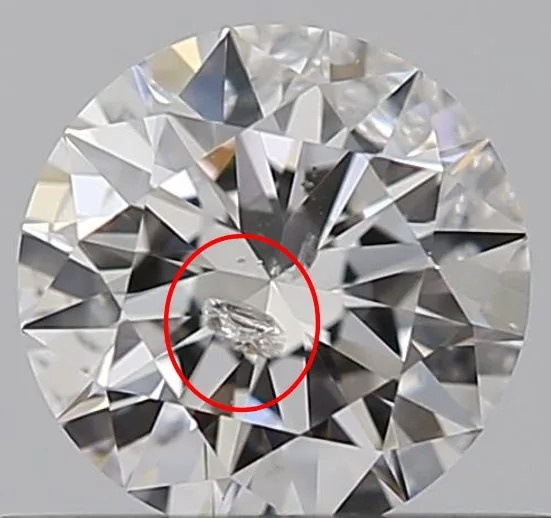
Image source: Bing (Web (fair-use with source credit))
The Critical Flaws: Surface-Reaching Feathers and Heavy Graphite Clusters
A feather is a tiny internal fracture inside the crystal lattice. If that feather stays buried deep within the diamond, it rarely causes an issue.
The danger begins when a feather breaches the surface. Surface-reaching fractures create an open pathway for impact force. Strike the stone at that exact spot, and the fracture will spread.
Large deposits of graphite, hematite, or magnetite also weaken the gem. Foreign minerals expand and contract at different rates than pure carbon. That temperature variance builds internal strain points inside the stone.
The Danger Zone: Thin Girdles, Exposed Corners, and Rose Cuts
The girdle is the outer perimeter edge of the diamond. If the lapidary cut the girdle knife-edge thin, it lacks the mass needed to absorb bumps.
Shape plays an equally important role:
- Marquise, pear, and princess cuts have pointed tips that catch on clothing.
- Rose cuts feature a flat base with a faceted dome, which concentrates force straight down into the wide, thin outer rim.
- Brilliant cuts distribute shock better because the faceted pavilion redirects energy inward.
An exposed point on a rose cut stone with a surface feather is an accident waiting to happen.
Pre-Purchase Inspection Workflow: How to Spot a High-Risk Stone
You should evaluate a salt and pepper diamond carefully before you commit to buying it. As of 2026, many independent jewelers share high-resolution videos and microscopic scans of their stones. Use this step-by-step diagnostic workflow to evaluate risk.
Step 1: Check the Girdle Edge
  │
  ├─► Knife-edge thin or jagged? ────────► HIGH CHIP RISK (Avoid or bezel set)
  └─► Medium to slightly thick? ────────► Proceed to Step 2
        │
Step 2: Trace Surface-Reaching Feathers
  │
  ├─► Feather breaks the outer edge? ────► CRITICAL FAILURE POINT (Reject stone)
  ├─► Feather breaches the table only? ──► MODERATE RISK (Keep away from prongs)
  └─► All feathers fully internal? ──────► Proceed to Step 3
        │
Step 3: Evaluate Pointed Corners (Pears, Marquise, Princess)
  │
  ├─► Dark graphite concentrated at tip? ─► EXTREME RISK (Tip can shear off)
  └─► Clean, clear tips? ────────────────► LOW RISK (Safe for everyday wear)
First, use a 10x jeweler's loupe to inspect the perimeter. Tilt the gem slowly under direct light. Watch how reflections bounce across the surface facets.
If a dark line breaks the surface reflection, you have found an open feather.
Second, examine the girdle thickness all the way around the stone. Irregular cutting often leaves thin sections alternating with thick spots. Those thin sections are prime targets for edge chips.
Third, look at the stone in profile view. Make sure the base has enough depth to seat safely in metal without resting directly against your skin or the ring bridge.
Choosing the Right Setting: Bezel vs. Prongs for Fragile Diamonds
The mount you pick directly determines whether an included diamond survives daily wear. A great setting shields vulnerable spots without hiding the stone's character.
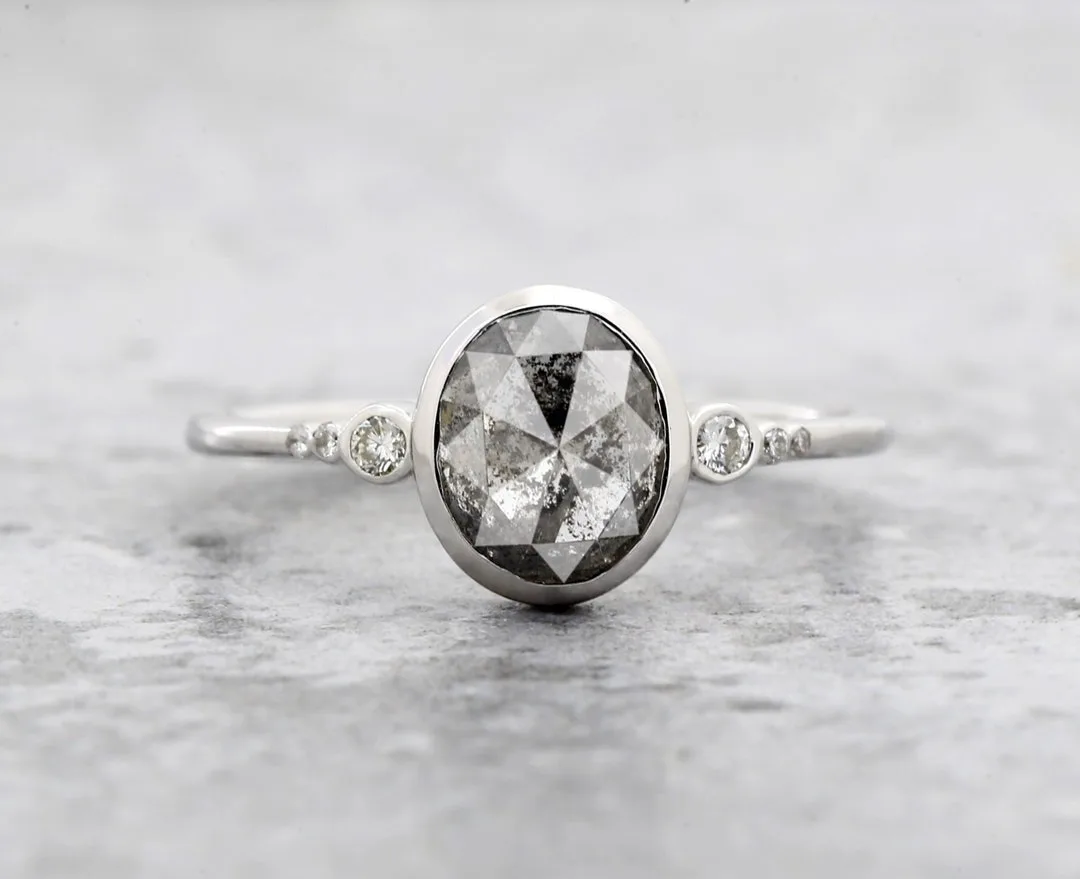
Image source: Bing (Web (fair-use with source credit))
+-------------------+--------------------+-------------------+---------------------+
| Setting Style     | Edge Protection    | Snag Risk         | Best For            |
+-------------------+--------------------+-------------------+---------------------+
| Full Bezel        | Maximum (Complete) | Extremely Low     | High-risk stones    |
| Half Bezel        | Moderate           | Low               | Low-risk rounds     |
| 6-Prong Mount     | Fair               | Moderate          | Stones with clean edges |
| 4-Prong Mount     | Poor               | High              | Not recommended     |
| V-Prong (Corners) | High (Tips only)   | Low at corners    | Pears and marquise  |
+-------------------+--------------------+-------------------+---------------------+
A full bezel wraps a solid metal rim around the entire outer perimeter. The metal absorbs everyday knocks before they can reach the diamond's edge. This setting works best for stones with thin girdles or perimeter inclusions.
Prong settings leave the sides of the stone open to ambient light, but they leave the girdle exposed. If you prefer prongs, choose a minimum of six rounded prongs rather than four. For fancy shapes like pears or marquise cuts, insist on V-shaped prongs to cap the pointed corners.
Keep the ring profile low. High cathedral heads sit far above the finger, where they tend to strike tables, countertops, and car doors.
What to Do If Your Salt and Pepper Diamond Chips: A Triage Decision Tree
Accidents happen fast. You hit your hand on a kitchen island, look down, and notice a small void along the girdle of your diamond. Follow this triage tree immediately.
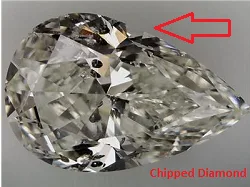
Image source: Bing (Web (fair-use with source credit))
Did you notice a chip on your ring?
  │
  ▼
Step 1: Stop wearing the ring immediately.
  │
  ▼
Step 2: Inspect with a magnifying glass or 10x loupe.
  │
  ├─► Is the stone loose in the mount?
  │     └─► YES: Place in a sealed pouch. Take directly to a bench jeweler.
  │     └─► NO: Proceed to Step 3.
  │
Step 3: Check chip location.
  │
  ├─► Small surface flake on the girdle (<0.5mm)?
  │     └─► ACTION: Ask a jeweler to turn the stone so a prong covers the chip.
  │
  ├─► Deep crater extending into the stone?
  │     └─► ACTION: Stone needs evaluation by an independent lapidary for recutting.
  │
  └─► Long internal line running across the body?
        └─► ACTION: High cleaving danger. Resetting into a protective bezel required.
If the damage is a micro-flake, a bench jeweler can often polish out the rough patch. This process causes minimal carat loss.
If the chip runs deep, do not wear the ring. Continued wear allows dirt and skin oils to pack into the fracture. That hydraulic pressure can cause the crack to travel deeper into the crystal.
Place the ring into a small jewelry pouch and seek an inspection from an experienced bench jeweler.
Mistakes That Cause Salt and Pepper Diamonds to Fracture
Most broken salt and pepper diamonds do not fail during heavy construction work. They break during ordinary daily routines because wearers treat them like clear white diamonds.
The most common errors that cause sudden fractures include:
- Using ultrasonic jewelry cleaners. High-frequency sound waves cause rapid cavitation in liquid, which drives tiny shock waves directly into open fissures and can split the stone.
- Steam cleaning at jewelry counters. Rapid temperature shifts cause graphite inclusions to expand faster than the surrounding carbon, cracking the diamond from the inside out.
- Wearing rings during gym workouts. Clamping your fingers around steel barbells, dumbbells, or kettlebells places high pinpoint pressure directly on exposed girdles.
- Allowing bench jewelers to use standard retipping methods. Torches transfer extreme thermal stress into heavily included gems. A jeweler must remove the stone or use laser welders instead.
- Wearing the ring while doing housework. Granite counters, porcelain sinks, and ceramic tiles share a high hardness rating and easily shatter brittle edges on contact.
Essential Care, Cleaning, and Insurance Strategies for Vulnerable Stones
Caring for an included diamond takes a gentle approach. The safest cleaning method requires only a bowl of warm water, mild dish soap, and a baby toothbrush. Soak the ring for ten minutes to loosen grease, gently scrub around the setting, and pat dry with a lint-free microfiber cloth.
Jewelry insurance demands extra attention for rustic diamonds. Standard home policies often exclude pre-existing structural flaws or dispute the value of non-graded stones. According to consumer guidelines from the Gemological Institute of America, an independent gemological appraisal complete with macro photos is the best way to secure agreed-value coverage.
+---------------------+-------------------------------+-------------------------------+
| Insurance Feature   | Standard Homeowners Rider     | Specialized Jewelry Policy    |
+---------------------+-------------------------------+-------------------------------+
| Inclusion Coverage  | Often denies claims on cracks | Covers mysterious loss & chips|
| Repair Choice       | Dictated by carrier network   | You pick your bench jeweler   |
| Claim Adjustment    | Actual cash value (depreciated)| Agreed value from appraisal  |
+---------------------+-------------------------------+-------------------------------+
Make sure your policy covers accidental chipping rather than total loss alone. If a stone fractures, an agreed-value policy allows you to recut the gem or replace it without fighting over clarity grades.
Frequently Asked Questions About Salt and Pepper Diamond Durability
Can a salt and pepper diamond break in half?
Yes, a salt and pepper diamond can break completely in half. If a heavy impact strikes a surface-reaching feather along an octahedral cleavage plane, the crack can run through the stone instantly. Protective mountings like bezels significantly lower this risk.
Can you fix a chipped salt and pepper diamond?
A bench jeweler or lapidary can fix minor chips by polishing the edge or rotating the gem under a prong. Severe fractures require recutting the stone, which usually causes a ten to twenty percent loss in total carat weight.
Are rose cut salt and pepper diamonds more fragile?
Rose cut stones are more fragile along their outer edges than brilliant cuts. They have a flat base and a thin perimeter girdle that takes the brunt of direct surface hits. A protective rubover or bezel setting is best for this cut.
Will hand sanitizer or soap damage an included diamond?
Hand sanitizer and mild hand soaps will not harm the diamond or its carbon inclusions. However, repeated exposure leaves a hazy film behind the stone that dulls its natural light reflection. Avoid harsh cleaners with bleach or chlorine, which weaken the setting metal.

Similar Posts