Is PVD Gold Stainless Steel Safe for Showers?
Founder & Fashion Creative Director at Julia Fashionista · CFDA Fashion Scholar, Certified Image Consultant (AICI) · 12+ years in editorial wardrobe styling, sustainable textile sourcing, and luxury capsule curation
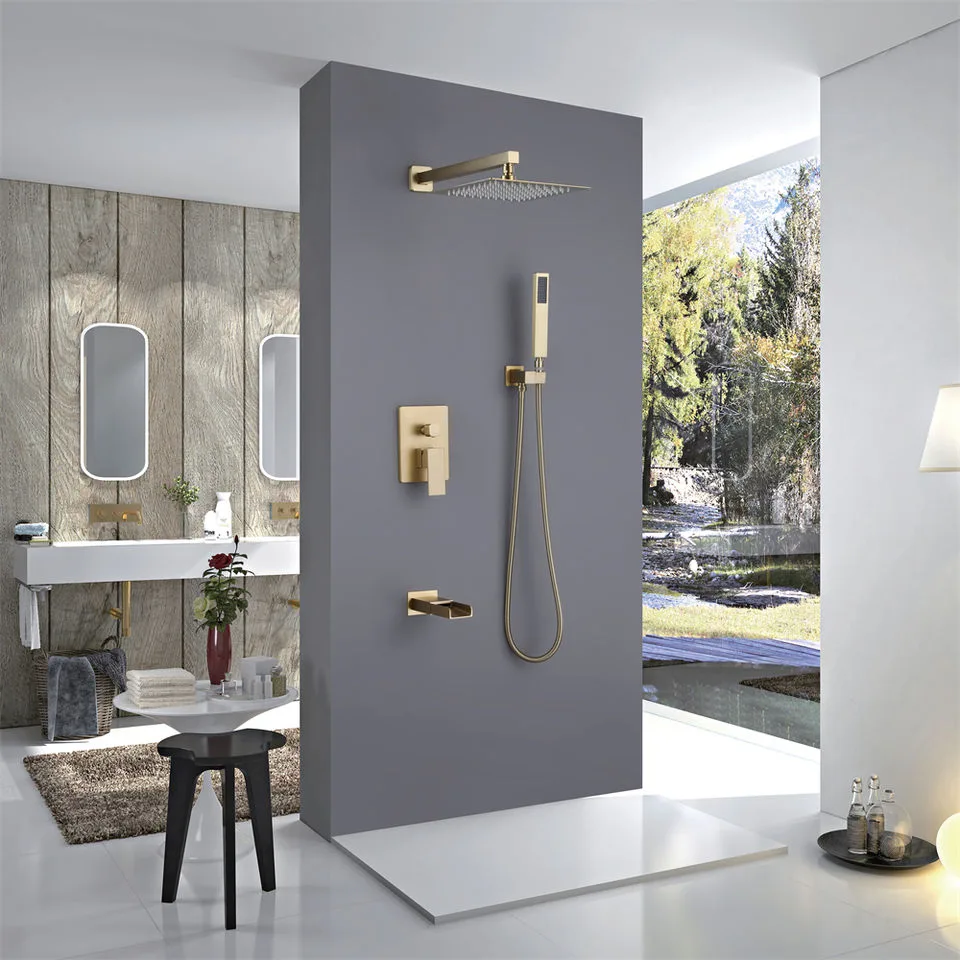
Image source: Bing (Web (fair-use with source credit))
Yes, a PVD gold coating stainless steel shower safe fixture will withstand high humidity, steam, and everyday water exposure without flaking or tarnishing. Physical Vapor Deposition (PVD) creates a molecular bond with the underlying steel, producing an ultra-hard surface that outlasts traditional plated finishes.
Under standard testing methods from organizations like ASTM International, PVD coatings routinely exceed 1,000 hours of neutral salt spray exposure without breakdown. As of 2026, it remains the gold standard for luxury shower hardware because it resists scratches and corrosion far better than organic lacquers or electroplated alternatives.
Quick Answer
A PVD gold coating on stainless steel is completely shower safe. The vaporized metal bonds directly at the atomic level. It will never chip, flake, or peel like traditional paint or electroplating.
The finish resists water, steam, and mild soaps easily. Harsh bathroom chemicals can still damage it over time.
How PVD Bonds to Stainless Steel (and Why It Matters in Wet Zones)
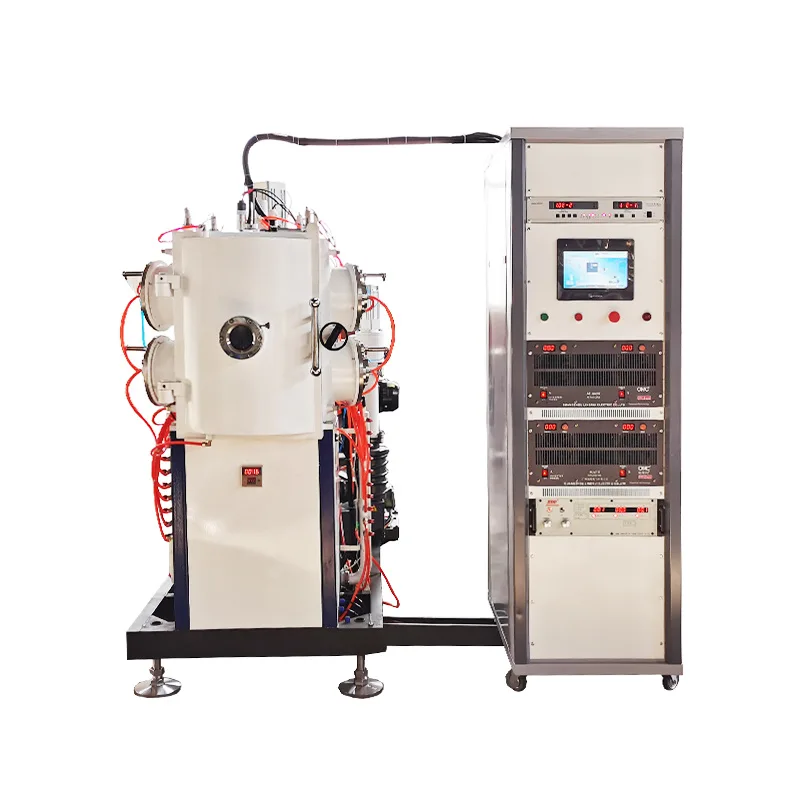
Image source: Bing (Web (fair-use with source credit))
To understand why PVD works so well in a wet shower, you have to look at how manufacturers apply it. Physical Vapor Deposition takes place inside a high-vacuum chamber heated to between 300 and 800 degrees Fahrenheit.
Technicians vaporize a solid metal target, typically titanium or zirconium, using an electric arc or magnetron sputtering. At the same time, they inject reactive gases like nitrogen into the chamber. The vaporized metal ions react with the gas, ionizing into a high-energy plasma.
A strong electrical bias pulls these ions straight toward the stainless steel hardware. Rather than sitting on top of the metal like a coat of paint, the incoming ions penetrate the surface lattice of the steel. This forms an atomic diffusion layer.
The resulting ceramic-metal film measures only 0.2 to 0.5 microns thick. That sounds paper-thin, but its structural density makes it remarkably tough. The surface achieves a hardness rating between 2,000 and 3,000 Vickers (HV).
For comparison, standard chrome plating rarely exceeds 1,000 HV, and electroplated gold sits around 150 HV.
Because the bond is metallurgical rather than mechanical, water cannot sneak underneath the coating. In wet, steamy showers, standard plated fixtures often blister when moisture seeps past microscopic pores. PVD prevents this entirely.
The layer remains completely stable, inert, and impervious to moisture under normal bathing conditions.
The Decision Tree: Will PVD Gold Survive Your Specific Shower Environment?
While the PVD layer itself will not rust, its real-world lifespan depends heavily on three environmental variables. PVD is a thin shield, not a solid slab of gold. If your water or cleaning routine attacks the base metal, the system fails.
Use the decision rules below to evaluate your specific setup.
Variable 1: Base Metal Chemistry (Grade 304 vs. Grade 316)
- If your fixtures use Grade 316 stainless steel: Your shower hardware is safe anywhere, including outdoor coastal showers and steam rooms. Grade 316 contains 2% to 3% molybdenum, which prevents pitting from airborne chlorides and heavy moisture.
- If your fixtures use Grade 304 stainless steel: Your setup is fully safe for normal indoor residential showers. However, you must avoid prolonged exposure to standing salty water or trapped moisture under trim rings.
- If the fixture uses cheap zinc alloy (zamak) under PVD: Do not install it in a wet shower. The core metal will corrode quickly through microscopic pinholes, causing the surface to bubble.
Variable 2: Your Water Profile (Hard Minerals, pH, and Well Water)
- If your water tests between pH 6.5 and 8.0: Your PVD gold coating will remain completely stable for decades. Everyday municipal tap water causes zero chemical reaction with titanium nitride coatings.
- If you have extremely hard well water (above 10 grains per gallon): The coating itself will survive, but evaporating water will deposit calcium carbonate on the surface. These white chalky spots are hard to remove safely because acidic descalers can etch the finish.
- If you have acidic well water (pH below 6.0): Rinse and dry your shower trim regularly. Constant, unevaporated acidic water droplets can cause micro-etching along threaded joints over several years.
Variable 3: Ventilation and Daily Moisture Retention
- If your shower has an active exhaust fan (50+ CFM) and dries between uses: The fixture will maintain its original luster with zero special treatment.
- If you have an enclosed steam shower with 100% continuous humidity: Ensure your hardware is Grade 316 stainless steel beneath the PVD. Persistent, hot condensation will seek out any microscopic flaw in lesser alloys.
| Shower Environment | Base Steel Needed | PVD Lifespan Expectation | Maintenance Protocol Required |
|---|---|---|---|
| Standard Enclosure (Dry between uses) | AISI 304 or 316 | 20+ Years | Wipe down weekly with a microfiber cloth |
| High-Humidity Steam Shower | AISI 316 Marine Grade | 15–20 Years | Squeegee or dry trim after every session |
| Coastal Home (Salt-air exposure) | AISI 316 Marine Grade | 15+ Years | Rinse with fresh water, dry thoroughly |
| Hard Well Water System | AISI 304 or 316 | 10–15 Years | Daily wipe-down to stop mineral scale buildup |
PVD Gold vs. Electroplated Gold vs. Brushed Brass: Wet Area Performance
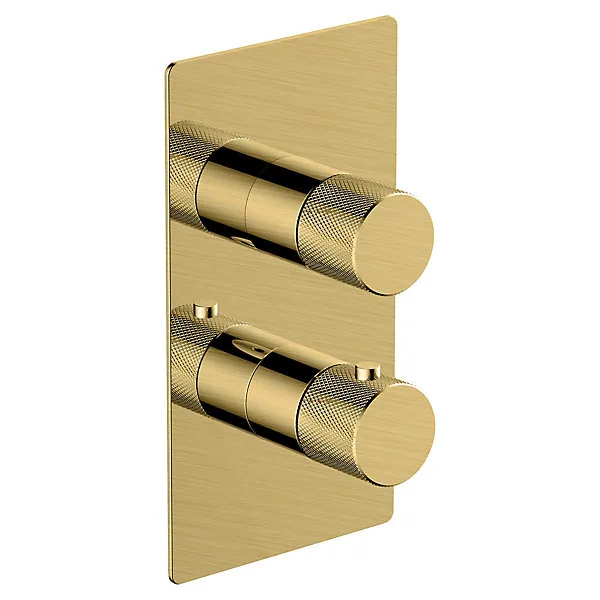
Image source: Bing (Web (fair-use with source credit))
Shopping for shower hardware can be confusing because three completely different manufacturing methods create a warm, golden look. Each reacts differently to running water and steam.
Electroplated gold submerges a brass or steel part in a chemical bath. An electric current deposits a thin layer of real 18k or 24k gold over a nickel underplate. While real gold does not tarnish, it is extremely soft.
Without a synthetic lacquer clear-coat, daily handling and water friction wear it off within two to five years. Once that lacquer cracks, water enters, turning the fixture green or black.
Raw or "living" brushed brass is solid brass with no protective topcoat. When you put raw brass in a shower, it reacts constantly with oxygen, water, and shampoo residue. It rapidly darkens, develops brown and green patina spots, and requires monthly polishing with metal paste to stay bright.
PVD gold bypasses both issues. Manufacturers usually evaporate titanium nitride (TiN) or zirconium nitride (ZrN) to replicate the rich color of yellow or rose gold. The layer does not oxidize, does not require a clear-coat, and has a rock-solid surface hardness.
- Choose PVD Gold if: You want a permanent, maintenance-free gold color that will not peel, discolor, or wear away under daily shower use.
- Choose Electroplated Gold if: You are restoring a low-use powder room fixture where pure, historical 24k luster matters more than wear resistance.
- Choose Raw Brushed Brass if: You genuinely want an antique, aged look that changes color and darkens with everyday exposure.
Chemical Triggers That Ruin PVD Coatings (and What to Avoid)
Even though PVD-coated stainless steel resists physical abrasion, certain aggressive chemicals can ruin the finish permanently. The damage happens in one of two ways. Harsh acids directly strip the thin titanium layer, or chlorine compounds penetrate microscopic gaps and corrode the underlying steel.
Per plumbing performance standards from the American Society of Mechanical Engineers (ASME A112.18.1/CSA B125.1), finish degradation usually stems from chemical attack rather than water exposure. Keep these common household products far away from your gold shower trim:
- Hydrochloric and Muriatic Acids: Often found in heavy-duty tile and grout cleaners. These acids dissolve the titanium nitride layer within minutes, leaving bare, dark grey metal behind.
- Sodium Hypochlorite (Bleach): Strong bleach solutions attack the chromium oxide film of the underlying stainless steel. This causes crevice corrosion and pitting under trim plates and gaskets.
- Phosphoric and Sulfamic Acid Descalers: Standard supermarket spray bottles designed to dissolve thick limescale will strip the luster off a PVD finish.
- Abrasive Scrubbing Powders: Cleaners containing pumice, feldspar, or silica will physically cut through a sub-micron PVD layer when scrubbed with force.
- Abrasive Scouring Pads: Green Scotch-Brite pads and steel wool are harder than the base metal and will leave deep, cloudy scratch patterns across brushed or polished gold.
The Daily and Monthly Maintenance Playbook for High-Moisture Enclosures
Proper maintenance for PVD gold is simple because the coating is chemically non-reactive to water. Your primary goal is preventing mineral deposits from hardening over the top of the metal.
For daily care, keep a dedicated microfiber cloth near the shower. After your last shower of the day, wipe down the mixer faceplate, handle, and showerhead. This removes standing droplets before they evaporate and leave behind calcium rings.
For monthly deep cleaning, skip commercial aerosol bathroom sprays entirely. Mix a mild solution of warm tap water and a few drops of pH-neutral liquid dish soap. Wash the fixtures using a soft, non-abrasive sponge.
Rinse thoroughly with clean water, then buff dry with a clean towel.
If you deal with occasional stubborn soap scum, you can use a diluted 50/50 mix of distilled white vinegar and warm water. Spray it onto the cloth, not directly onto the fixture, and wipe the area gently. Immediately rinse the surface with plain water to wash away the mild acid, then dry it completely.
Never let vinegar sit on gaskets or seam lines.
Troubleshooting Common Issues: Water Spots, Discoloration, and Micro-Pitting
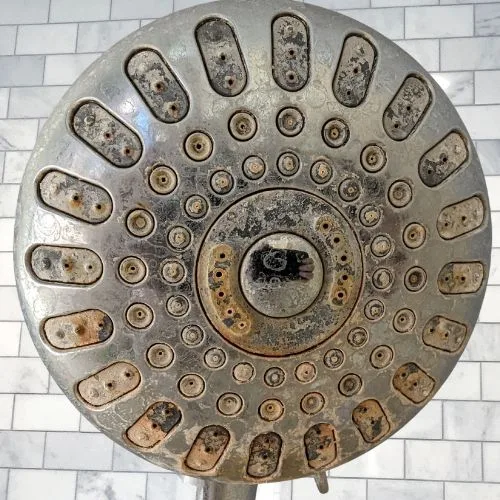
Image source: Bing (Web (fair-use with source credit))
Even durable finishes encounter water-related issues. Here is how to diagnose and resolve the three most common problems on PVD shower fixtures:
- Chalky White Water Spots: Hard water leaves behind dissolved calcium and magnesium. These spots sit on top of the coating rather than etching into it. Soak a microfiber cloth in warm water mixed with 10% white vinegar. Lay the damp cloth over the spots for five minutes to dissolve the scale, then rinse and dry.
- Rainbow-Like Discoloration: This rainbow film is not damaged metal. It is a thin layer of body oil, shampoo surfactant, or silicone hair product adhering to the smooth surface. Clean the fixture using pure isopropyl alcohol on a cotton pad. The alcohol dissolves the greasy film instantly, restoring the true gold tone without harming the PVD.
- Tiny Dark Brown or Black Specks (Micro-Pitting): If you see rust-colored pinpricks, the issue originates below the PVD layer. Bleach or harsh chlorides have entered microscopic pores and oxidized the base metal. You cannot buff this out without stripping the thin finish. Replace the affected component and verify that your cleaners are non-chlorinated.
Frequently Asked Questions About PVD Gold Shower Fixtures
Does PVD gold peel or flake off over time?
No, authentic PVD gold will never peel or flake off your shower fixtures. Traditional electroplated finishes can blister because they sit on the metal as a topical film. PVD forms an atomic bond that integrates directly into the stainless steel surface.
It cannot separate from the base substrate.
Can I use vinegar to clean my PVD gold shower head?
Yes, but only in diluted form and for short periods. A 50/50 mix of white vinegar and water safely dissolves light mineral buildup. Never soak a PVD fixture in straight vinegar overnight.
Always rinse the metal thoroughly with plain water and dry it with a towel immediately afterward.
What causes PVD gold to turn green in a shower?
Real PVD gold on stainless steel will never turn green. Green deposits indicate that the fixture actually has an unlacquered brass base, or it is cheap zinc alloy with conventional electroplating. The green film is copper carbonate forming as moisture reacts directly with the underlying copper-bearing metal.
Is PVD gold better than brushed brass for a wet room?
Yes, PVD gold performs substantially better in a wet room than raw brushed brass. Raw brass tarnishes quickly, spots easily from shower water, and requires constant polishing. PVD gold provides the exact look of warm brushed brass while remaining completely inert to moisture and daily humidity.

Similar Posts