8mm vs 10mm Huggies: Which Inner Diameter Fits Best?
Founder & Fashion Creative Director at Julia Fashionista · CFDA Fashion Scholar, Certified Image Consultant (AICI) · 12+ years in editorial wardrobe styling, sustainable textile sourcing, and luxury capsule curation
Deciding between huggie hoop inner diameter 8mm vs 10mm often feels like a guessing game. A difference of two millimeters sounds tiny on paper, but it completely changes how jewelry sits against your ear. Pick the wrong size and your earrings will either pinch painfully or droop forward awkwardly.
Standard fashion jewelry often uses 20 gauge wire, while professional body piercing commonly starts at 18 or 16 gauge. Because cartilage and earlobes vary drastically in thickness, inner clearance dictates whether a hoop hugs or pinches. Getting the right fit starts with understanding how that measurement works.
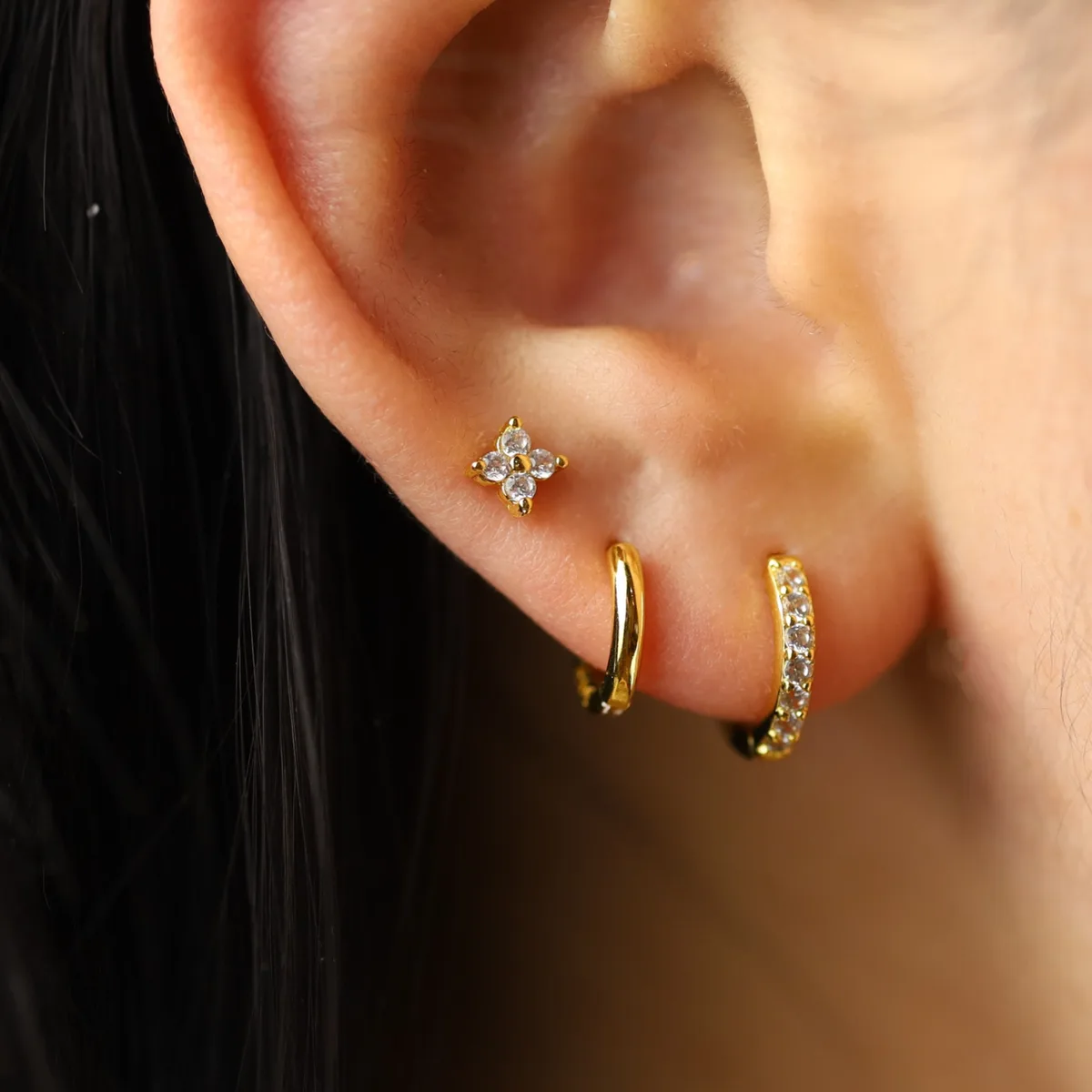
Image source: Bing (Web (fair-use with source credit))
Quick Answer
Comparing huggie hoop inner diameter 8mm vs 10mm comes down to placement. An 8mm hoop creates a tight, flush hug on most lower lobes. It works best for upper lobes and cartilage piercings.
A 10mm hoop provides breathing room and a slight drop. It fits fleshy first lobes and accommodates thicker tissue easily.
Why the 2mm Difference Between 8mm and 10mm Huggies Changes Everything
In the world of piercing jewelry, two millimeters represents a massive 25 percent increase in diameter. That extra space dictates whether your earring sits flush against your skin or dangles with visible clearance below the ear rim.
When an earring fits too tightly, it creates constant pressure on the piercing channel. Professional piercing standards from the Association of Professional Piercers emphasize that improper jewelry dimensions can lead to migration, irritation, and tissue damage. If an 8mm hoop cannot clear the bottom of your lobe, the wire will pull upward into the flesh.
A hoop that is too large brings a different set of frustrations. A 10mm ring on a thin, low-set lobe will sag forward and tilt to one side. The excess space also catches easily on knit sweaters, hairbrushes, and pillowcases.
That tiny 2mm difference determines whether your hoop functions as a true, sleep-safe huggie or as a small everyday drop earring.
Inner Diameter vs. Outer Diameter: The Sizing Trap That Wastes Money
Many shoppers mistakenly order earrings based on the outer diameter rather than the inner diameter. The outer diameter measures the entire width of the hoop from exterior edge to exterior edge. The inner diameter measures only the open, empty circle inside the ring where your ear tissue sits.
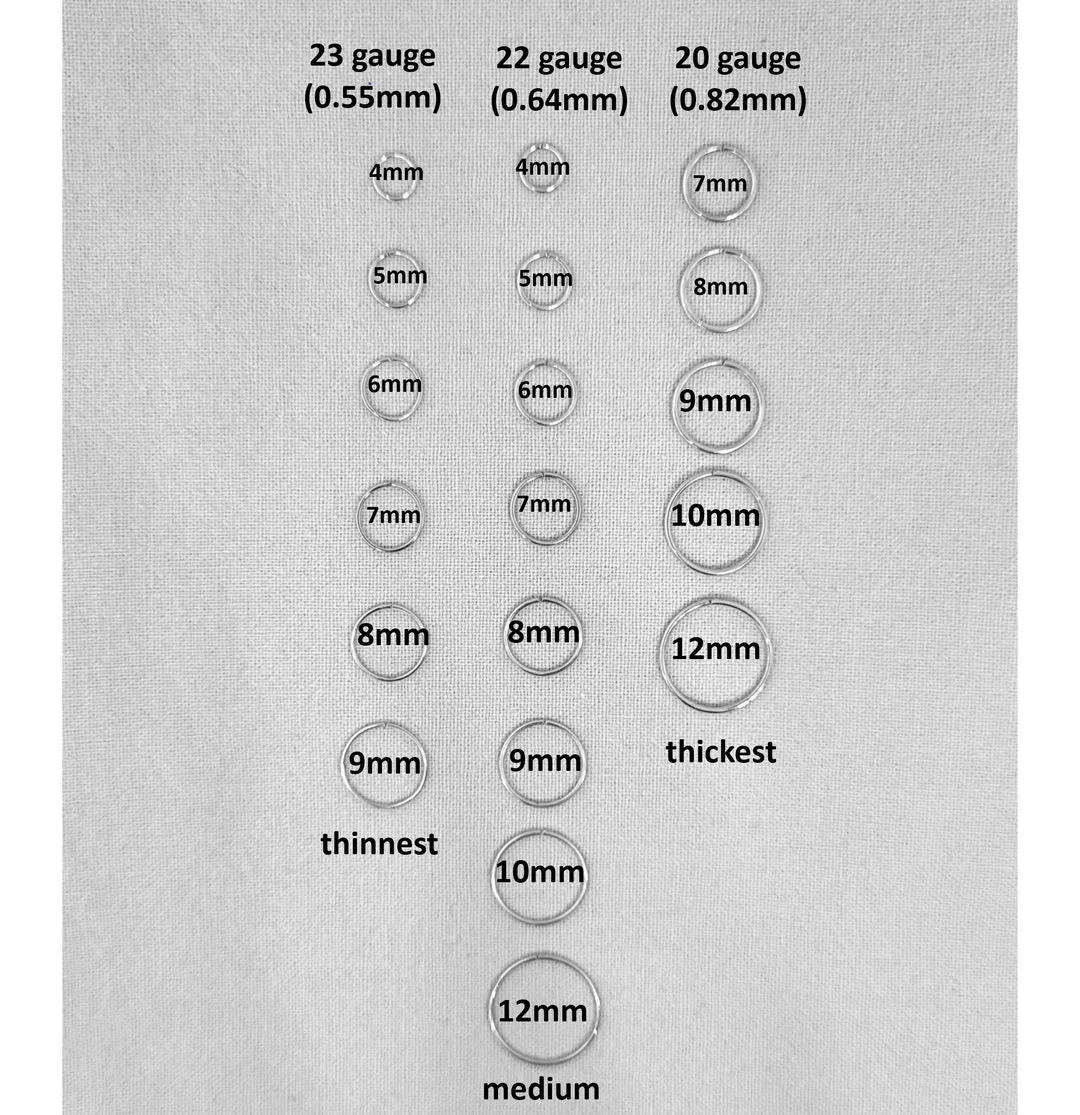
Image source: Bing (Web (fair-use with source credit))
Your ear only cares about inner diameter. If a product listing advertises a "10mm hoop" but actually refers to the outer diameter, the inner space might only be 7mm once you subtract the metal thickness. This trap becomes worse with chunky styles, pavé crystals, or wide dome bands.
Thicker metal eats directly into your wearable clearance. A flat 2mm-wide band with an 8mm inner diameter fits comfortably, but a chunky 8mm outer-diameter band will severely pinch your earlobe. Always verify that manufacturer specifications explicitly state the inner measurement before purchasing.
As of 2026, reputable jewelers clearly distinguish between these two specs on their sizing charts to prevent unnecessary returns.
8mm Huggie Hoops: The Snug Fit Breakdown
An 8mm inner diameter (roughly 5/16 of an inch) is the gold standard for a true huggie look. It sits close to the tissue, leaving little to no negative space between the hoop and the edge of your ear.
Where 8mm Fits Best on the Ear
For people with petite ears or low-placed piercings, an 8mm hoop works well in the first lobe. It creates a sleek, tailored look that stays entirely flush.
This size truly shines in secondary placements. It is the premier choice for second and third lobe piercings, where the distance from the piercing hole to the rim shrinks. An 8mm hoop also fits standard helix, forward helix, and tragus piercings reliably, assuming the cartilage ridge is not unusually wide.
Pros and Cons of an 8mm Inner Diameter
The benefits of an 8mm inner diameter center on convenience and minimalism:
- Sits completely flush against the ear with minimal movement.
- Zero snagging on hair, phone receivers, or clothing.
- Comfortable to sleep on without poking the neck.
The downsides stem directly from its tight profile:
- Can pinch thicker, fleshier first earlobes.
- Difficult to close if the clasp sits too close to your skin.
- Zero room to add dangling charms or styling accents.
10mm Huggie Hoops: The Classic Drop Breakdown
A 10mm inner diameter (approximately 3/8 of an inch) offers a relaxed, casual fit. Instead of tightly embracing the tissue, it leaves a comfortable gap of visible daylight between the earring and the bottom of your ear.
Where 10mm Fits Best on the Ear
A 10mm hoop is the most forgiving, universal size for standard first lobe piercings. If your piercings were done higher on the lobe, or if you have thick, fleshy ear tissue, 10mm provides the clearance you need to prevent irritation.
Beyond the first lobe, a 10mm hoop functions well in mid-ear placements. It is a common size for standard conch piercings, where the ring must wrap entirely around the outer cartilage rim from the inner cup of the ear.
Pros and Cons of a 10mm Inner Diameter
The advantages of choosing a 10mm hoop include:
- Fits almost every standard adult first lobe piercing without pinching.
- Leaves enough clearance to hang interchangeable charms or small drops.
- Much easier to open and snap closed with your fingers.
The drawbacks mostly involve aesthetics and snag hazards:
- May droop or tilt forward on thin earlobes.
- Not snug enough to qualify as a true huggie look on upper piercings.
- Catches more easily on knit clothing and hair strands.
Side-by-Side Comparison: 8mm vs. 10mm Huggie Hoops
Choosing between these two sizes requires balancing your anatomy against your styling goals. One size is not inherently better than the other, but each serves distinct piercing placements.
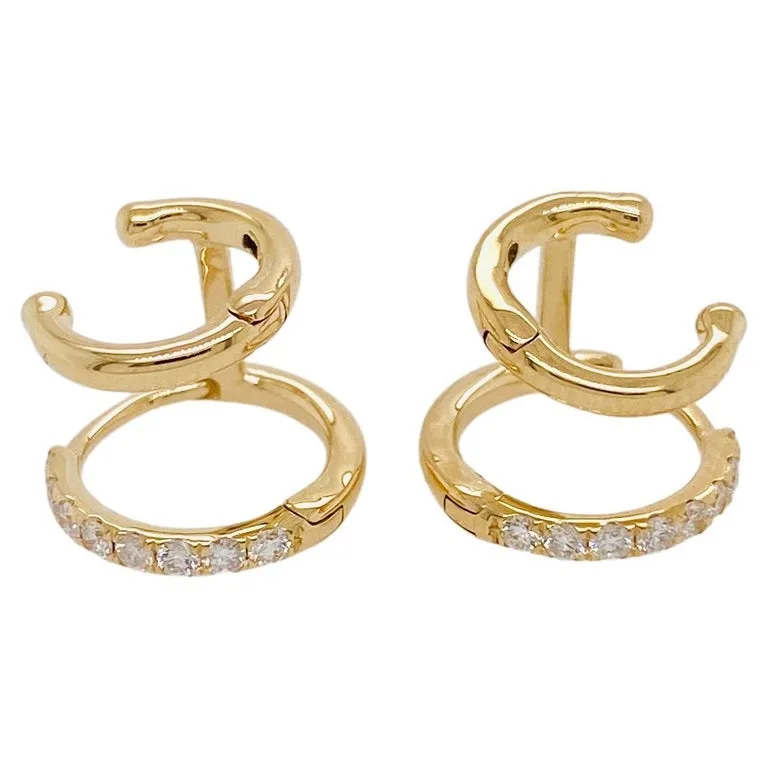
Image source: Bing (Web (fair-use with source credit))
| Feature | 8mm Inner Diameter (~5/16") | 10mm Inner Diameter (~3/8") |
|---|---|---|
| Fit Profile | Snug, tailored, flush to the skin | Relaxed drop with visible negative space |
| Best Lobe Placement | Petite first lobes, standard seconds, thirds | Average to fleshy first lobes |
| Best Cartilage Placement | Helix, forward helix, tragus, rook | Conch, loose outer helix |
| Sleep Comfort | Excellent, virtually unnoticeable | Good, but can catch on textured pillows |
| Handling Ease | Requires precision to align clicker clasp | Easy to grip and snap shut |
| Charm Compatibility | Too tight for clip-on charms | Fits charms and drops comfortably |
If you want a seamless ear stack that ascends the earlobe, pairing both sizes creates a balanced visual flow. Placing a 10mm hoop in your first lobe followed by an 8mm hoop in your second lobe builds a clean, proportional gradient.
How to Accurately Measure Your Piercing-to-Edge Distance at Home
You cannot guess your hoop size accurately without knowing the distance from your piercing channel to the edge of your ear. This measurement is called your piercing-to-edge distance.
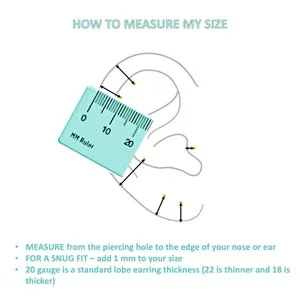
Image source: Bing (Web (fair-use with source credit))
A simple paper strip method gives you an accurate measurement in millimeters:
- Cut a narrow strip of paper about 5mm wide.
- Stand in front of a well-lit mirror and line up the top edge of the paper directly over your piercing hole.
- Use a fine-tip pen or pencil to mark where the outer edge of your earlobe or cartilage rim ends.
- Lay the marked strip flat against a metric ruler to read the distance in millimeters.
Once you have that number, always add clearance. If your measurement is 6mm, an 8mm hoop provides 2mm of drop room, making it a comfortable snug fit. If your measurement is 8mm or more, an 8mm hoop will pinch your ear severely.
You will need a 10mm hoop to give your tissue the necessary breathing room.
Common Mistakes That Lead to Swelling, Snags, and Pinched Lobes
The most painful sizing mistake is forcing an undersized hoop into a healing piercing. Hoops naturally rotate, dragging crust and bacteria directly into the healing channel. ASTM International standard ASTM F136 defines biomedical titanium standards, but even the safest metal causes pressure necrosis if the ring diameter is too tight.
Another frequent error is ignoring the "cheese-cutter effect." This happens when a thin, tight hoop pulls continuously upward or outward against your ear margin. Over several months, the wire can slowly slice through soft lobe tissue, elongating the piercing hole into an unsightly slit.
People also overlook the thickness of their earlobe when looking straight on. A piercing might only be 6mm from the bottom edge, but a thick, rounded lobe pushes the hoop outward. That lateral bulk takes up space inside the ring, turning an otherwise roomy 8mm hoop into a painful clamp.
Frequently Asked Questions About Huggie Hoop Sizing
Can I wear an 8mm huggie hoop in a first lobe piercing?
Yes, you can wear an 8mm hoop in a first lobe piercing if your piercing sits low. It works best on thin to average lobes with a piercing-to-edge distance under 7mm. If you have thick lobes or a higher hole placement, an 8mm hoop will likely pinch your skin.
Will a 10mm hoop be too loose for a second lobe piercing?
A 10mm hoop is usually too loose for a second lobe piercing if you want a true huggie look. Second piercings sit closer to the edge of the ear, typically requiring a 6mm to 8mm ring. A 10mm hoop will hang with considerable space underneath.
Is an 8mm or 10mm hoop better for sleeping?
An 8mm hoop is significantly better for sleeping because it hugs the ear closely. Its low profile prevents the earring from catching on pillowcase fibers or pressing into the side of your neck. A 10mm hoop has more play, which can tilt uncomfortably when you sleep on your side.
How do I know if my huggie hoop is too small?
Your huggie hoop is too small if the lower curve indents your earlobe or pulls down on the piercing hole. You might notice throbbing, warmth, redness, or tenderness within an hour of putting it in. A properly sized hoop should rotate smoothly without dragging on your tissue.
What wire gauge should I choose for an 8mm or 10mm huggie?
Most standard ear piercings use 20 gauge (0.8mm) or 18 gauge (1.0mm) wire. If your piercing was done with a needle at a professional studio, 18 gauge or 16 gauge (1.2mm) is standard. Always check the post gauge so you do not accidentally stretch your piercing channel.

Similar Posts