10k vs 14k Gold: Which Tarnishes Faster for Everyday Wear?
Founder & Fashion Creative Director at Julia Fashionista · CFDA Fashion Scholar, Certified Image Consultant (AICI) · 12+ years in editorial wardrobe styling, sustainable textile sourcing, and luxury capsule curation
Choosing between 10k vs 14k gold tarnish everyday wear comes down to how much base metal sits against your skin. Many people assume solid gold never discolors, yet daily moisture and friction tell a different story. If your ring or chain turns dull, dark, or leaves a line, the alloy mix is usually responsible.
Pure gold does not oxidize, but gold jewelry blends pure gold with copper, silver, and zinc. Under Federal Trade Commission guidelines outlined in 16 CFR Part 23, 10k gold contains 41.7% pure gold, while 14k gold holds 58.3%. That difference in purity changes how each alloy handles daily sweat, skin oils, and airborne compounds.
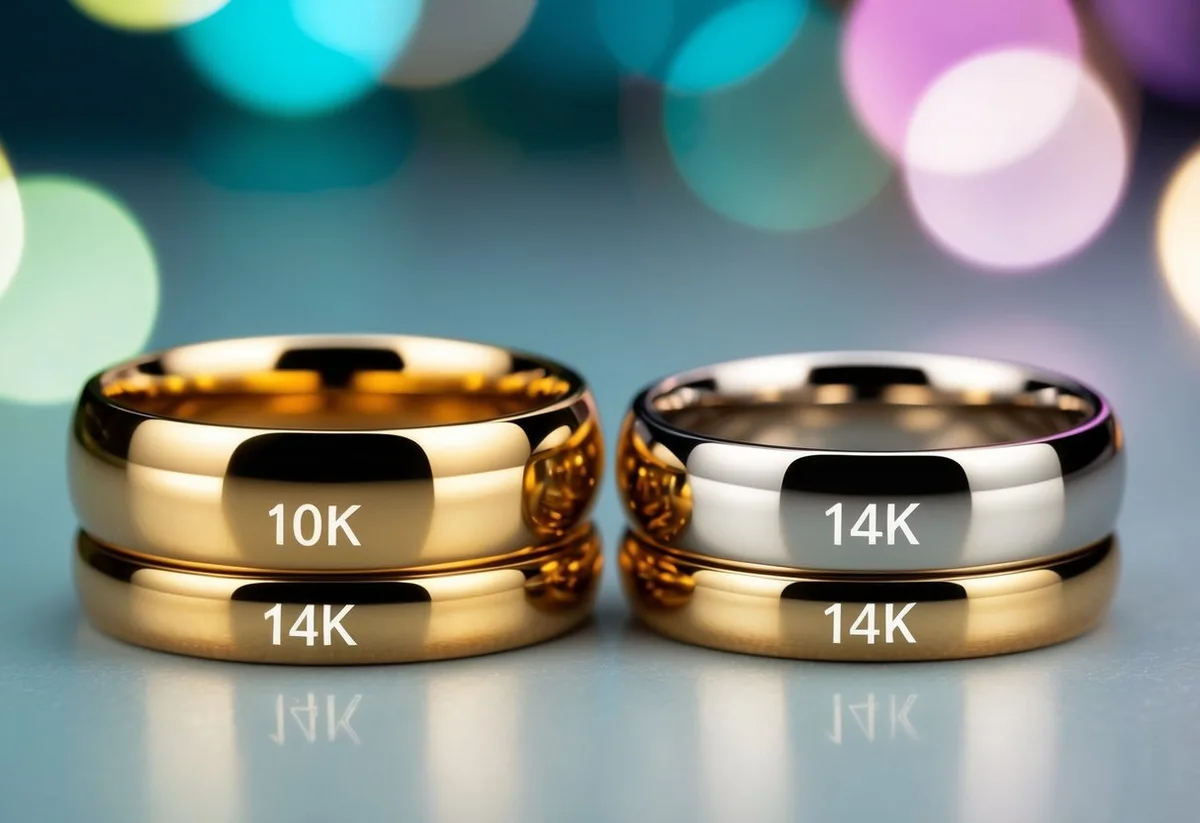
Image source: Bing (Web (fair-use with source credit))
Quick Answer
In 10k vs 14k gold tarnish everyday wear, 10k tarnishes significantly faster.
10k gold contains 58.3% non-gold base metals.
14k gold contains only 41.7% base metals.
Base metals react quickly with sweat and sulfur.
14k gold resists daily discoloration far better than 10k.
The Quick Verdict: Does 10k or 14k Gold Tarnish Faster in Everyday Wear?
In our research, 10k gold tarnishes noticeably faster than 14k gold under daily wear conditions. The reason rests on simple elemental math. Pure elemental gold does not oxidize, corrode, or react with standard atmospheric moisture.
The non-gold metals mixed into the alloy do react. Because 10k contains a majority of base metals (copper, silver, or zinc), it has more reactive material exposed on the surface. That makes it vulnerable to moisture, ambient sulfur, and cosmetic acids.
14k gold has a solid gold majority. That extra pure gold acts as a protective barrier against environmental oxidation. While 14k gold can still discolor under harsh chemical exposure, it stays bright much longer in normal daily routines.
If you wear your jewelry in the shower, at the gym, or during sleep, 10k shows a dull, brownish haze much sooner. 14k gold maintains its original luster with far less surface intervention.
The Metallurgy of Tarnish: Why Solid Gold Jewelry Can Discolor
Tarnish is a thin layer of chemical corrosion formed by an alloy reacting with non-metals. Oxygen, moisture, and airborne hydrogen sulfide attack base metals like copper and silver. As of 2026, jewelers still rely on these base metals to give soft pure gold structural rigidity.
When silver within a gold alloy contacts sulfur, it forms black silver sulfide. When copper meets moisture, sweat acids, and oxygen, it forms greenish-black copper oxides and carbonates.
Because 10k gold contains 58.3% base metals, these chemical reactions happen directly on the exposed exterior of the piece. The pure gold atoms cannot shield every adjacent copper or silver atom from airborne contaminants.
In 14k gold, the higher concentration of pure gold atoms interrupts these oxidation chains. The gold atoms crowd the surface lattice. This prevents base metals from creating contiguous sheets of visible tarnish.
10k vs 14k Gold: Side-by-Side Comparison for Daily Wear
Evaluating gold alloys requires balancing chemical resistance against mechanical strength. 10k is technically harder, but 14k provides a much cleaner visual performance over long periods.
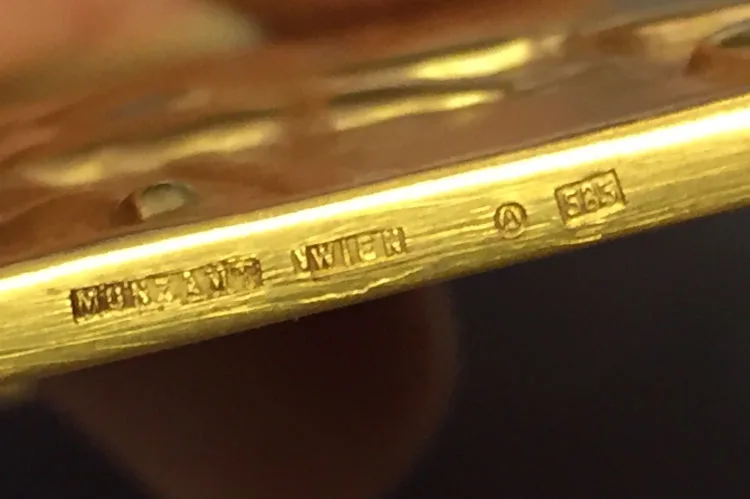
Image source: Bing (Web (fair-use with source credit))
| Feature / Spec | 10k Gold (.417 Fineness) | 14k Gold (.585 Fineness) |
|---|---|---|
| Pure Gold Content | 41.7% | 58.3% |
| Base Metal Content | 58.3% (Copper, Silver, Zinc) | 41.7% (Copper, Silver, Zinc) |
| Tarnish Resistance | Moderate to low; prone to darkening | High; highly resistant to daily air/sweat |
| Vickers Hardness (HV) | ~120 to 140 HV | ~110 to 135 HV |
| Color Profile | Paler straw yellow; cooler tone | Rich, warm, classic yellow gold |
| Skin Reaction Risk | Higher risk of green/black rub-off | Very low risk under normal conditions |
| Best Everyday Application | Heavy tools, rough construction wear | Rings, chains, wedding bands, earrings |
10k gold offers higher scratch resistance because base metals increase structural rigidity. Yet aggregate user reviews show owners clean 10k jewelry far more often to remove dullness.
14k gold strikes the best balance for general consumers. It resists bending and impact while stopping base metal corrosion before it starts.
Skin Chemistry, Sweat, and Daily Triggers: What Actually Causes Black Marks?
Gold itself does not stain skin. When a ring leaves a dark ring around your finger, you are seeing a chemical or mechanical reaction caused by alloy metals.
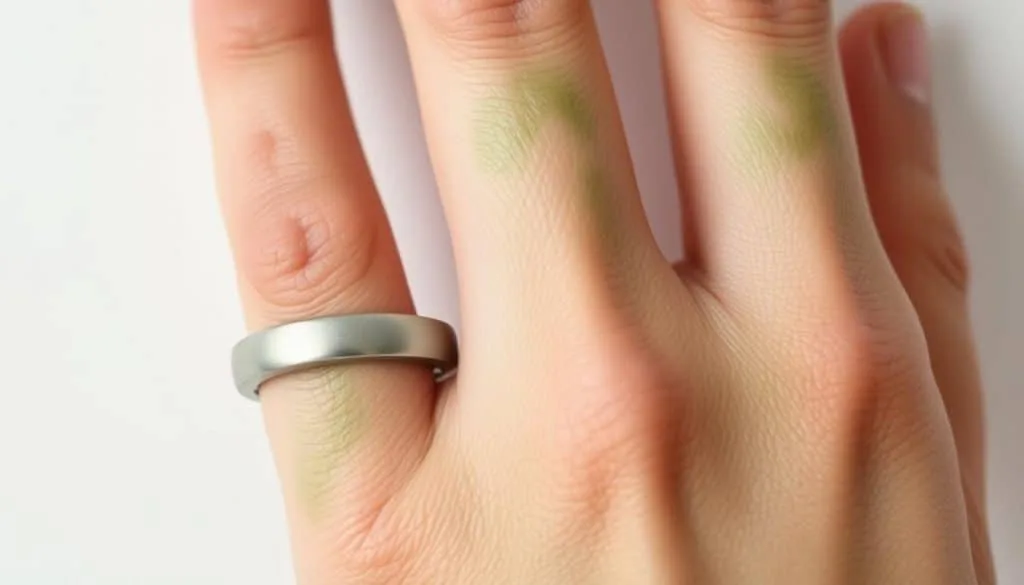
Image source: Bing (Web (fair-use with source credit))
Black Dermographism from Cosmetics
Black dermographism happens when hard particulates in cosmetics abrade softer jewelry metals. Makeup, sunscreen, and lotions often contain compounds like zinc oxide, titanium dioxide, and calamine.
These tiny cosmetic particles act like micro-sandpaper against the metal. They scrape off ultra-fine metal dust particles.
When finely divided, all metals appear black rather than shiny. Because 10k contains high levels of silver and copper, this dust oxidizes rapidly, leaving intense black rings on skin.
Acidic Perspiration and Copper Salts
Perspiration contains sodium chloride, lactic acid, and urea. Wearers with slightly acidic skin chemistry break down copper content rapidly.
This reaction produces copper sulfate and copper chloride. These salts create characteristic green or dark smudges against damp skin. 10k gold produces these salts readily during workouts, while 14k gold rarely triggers them.
Scratches vs Tarnish: The Hidden Trade-off Between 10k and 14k Durability
Many buyers choose 10k gold believing harder always means better. Metallurgy proves that hardness and corrosion resistance often pull in opposite directions.
Surface Hardness Differences
10k gold rates higher on the Vickers hardness scale, running between 120 and 140 HV. 14k gold registers slightly lower, typically between 110 and 135 HV.
In heavy physical labor, 10k resists superficial scratches and scuffs slightly better. It resists accidental gouges from steel tools, concrete, or abrasive equipment.
Chemical Wear and Micro-Pitting
Hardness does not protect against environmental exposure. 10k gold remains vulnerable to micro-pitting caused by domestic chemicals.
When base metals inside 10k leach out from repeated exposure to pool water or detergents, the surface develops tiny microscopic voids. These microscopic pits scatter light, making the ring appear perpetually dull even after buffing.
14k gold maintains its smooth, reflective matrix much longer. It may show fine hairline scratches, but those scratches form a uniform, glowing patina rather than a chemical haze.
How to Prevent and Clean Tarnish on Daily-Wear Gold Jewelry
Preventing tarnish on daily-wear gold starts by cutting off exposure to household chemicals and moisture. A few straightforward habits will protect the surface of both 10k and 14k pieces.
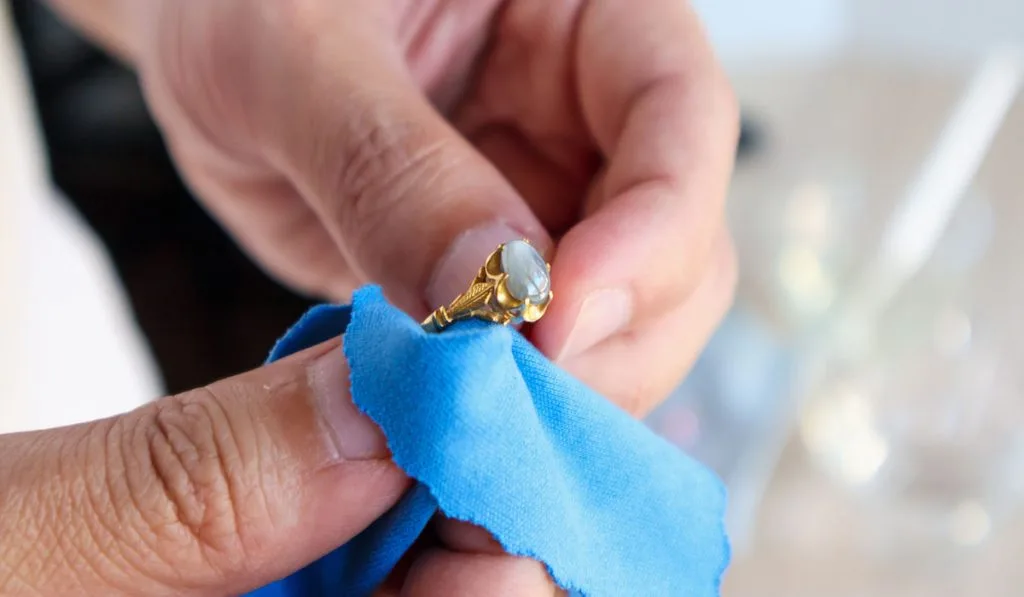
Image source: Bing (Web (fair-use with source credit))
- Take your jewelry off before entering swimming pools or hot tubs. Chlorine causes stress-corrosion cracking in gold alloys, attacking base metals along microscopic grain boundaries.
- Apply lotions, sunscreens, and perfumes at least ten minutes before putting on rings or chains. This waiting window lets volatile solvents evaporate instead of settling onto the metal.
- Store daily pieces in a dry space away from bathroom humidity. A lined jewelry box or an anti-tarnish pouch stops ambient moisture from reacting with copper and silver content.
When discoloration appears, mild cleaning methods work best. You rarely need harsh commercial chemicals to restore shine to alloyed gold.
- Mix a few drops of mild dish soap into a bowl of warm water.
- Soak the jewelry for ten to fifteen minutes to loosen surface oils.
- Gently scrub around settings and links using an extra-soft baby toothbrush.
- Rinse the piece thoroughly under clean, lukewarm running water.
- Pat dry with a lint-free towel, then finish by rubbing lightly with a jeweler's microfiber polishing cloth.
Which Karat Should You Choose for Your Everyday Piece?
Pick 14k gold if you want a set-it-and-forget-it piece that handles daily life with minimal upkeep. Its 58.3% gold content creates enough chemical resistance to stop everyday sweat, lotions, and humidity from turning the metal dark. It gives you the rich, warm color of classic gold while staying tough enough for wedding bands, chains, and stud earrings.
Choose 10k gold if maximum resistance to bending, dents, and heavy scrapes matters more to you than cleaning frequency. It suits mechanics, carpenters, or athletes who work with rough tools and do not mind wiping down their jewelry regularly. The lower upfront cost makes it an attractive entry point, but you must accept its paler straw hue and higher risk of skin discoloration.
If you have sensitive skin, skip 10k entirely. Higher concentrations of base metals, especially nickel and copper, raise the chance of contact dermatitis. For the best balance of structural integrity, long-term shine, and skin comfort, 14k remains the gold standard for daily wear.
Frequently Asked Questions About 10k and 14k Gold Tarnish
Can you shower with 10k or 14k gold every day?
You can shower with 14k gold occasionally, but you should take off 10k gold beforehand. Tap water, body washes, and shampoo leave residues that accelerate base-metal oxidation on 10k items. Over time, these residues leave a stubborn film that dulls the alloy.
Does 14k gold turn your skin green?
14k gold rarely turns skin green under normal conditions. Its high ratio of pure gold prevents copper oxidation on the skin surface. Discoloration usually only occurs if makeup rubs against the metal, or if the piece encounters harsh domestic chemicals.
Why did my 10k gold ring turn black?
Your 10k gold ring turned black because base silver and copper reacted with airborne sulfur, sweat, or cosmetics. These elements produce silver sulfide and copper oxides directly on the metal. A quick rub with a dedicated jewelry cloth will remove the dark layer.
Is 10k gold good enough for a daily wedding band?
Yes, 10k gold is physically tough enough for a daily wedding band because it resists dents and deep gouges well. You will simply need to clean it more often to stop tarnish. If you prefer low maintenance and a warmer yellow hue, 14k is the better choice.

Similar Posts