Why White Gold Turns Yellow When Rhodium Wears Off
Founder & Fashion Creative Director at Julia Fashionista · CFDA Fashion Scholar, Certified Image Consultant (AICI) · 12+ years in editorial wardrobe styling, sustainable textile sourcing, and luxury capsule curation
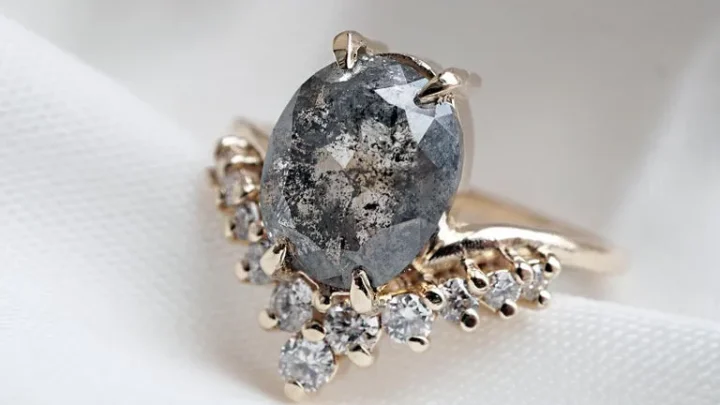
You look down at your ring, and something seems off. The crisp, icy sheen is fading, leaving behind a dull, buttery tint along the edges. Noticing your white gold rhodium plating wearing off yellow can feel alarming, but your ring is not fake, damaged, or ruined.
Natural white gold has an organic warmth beneath its surface. Standard fine jewelry utilizes a flash coat of liquid rhodium, often just 0.10 to 0.75 microns thick. When daily friction slowly erodes that micro-shield, the raw alloy beneath peeks through.
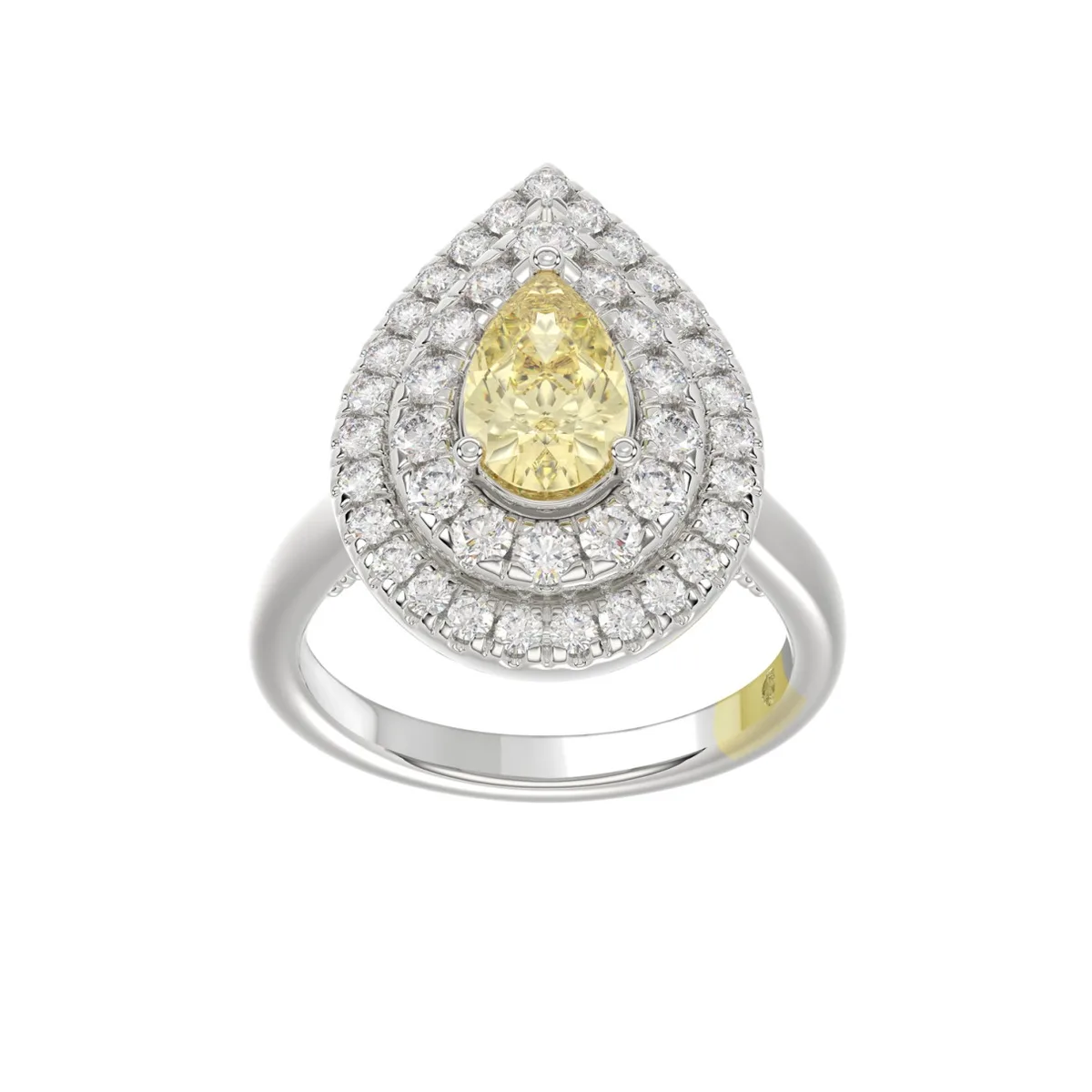
Image source: Bing (Web (fair-use with source credit))
Quick Answer
White gold rhodium plating wearing off yellow is completely normal. White gold naturally contains yellow gold mixed with white metals. Jewelers coat it with rhodium for an ultra-white shine.
Daily friction wears this micro-layer down over time. The underlying warm metal becomes visible at friction points. A bench jeweler can quickly restore it through professional polishing and electroplating.
Why Your White Gold Ring Is Turning Yellow
Pure gold is mined as a rich, intense yellow metal. Because 24-karat gold is too soft for rings, jewelers blend it with silver, zinc, and nickel. This creates standard 14k or 18k alloys.
Even with these bleaching metals, the natural golden tint is never fully erased.
To achieve an ultra-white mirror finish, manufacturers electroplate the piece with rhodium. Rhodium belongs to the platinum group of metals. It is exceptionally hard, reflective, and hypoallergenic.
It acts like a temporary jacket over the ring.
When you wash hands, grab steering wheels, or handle rough surfaces, that jacket suffers abrasion. Physical contact rubs the rhodium away cell by cell. The warm metal beneath begins showing through at the contact points.
This shift is not oxidation, tarnish, or corrosion. The gold is simply showing its true face. As of 2026, jewelers still consider routine plate wear standard operating behavior for daily jewelry.
The Truth About White Gold Alloys and Rhodium Plating
Understanding your karatage helps predict how noticeable this color shift will be. The higher the karat mark stamped inside your band, the more raw yellow gold is inside the mix.
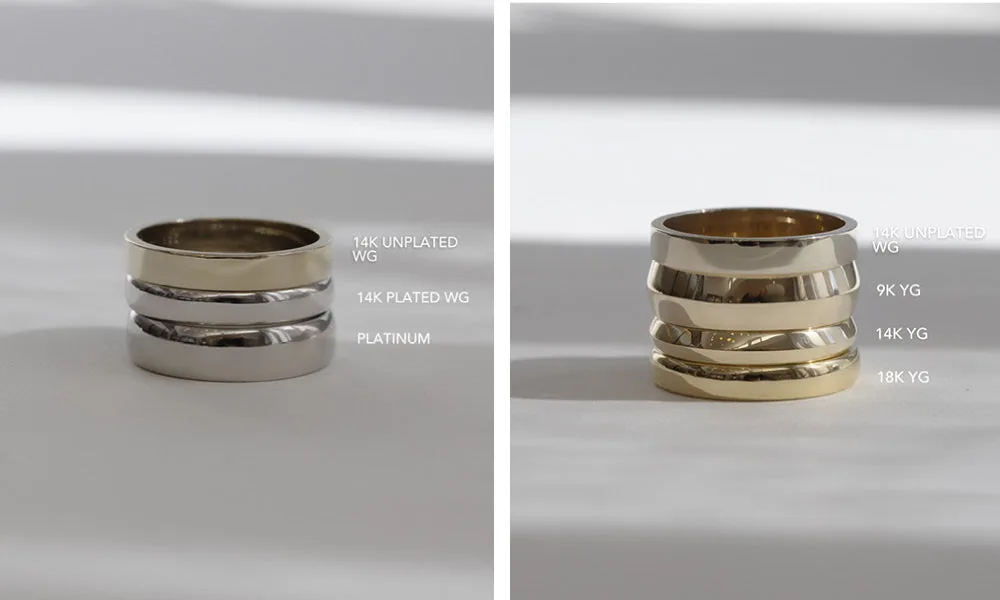
Image source: Bing (Web (fair-use with source credit))
A 14k piece contains 58.3 percent pure gold. The remaining percentage consists of alloy metals. An 18k piece contains 75 percent pure gold.
Therefore, 18k white gold reveals a much deeper champagne hue once stripped.
| Karatage | Pure Gold Content | Common Alloy Blend | Unplated Color Tone | Plating Wear Contrast |
|---|---|---|---|---|
| 10k White Gold | 41.7% | Nickel, Zinc, Copper, Silver | Very pale straw yellow | Low |
| 14k White Gold | 58.3% | Nickel, Zinc, Copper | Warm ivory or soft champagne | Moderate |
| 18k White Gold | 75.0% | Nickel or Palladium, Copper | Distinct warm yellow-white | High |
| 18k Palladium-White | 75.0% | Palladium, Silver | Gunmetal or soft gray-white | Very Low |
The Gemological Institute of America documents how alloy formulas alter the baseline tone of raw white gold. Standard nickel alloys lean warm, while premium palladium blends sit closer to a soft, natural gray.
Rhodium itself has an optical reflectance near 80 percent. When that shield recedes, the jump from mirrored silver to pale gold looks prominent. You are looking at two entirely different metals sitting side by side.
Diagnosing the Wear: What Your Ring's Yellow Spots Mean
Plating wear does not happen all at once across the ring. It follows distinct patterns based on your anatomy and lifestyle. Identifying where the yellow appears helps pinpoint the exact cause.
- Bottom of the shank: If the yellow sits on the palm side of your band, this is standard mechanical wear. Gripping door handles, weights, shopping carts, and tools grinds the outer plating away.
- Side walls of the band: If yellowing happens on the sides between your fingers, skin acidity is the primary culprit. Sweat and natural skin oils speed up chemical erosion, especially in hot conditions.
- Prong tips and bezel edges: If the color fades around your stone mounts, daily textile friction is responsible. Reaching into pockets, sliding on knit sweaters, and tucking blankets all rub against elevated prongs.
- Splotchy, uneven patches within three months: If broad yellow patches appear quickly without heavy wear, the plating bath failed. The bench jeweler likely lacked sufficient tank voltage or skipped chemical degreasing during prep.
Normal wear takes 12 to 24 months on a daily engagement ring. Anything under four months on a standard desk worker points directly to improper initial application.
Decision Matrix: Should You Re-Plate, Leave It, or Switch Metals?
Rhodium wear leaves you with three functional paths. You can maintain the coating, accept the natural tone, or move to a different metal structure altogether.
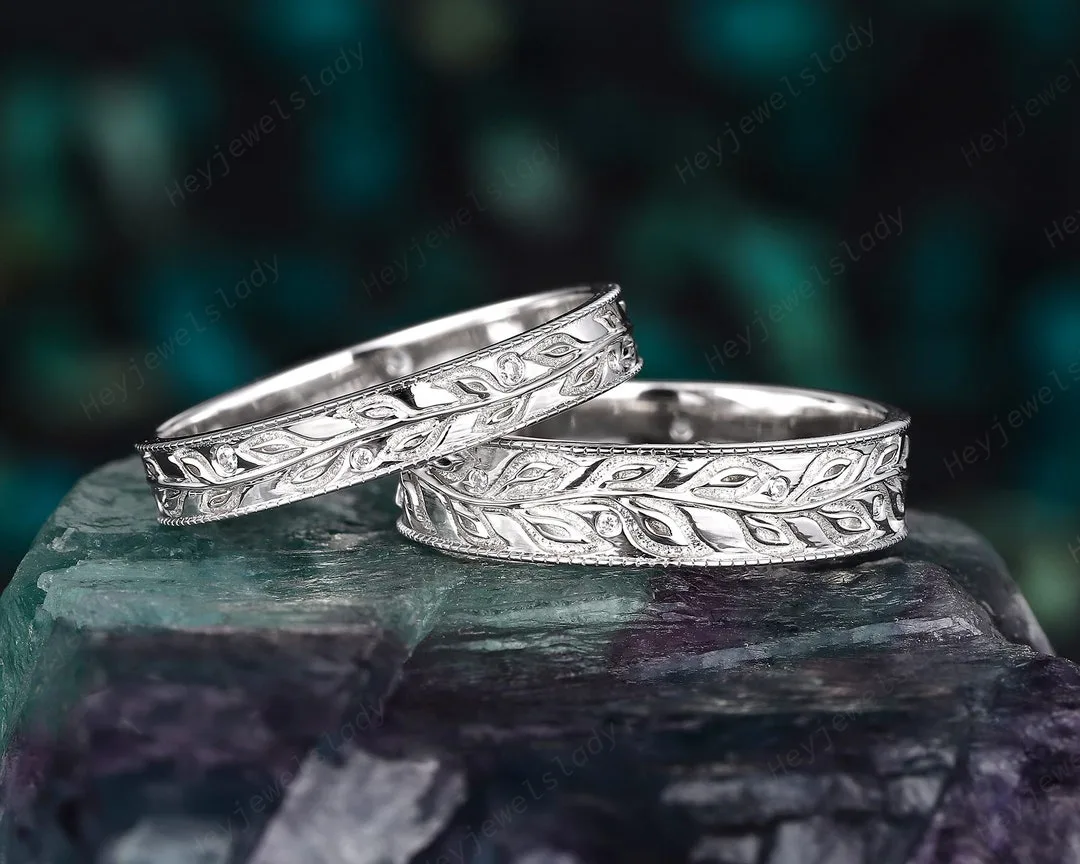
Image source: Bing (Web (fair-use with source credit))
If you demand a bright, mirrored, ice-white look
Plan to re-dip the ring every 12 to 18 months. Re-plating is the only method to restore an ultra-white look on traditional white gold. If you wear an eternity band with exposed prongs, this cadence keeps stones looking crisp and bright.
If you prefer low-maintenance, vintage aesthetics
Consider polishing the remaining rhodium off entirely. Unplated white gold carries a warm, rich tone often called "champagne gold." It highlights vintage cuts and milgrain details beautifully. Choosing to leave it bare eliminates routine shop trips forever.
If your skin reacts with redness or itching
Switch to a naturally white metal like platinum. When rhodium wears thin, underlying nickel contacts your skin, often triggering contact dermatitis. Guidance from the Federal Trade Commission requires jewelers to disclose metal content so sensitive buyers can avoid hidden irritants.
Platinum (950 PT) and pure palladium are naturally white metals through their entire core. They never require electroplating. While they scratch and form a satiny patina, they will never turn yellow under any circumstance.
The Professional Rhodium Re-Dipping Workflow and True Costs
Re-plating is not simply dropping a ring into liquid. Proper plating requires methodical chemical cleaning, abrasive prep, and controlled electrical current.
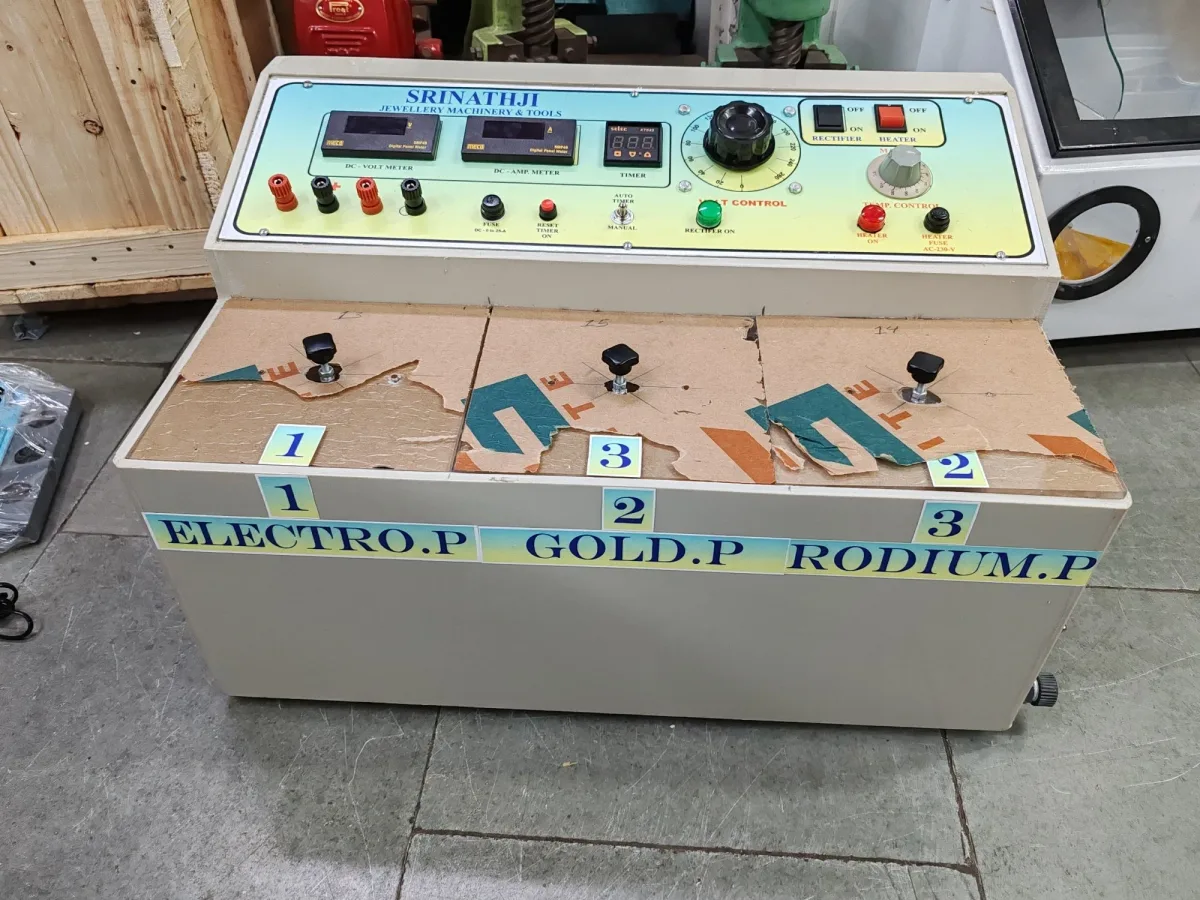
Image source: Bing (Web (fair-use with source credit))
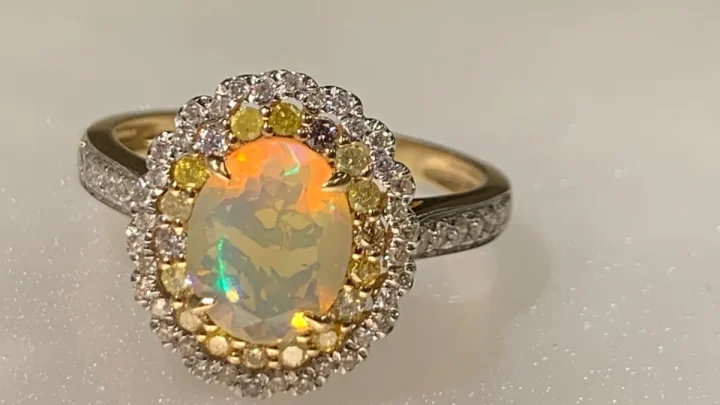
- Pre-inspection: The bench jeweler inspects gemstone mountings under magnification. Rhodium baths can damage soft stones like pearls, opals, and emeralds, requiring protective masking or mechanical removal.
- Surface refinishing: The jeweler buffs away existing micro-scratches and residual rhodium using rotating wheels charged with tripoli and rouge. Plating over an unscratched surface locks in flaws.
- Electro-cleaning: The ring enters a heated caustic bath charged with electrical current. This strips away embedded skin oils, hand lotions, and polishing compounds.
- Acid activation: A quick bath in a mild acid activator neutralizes caustic residues and prepares the underlying gold for molecular bonding.
- Triple distilled rinse: The jeweler dunks the ring across three separate tanks of pure distilled water to avoid tank contamination.
- Electroplating bath: The piece hooks to a negative cathode wire and lowers into a 105 to 115 degree Fahrenheit rhodium sulfate bath. A platinized titanium anode carries 2 to 4 volts of direct current. Within 30 to 60 seconds, dissolved rhodium bonds to the gold.
- Final ultrasonic and dry: The ring receives a clean ultrasonic bath, followed by a blast of compressed steam and hot air.
Expect to pay between $40 and $120 for standard re-plating. Wide bands and double-shank bridal sets cost more because they draw more raw rhodium out of the solution during immersion. Turnaround times typically run between two and five business days.
Common Mistakes That Strip Rhodium Plating Faster
Certain everyday habits accelerate surface friction and erode your ring's micro-layer long before its time. Avoiding these common exposures helps preserve the icy finish for years instead of months.
- Cleaning with abrasive pastes: Toothpaste and baking soda contain microscopic abrasive particles. Scrubbing with them behaves like ultra-fine sandpaper against your ring, wearing the rhodium away within minutes. Stick exclusively to warm water, mild liquid dish soap, and a baby-soft toothbrush.
- Wearing jewelry in swimming pools and hot tubs: Chlorine and bromine attack white gold alloy components like nickel and copper. The chemical bath leaches these base metals beneath the plating, causing stress corrosion and premature flaking.
- Using alcohol-based hand sanitizers continuously: Frequent sanitizer use leaves harsh residues that dull specular reflectivity. While alcohol does not dissolve rhodium directly, rubbing wet hands together creates intense abrasive friction while the chemicals sit on the metal.
- Lifting heavy weights at the gym: Knurled steel barbells and dumbbells exert intense point-pressure against gold shanks. The steel gouges through micro-thin rhodium immediately, flattening prongs and shifting underlying metal structures.
- Stacking unmatched bands without spacers: Wearing an unplated platinum band or diamond-encrusted eternity band directly against white gold causes immediate problems. Diamonds and platinum possess higher surface hardness, acting like metal files that chew away adjacent rhodium coatings.
Frequently Asked Questions About Rhodium Plating and White Gold
How long does rhodium plating normally last?
Rhodium plating lasts between 12 and 24 months on daily engagement rings. Occasional jewelry like earrings, brooches, or pendants can easily hold their finish for a decade. The exact lifespan depends strictly on surface friction, daily desk contact, and individual skin chemistry.
Can you fix yellowing white gold at home?
No, you cannot fix yellowing white gold at home using jewelry cleaner or polishes. The yellow tone is exposed gold, not surface grime or tarnish. Restoring the bright white surface strictly requires professional electro-deposition in an industrial rhodium bath.
Does re-dipping a ring damage gemstones?
Standard diamonds, sapphires, and rubies easily survive the plating process without harm. However, soft or porous gems like pearls, opals, turquoise, and emeralds are destroyed by ultrasonic cleaners and plating heat. A bench jeweler must shield or unseat delicate stones before tank immersion.
Is unplated white gold durable enough for daily wear?
Yes, unplated white gold is exceptionally durable for daily wear. The rhodium coat is purely aesthetic and adds almost zero structural strength to the ring. Leaving white gold bare creates a natural, vintage champagne look that never changes color again.
Why is my new white gold ring turning yellow after two months?
A ring turning yellow within two months indicates defective manufacturing or improper electroplating prep. The jeweler either skipped the caustic degreasing step, maintained poor tank voltage, or flash-plated a coating thinner than 0.1 microns. Return it for a warranty re-dip.
Long-Term Strategy: Managing Your White Gold Over Time
Living with white gold means accepting that maintenance is part of ownership. You can build a sensible routine that protects your investment without constant trips to the counter.
If you love the icy, bright sheen, schedule your re-dipping alongside routine stone inspections. Bench jewelers check prong tension while the piece is stripped and prepped for plating. Grouping maintenance every 18 months keeps stones secure while refreshing the finish.
If maintenance costs add up, consider having your jeweler buff away the remaining rhodium evenly. Embracing natural white gold removes recurring service fees. Natural white gold pairs beautifully with warm antique diamonds and colored gems, developing its own soft character over decades.

Similar Posts