1 vs. 1.5 Inch Belt: Which Fits Jeans Loops Best?
Founder & Fashion Creative Director at Julia Fashionista · CFDA Fashion Scholar, Certified Image Consultant (AICI) · 12+ years in editorial wardrobe styling, sustainable textile sourcing, and luxury capsule curation
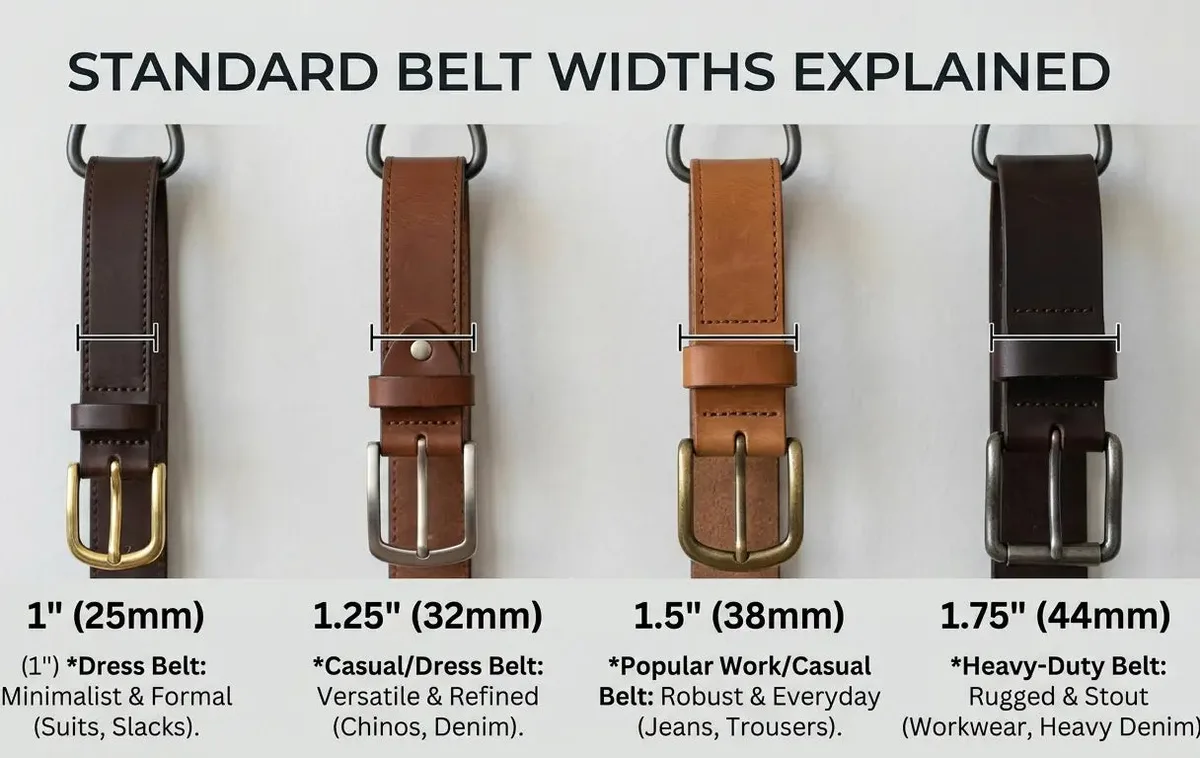
Choosing the right belt comes down to how your trousers are built. When you compare belt width 1 inch vs 1.5 inch jeans loops, you are looking at the direct physical match between your leather strap and the cut of your denim.
Standard five-pocket jeans feature loops measuring 1.75 to 2.25 inches tall, designed originally for utility rather than dress wear. Pairing an undersized strap with heavy denim creates fit and structural problems, while the correct width anchors your trousers firmly in place.
Image source: Bing (Web (fair-use with source credit))
Quick Answer
A 1.5-inch belt fits jeans loops properly. Standard jeans loops measure roughly two inches high. A 1-inch belt leaves too much empty space.
That extra slack causes denim waistbands to fold over. Narrow straps also twist under heavy fabric weight. Choose a 1.5-inch belt for casual denim.
Save 1-inch belts for dress trousers.
The Anatomy of Jeans Loops: Why Belt Width Actually Matters
Belt loops on jeans serve a functional mechanical purpose. Unlike tailored suit trousers that sit high on the hips with thin, subtle cloth tabs, five-pocket denim relies on heavy-duty construction.
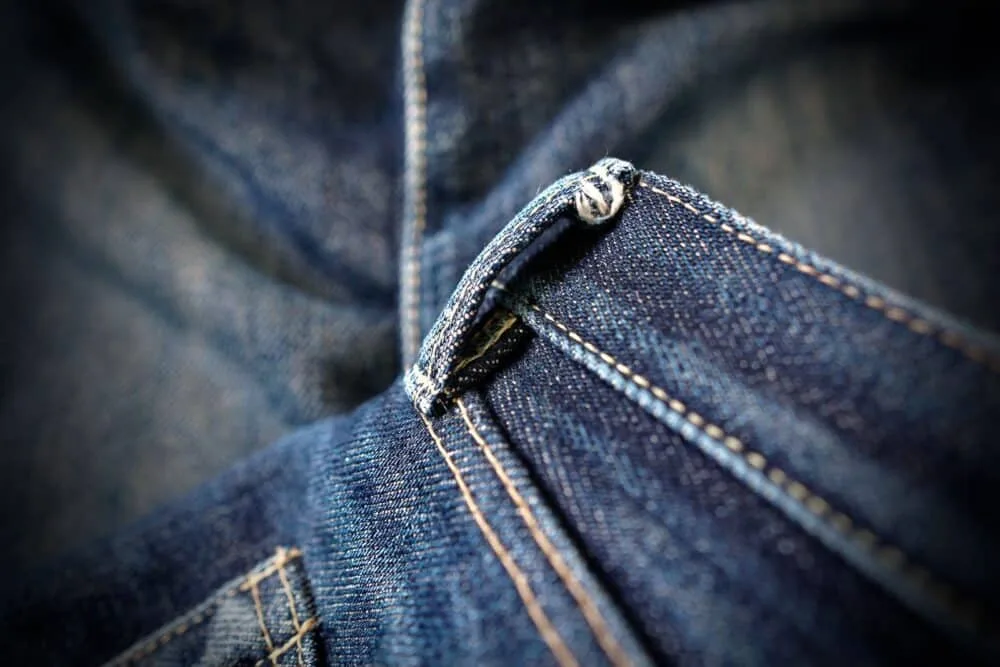
Image source: Bing (Web (fair-use with source credit))
Manufacturers secure jeans loops using dense bar-tack stitching at the top and bottom edges of a two-piece, chain-stitched waistband. Denim fabric ranges from lightweight 10-ounce blends up to rigid 21-ounce selvedge weave. As a result, the loops must withstand intense downward pulling and lateral shear forces.
According to historical pattern archives from classic denim makers like Levi Strauss & Co., workwear brands standardized these loops to accommodate wide, utilitarian leather straps. The vertical opening, also called the loop throat clearance, sits between 1.75 inches and 2 inches on modern production runs.
When your leather strap is too narrow, you create excessive vertical play. The strap shifts upward or downward during normal movement like bending or sitting. This movement pulls on the bar tacks at improper angles, stressing the thread and causing premature loop blowouts.
The 1-Inch Belt on Denim: Aesthetic Upside and Structural Limits
A 1-inch leather belt measures 25.4 mm across. In traditional leatherwork, this width belongs to refined dress belts, casual summer accent straps, or Western-style tapered dress wear.
Placing a 1-inch belt through standard jeans loops creates an obvious mechanical gap. The strap covers only about half of the loop's height, leaving almost an inch of empty space. As of 2026, thinner leather straps remain popular in minimalist, retro, and rock-and-roll styling circles, but you trade function for looks.
The structural limits show up quickly during daily wear:
- Waistband Roll: The top edge of your jeans folds downward over the belt because the narrow strap fails to support the top rail of the waistband.
- Edge Digging: Narrow straps focus all trouser-holding pressure onto a narrow strip of skin, creating pinch points along the hip bones.
- Strap Deformation: Under the friction of heavy denim, lightweight 1-inch straps often warp, curve, or twist out of shape over time.
A 1-inch strap only makes sense on denim when you wear extremely light fashion jeans, light stretch fabric, or when you tuck your shirt purely for a distinct, streamlined vintage profile.
The 1.5-Inch Belt on Denim: The Workwear Gold Standard
A 1.5-inch belt measures 38.1 mm across, which represents the undisputed industry standard for casual denim.
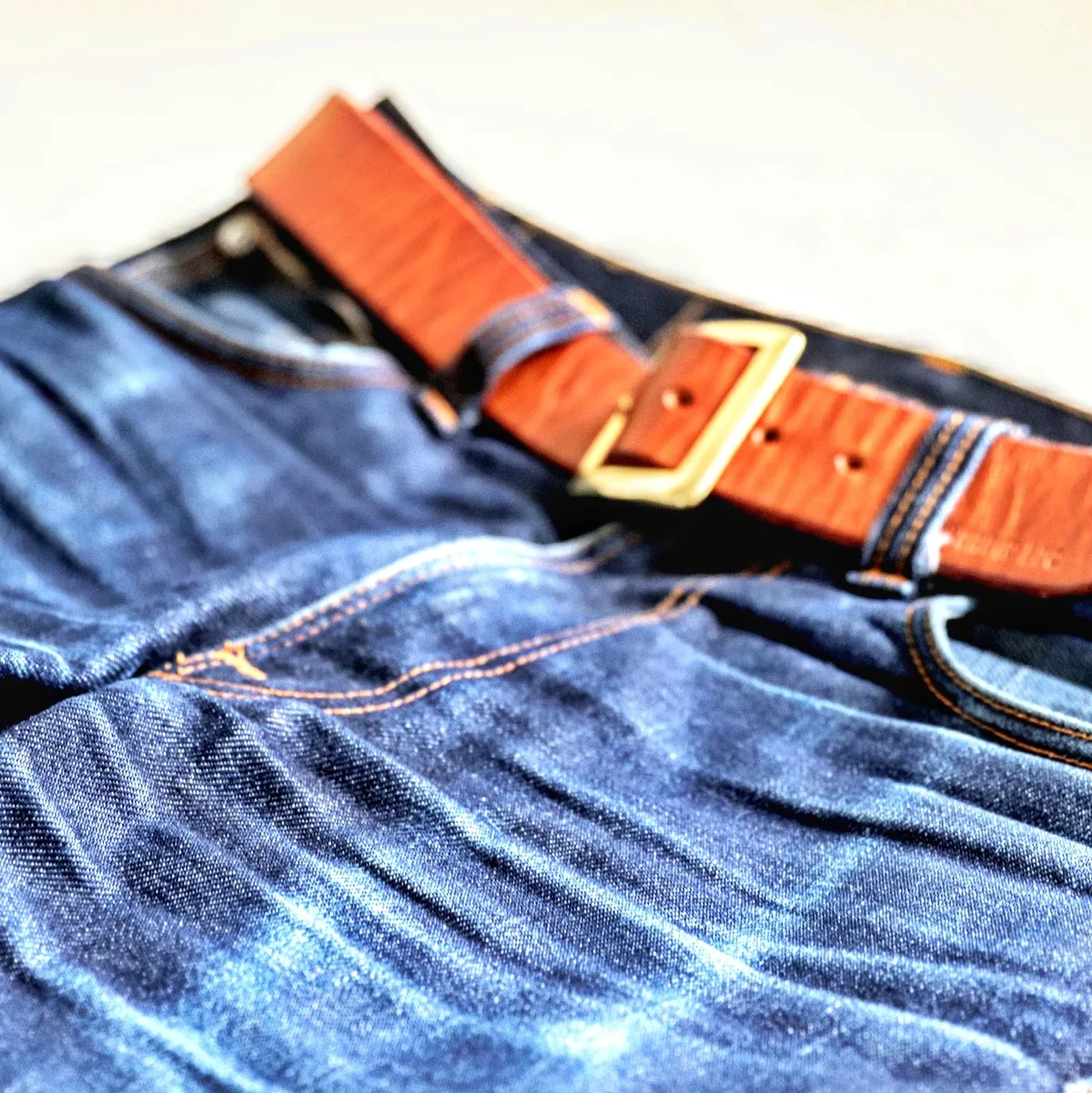
Image source: Bing (Web (fair-use with source credit))
This width fills approximately 75% to 85% of standard jeans loops. That coverage leaves enough clearance for smooth threading through the loops while eliminating sloppy vertical sliding.
Casual belts at this width usually feature heavier hides. Craftsmen measure leather thickness in ounces, where one ounce equals roughly 1/64 of an inch. While a 1-inch strap often uses thin 6-to-7-ounce leather to fit dress buckles, a 1.5-inch belt typically uses 9-to-12-ounce bridle, harness, or vegetable-tanned leather.
The Leather Industries of America outlines these grading standards to verify tensile strength across working weights.
The physical width distributes weight evenly across your lower torso. It clamps down on the entire chain-stitched waistband band, locking your jeans flat against your hips. Whether your pockets are loaded with a wallet, keys, and phone, or you are simply walking, the 1.5-inch profile prevents the waistband from buckling or sagging.
Side-by-Side Breakdown: 1-Inch vs. 1.5-Inch Belts
To see how these two widths compare when threaded through denim, examine the direct specifications:
| Feature / Metric | 1-Inch Belt (25.4 mm) | 1.5-Inch Belt (38.1 mm) |
|---|---|---|
| Typical Leather Weight | 6–8 oz (2.4–3.2 mm thick) | 9–14 oz (3.6–5.5 mm thick) |
| Jeans Loop Clearance | 0.75" to 1.25" excess slack | 0.25" to 0.5" secure tolerance |
| Waistband Roll Prevention | Poor (top edge folds outward) | Excellent (holds waistband flat) |
| Weight Distribution | Concentrated on hips | Broad, even load-bearing |
| Best Denim Weight | Light (8–11 oz) / Stretch denim | Mid to Heavy (12–21+ oz) |
| Visual Balance | Subtle, dressy, or Western | Rugged, balanced, traditional |

Image source: Bing (Web (fair-use with source credit))
Loop Clearance and Vertical Play
Jeans loops are tall to allow smooth passage of double-thick leather ends and bulky prong keepers. A 1-inch belt swims inside this space. When you sit, the belt naturally migrates to the top of the loop.
When you stand, it falls to the bottom. This constant vertical play wears down the interior stitching of your pants. A 1.5-inch strap eliminates this float, holding your trousers at a fixed position throughout the day.
Waistband Roll and Structural Support
A rigid denim waistband needs a backer of equal strength. A 1-inch strap acts like a thin wire wrapped around cardboard: when you bend, the fabric simply folds around the narrow pressure point. A 1.5-inch strap covers nearly the entire height of the denim waistband.
It functions like an internal stay, holding the fabric straight and preventing annoying waist bunching.
Visual Weight, Hardware Scale, and Silhouette
Proportions matter in casual style. Five-pocket jeans feature thick copper rivets, heavy golden topstitching, and wide pocket openings. A 1-inch strap with a tiny dress buckle looks visually fragile against these rugged design cues.
In contrast, a 1.5-inch belt accommodates heavy heel-bar buckles, roller buckles, and wider hardware that match the scale and weight of denim.
When to Wear a 1-Inch Belt with Jeans (and How to Make It Work)
You can wear a 1-inch belt with jeans if you choose the right denim cut and fabric weight. It works best on clean, dark-wash trousers with minimal distressing. Lightweight stretch denim or trousers with a tailored, slim silhouette pair naturally with smaller straps.
If you want a 1-inch strap to work without twisting, choose thicker leather. Look for an 8-to-9-ounce solid cowhide rather than a lined, split-leather dress belt. Dense bridle leather stays rigid on its own.
It resists buckling even when it does not fill the loop throat.
Styling also dictates this choice. A narrow belt shines in Western wear, especially when paired with an engraved three-piece buckle set. It also suits smart-casual outfits featuring an unstructured blazer, an oxford shirt, and clean raw selvedge cuffs.
Just keep your pockets light. Thin belts cannot carry heavy items without dragging down the rear waistband.
When the 1.5-Inch Belt Is Non-Negotiable
A 1.5-inch belt becomes non-negotiable whenever you wear medium-to-heavyweight denim weighing 13 ounces or more. Heavier cotton fabric puts significant downward pressure on your waist. A narrow strap simply cannot distribute that load.
Workwear, utility trousers, and heritage five-pocket jeans are engineered specifically around a 1.5-inch platform. If you carry pocket tools, a substantial folding knife, or a heavy leather wallet, the extra strap width keeps the pants anchored. It prevents your waistband from sagging on one side.
This width is also essential if you carry a firearm inside or outside the waistband. Everyday carry holsters require a rigid 1.5-inch gun belt to clamp firmly to the fabric. Anything narrower lets the holster pivot or tilt outward when you draw.
Finally, unwashed raw denim requires a thick, wide strap to break in properly. A wide vegetable-tanned harness belt shapes itself to your hip contours alongside your jeans.
Practical Sizing Mistakes That Ruin the Look and Fit
The most common sizing mistake is assuming your belt size equals your jeans tag size. Most modern denim uses vanity sizing, where a labeled 34-inch waist actually measures 36 inches around. If you order a 34-inch belt for size 34 jeans, the strap will be too short to reach the middle hole.
Another mistake is threading a dress belt into workwear denim. Dress belts usually measure 1.125 to 1.25 inches wide and feature padded, feathered edges. The rough interior stitching and thick denim loops act like sandpaper, quickly scuffing soft dress calfskin.
Here are a few other pitfalls to watch for:
- Ignoring Strap Thickness: A 1.5-inch strap cut from thin 4-ounce fashion leather will curl almost as quickly as a 1-inch strap.
- Forcing Oversized Straps: Forcing a 1.75-inch heavy work belt through standard 1.75-inch loops will pinch the leather and fray your loop edges.
- Over-Tightening Narrow Straps: Cinching a 1-inch belt down extra hard to stop trouser sag will distort your waistband fabric permanently.
Always check both the width and the thickness of the leather hide before pairing it with your daily denim.
Frequently Asked Questions About Belt Width and Jeans Loops
Can you put a 1-inch belt through standard jeans loops?
Yes, you can put a 1-inch belt through standard jeans loops. The belt will slide through easily because the loops are much wider than the strap. However, you will have nearly an inch of excess vertical room.
This gap often allows the top of the denim waistband to curl outward.
What is the most versatile belt width for men?
A 1.375-inch or 1.5-inch belt is the most versatile casual width. A 1.5-inch strap fills jeans loops properly and looks balanced with casual shoes and boots. If you want a single belt to transition between casual denim and business-casual chinos, a 1.25-inch or 1.375-inch strap offers the best compromise.
Will a 1.5-inch belt fit through all jeans loops?
A 1.5-inch belt fits virtually every major brand of five-pocket jeans, including Levi's, Wrangler, Lee, and standard designer denim. Most brand specifications set loop openings between 1.75 and 2 inches. Unless you are wearing tailored dress trousers with narrow custom tabs, a 1.5-inch strap threads through without snagging.
Why does my jeans waistband fold over my belt?
Your waistband folds over because your belt is too narrow or too flimsy to support the fabric. When you sit or bend, the denim compresses downward. If the strap leaves empty space at the top of the loop, the waistband collapses over the belt rather than staying upright.
How do you accurately measure your jeans loop opening?
Lay your jeans flat on a table and smooth out the waistband. Take a rigid wooden or metal ruler and measure the vertical space between the top bar tack and the bottom bar tack inside the loop. Subtract a quarter of an inch to find your maximum smooth-fitting belt width.
The Verdict: How to Choose for Your Specific Wardrobe
For most daily denim wear, the 1.5-inch belt is the clear winner. It matches the scale, thickness, and functional design of standard five-pocket jeans. It stops waistband roll, handles heavier fabric weights, and stays comfortable through long hours on your feet.
Reserve the 1-inch belt for specific, intentional outfits. It belongs with lightweight fashion jeans, clean dark trouser-cut denim, and tailored retro styles where you want the hardware to stay subtle.
Before you buy your next strap, measure your favorite jeans. Check the vertical loop clearance and feel the weight of the denim. Pairing the right strap width to your trouser construction protects your clothes and keeps your everyday fit looking sharp.

Similar Posts