How to Fix Stretched Acetate Temples with Warm Water
Founder & Fashion Creative Director at Julia Fashionista · CFDA Fashion Scholar, Certified Image Consultant (AICI) · 12+ years in editorial wardrobe styling, sustainable textile sourcing, and luxury capsule curation
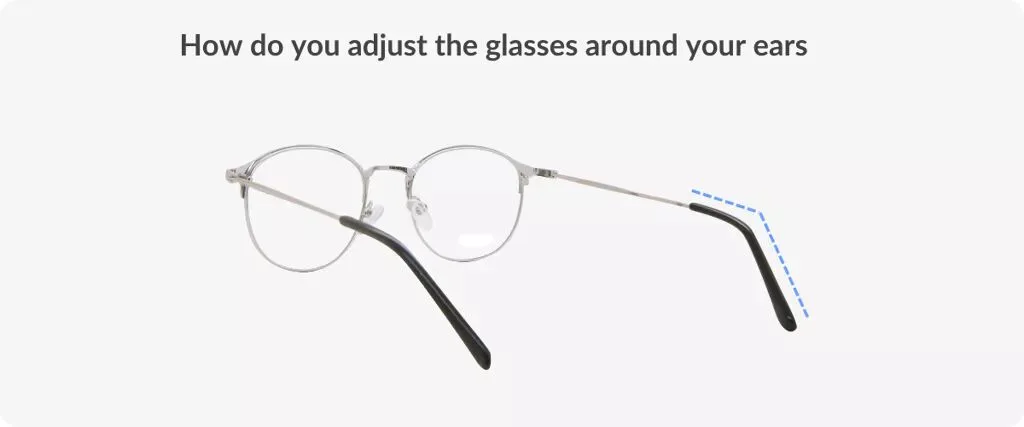
Image source: Bing (Web (fair-use with source credit))
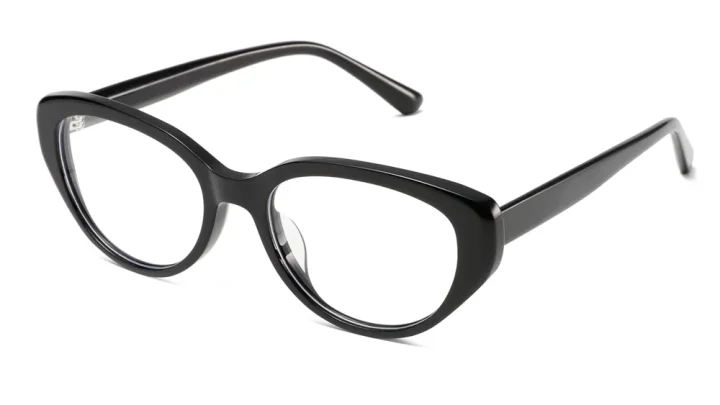
If your glasses slide down your nose every time you tilt your head, your acetate frames stretched out temples warm water fix can solve the problem in minutes. Acetate is a pliable plant-based plastic that relaxes over time, especially if you push your glasses onto your head. You do not need expensive optical shop tools to reshape the temple arms.
According to ophthalmic standards under ISO, cellulose acetate is designed for thermoforming adjustments under controlled heat. By softening the material in a warm water bath between 120°F and 140°F, you can restore their original snug grip without snapping the plastic or damaging the frame front.
Quick Answer
You can fix loose acetate frames using warm water. Heat only the temple arms in water between 120°F and 140°F. Soak them for 30 to 60 seconds.
Bend the temples inward gently with your fingers. Cool them in cold tap water to set the shape. Never submerge the lenses.
Why Acetate Temples Stretch and When Warm Water Works
Cellulose acetate (often called zyl in optical dispensaries) is a semi-synthetic thermoplastic made from purified wood pulp and cotton linters. Unlike injection-molded plastics that snap back or shatter under force, acetate has a low glass transition temperature. That means it responds directly to heat and retains new shapes once cooled.
Over time, acetate suffers from thermal memory relaxation. As of 2026, daily habits like parking glasses on top of your head remain the leading cause of loose eyewear. The skull widens past the ears.
Forcing rigid frames over that wider circumference splays the temples outward.
Understanding Cellulose Acetate and Thermal Memory
When acetate gets warm, its polymer chains become flexible. Body heat and external temperatures gradually pull the material apart along the hinge line. Warm water introduces safe, uniform heat that loosens those chains again.
This flexibility allows you to guide the plastic back into a secure position.
Identifying the Three Primary Fit Issues: Splay, Slip, and Mastoid Gap
Before bending anything, you need to diagnose where the frame is failing your face:
- Temple Splay: The arms bow out too wide from the front hinges, losing side-pressure against your head.
- Mastoid Gap: The downward curve behind your ear (the mastoid bend) starts too far back, leaving a gap that lets frames slide forward.
- Nose Slip: The overall temple tension is too weak, dumping all frame weight onto your nasal bridge.
| Fit Issue | Visible Symptom | Adjustment Zone |
|---|---|---|
| Temple Splay | Gap at temples, arms flare outward | Front third of temple, near hinge |
| Mastoid Gap | Bend sits behind ear, not touching bone | Middle bend of temple |
| Nose Slip | Glasses slide down bridge constantly | Full inward bow and downward hook |
Frame Material Check: Can Your Glasses Handle a Warm Water Adjustment?
Not all plastic frames tolerate home heat adjustments. True cellulose acetate softens predictably, but other materials react badly to warm water baths.
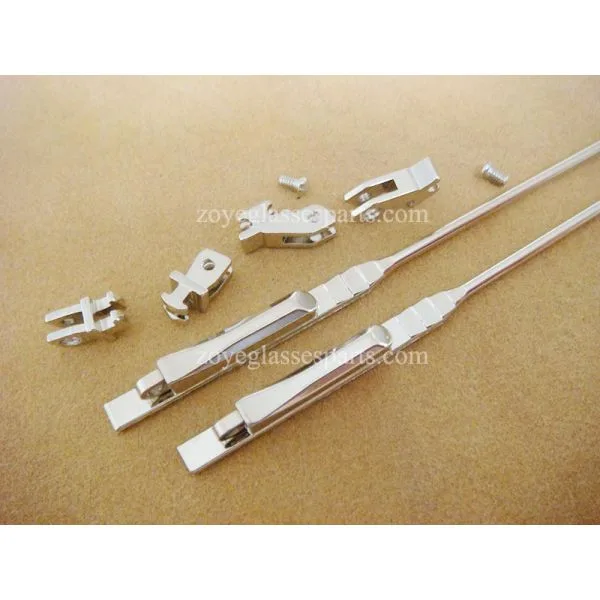
Image source: Bing (Web (fair-use with source credit))
Acetate vs. Nylon (TR-90), Optyl, and Metal Frames
If your frames are TR-90 or Grilamid nylon, do not use this method. Nylon plastics feature extreme shape memory; they resist heat bends and will quickly spring back to their factory mold.
Optyl, an epoxy resin used in vintage luxury frames, requires high heat (over 180°F) to move. It will not budge in standard warm tap water. Metal frames should be adjusted cold using dedicated nylon-jaw pliers, not water baths.
Locating the Internal Wire Core
Look closely at the sides of your glasses. Quality acetate frames almost always feature a metal wire core running inside the temple. This embedded wire acts as an internal spine.
If you see a metal core running through the plastic, your frames will accept and hold a warm-water bend. The metal stabilizes the adjustment once the plastic cools.
Pre-Adjustment Assessment: The Step-by-Step Fit Diagnostic
Never bend a frame blindly. Taking two minutes to assess the physical frame geometry ensures you only bend the side that needs correction.
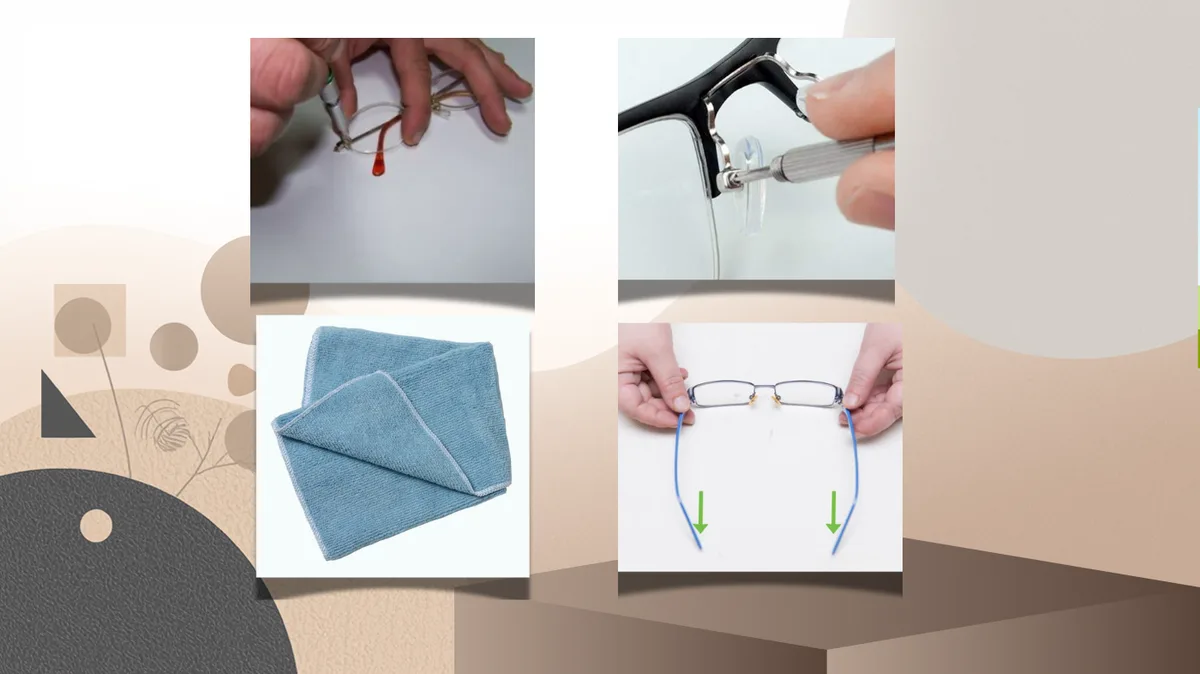
Image source: Bing (Web (fair-use with source credit))
The Tabletop Wobble Test
Place your glasses open on a flat, level table with both temple tips touching the surface:
- Look directly at the front of the frame to check horizontal level.
- Tap the top of the left hinge, then the right hinge.
- If the frame wobbles like an uneven restaurant table, one temple is bent higher than the other.
- Note which temple tip fails to touch the flat tabletop.
Pinpointing the Slippage Point: Temple Curve vs. Hinge Angle
Put the glasses on while looking into a mirror. Turn your head sideways.
Check where the bend of the temple starts. The bend should contour naturally over your ear, curving down directly behind the mastoid bone. If the bend starts a half-inch behind your ear, you have an elongated mastoid gap.
If the bend touches your ear correctly but the sides lift off your temples, you have excess temple splay.
Safe Water Reshaping Workflow: Tools, Setup, and Temperatures
Reshaping acetate requires patience and steady, moderate warmth. Gather your tools before you run any water.
- A shallow ceramic bowl or wide mug
- A digital cooking thermometer
- Warm tap water (120°F to 140°F)
- A bowl of cool tap water (around 60°F)
- A soft microfiber optical cloth
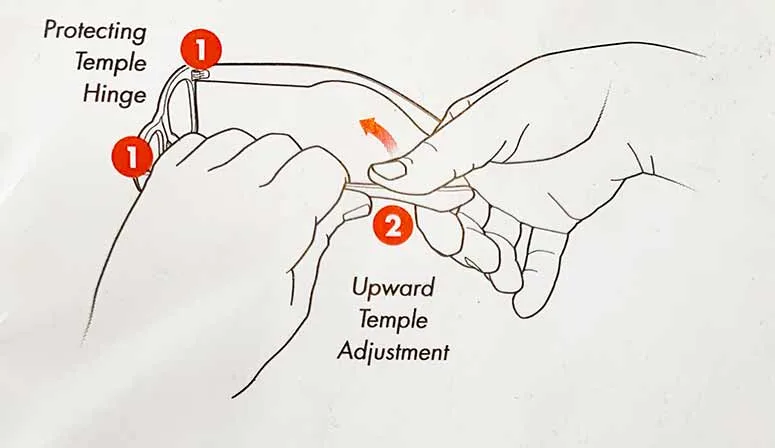
Image source: Bing (Web (fair-use with source credit))
The Safe Heat Zone: Why 120°F to 140°F Matters
Acetate softens safely between 120°F and 140°F (49°C to 60°C). Water hotter than 140°F damages modern prescription lenses. Never use boiling water directly from a kettle.
Boiling water leaches out the plasticizers that keep acetate durable.
The Lens Isolation Protocol: Preventing AR Coating Crazing
Multi-layer anti-reflective (AR) coatings expand at a different rate than your polycarbonate or high-index lenses. Thermal shock shatters this coating into thousands of tiny, irreversible fractures called crazing.
Keep your lenses dry. Rest the frame front across the rim of your bowl or mug. Only submerge the plastic temple arm in the heated water, keeping the front frame and lenses well above the waterline.
+-------------------------------------------------------+
|                DO NOT SUBMERGE LENSES                 |
|                                                       |
|    [Lens Front]  <--- Keep completely dry             |
|   ==============                                      |
|    \          /  <--- Resting on rim of mug           |
|     \        /                                        |
|   ~~~~~~~~~~~~~~ <--- Water Line (120°F - 140°F)      |
|      |      |                                         |
|      | Wire |    <--- Submerge temples ONLY           |
|      | Core |         (30 to 60 seconds)              |
|      \______/                                         |
+-------------------------------------------------------+
Step-by-Step Temple Heating and Bending Method
- Fill your mug with hot tap water until the thermometer reads roughly 130°F.
- Insert one temple arm into the water, keeping the lens front out.
- Hold the temple submerged for 30 to 45 seconds to let heat reach the wire core.
- Remove the frame and dry your hands quickly with a towel.
- Support the temple with both hands. Place your thumbs on the inside of the temple curve.
- Apply steady, slow pressure with your thumbs to curve the arm inward or increase the ear hook.
- Dip the reshaped temple into the cool water bath for 20 seconds to lock the bend.
- Repeat the exact process on the opposite temple arm.
Critical Mistakes That Ruin Acetate Frames (and How to Avoid Them)
Adjusting frames at home carries clear mechanical limits. Cellulose acetate is forgiving, but aggressive shortcuts will break the frame.
Thermal Shock and Plasticizer Whitening
Exposing acetate to boiling water pulls chemical plasticizers straight to the surface. This reaction leaves a chalky, cloudy white residue on dark acetate. Once this bloom occurs, the frame surface requires professional buffing with polishing compounds to restore gloss.
Over-Torquing the Hinge Junction
Never bend an acetate frame right at the metal hinge screw. Frame hinges sit anchored inside small melted cavities in the acetate. If you use the hinge as a leverage point, you will pull the metal anchor right out of the plastic frame front.
Always keep your thumb at least one inch behind the hinge barrel when curving the temple inward.
Applying Pressure Beyond the Wire Core
Most temple arms taper off near the very tip. If you apply excessive force beyond the end of the internal wire core, the unsupported acetate will snap. Focus your bending force strictly along the section reinforced by the internal metal wire.
Alternative Reshaping Methods: Warm Water vs. Hair Dryers vs. Optician Hot Air
Warm water is the safest home method, but other heating options exist. Understanding the trade-offs prevents accidental damage to high-end frames.
Comparing DIY Techniques Against Professional Dispensary Warmers
Many people try using an electric hair dryer instead of water. A hair dryer blows turbulent, unmeasured hot air that can easily exceed 200°F. That level of heat strips lens coatings, warps frame rims, and melts delicate temple tips within seconds.
By contrast, an optical dispensary uses a dedicated frame warmer. These professional units circulate hot glass beads or dry air through narrow directional nozzles. This setup lets a technician soften a three-millimeter section of the frame without warming the lenses.
A warm water bath closely replicates this controlled temperature profile using ordinary kitchen tools.
| Method | Temperature Control | Lens Damage Risk | Best Use Case |
|---|---|---|---|
| Warm Water Bath | High (controlled via thermometer) | Very low (with rim isolation) | DIY temple splay and mastoid bends |
| Hair Dryer | Poor (spikes rapidly) | Extremely high | Emergency fixes on cheap sunglasses |
| Optical Frame Warmer | Precise (built-in thermostats) | None (isolated hot air jet) | Complex bridge and eyewire shaping |
When to Stop DIY Attempts and Visit an Optometrist
Stop bending if you feel resistance from the internal metal core. Forcing a stubborn wire can shear the acetate completely in two.
You should also consult an eye care provider if the loose fit comes from the bridge rather than the temples. Reshaping the nose bridge requires warming the entire eyewire. That process risks popping the lenses loose or ruining precision astigmatism axes.
Most optical shops adjust frames for free or a nominal fee, even if you bought them elsewhere.
Frequently Asked Questions About Adjusting Acetate Frames with Warm Water
Can warm water damage prescription lens coatings?
Yes, water over 140°F can craze anti-reflective and scratch-resistant lens coatings. High heat makes the lens substrate expand faster than the micro-thin metal oxide coating on top. Keep the lens portion completely dry and out of the hot water bath during adjustments.
How long does the warm water adjustment last?
A proper adjustment lasts anywhere from six months to a year. Acetate relaxes naturally from body heat, skin oils, and mechanical stress. Taking frames off with one hand or resting glasses on your head will stretch the temples out much faster.
Why won't my plastic frames stay bent after heating?
Your glasses may be made from nylon, TR-90, or polycarbonate instead of cellulose acetate. These injection-molded plastics possess extreme shape memory and snap back to their factory molds. They require specialized dispensary tools and higher heat thresholds to hold new shapes.
Can I run boiling water over my glasses to fix them faster?
Never use boiling water on acetate frames. Temperatures near 212°F cause plasticizer leaching, leaving cloudy white marks on the surface of the frame. Extreme heat will also warp the lens bevels and destroy multi-layer optical lens coatings instantly.
What should I do if my frames feel uneven on my ears?
Use the tabletop wobble test to find the offending temple. Submerge only the arm that sits too high or too low for 30 seconds. Gently bend that single temple up or down near the hinge, then cool it in water and retest on a flat surface.

Similar Posts