Spiral vs. Invisible Clip Ring Guards: Which Is Best?
Founder & Fashion Creative Director at Julia Fashionista · CFDA Fashion Scholar, Certified Image Consultant (AICI) · 12+ years in editorial wardrobe styling, sustainable textile sourcing, and luxury capsule curation
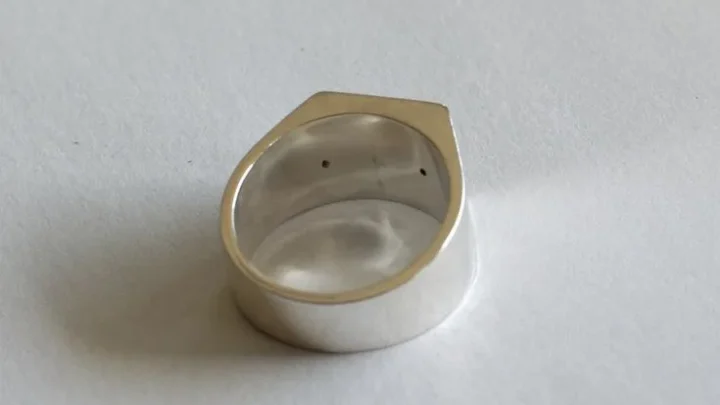
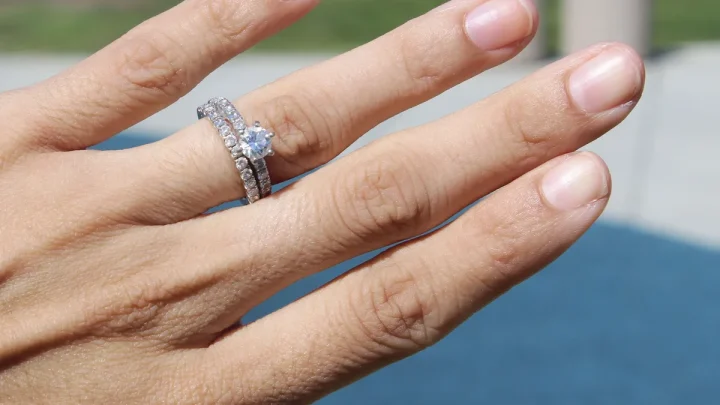
A loose ring is an accident waiting to happen. In the debate between a ring guard spiral vs plastic clip invisible sizer, the right choice comes down to your band shape and knuckle size. Both keep your valuable jewelry on your finger without permanent alterations.
Our research shows these silicone and plastic tools reduce jewelry by 0.5 to 2.5 full US sizes. They save you from paying for costly gold or platinum cutting at a bench jeweler. Let us look closely at how each option performs so you can pick the best fit.
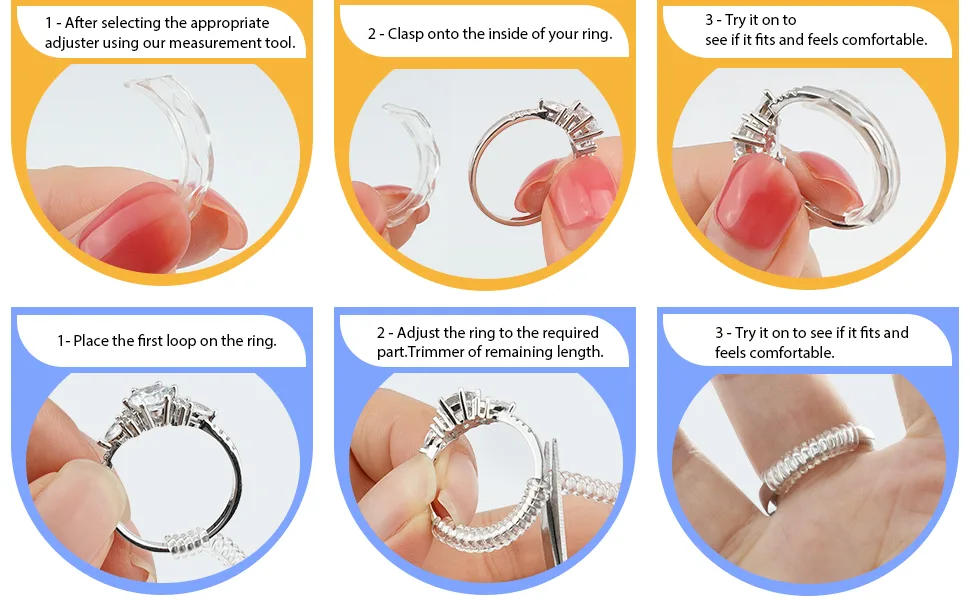
Image source: Bing (Web (fair-use with source credit))
Quick Answer
A ring guard spiral vs plastic clip invisible choice depends on your knuckle size. Spirals wrap on like a coil. They flex easily over larger knuckles.
Snap-on clips use a rigid bar. They offer a flatter, more hidden profile on wide bands. Use spirals for knuckle clearance.
Pick clips for discrete everyday wear.
Why Your Loose Ring Needs a Guard Right Now
A spinning ring causes daily frustration. When a heavy stone tilts into your palm, the setting takes direct hits from hard surfaces. These impacts can loosen prongs over time.
That eventually risks stone loss.
Temperature drops make the problem worse. Fingers naturally shrink in air-conditioned rooms or during cold winter months. A ring that fits well in July can easily slip off while washing hands in January.
Temporary ring sizing devices give you a secure fit right away. Permanent resizing requires cutting and soldering metal. That process removes precious alloy and can weaken thin antique shanks.
Temporary guards protect the original metal while keeping your ring safe.
How Spiral Guards and Invisible Plastic Clips Actually Work
Both options solve the same issue using very different physical designs. A spiral ring adjuster looks like a tiny telephone cord. You wrap its coils around the bottom of the band, also known as the ring shank.
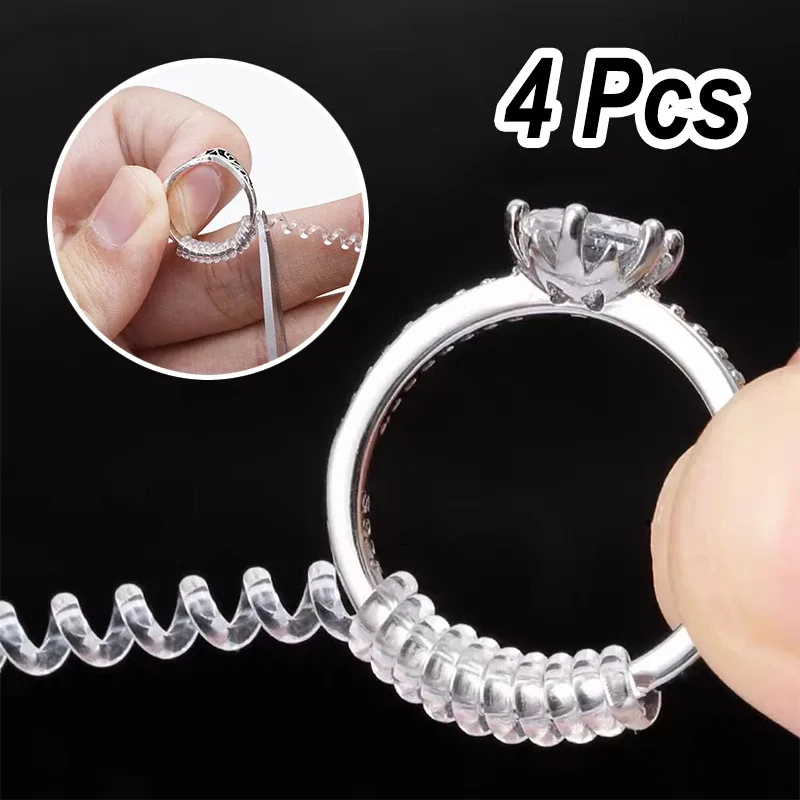
Image source: Bing (Web (fair-use with source credit))
These coils use flexible thermoplastic polyurethane (TPU). The material grips the metal through continuous tension. You can trim the spiral to add or remove coils, which lets you dial in the exact thickness you need.
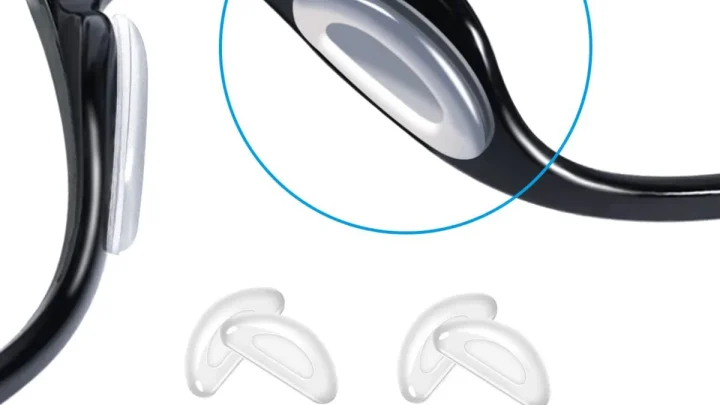
A snap-on invisible ring clip is a rigid, U-shaped bar. It snaps directly over the bottom of the shank. Instead of wrapping around the sides, it clips flat against the inside curve.
These clips come in fixed millimeter widths, from 1mm up to 8mm, to match specific shank profiles.
Head-to-Head Comparison: Comfort, Grip, and Invisibility
Each style presents distinct trade-offs between stealth and skin comfort. Clips look far more discreet from the outside. Because they sit inside the band, people rarely spot them.
Spirals wrap entirely around the band, leaving visible clear loops along the outer palm.
Image source: Bing (Web (fair-use with source credit))
When it comes to palm grip, spirals feel softer against everyday items like steering wheels and gym barbells. Clips are made of rigid plastic. You will feel that hard edge press against your skin when carrying heavy grocery bags.
| Feature | Spiral Ring Guard | Invisible Snap-On Clip |
|---|---|---|
| Visibility | Noticeable wraps on outer band | Nearly invisible from outside |
| Material Feel | Soft, flexible silicone/TPU | Rigid, molded clear plastic |
| Size Adjustability | Custom (add or cut coils) | Fixed sizes per clip |
| Band Width Fit | Universal (stretches to fit) | Must match band width exactly |
| Typical Lifespan | 1 to 3 months | 3 to 6 months |
Knuckle Clearance, Band Profiles, and Sizing Performance
Your hand anatomy determines which style works best. If your knuckles are larger than the base of your finger, rigid clips often fail. A clip makes the ring diameter permanently smaller.
This prevents the band from sliding over a swollen or arthritic joint.
Spirals solve this problem with elastic stretch. The flexible coils give slightly under pressure as you slide the ring past your knuckle. Once the band settles at the finger base, the coil expands back to fill the empty space.
Band shape also plays a major role. Standard flat or comfort-fit bands work well with both styles. Wide cocktail bands or tapered shanks cause rigid clips to pop off unexpectedly.
Spirals easily accommodate tapered bands because you can wrap them unevenly to match the slope.
The Hidden Downsides: Skin Irritation, Scratches, and Soap Scum
Neither option is completely trouble-free. The biggest issue with spirals is soap scum and lotion buildup. The gaps between coils trap hand soap, dead skin, and moisture against your finger.
Trapped moisture can lead to contact dermatitis or skin pruning. The American Academy of Dermatology notes that trapped irritants under rings frequently cause red, itchy rashes. You must unwrap and clean spiral coils often to prevent hygiene issues.
Rigid plastic clips have a different flaw. Sharp clip edges can leave microscopic rub marks on soft metals like 18k yellow gold or pure silver. Clips also turn brittle from hand sanitizers and UV light exposure.
As of 2026, most brands use improved TPU formulas, but regular replacement remains necessary.
Step-by-Step Installation and Fitting Guide for Both Styles
Installing these guards requires zero special equipment, though a pair of precision nail scissors makes trimming clean and simple. You want to avoid leaving sharp, jagged plastic edges against your palm.
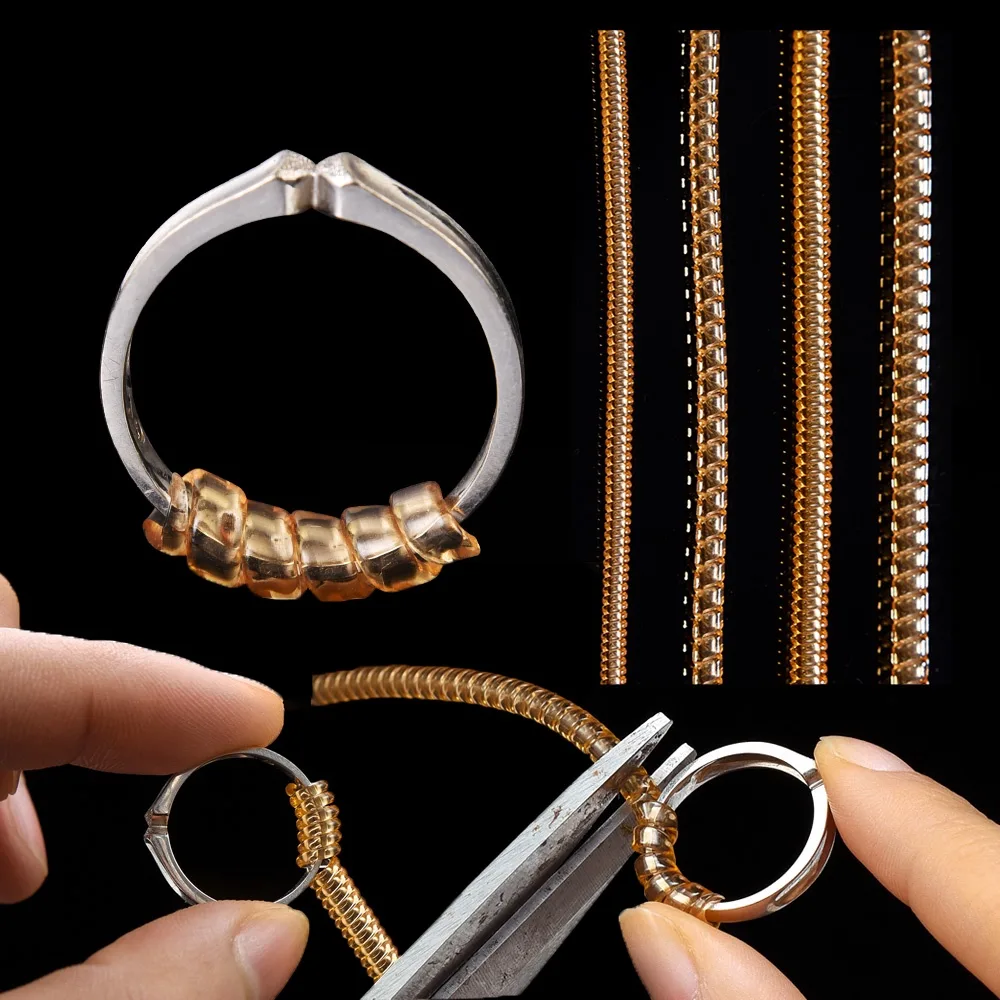
Image source: Bing (Web (fair-use with source credit))
Fitting a Spiral Guard
- Start by hooking one end of the spiral coil around the bottom of the band.
- Twist the coil around the shank 3 to 5 times.
- Try the ring on to check the snugness. Add another turn if the ring still shifts, or unwind a turn if it feels tight.
- Snip the remaining length with flush-cut shears. Leave the cut edge facing outward so it never pokes your finger.
Snapping on an Invisible Clip
- Measure your band width in millimeters using a basic ruler.
- Pick the clip size that matches your band width exactly.
- Place the ring upside down on a flat surface.
- Center the clip channel over the inner curve of the shank.
- Press down firmly with both thumbs until you hear a clear snap. The clip must sit flush against the metal without wobbling sideways.
If you struggle to remove an old clip, do not pry it off with metal tweezers. Metal tools will scratch your ring. Slide a piece of dental floss underneath the clip edge instead, then pull gently upward to pop it free.
Frequently Asked Questions About Temporary Ring Guards
How often should you replace a temporary ring guard?
You should replace spiral guards every 4 to 8 weeks. Hand soaps and body lotions cloud the flexible material and build up residue between the coils. Rigid clips last longer, typically 3 to 6 months.
Swap them out as soon as the plastic discolors or turns brittle.
Can a plastic ring clip scratch yellow gold or platinum?
Yes, rigid plastic clips can scuff softer metals over time. While the plastic itself is softer than gold, grit or dirt trapped under the clip acts like sandpaper. Fine gold alloys, especially 18k, scratch easily from this micro-friction.
Clean your band and clip weekly to prevent abrasions.
Will hand sanitizer ruin a silicone or TPU ring sizer?
Occasional exposure causes no harm, but daily alcohol sanitizers slowly dry out the plasticizers in TPU guards. This makes the material stiff, cloudy, and prone to cracking. Take your ring off before applying gel hand sanitizer, or let your hands dry fully before putting it back on.
Which style works better for wide wedding bands?
Snap-on clips work much better on wide, uniform bands between 4mm and 8mm. Wide bands require oversized spiral coils that add too much bulk inside the palm. A wide clip stays locked in place, distributes pressure evenly, and remains completely out of sight.
The Final Verdict: Which Guard Fits Your Life and Ring?
Your decision comes down to knuckle clearance versus daily visual profile. Neither option is universally better, but each excels in specific hand and ring configurations.
Choose the spiral guard if your knuckle is noticeably wider than the base of your finger. The flexible coils give you that essential bit of stretch as the ring slides over the joint. Spirals are also the clear winner for thin bands under 2mm, tapered bands, or antique rings where metal preservation is critical.
Choose the invisible snap-on clip if your ring simply spins on a straight finger with normal knuckles. Clips stay hidden from sight, keep the exterior metal clean, and deliver a firm hold on wider bands. For further guidance on fine jewelry care, refer to resources from the Jewelers of America.

Similar Posts