Should You Solder Stacking Rings or Keep Them Separate?
Founder & Fashion Creative Director at Julia Fashionista · CFDA Fashion Scholar, Certified Image Consultant (AICI) · 12+ years in editorial wardrobe styling, sustainable textile sourcing, and luxury capsule curation
Deciding whether to keep your stacking rings soldering together or separate comes down to comfort, lifestyle, and metal preservation. Loose bands slide against each other, creating constant movement and gradual wear on the shanks. Joining them creates a single, stable ring that stays aligned all day.
Research across bench jewelers shows that stacking three or more rings increases friction, accelerating metal loss on softer alloys like 18k gold. The Gemological Institute of America notes that harder gemstones easily scratch softer precious metals when placed in direct contact. As of 2026, jewelers report that ring spinning remains the top complaint leading clients to choose fusion.
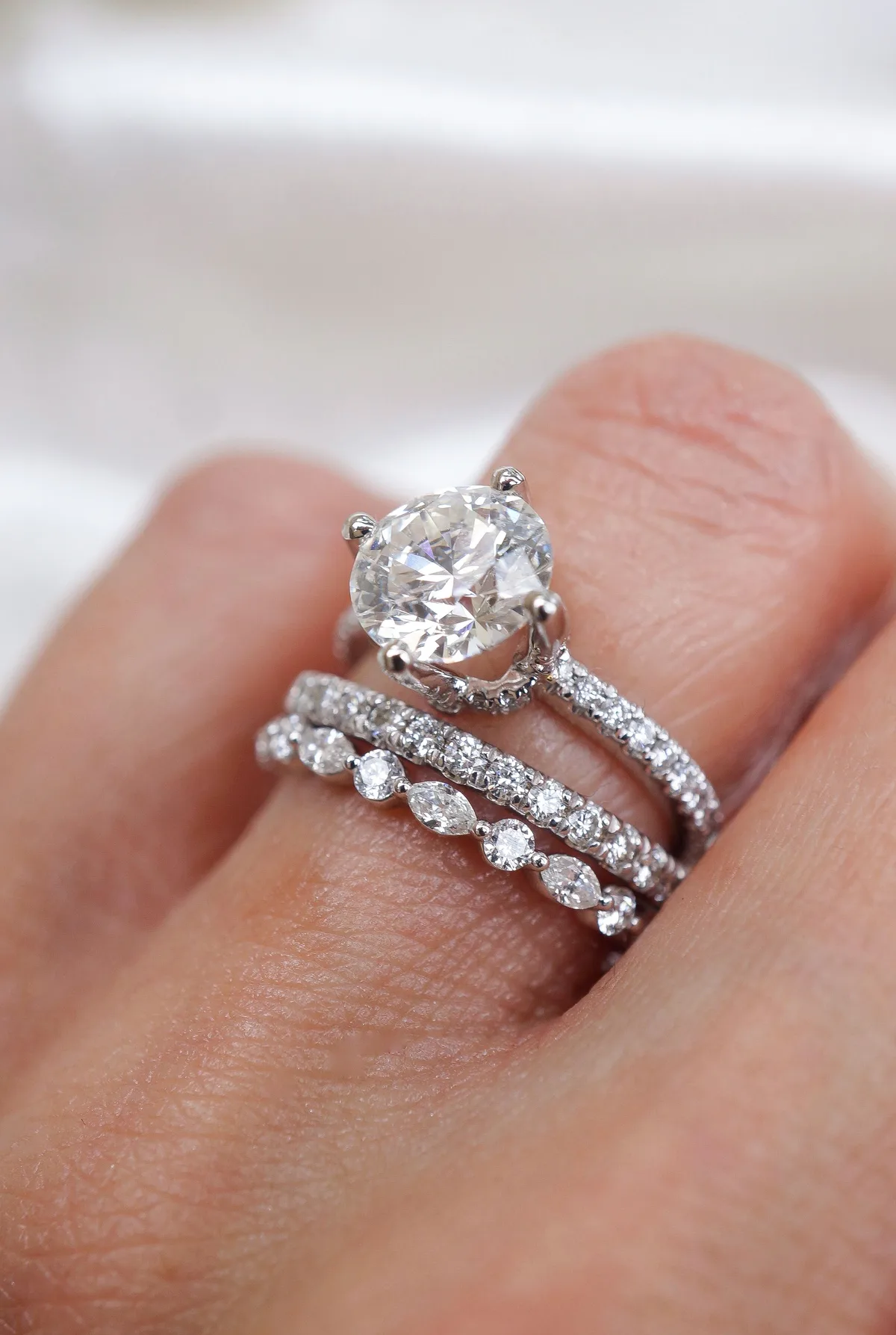
Image source: Bing (Web (fair-use with source credit))
Quick Answer
Deciding on stacking rings soldering together or separate depends on daily wear habits. Soldering stops ring spinning completely. It prevents metal friction and prong damage.
Separate bands allow versatile styling. You can wear a simple band for travel or workouts. Soldering makes rings feel a quarter-size tighter.
Try temporary adjusters before choosing permanent fusion.
The Stacking Dilemma: Constant Friction vs. Total Versatility
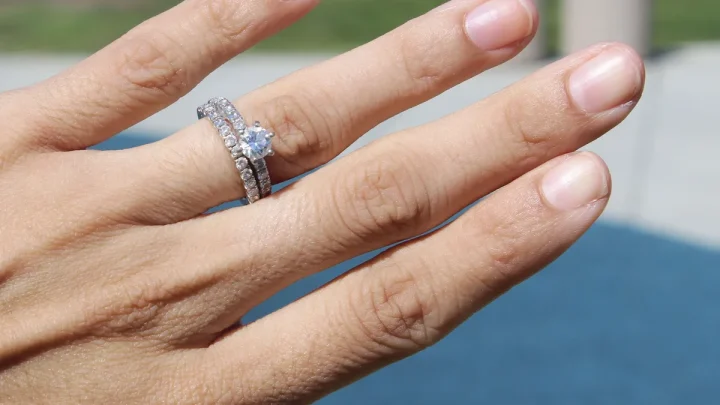
A loose ring stack offers flexibility. You can wear your engagement ring alone, pair your wedding band with an anniversary ring, or swap styles to match an outfit. That versatility is hard to give up if you work with your hands or travel frequently.
Yet loose rings create constant friction. As you move your fingers, the bands spin independently. The heavy center stone on an engagement ring naturally drops toward your palm.
You spend half your day twisting bands back into place.
Soldering eliminates that movement entirely. The jeweler joins the bands at the bottom and sides, locking them into a single unit. Your stones stay upright and properly centered.
The downside is permanence. Once rings are fused, you lose the option to wear a single, understated band. If your job requires sterile hands or manual labor, you must take off the entire stack.
| Factor | Soldered Rings | Separate Bands |
|---|---|---|
| Ring Spinning | Completely eliminated | Frequent; requires manual adjustment |
| Styling Flexibility | Fixed design; all or nothing | Mix, match, or wear single bands |
| Metal Wear | Zero internal friction | Continuous surface abrasion |
| Fit / Sizing | Fits 1/4 to 1/2 size tighter | Fits true to individual band size |
| Prong Safety | Stones cannot strike adjacent rings | Risk of diamond-on-metal gouging |
Diagnostic Checklist: How to Read the Wear on Your Rings Right Now
Before deciding to fuse your stack, inspect your rings for mechanical damage. Take your rings off under bright light. Use a magnifying glass or a jeweler's loupe to check the contact points between the bands.
Look closely for these specific signs of wear:
- Flat spots on round shanks: Run your fingernail along the sides of each band. If the metal feels flat or grooved where the rings touch, friction is rubbing the material away.
- Prong notches: Look at the side of your engagement ring settings. If an adjacent diamond band touches the prongs, check for small cuts or grooves.
- Girdle contact: Check if the outer rim (the girdle) of any diamond touches the metal of an adjoining ring. Exposed diamond edges act like glass cutters against gold and platinum.
- Thinning base metal: Compare the bottom of the band to the top shoulders. A band that looks noticeably thinner at the contact zone needs stabilization.
If you spot visible gouges or thinning prongs, your rings are actively damaging each other. In that case, fusion or physical spacers become necessary repairs rather than cosmetic choices.
The Structural Realities: What Actually Happens to Your Metal Over Time
When two rings sit next to each other, they generate continuous microscopic friction. Every hand movement causes them to shift, grind, and press against each other.
Image source: Bing (Web (fair-use with source credit))
Friction, Micro-Saws, and Metal Displacement
Diamonds sit at a 10 on the Mohs hardness scale. Gold alloys typically register between 2.5 and 3, while platinum sits around 4 to 4.5. When an eternity band rests against a plain solitaire shank, the harder diamond girdles rub directly into the softer metal.
Over several years, this creates deep gouges known as metal galling. The diamond edge works like a miniature saw blade, slicing into the adjacent setting.
Eventually, this friction wears through the prongs holding your stones. The Gemological Institute of America highlights that structural integrity in prongs is vital for preventing stone loss. Without soldering or a protective spacer, loose stacks often require costly prong re-tipping every three to five years.
The "Phantom Sizing" Trap: Why Fused Rings Fit Tighter
Joining multiple rings changes how they sit on your finger. A single 2 mm band contacts a tiny area of skin, sliding over knuckles with little resistance.
When you solder three 2 mm bands together, you create a wide 6 mm band. Wider bands trap more skin and encounter more resistance over the knuckle.
This causes "phantom sizing," where rings that felt loose separately suddenly feel tight once soldered. As a general rule, fusing rings into a stack wider than 4 mm requires sizing the entire set up by a quarter to a half size. Never solder rings together without having a bench jeweler check the combined width against a wide-ring sizing gauge.
Side-by-Side Breakdown: Soldering vs. Keeping Bands Separate
Choosing between these options means balancing structural protection against everyday convenience.
Soldered rings excel at stability. They protect delicate prongs from impact and eliminate the irritation of spinning center stones. They reinforce ultra-thin bands under 1.5 mm, preventing the shanks from bending under heavy grip pressure.
Separate bands win on everyday practicality. You can leave your expensive diamond rings at home and wear a plain band to the gym, the beach, or on vacation. You can also add new anniversary rings over time without rebuilding the entire stack.
Separate bands work best when paired with rings designed to nest without touching. If your engagement ring has an integrated gallery rail that lifts diamonds above adjacent metal, the risk of damage drops significantly.
The Decision Tree: When to Fuse, When to Keep Loose, and When to Pause
Your decision should follow your finger anatomy, ring design, and daily habits. Walk through these scenarios to identify the right path.
Branch 1: The Top-Heavy Solitaire and Spin Frustration
If your engagement ring has a large center stone or sits on a thin shank, it will naturally spin toward your palm.
- If your bands constantly spin out of alignment: Solder them together. Joining the engagement ring to a fitted wedding band widens the base, anchoring the center stone upright.
- If your knuckles are larger than the base of your finger: Pause before soldering. Fusing them makes the stack stiffer, which may stop it from clearing your knuckle. Test sizing beads or a euro-shank conversion first.
Branch 2: The Active Lifestyle and Low-Profile Band Need
Your occupation and daily routine play a significant role in ring safety.
- If you work in healthcare, fitness, or manufacturing: Keep the bands separate. Fused rings cannot be adapted. You need the freedom to wear a simple, low-profile band that fits under medical gloves or won't catch on machinery.
- If you prefer to wear your complete bridal set 24/7: Solder them. Continuous daily wear without soldering accelerates metal erosion at contact points.
Branch 3: The Curved or Mismatched Setting Stack
Unusual ring shapes introduce distinct mechanical challenges.
- If you wear a curved, contoured, or chevron shadow band: Solder the set. Contoured bands are made to frame a specific center stone. When loose, the curve rotates away, leaving an awkward gap.
- If you stack mismatched metals, such as platinum against 14k gold: Solder them immediately or insert a sacrificial spacer. Platinum is denser and harder than yellow gold, meaning the platinum ring will rapidly grind away the gold band.
The Bench Jeweler Process: Spot-Welding, Full Seams, and Desoldering
Joining your bands is a straightforward bench procedure. The bench jeweler first cleans the rings in an ultrasonic bath to remove dirt, skin oils, and polishing compounds.
Image source: Bing (Web (fair-use with source credit))
Next, the jeweler aligns the rings under magnification and clamps them securely. Most modern jewelry shops use laser welders rather than open gas torches. Laser welding focuses heat on a pin-sized area, fusing the metal without risking damage to heat-sensitive stones like emeralds or opals.
The jeweler will typically offer two joining styles:
- Spot or tack soldering: The jeweler places two or three tiny solder tacks at the bottom and sides of the shanks. This keeps the bands locked together while leaving the seam reversible. It causes minimal metal disturbance.
- Full-seam brazing: The jeweler runs plumb gold or platinum solder along the entire contact seam. This creates a permanent, solid wide band. It offers maximum strength, but undoing it later takes significantly more work.
The standard turnaround time is two to five days. The process typically costs between $45 and $150, depending on metal type and the number of connection points.
Desoldering is always possible if you change your mind later. A jeweler uses an ultra-thin jeweler's saw blade to slice through the solder joints without cutting into the original ring shanks. The rings are then filed, re-rounded on a mandrel, and buffed to restore their independent shapes.
Desoldering generally costs between $60 and $200.
Sizing Hacks and Alternatives Before You Light the Torch
You do not have to commit to permanent soldering right away. Several mechanical fixes stop rings from spinning and reduce friction wear while keeping the bands separate.
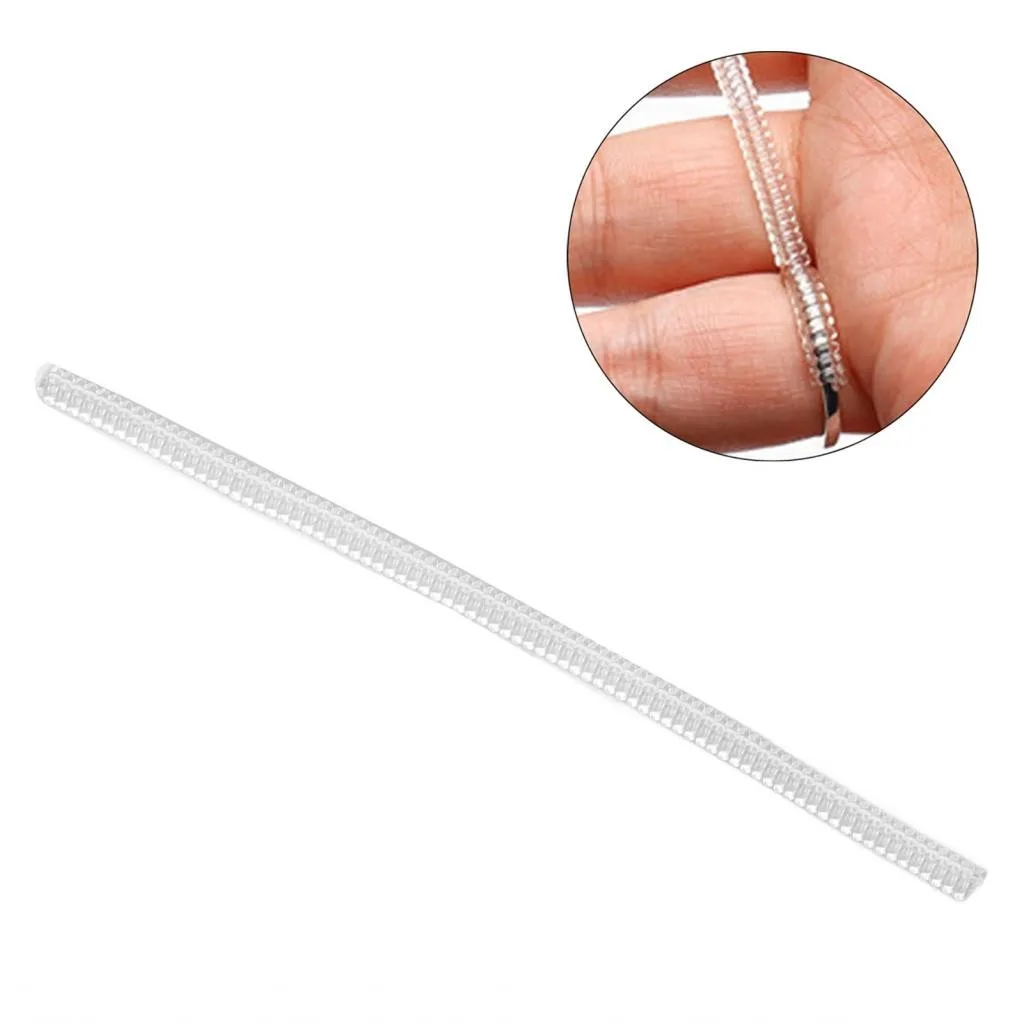
Image source: Bing (Web (fair-use with source credit))
Before visiting a jeweler, consider trying non-permanent options:
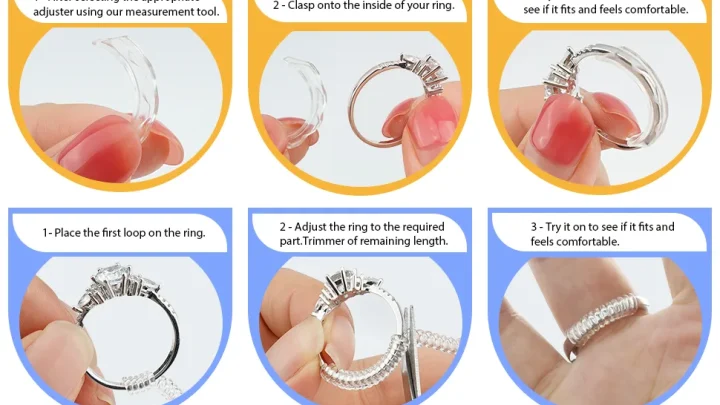
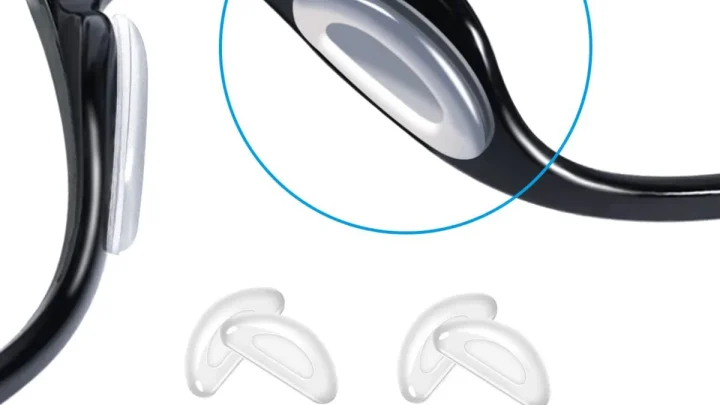
- Silicone spiral adjusters: These clear coils wrap around the bottom of the shanks, bridging two rings together. They prevent independent spinning, cushion the metal, and cost under $10 online.
- Sizing beads (speed bumps): A jeweler solders two small metal spheres inside the bottom inner shank of the engagement ring. These beads press gently against the fleshy pad of your finger, stabilizing top-heavy stones without locking the bands together.
- A thin metal spacer band: Placing an ultra-thin 1 mm plain band between your engagement ring and an eternity band creates a protective buffer. The sacrificial band takes all the friction, saving your diamond prongs from metal galling.
- Euro-shank conversion: A jeweler reshapes the rounded bottom of the engagement ring shank into a flattened, squarish profile. The flat corners prevent the ring from tipping side to side on your finger.
Testing these alternatives for a few months gives you a clear sense of how you prefer your stack to feel. If spinning remains an issue, permanent soldering remains a simple next step.
Practical Answers to Common Ring Soldering Questions
Does soldering rings together ruin their value?
Soldering does not ruin ring value if performed by a qualified jeweler using plumb solder. The process joins the metals without altering the carat purity or damaging the gemstones. The rings can be cut apart and restored to individual pieces later with negligible metal loss.
Can you separate rings after they are soldered together?
Yes, a bench jeweler can separate soldered rings using a fine jeweler's saw. The jeweler carefully cuts along the solder line, files away residual alloy, and polishes the shanks. The entire desoldering and restoration process takes under an hour of bench work.
Will soldering rings together make them smaller?
Soldering makes rings feel roughly a quarter to half size tighter due to the wider contact surface against your skin. The rings themselves do not shrink during welding. The wider combined shank simply displaces more tissue, creating a snugger fit over your knuckle.
How much does it cost to solder two rings together?
Soldering two rings together typically costs between $45 and $150. The total price depends on the metal type, ring width, and whether the jeweler uses a torch or a laser welder. Platinum sets and complex pavé eternity bands usually fall at the higher end of the pricing scale.

Similar Posts