Why Bending Your Cuff Bracelet Daily Causes Metal Fatigue
Founder & Fashion Creative Director at Julia Fashionista · CFDA Fashion Scholar, Certified Image Consultant (AICI) · 12+ years in editorial wardrobe styling, sustainable textile sourcing, and luxury capsule curation
If you pull your cuff open to slip it on and pinch it shut every day, you are slowly destroying the piece. That routine causes cuff bracelet metal fatigue bending daily, which inevitably snaps the band in two. Most people assume precious metals are flexible forever, but repeated bending creates hidden micro-cracks at the center point.
Every time you flex the metal, its internal structure hardens and grows brittle. Testing data from materials standards bodies like ASTM International confirms that repeated cyclic stress drastically lowers the fatigue life of non-ferrous alloys. Here is what actually happens inside the metal, how to assess the damage, and the exact method to wear your cuff without flexing it at all.
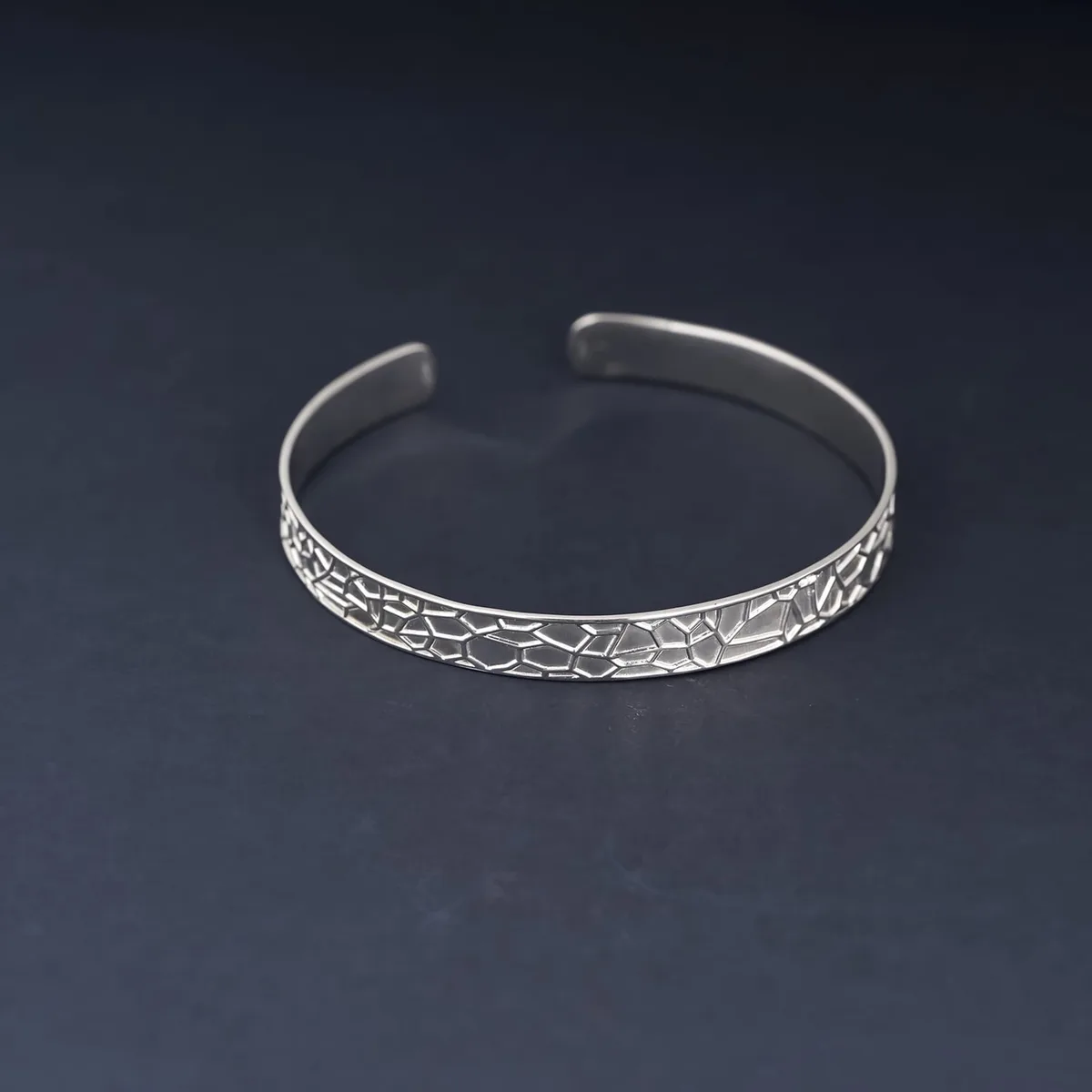
Image source: Bing (Web (fair-use with source credit))
Quick Answer
A cuff bracelet metal fatigue bending daily habit breaks the metal through work hardening. Bending it open and closed forces the internal grain structure to lock up. The metal loses ductility and snaps cleanly at the center.
To prevent breaks, adjust your cuff once to fit your wrist. After that, roll it on and off from the side of your arm without bending the metal.
Why Your Daily Bending Habit Snaps Cuff Bracelets
Metals like silver, gold, brass, and copper feel solid, but they are composed of crystalline grains. When you bend a cuff bracelet at room temperature, you perform a process called cold working. This does not merely alter the band's curve.
It permanently changes the metal's internal architecture.
The Science of Cold Working and Dislocation Pile-Up
Inside unworked metal, microscopic defects called dislocations slide smoothly across slip planes. This movement is what makes precious metals malleable.
When you bend the cuff open to put it on, dislocations glide along those planes and collide. Pinching it shut forces them into reverse, creating new dislocations that tangle into microscopic traffic jams. Metallurgists call this dislocation pile-up.
As dislocations jam together, the metal can no longer yield smoothly. It enters a work-hardened state. The band feels stiffer, which many wearers mistake for strength.
In reality, the metal has lost its plastic deformation capacity. With each flex cycle, micro-voids form at grain boundaries until a sudden cold-shut fracture snaps the bracelet in two.
How Different Jewelry Metals Handle Cyclic Flex
Different alloys tolerate cyclic stress at wildly different rates. Sterling silver is an alloy of 92.5% fine silver and 7.5% copper. That copper additive increases hardness, but it also accelerates work hardening during daily flexing.
Fine silver (.999) resists work hardening longer because it lacks solute copper, though it remains too soft for structural jewelry. As of 2026, standard workshop tests show that 14k gold work-hardens faster than sterling silver due to its complex alloy matrix of copper, silver, and zinc. Brass and bronze develop fatigue cracks even faster under repeated bending cycles.
| Metal Alloy | Typical Temper for Cuffs | Flex Fatigue Resistance | Common Point of Failure |
|---|---|---|---|
| Sterling Silver (.925) | Half-hard | Low (under 300 cycles) | Center spine / stamped details |
| Fine Silver (.999) | Dead-soft | Moderate | Bends out of shape easily |
| 14k Yellow Gold | Half-hard | Low to Moderate | Hinge-point or apex stress line |
| Yellow Brass (C260) | Spring-hard / Half-hard | Very Low | Crystal boundary tear across gap |
| Solid Copper | Soft to Half-hard | High | Deep stampings and bezel edges |
The Damage Check: Can Your Cuff Still Be Saved?
Before adjusting your cuff or changing your daily habits, inspect the piece for fatigue. A band with severe internal cracking can snap during simple handling.
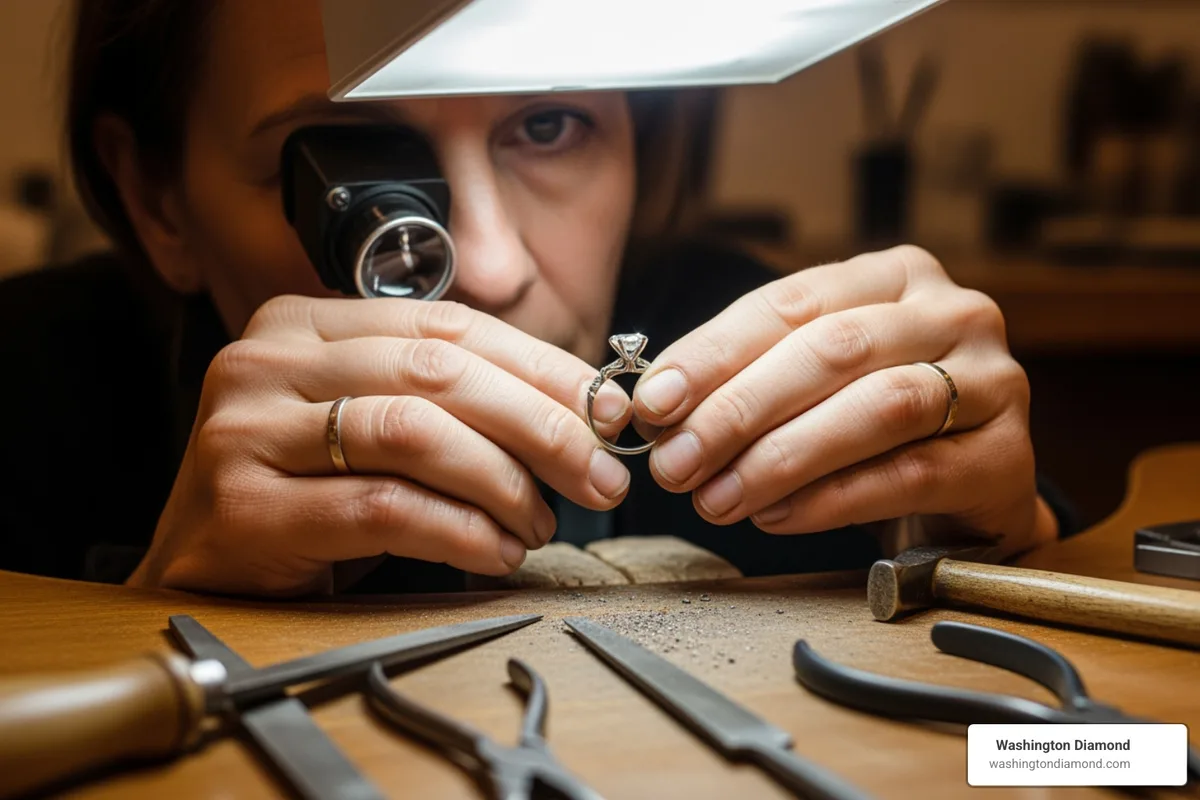
Image source: Bing (Web (fair-use with source credit))
Early Warning Signs of Micro-Fissures and "Orange Peel" Surface Grain
Look at the outside apex of your cuff under bright lighting with a 10x jeweler's loupe. Watch for these structural warnings:
- An "orange peel" texture. The smooth surface turns mottled and pebbled, showing that grain boundaries are tearing apart beneath the surface.
- A dragging sensation on your fingernail. Run your nail along the inner and outer curve of the center spine. If it catches on an invisible ridge, a fissure has already breached the surface.
- Localized thinning. If the center of the band looks slightly narrower or necked down compared to the ends, the metal has begun plastic necking prior to total failure.
- Loosened stones. On cuffs with bezel-set stones, frame flex distorts the setting base, loosening prongs or popping stones loose.
Triage Decision Tree: When to Wear, Repair, or Re-Anneal
Use this simple decision workflow to determine what step to take next:
- Does the cuff show deep visible cracks or catching edges?
- If YES: Stop wearing it immediately. Daily rolling will snap it. The piece requires laser or torch hard-soldering with a reinforcing plate from a professional bench jeweler.
- If NO: Move to step 2.
- Does the metal feel springy and stubborn, or display light orange-peel texture?
- If YES: The metal is heavily work-hardened. It must be thermally annealed to reset the grain structure before you attempt to reshape the gap.
- If NO: The metal retains sufficient ductility. Proceed directly to the one-time sizing process.
Step 1: Shape the Cuff Once for a Permanent Custom Fit
A cuff bracelet should be sized once to mirror your anatomy, then left alone. It is a rigid ring with an entry gap, not a spring clamp.
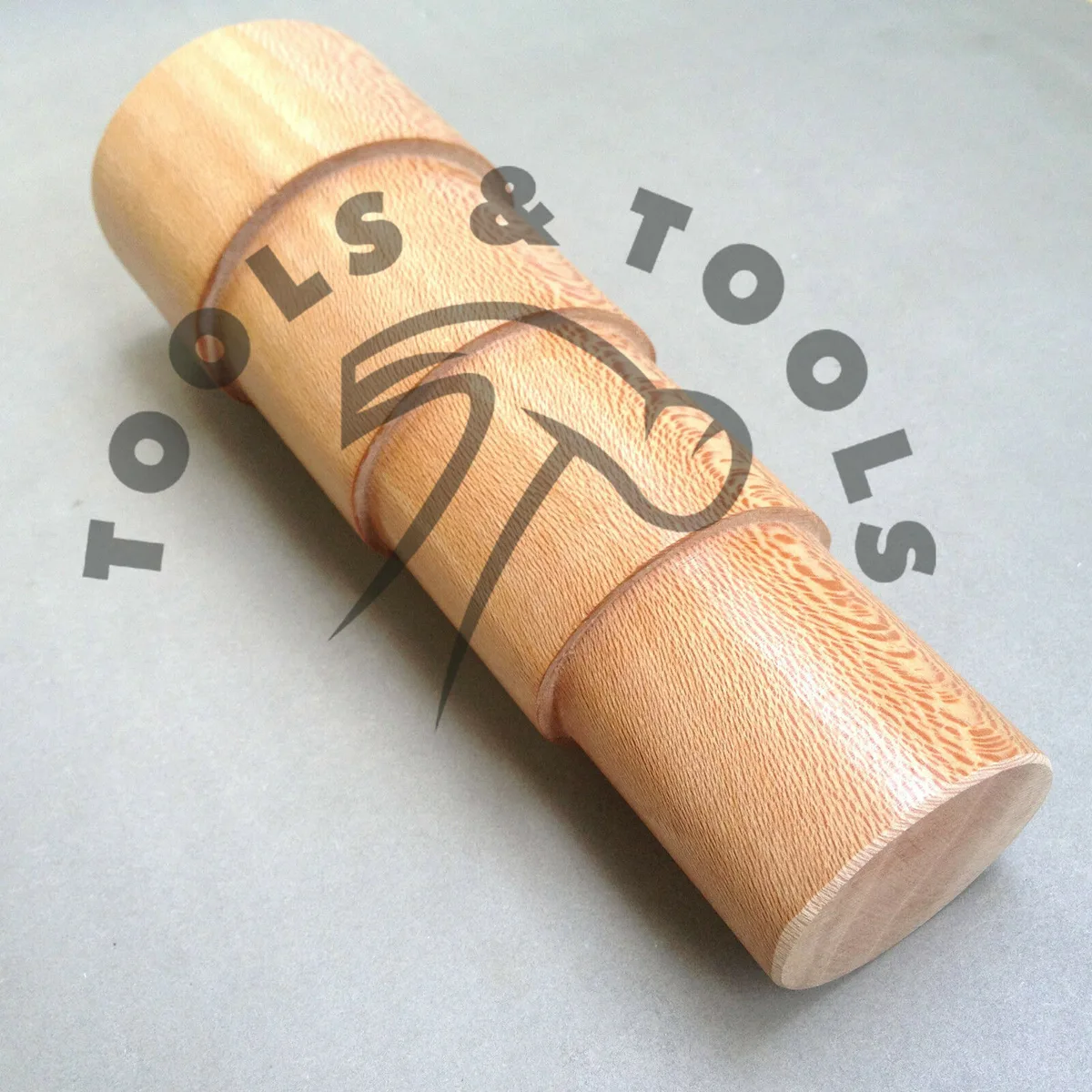
Image source: Bing (Web (fair-use with source credit))
Finding Your True Wrist Profile (Oval vs. Round)
Human wrists are oval, wider across the top than from front to back. Many mass-produced cuffs ship with a round profile, which creates pressure points and forces the wearer to pry the terminals open.
Measure the flat width of your wrist with a sliding caliper or flat ruler. Then measure the cross-depth from top to bottom. Your cuff should replicate this oval shape.
When the inner curve matches your wrist contours, the bracelet stays stable without squeezing.
Setting the Gap Distance on an Oval Mandrel
To size the cuff, use an oval bracelet mandrel and a non-marring rawhide or nylon mallet. Avoid steel hammers, which stretch and thin the metal.
- Slide the cuff onto the oval mandrel.
- Strike the curved sides gently with the rawhide mallet to bring the walls inward, creating a balanced oval.
- Check the terminal gap with a ruler. For an average wrist, set the gap between 1.0 inch (25 mm) and 1.25 inches (32 mm).
- Never hammer directly on the center apex or over decorative stamped motifs. Confine light taps to the smooth side curves.
- Try the cuff using the side-entry method. If it feels too loose, remove it and compress the ends slightly between both palms using even, full-body pressure. Never bend just the terminals.
Step 2: Master the Zero-Flex "Roll-On" Technique
Once the gap is set to match your wrist thickness, stop bending the cuff entirely. You put on a properly fitted cuff through side wrist insertion, rolling the bracelet into position without expanding the gap.
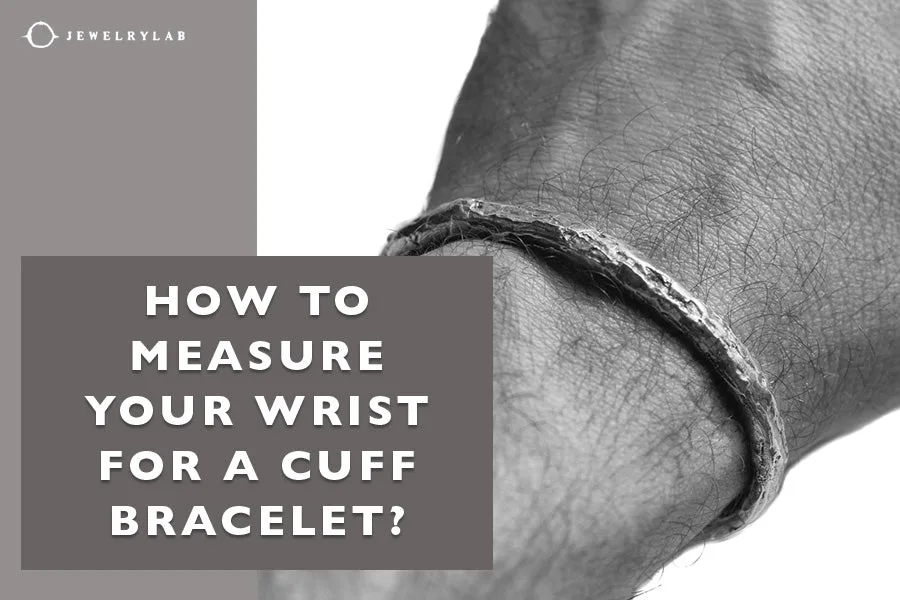
Image source: Web (Bing) / jewelrylab.co (Web image (fair-use with source credit))
Locating the Soft Spot on Your Side Wrist
Turn your forearm inward so your thumb points toward your chest. Look at the narrow edge of your wrist, roughly one to two inches above the wrist joint.
Feel for the soft, compressible channel of tissue between the arm bones and flexor tendons. This area compresses easily without discomfort. Your cuff gap should match this soft tissue dimension, which is substantially narrower than the flat width of your arm.
The Four-Beat Motion That Eliminates Metal Stress
Use this sequence each morning and evening:
- Position the lead terminal. Hold the cuff in your opposite hand. Place one terminal end firmly into the soft indentation on the inside edge of your forearm, approximately two inches above the wrist joint.
- Anchor the terminal. Keep that first terminal stationary against your skin. Do not slide it across the bone.
- Roll the frame across. Rotate the bracelet body smoothly over the top of the forearm. Let the second terminal roll over the outer wrist margin. The cuff slips on by compressing skin, not bending metal.
- Slide into position. Once the band clears the arm, slide the bracelet down toward your hand where it sits naturally.
To remove it, reverse the movement: slide the cuff up two inches, hook one terminal into the soft tissue, and roll the outer terminal off. The metal never flexes, stopping fatigue before it starts.
Common Cuff Wearing Mistakes That Accelerate Fatigue
Most broken cuffs fail because of small handling errors repeated every day. Recognizing these habits preserves your jewelry.
Pulling Terminals Unevenly
Many people pull outward on a single terminal end with one hand while holding the other side steady. This concentrates all cyclic flex into a single high-stress zone, usually just off-center.
Uneven torque quickly twists the band out of plane. When you twist metal while bending it, shear forces cause grain boundaries to fail in a fraction of their normal lifespan. If you must adjust the shape, use both hands to distribute pressure symmetrically along the whole curve.
Squeezing Over Clothing or Thick Sleeves
Forcing a cuff over a knit sweater or long-sleeve shirt expands the band beyond its intended gap width. Once over the cuff of the shirt, people squeeze it back down to stay in place.
This habit creates two full cycles of extreme plastic deformation within seconds. Over the course of a single winter, this routine puts hundreds of flex cycles on the alloy, leading to sudden failure. Wear your cuffs against bare skin or choose larger hinged bangles over heavy fabrics.
Flexing Cuffs with Bezel-Set Gemstones
Flexing a plain metal wire cuff is harmful enough, but flexing a stamped cuff with bezel-set stones causes immediate damage. Stones like turquoise, onyx, and coral do not flex.
When you bend the band, the flat silver plate beneath the setting curves upward. This action forces the bezel wall outward, loosening the stone, or creates pressure points that crack the cabochon across its center. Never adjust a stone-set cuff yourself without supporting the setting base on a jeweler's anvil.
Bringing Overworked Metal Back to Life: The Solder and Anneal Workflow
When a cuff reaches peak work-hardening, mechanical adjustments will break it. The metal must undergo thermal treatment to restore its crystalline structure.
Restoring Elasticity Through Thermal Stress Relief
Annealing heats the metal to a specific temperature where deformed crystal grains recrystallize into unstrained, pliable grains. For plain sterling silver, a bench jeweler paints the metal with a boric acid and denatured alcohol flux to prevent fire-scale.
Using a jeweler's torch, heat is washed evenly across the piece until it reaches a dull cherry-red glow, roughly 1100°F to 1200°F (593°C to 650°C). The piece is allowed to cool until the red glow vanishes in ambient light, then quenched in water and soaked in a warm sodium bisulfate pickle bath. This thermal cycle unlocks jammed dislocations, resetting the metal back to a workable temper.
Never try to torch-anneal a cuff with heat-sensitive gems like turquoise or pearls in place. The heat will scorch or shatter the stones instantly.
Hard-Soldered Repairs vs. Structural Reinforcement Sleeves
If micro-cracks have already breached the metal surface, annealing alone cannot heal the fissure. A crack represents a physical gap in the crystal lattice that requires torch soldering.
- Simple seam soldering: Best for clean hairline cracks without missing material. The jeweler cleans the seam, flows hard silver solder through the crack, files it smooth, and repolishes the surface.
- Internal reinforcement sleeves: Best for wide, thin cuffs or pieces that snapped completely in half. A thin sterling silver backplate is sweat-soldered along the interior spine across the break, distributing future mechanical stresses across a wider surface area.
- Laser welding: Best for antique or stone-set cuffs where torch heat cannot be applied safely. A localized laser beam welds the seam without transferring heat into adjacent gemstones.
Frequently Asked Questions About Cuff Bracelet Care and Metal Fatigue
Can you fix a cuff bracelet that snapped completely in half?
Yes, a bench jeweler can repair a snapped cuff using hard silver solder or laser welding. For lasting durability, the repair usually includes an internal reinforcement plate soldered across the break to support future mechanical loads.
How wide should the opening gap on a cuff bracelet be?
A standard cuff opening should measure between 1.0 inch (25 mm) and 1.25 inches (32 mm). This clearance lets you roll the bracelet on over the narrow side of your wrist without stretching the band.
Why does my sterling silver cuff feel stiffer after wearing it for months?
The stiffness comes from work hardening caused by daily squeezing and spreading. Each bend forces the metal crystal grains to jam against each other, reducing flexibility until the silver turns brittle and snaps.
Is it safe to bend a cuff bracelet if it has turquoise stones?
No, bending a stone-set cuff often cracks the stones or loosens the bezels. Stones cannot flex, so bending the underlying metal base plate forces the setting outward and drops the stone.
How often should a cuff bracelet be annealed?
A properly fitted cuff never needs re-annealing because it should never be flexed during daily wear. If you must reshape an old, stiff cuff, anneal it once before making the adjustment.

Similar Posts