Why Snake Chain Charm Bracelets Stretch & How to Fix It
Founder & Fashion Creative Director at Julia Fashionista · CFDA Fashion Scholar, Certified Image Consultant (AICI) · 12+ years in editorial wardrobe styling, sustainable textile sourcing, and luxury capsule curation
A snake chain charm bracelet stretching out is a common problem for jewelry owners. You buy a bracelet that fits snugly, but months later it hangs down to your knuckles.
In our research across major charm brands like Pandora and Trollbeads, this growth is rarely a defect. Most snake chains expand by roughly 0.5 to 1.0 centimeter over the first year. Understanding how this metal weave behaves will help you fix the fit and protect your charms.
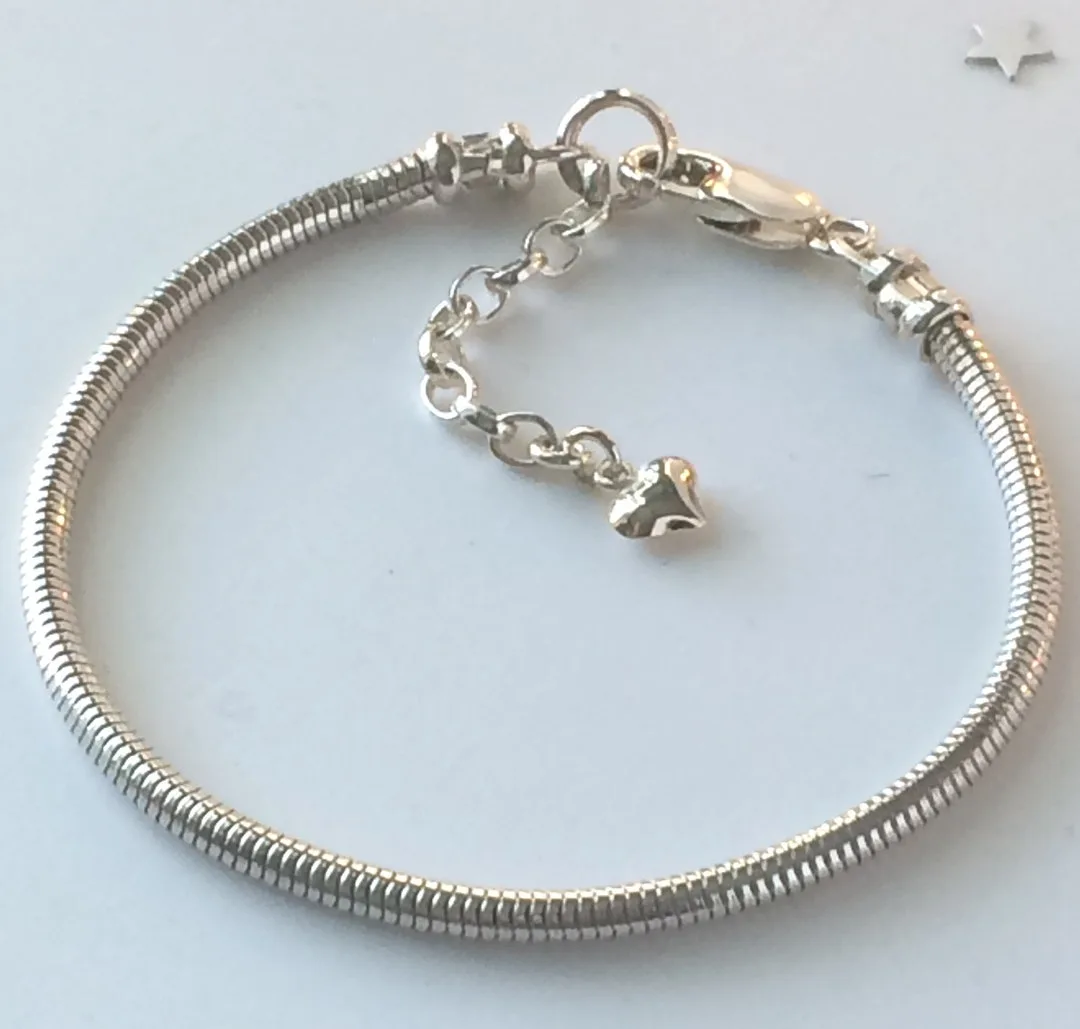
Image source: Bing (Web (fair-use with source credit))
Quick Answer
A snake chain charm bracelet stretching out is normal mechanical relaxation. The metal does not actually stretch like elastic. Instead, the tiny interlocking rings settle under the weight of your charms.
This settling adds about one centimeter of length over time. You cannot shrink the chain back at home. You can absorb the excess slack by adding more beads or silicone-grip clips.
Why Your Snake Chain Charm Bracelet Feels Loose Over Time
A snake chain is made of dozens of tiny curved rings joined together. When the piece is brand new, those rings sit rigid and tight.
As you wear the piece, daily movement and bead weight cause those rings to shift. The mechanical slack between each link closes up. This causes the total length of the piece to grow longer.
Relaxation vs. Actual Damage: What Is Sleeping Beneath the Metal?
Mechanical relaxation is not structural failure. Precious metals like sterling silver and gold do not stretch easily without high heat or massive force.
What feels like stretching is just the links loosening up their joints. Damage occurs only if the core pulls apart or bends sharply.
The Two-Finger Rule and Normal Break-In Measurements
Jewelers recommend using the two-finger rule when sizing a new bracelet. You should be able to slide two fingers flat beneath the chain while wearing it.
This initial gap feels too loose on a bare wrist. However, a standard chain grows by 0.5 to 1.0 centimeter during normal break-in.
That built-in space ensures the chain will not choke your wrist once you load it with beads.
| Wear Stage | Typical Length Change | What Is Happening | Best Next Step |
|---|---|---|---|
| Brand New | 0 cm | Rigid links, stiff cylindrical shape | Wear with 1 to 3 charms |
| 1 to 6 Months | +0.3 to +0.6 cm | Initial link settling, softer drape | Add spacer beads to maintain fit |
| 1+ Years (Full) | +0.8 to +1.0 cm | Fully relaxed links under bead load | Balance charms across stations |
| Damaged Core | +1.5 cm or more | Bent internal links or separating joints | Professional bench jeweler repair |
Diagnostic Workflow: Evaluating the Cause of Your Bracelet's Sag
Before trying to fix the extra length, you need to find out why it happened. Use this diagnostic process to evaluate your bracelet.
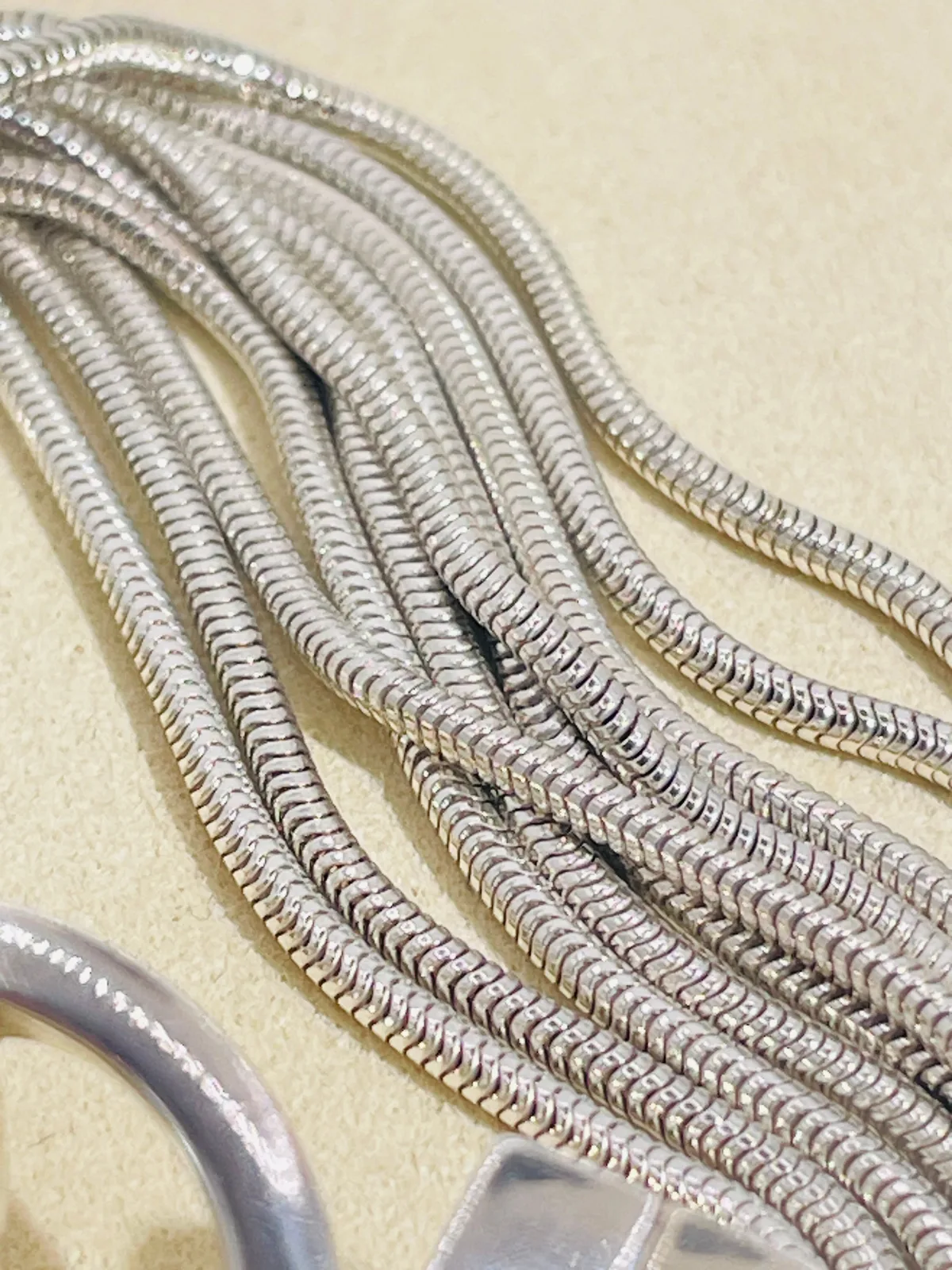
Image source: Bing (Web (fair-use with source credit))
Branch 1: Normal Link Relaxation (Settling Under Weight)
Inspect your bracelet while holding it straight out horizontally. Does it form an even, smooth curve without sharp angles?
If the drape is uniform and the growth is under one centimeter, your bracelet has experienced normal relaxation. The chain simply settled into its natural working shape.
Branch 2: Mechanical Deformation (Yanking, Catching, or Kinking)
Look closely at the individual bands under good light. Do you see a gap where individual rings separate, or a spot that stays bent at an angle?
If so, the bracelet suffered plastic deformation. This happens when a bracelet catches on a sweater, a doorknob, or gets yanked by a child.
Mechanical deformation weakens the integrity of the silver. It will not correct itself through standard charm adjustments.
Branch 3: Underfilled Bracelet Syndrome (Sized for 15 Charms, Holding 3)
Check how many charms are currently sitting on your chain. Most sizing charts assume you will eventually fill the bracelet.
If you bought a size that accounted for a full set, wearing only two or three charms will make it feel massive. The chain has not stretched past its design. It simply lacks the charm volume required to take up wrist space.
Action Plan: Fixing the Fit Based on Your Diagnostic Branch
Once you know why the chain feels loose, choose the right remedy below.
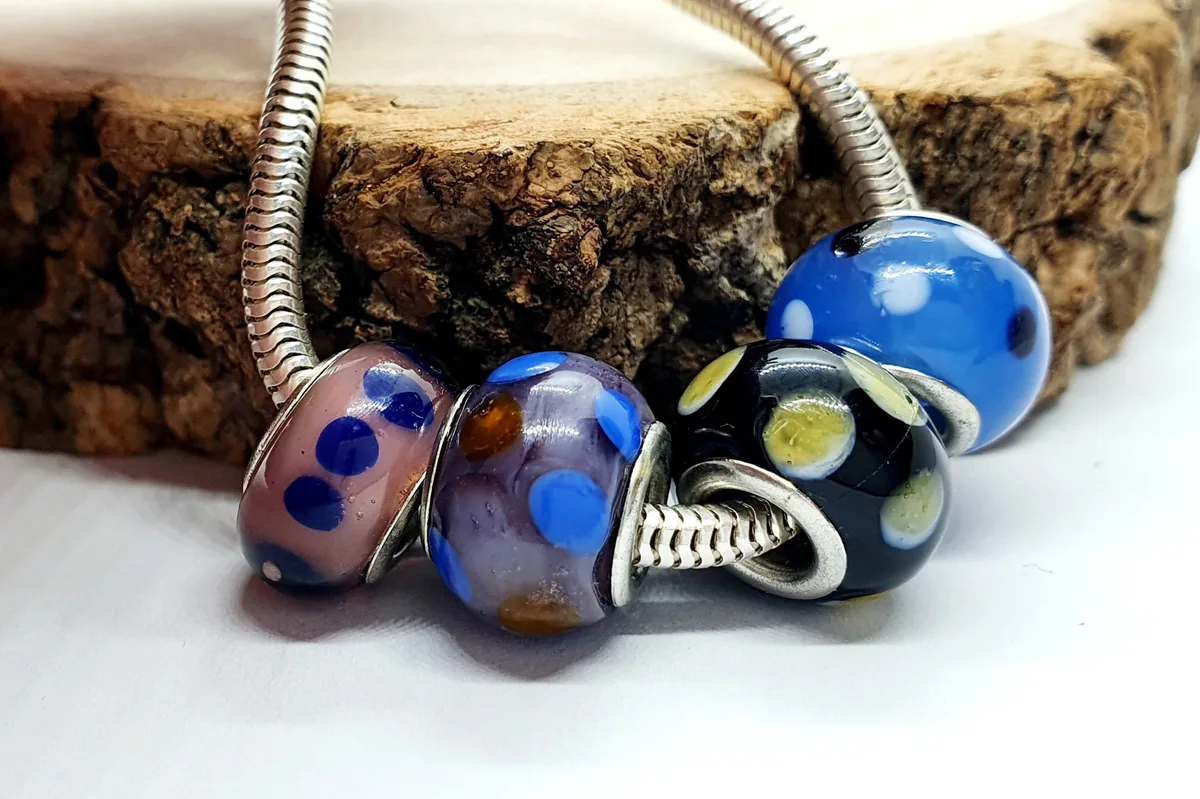
Image source: Bing (Web (fair-use with source credit))
Action A: Absorbing Slack with Beads, Muranos, and Spacers
If your bracelet grew through normal relaxation, add volume inside the circle. The easiest way to tighten the fit is to add thicker beads.
- Add wide Murano glass beads, which displace up to 0.5 cm of inner diameter each.
- Insert solid silver spacer rings between existing hanging charms.
- Thread two additional barrel charms near the clasp to pad the wrist contact points.
Action B: Anchoring Movement with Clips and Silicone Grippers
When charms slide to the bottom of your wrist, gravity pulls the chain down and makes it feel looser.
Place lock clips over the two raised threads on the bracelet core. If your bracelet is unthreaded, snap clips over small silicone grip rings.
This locks your charms into three balanced sections. It keeps the weight evenly distributed around your entire wrist so the bottom does not sag.
Action C: When to Take It to a Bench Jeweler (and What It Costs)
If your bracelet suffered mechanical deformation, do not keep wearing it. Strained links will eventually snap and dump your charms.
Take the piece to a professional bench jeweler certified through organizations like Jewelers of America.
A jeweler can unsolder an end-cap, remove the damaged links, and resolder the connection. As of 2026, standard bench fees for snake chain shortening run between $35 and $75, depending on metal type.
Why You Cannot "Shrink" a Snake Chain at Home
Many online forums suggest bizarre DIY tricks to tighten stretched bracelets. None of them work, and most will ruin your jewelry.
Image source: Bing (Web (fair-use with source credit))
The Myth of Boiling, Twisting, or Freezing Precious Metals
Boiling a silver chain will not shrink the metal. Precious metals require extreme temperatures above 1,000 degrees Fahrenheit before their crystal structures change.
Freezing will not contract the links permanently either. Twisting the chain tightly to shorten it is even worse. Twisting snaps the tiny internal alignment tabs inside the rings.
The Internal Anatomy of Interlocking Curved Bands
Snake chains are hollow or semi-hollow tubes made of interlocking curved metal rings. Each ring hooks securely into the next.
Because the links fit together like tiny cups, there is no elastic memory. Once the gaps between those cups open up, no household method can push them back together uniformly. Cutting the chain is the only permanent way to reduce its physical length.
Charm Weight, Layout, and Prevention Strategies
Preventing excess sag starts with how you load and handle your bracelet every day.
Balancing Charm Distribution Across the Three Stations
Never let all your charms pool at the bottom clasp. That concentrates the entire payload onto a two-inch section of chain.
Use stationary clip charms to divide your bracelet into three distinct sections. Keep an equal number of charms in each zone. This spreads the downward pull evenly across the entire curve of your wrist.
Daily Habits That Accelerate Chain Elongation
A few bad habits drastically speed up link relaxation:
- Sleeping in your bracelet, which crushes the chain under your body weight.
- Wearing more than 20 charms on a single standard snake chain.
- Letting the bracelet dangle unsupported while putting it on.
- Showering with charms on, as trapped soap residue creates friction inside the links.
Take your bracelet off before exercising or sleeping. When fastening the clasp, rest your arm on a table rather than letting the heavy chain swing freely in the air.
Quick Comparison: Adjustment Options and Expected Outcomes
Choosing the right way to fix your bracelet depends on your budget, whether you want more charms, and the chain's structural health.
If the metal is structurally sound, non-invasive adjustments are always the safest starting point. Cutting the chain should remain a last resort.
The table below breaks down the four standard methods for handling excess bracelet slack.
| Method | Best For | Typical Cost | Reversibility | Impact on Fit |
|---|---|---|---|---|
| Adding Glass Beads / Spacers | Normal link relaxation on growing collections | $15 to $50 per bead | 100% reversible | Absorbs 0.3 to 1.0 cm of internal diameter |
| Silicone Clip Placement | Charms bunching at the bottom of the wrist | $5 to $15 per pair | 100% reversible | Lifts sag and stops drag across the skin |
| Professional Jeweler Shortening | Damaged links, kinks, or permanent downsizing | $35 to $75 bench fee | Permanent | Removes 1.0 cm or more permanently |
| Downsizing Bracelet Base | Bare-chain wearers and minimalists (1 to 3 charms) | $65 to $120 for new base | Replaceable | Resets bracelet to true wrist size |
Frequently Asked Questions About Snake Chain Stretching
Can you shrink a snake chain bracelet with hot water?
No, hot water cannot shrink a metal snake chain. Sterling silver and gold alloys require smelting temperatures to change shape. Boiling water only cleans away surface oil and lotion.
It will not contract the relaxed links, and sudden temperature shifts can loosen glued gem settings.
How many charms should you wear on a snake chain?
Most standard snake chains safely hold between 15 and 20 charms. Exceeding this limit places excessive weight on the core joints, which accelerates link separation. If you prefer heavier glass or dangle charms, limit the total count to 12 or 15 pieces to prevent unnecessary strain.
Will a snake chain keep stretching forever?
No, a snake chain will not stretch indefinitely. Normal mechanical relaxation stops after the first few months of regular wear, usually capping out around one centimeter. If your bracelet continues getting longer after that initial break-in period, internal links are likely pulling apart from physical overload.
Can a jeweler shorten a Pandora snake chain?
Yes, an independent bench jeweler can shorten a snake chain bracelet. The process involves unsoldering the threaded end terminal, trimming the damaged or excess links, and laser welding the clasp cap back in place. Doing this will void any existing manufacturer warranty, so keep that in mind beforehand.
Does a safety chain prevent a bracelet from stretching?
A safety chain does not stop normal link settling, but it prevents sudden accidental stretching. If your clasp pops open under tension, the safety chain catches the piece before it hits the ground. It also prevents the chain from overextending while you fasten it over your hand.
The Final Decision: What to Do with Your Stretched Bracelet Today
If your bracelet feels loose, do not panic and assume it is broken. Take off the chain, lay it straight on a flat desk, and inspect the link spacing under bright light.
If the weave looks uniform and clean, your bracelet is simply broken in. You do not need expensive repairs. Slide on two or three wider glass beads, snap on silicone-lined clips to balance the weight, and enjoy the extra room.
If you spot bent links, gaps between rings, or dropped solder joints, stop wearing the piece immediately. Store your charms safely in a pouch and bring the chain to a certified bench jeweler. They can laser weld the damaged core or shorten the barrel, keeping your investment safe on your wrist.

Similar Posts