Hollow Back Signet Rings: The Ultimate Dirt Trap
Founder & Fashion Creative Director at Julia Fashionista · CFDA Fashion Scholar, Certified Image Consultant (AICI) · 12+ years in editorial wardrobe styling, sustainable textile sourcing, and luxury capsule curation
If your favorite ring leaves red, itchy skin underneath, you are likely dealing with a classic signet ring hollow back dirt trap. That scooped recess behind the face cuts manufacturing costs, but it also collects daily grime right against your finger.
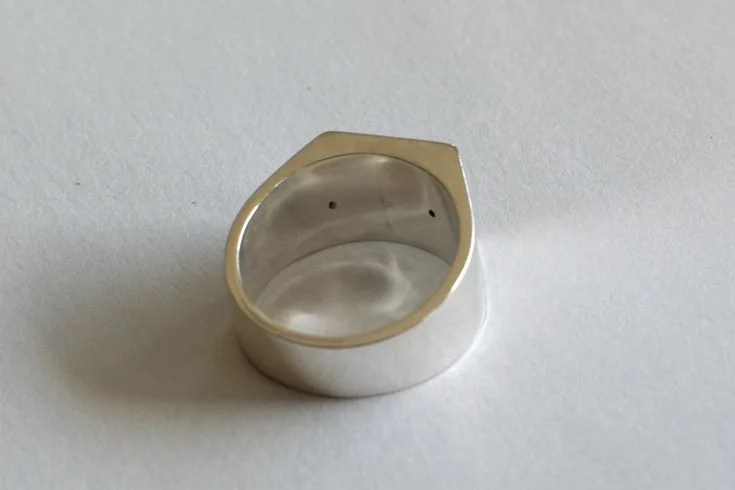
Image source: Bing (Web (fair-use with source credit))
Industry casting standards show that hollowed heads reduce gold weight by 40% to 60%. That weight savings makes the piece affordable, but the deep cavity creates real hygiene challenges. Learning how this pocket functions helps you stop skin irritation and keep your jewelry clean.
Quick Answer
A hollow back signet ring dirt trap is a recessed cavity behind the face. Manufacturers scoop this space out to reduce metal weight. The pocket collects soap, lotion, dead skin, and moisture against your finger.
This trapped debris causes odor and severe contact dermatitis. You can prevent issues with weekly cleanings or have a jeweler weld a backplate over it.
The Reality of the Hollow Back Signet Ring: Why That Cavity Exists
A hollow back signet ring features a scooped under-bezel. Manufacturers use this undercut design to save metal. As of 2026, precious metal prices make heavy, solid-cast jewelry expensive to produce.
Removing metal from the head keeps the retail price accessible.
Casting houses inject wax into molds to produce these shapes. Leaving the head solid requires more gold or silver. Coring out the back keeps the piece within a target price point.
It also stops thick castings from shrinking unevenly as the molten metal cools.
The trade-off falls entirely on the wearer. That empty pocket sits directly against your skin. It has no drainage channels.
Every time you wash your hands, moisture and residue rush straight into the void.
The Daily Problem: Moisture, Dead Skin, and "Ring Rash"
The pocket beneath a hollow signet creates a breeding ground for bacteria. Your skin sheds dead cells constantly. Those flakes combine with hand soap, skin oils, and lotions inside the cavity.
The mixture hardens into a grey, waxy paste.
This buildup leads to irritant contact dermatitis, often called ring rash. Clinical guidelines from the American Academy of Dermatology show that trapped moisture and soap under jewelry strip the skin's barrier. The metal does not always cause the allergy.
In many cases, the trapped surfactant residue burns the skin.
Trapped water also macerates the skin tissue. The skin turns white, soft, and fragile. Bacteria then feed on the trapped organic matter, producing a sour odor.
If your finger burns or peels under your ring, the cavity is almost certainly holding dirty moisture.
Anatomy of a Signet Ring: Hollow Back vs. Solid Back vs. Capped Gallery
Signet rings come in three primary back constructions. Each style handles daily wear, maintenance, and dirt accumulation differently.
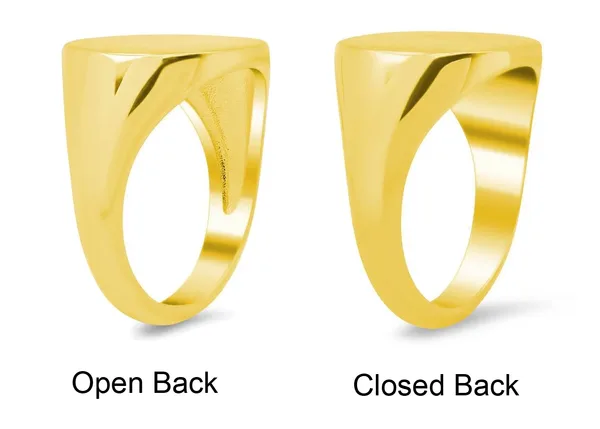
Image source: Bing (Web (fair-use with source credit))
A fully solid back ring is cast as one dense piece of metal. The interior shank is smooth, flat, or slightly curved for a comfort fit. There are no voids to catch dirt.
A hollow back ring features an open casting void directly under the seal face. The metal walls are often thin, sometimes measuring under 1.0mm. It feels front-heavy or strangely light on the finger.
A capped gallery ring balances both designs. The maker casts the ring with a hollow cavity, then laser-welds a smooth metal plate over the opening. Some makers pierce this plate with tiny decorative holes.
That allows air circulation while keeping the surface smooth against your finger.
| Construction Type | Weight Profile | Dirt Trap Risk | Cleaning Effort | Resizing Difficulty |
|---|---|---|---|---|
| Solid Back | Heavy, balanced | None | Low (wipe down) | Simple |
| Hollow Back | Light, uneven | Severe | High (deep scrubbing) | Hard (walls can warp) |
| Capped Gallery | Moderate | Very Low | Low to Moderate | Moderate |
Side-by-Side Breakdown: Upfront Savings vs. Long-Term Living
Choosing between these styles comes down to upfront purchase price versus daily maintenance. A hollow 14k gold signet might cost half the price of a solid version. The gold weight might drop from 14 grams down to 6 grams.
That cash savings brings daily compromises. Hollow rings dent easily because the top surface lacks solid backing. A firm bump against a table can cave in an undercut face.
Resizing a hollow ring is also tricky. The thin metal shoulders can buckle under the jeweler's torch or laser.
Solid rings require almost no daily thought. You wash your hands, dry your fingers, and move on. Hollow rings force you to take them off before applying lotion, washing dishes, or working out.
If you skip careful drying, your skin pays the price within days.
How to Live with a Hollow Back: Cleaning Protocols That Actually Work
If you already own an open-backed ring, regular cleaning is mandatory. Rinsing it under the tap will not dislodge packed grime. You need heat, a degreasing agent, and light mechanical agitation.
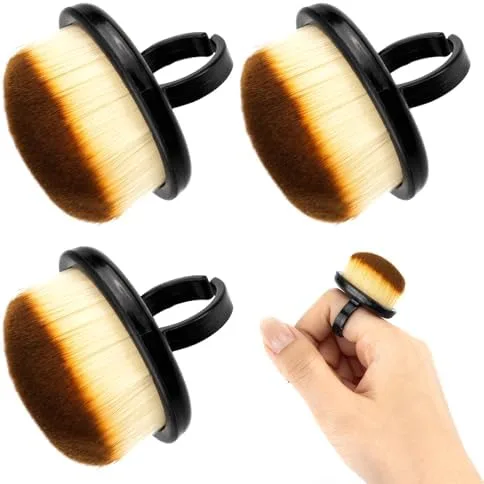
Image source: Bing (Web (fair-use with source credit))
Follow this weekly cleaning routine to keep bacteria and grime out of the cavity:
- Soak in degreaser: Mix warm water with a few drops of standard Dawn dish soap. Soak the ring for 15 minutes to break down hand oils and lotion.
- Scrub the recess: Use a soft-bristle detailing brush or a clean nylon makeup spoolie. Work the bristles deep into the undercut corners to loosen packed debris.
- Rinse thoroughly: Flush the cavity under running warm water. Use a plug in the sink drain so you do not drop the piece.
- Force-dry the pocket: Blot the ring with a lint-free towel. Use a hair dryer on a cool setting or an air duster to blow trapped droplets out of the cavity.
- Rest your skin: Let the ring dry completely on a counter before putting it back on your hand. Never push a wet hollow ring over damp skin.
Can a Jeweler Fix It? Retrofitting, Filling, and Backplate Solutions
A professional bench jeweler can permanently seal an open ring back using laser welding. You do not have to accept the dirt trap if the ring holds sentimental value. Jewelers see this issue often and have clear repair paths.
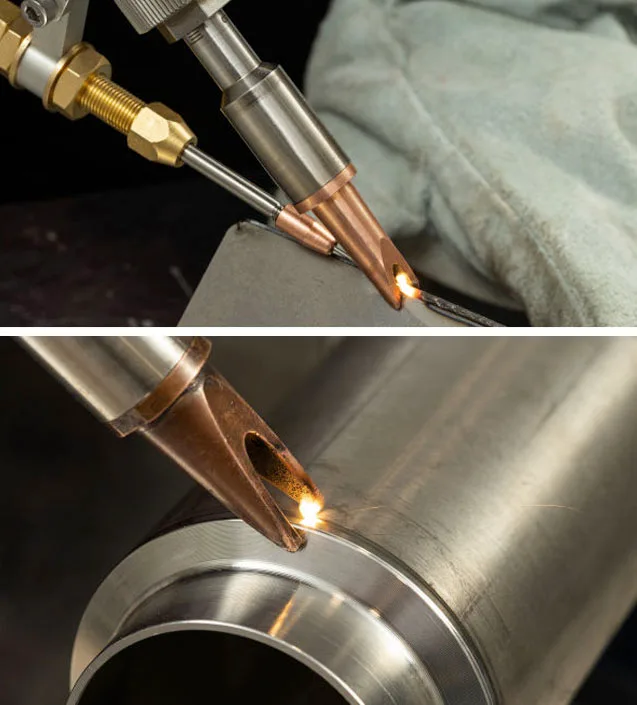
Image source: Bing (Web (fair-use with source credit))
The cleanest permanent fix is adding a fabricated backplate. A bench jeweler cuts a sheet of matching metal, either gold or silver, to fit the cavity contours. Using a laser welder, they tack the plate flush against the inside edge.
Laser welding generates focused heat, so stones or detailed surface engravings stay safe.
Never ask a repair shop to fill the entire cavity with liquid solder. Molten solder pits heavily as it cools and throws off the balance of the ring. It also creates a massive heat sink that makes future repairs or resizing nearly impossible.
According to bench repair benchmarks from Jewellers of America, retrofitting a custom inner plate typically runs between $90 and $250. The exact price depends on the metal type and shop labor. Silver costs less, while 14k or 18k gold costs more for the raw sheet material.
The Buying Decision: When to Save and When to Go Solid
Choosing between these builds depends on how often you plan to wear the piece. Buying a scooped ring is fine for occasional use, but daily wear demands solid metal.
Choose a hollow back signet ring if your budget is strictly capped. It lets you get the visual presence of a large gold face for a fraction of the cost. It also works well for cocktail rings or pieces worn once a month for formal events.
In those cases, dirt buildup never has time to start.
Choose a solid back ring if you want an everyday piece you never take off. If you work in healthcare, food service, or any field with constant hand-washing, solid metal is essential. It completely eliminates soap buildup and ring rash.
If you love the lower price of hollow styles, look at sterling silver alternatives. A solid sterling silver signet often costs less than a hollow 10k gold ring. You get all the durability and hygiene perks of a solid build without the gold price tag.
Frequently Asked Questions About Hollow Signet Rings
Why does my signet ring smell bad?
Trapped water, dead skin cells, and hand soap accumulate in the open hollow under-bezel. When trapped together in a dark space, bacteria feed on the organic matter and release an unpleasant odor. Cleaning the cavity weekly with warm soapy water eliminates the smell.
Can you fill a hollow ring with epoxy or resin?
You should avoid filling jewelry cavities with consumer epoxy or resin. Household adhesives degrade when exposed to hot water, hand sanitizers, and body oils. Over time, the resin yellows, cracks, and traps bacteria against your skin, making irritation worse.
Does a hollow back mean a signet ring is fake?
A hollow back does not mean a ring is fake gold or silver. Coring out metal is a standard manufacturing method used by legitimate jewelry makers to cut metal weight and lower retail costs. Check the shank for official hallmark stamps to confirm metal purity.
Can you resize a hollow signet ring?
A bench jeweler can resize most hollow rings, but the job carries extra structural risks. The thin walls along the hollowed shoulders can warp, crease, or collapse under compression. Complex size adjustments often require laser welding rather than traditional torch soldering.

Similar Posts