Why Do Polarized Sunglasses Show Rainbows on Car Windows?
Founder & Fashion Creative Director at Julia Fashionista · CFDA Fashion Scholar, Certified Image Consultant (AICI) · 12+ years in editorial wardrobe styling, sustainable textile sourcing, and luxury capsule curation
If you put on your shades and suddenly see a checkerboard grid or shimmering colors across your car, don't worry. Seeing polarized sunglasses rainbow spots car window patterns is completely normal and does not mean your glass is defective.
These floating patches happen because of how safety glass is heated, cooled, and treated during manufacturing. Per safety standards set by the National Highway Traffic Safety Administration, automotive side and rear windows undergo intense heat treatment to prevent dangerous shattering. Here is a clear breakdown of why your polarized lenses reveal these hidden stress marks and how to tell if they pose any real issue for your daily drive.
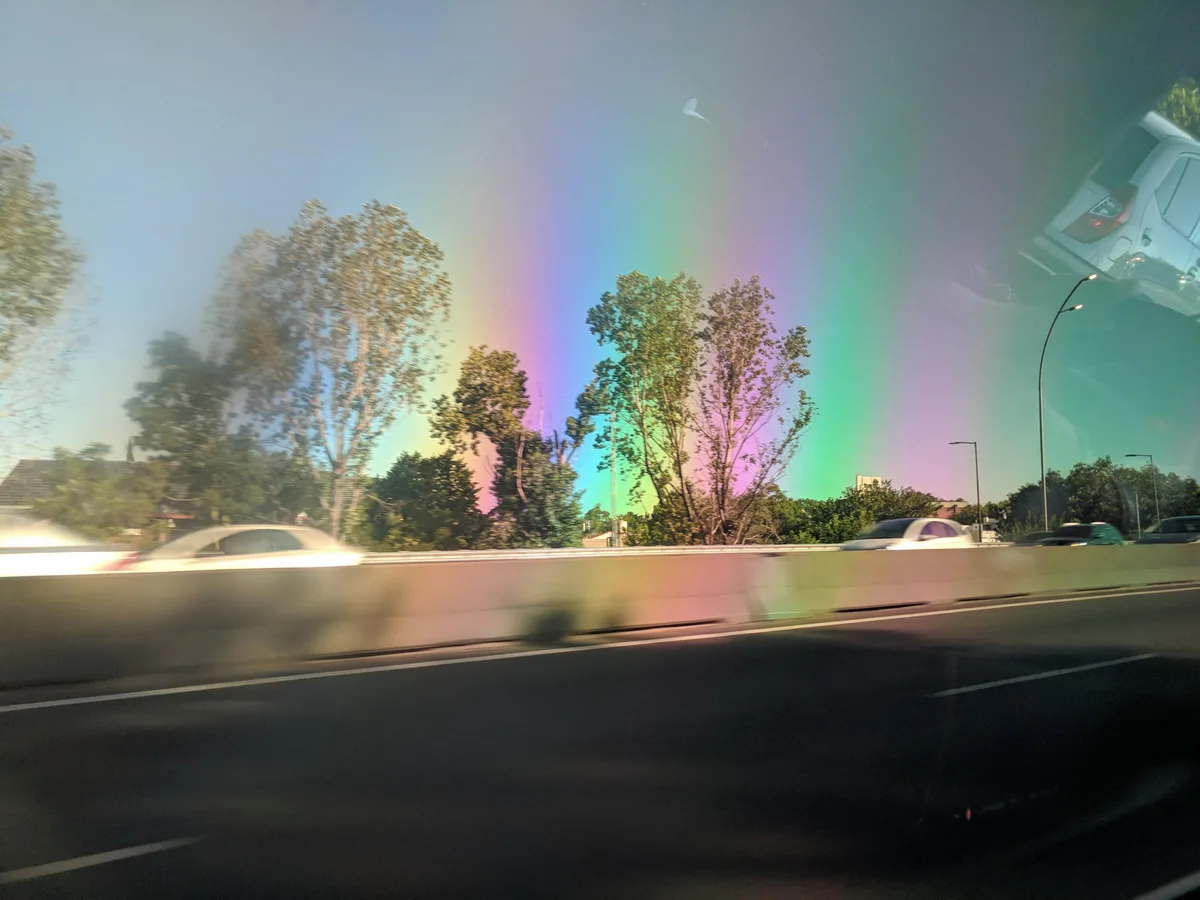
Image source: Bing (Web (fair-use with source credit))
Quick Answer
Seeing rainbow spots through car windows with polarized sunglasses is completely normal.
It happens because safety glass has mechanical stress locked inside it.
Your polarized lenses filter out specific light waves.
This filter makes the hidden stress patterns visible to your eyes.
The glass is safe and structurally sound.
Why You See Rainbow Patterns and Dark Spots Through Your Car Windows
The dark spots, wavy grids, and oily rainbow sheen you see are simply visual evidence of mechanical tension. Automotive glass manufacturers produce side and rear windows using a process called thermal tempering. This process strengthens the glass so it crumbles into dull pebbles instead of jagged shards during a crash.
During tempering, high-pressure air nozzles blast cold air onto hot glass. This creates distinct zones of high compression on the surface and high tension in the core. Under normal lighting, your naked eyes cannot detect these uneven cooling zones.
The sunlight passes straight through, appearing uniform and clear.
When sunlight bounces off the road or your vehicle, it becomes partially polarized. Adding polarized lenses introduces an optical filter that blocks horizontal light waves. That filter reveals the internal stress lines created by those factory cooling jets.
You are simply seeing the permanent fingerprint left behind by the factory cooling process.
The Optical Physics: Photoelasticity, Quenching, and Birefringence Explained
The technical name for this visual display is photoelasticity. When glass experiences uneven mechanical stress, it develops an optical property known as birefringence, or double refraction.
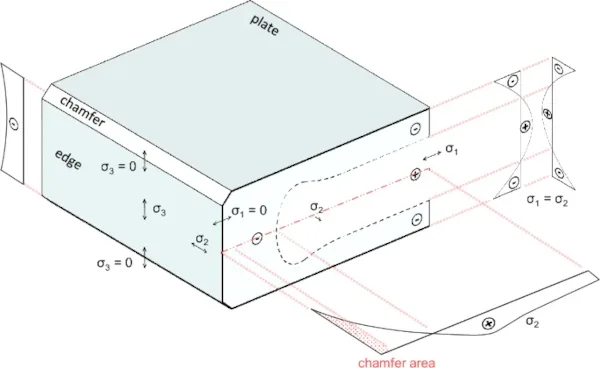
Image source: Bing (Web (fair-use with source credit))
Birefringent materials split incoming light rays into two separate paths traveling at slightly different speeds. As these light waves pass through the stressed zones, their wavelengths fall out of sync. This delay is called optical phase retardation.
When the light exits the glass and hits your polarized sunglasses, certain colors cancel out while others pass through. The visible spectrum spans roughly 400 nm to 700 nm. The phase shift cancels specific wavelengths within that band, creating constructive and destructive optical interference.
Where wavelengths cancel out, you see dark grey spots, often called quench marks or leopard spots. Where wavelengths reinforce each other, you see vibrant rainbow bands. The physical stress inside fully tempered glass ranges from 10,000 to 24,000 psi.
That intense compression guarantees these optical patterns remain permanently locked inside the pane.
Diagnosing the Visual Artifact: A Driver's Decision Workflow
Not every optical distortion on your car window comes from factory tempering. Aftermarket window tints, plastic films, and multi-layer windshields each react differently to polarized lenses. You can diagnose what you are seeing with a quick visual check.
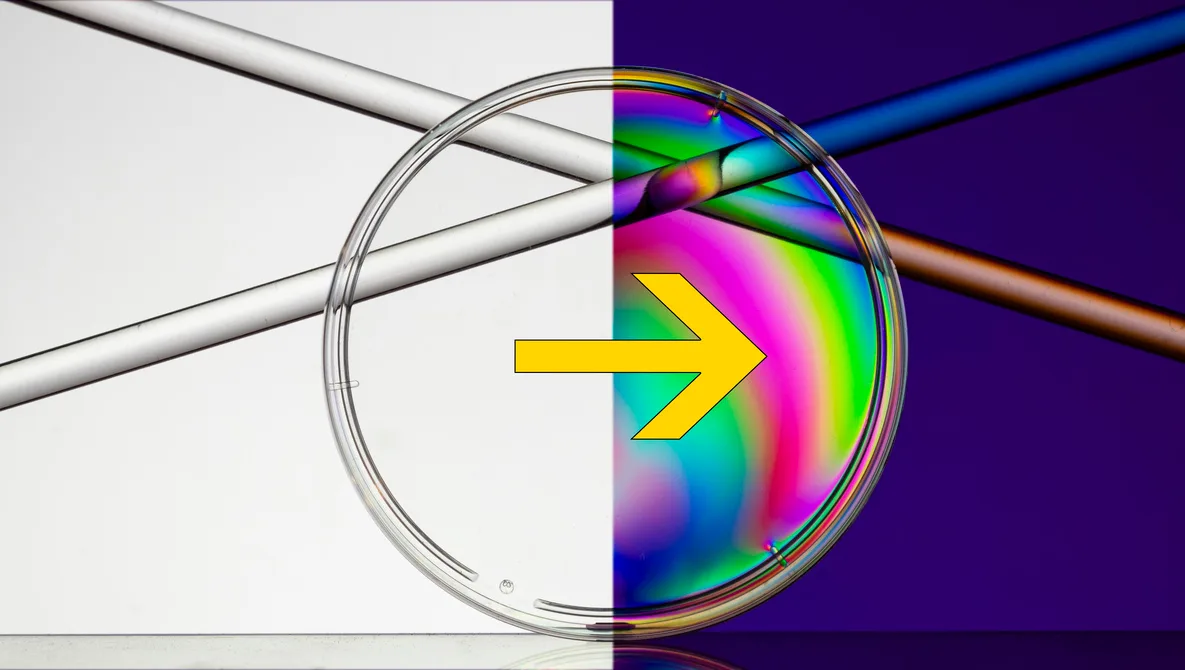
Image source: Bing (Web (fair-use with source credit))
Follow this simple decision workflow to identify the cause:
- If the patterns look like repeating geometric spots or a checkerboard grid on side or rear glass, you are seeing factory quench marks on tempered glass. No fix is needed, and the glass is structurally sound.
- If you see an oily, swirling rainbow film across the entire pane, check for aftermarket window tint. Stretched polyethylene terephthalate (PET) plastic films warp light unevenly across the whole surface.
- If your windshield shows faint, wide bands only at steep angles, you are looking at the polyvinyl butyral (PVB) acoustic interlayer in laminated glass.
- If your dashboard screens turn completely black, you are experiencing cross-polarization extinction with an LCD display.
To confirm the cause instantly, tilt your head 90 degrees while looking at the pattern. If the spots rotate, change color, or vanish entirely, you are dealing with polarized light interference rather than physical glass damage.
Where the Patterns Appear: Tempered Side Glass, Window Tints, and Windshields
Different automotive glass panels behave differently under polarized light. The table below breaks down where these artifacts appear and what causes them.
| Glass Location | Glass Type | Visual Effect Seen With Polarized Lenses | Primary Cause |
|---|---|---|---|
| Side Windows | Fully Tempered Glass | Checkerboard grids, dark spots, circular patches | Differential air-nozzle cooling (quench marks) |
| Rear Windshield | Fully Tempered Glass | Cross-hatch lines, dark grids, faint colored lines | Air quench arrays plus embedded defroster grid stress |
| Front Windshield | Laminated Safety Glass | Subtle bands or almost no distortion | Annealed outer layers with minor PVB interlayer stress |
| Aftermarket Tinted Glass | Tempered or Laminated + PET Film | Vivid oily swirls, purple and green rainbow sheets | Extruded polyester film birefringence under tension |
Front windshields rarely show dramatic spots because federal safety standards require laminated glass rather than fully tempered glass. Laminated glass uses two sheets of annealed glass bonded around a plastic PVB center. Because annealed glass cools slowly and evenly, it lacks the aggressive stress patterns found in tempered side windows.
If your front windshield shows intense rainbow swirls, the vehicle likely has an aftermarket clear heat-rejection film applied to the inside surface.
The Practical Catch: Digital Cockpits, LCD Screens, and Heads-Up Displays (HUDs)
While rainbow spots on side windows are harmless, polarized lenses create real operational headaches with modern cabin electronics. As of 2026, modern vehicle interiors rely heavily on liquid crystal displays (LCDs) and digital projection systems.
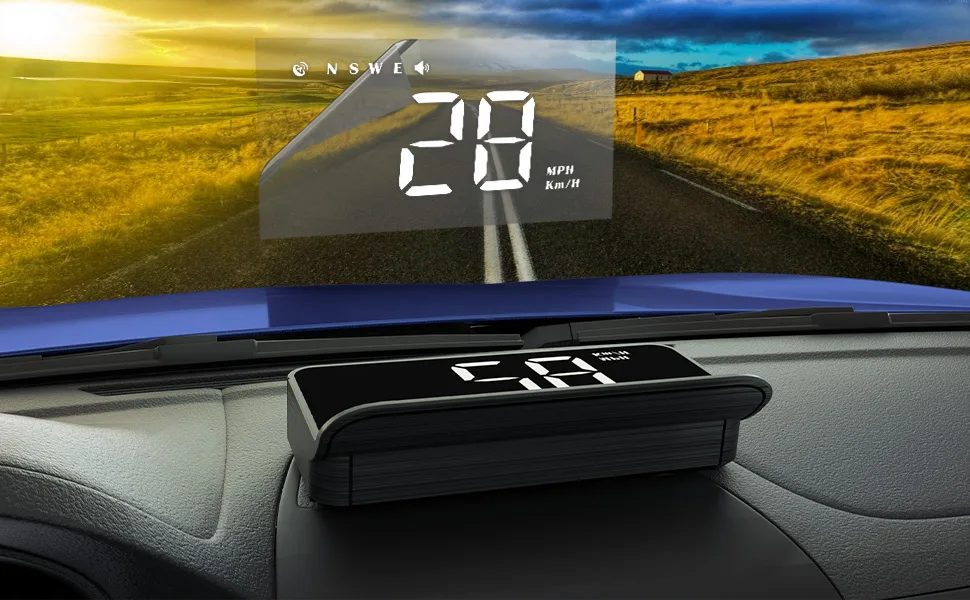
Image source: Bing (Web (fair-use with source credit))
LCD screens produce light by passing backlight through a polarizing filter. If the manufacturer aligns that display filter vertically, your horizontally polarized sunglasses work fine. But if the screen filter is aligned horizontally, the two filters cross at a 90-degree angle.
This creates total optical extinction, making the navigation screen or digital speedometer appear completely dead.
Heads-up displays face an even steeper challenge:
- HUDs bounce polarized projector light off the windshield directly toward your eyes.
- The windshield glass reflects light at angles close to Brewster's angle (roughly 56 degrees).
- This reflection naturally polarizes the projection image along a horizontal plane.
- Polarized sunglasses block horizontal light by design, dimming or wiping out the HUD readout entirely.
Some automakers use specialized optical wedge interlayers to keep HUD images readable through polarized eyewear. However, many systems still suffer significant brightness loss when you wear polarized lenses behind the wheel.
Polarized vs. Non-Polarized Driving Sunglasses: Weighing the Trade-Offs
Choosing between polarized and non-polarized sunglasses comes down to where you need visual clarity most.
Polarized lenses offer superior glare reduction on open highways. They block horizontally reflected light from wet asphalt, car hoods, and standing water. They also eliminate the annoying reflection of your dashboard on the inside of the windshield.
However, non-polarized lenses provide an unaltered view of your car's surroundings and digital displays. They show side windows without dark quench spots and keep aftermarket tints looking uniform. More importantly, non-polarized glasses never blank out projection HUDs or digital instrument clusters.
Per standards outlined in ISO 12312-1 for automotive eyewear, safe driving sunglasses should balance glare control with clear visibility of warning signals and controls. If you prioritize reading tech gauges instantly, non-polarized lenses hold a distinct advantage. If your daily drive involves intense sun glare off flat roads, polarization remains hard to beat.
How to Pick the Right Pair for Your Commute and In-Cabin Tech
You can match your eyewear to your cockpit setup with a few straightforward checks.
Use this guide to determine the best lens type for your vehicle:
- If your car uses an analog instrument cluster and has no heads-up display, choose polarized Category 3 lenses (8% to 18% light transmission). You get maximum glare protection with zero electronic interference.
- If your car features a projection HUD or critical LCD gauges, choose non-polarized lenses with an anti-reflective coating. You will retain full screen visibility while cutting direct overhead sunlight.
- If you frequently drive through varied light, like tunnels or tree-lined roads, look for Category 2 driving lenses (18% to 43% transmission). Copper or amber non-polarized tints enhance contrast without darkening your cabin too aggressively.
- If your vehicle has dark aftermarket window tint that produces strong rainbow sheens, stick with non-polarized lenses to prevent visual fatigue caused by thin-film interference.
Testing your setup takes seconds. Sit in your driver seat on a sunny day with your preferred glasses. Scan your side mirrors, look at your center console, and check your digital speed display.
If every screen remains legible and your mirrors look crisp, your eyewear matches your cabin tech.
Frequently Asked Questions About Polarized Sunglasses and Auto Glass
Do the rainbow spots mean my car window is damaged or defective?
No, rainbow spots do not indicate damage or glass failure. They are a natural optical effect of thermal tempering. The spots show where factory air jets rapidly cooled the glass to give it high structural strength.
Your window is completely safe.
Can you remove the rainbow effect from tinted windows?
You cannot remove the rainbow effect from existing tinted glass. The pattern forms when polarized light passes through the stretched polyester film inside the tint. The only permanent fix is replacing the film with a non-birefringent ceramic coating or switching to non-polarized sunglasses while driving.
Why doesn't the front windshield show dark rainbow spots?
Front windshields do not show quench spots because federal regulations require laminated safety glass rather than fully tempered glass. Laminated windshields use annealed glass sheets that cool slowly and evenly. Without the rapid air blast cooling used on side windows, no heavy internal stress patterns form.
Are polarized sunglasses safe for daytime driving?
Polarized sunglasses are generally safe and significantly reduce blinding road glare. The only safety concern arises if your vehicle uses a heads-up display or digital screens that black out when viewed through polarized filters. If your gauges disappear, switch to non-polarized lenses.
Why do some car screens turn completely black with sunglasses?
Digital car screens use liquid crystal displays that rely on polarizing filters to generate visible images. If the screen's filter is aligned at a 90-degree angle to your sunglass lenses, it creates optical extinction. Tilting your head slightly will usually reveal the image again.

Similar Posts